EDUCATIONAL DESIGN
Students thrive in educational environments that are age appropriate, safe, welcoming, comfortable and inspiring. We design schools with these qualities in mind as a matter of standard practice. For learners and teachers, we create classrooms that are spacially and functionally flexible, illuminated with natural daylight, healthy and thermally comfortable, and acoustically appropriate to function.
For school owners, we deliver facilities that are highly energy-efficient, durable, responsive to culture and micro-climate, and reasonable to operate and maintain.
We believe educational design can contribute to the educator’s goal to nurture in students a lifelong love of learning and a sense of belonging to their community. Schools matter.
FEATURED EDUCATIONAL PROJECTS
EAST KAPOLEI ELEMENTARY SCHOOL

HONOULIULI MIDDLE SCHOOL
ROOSEVELT HIGH SCHOOL GYMNASIUM
KOHALA HS STEM/SCIENCE FACILITY
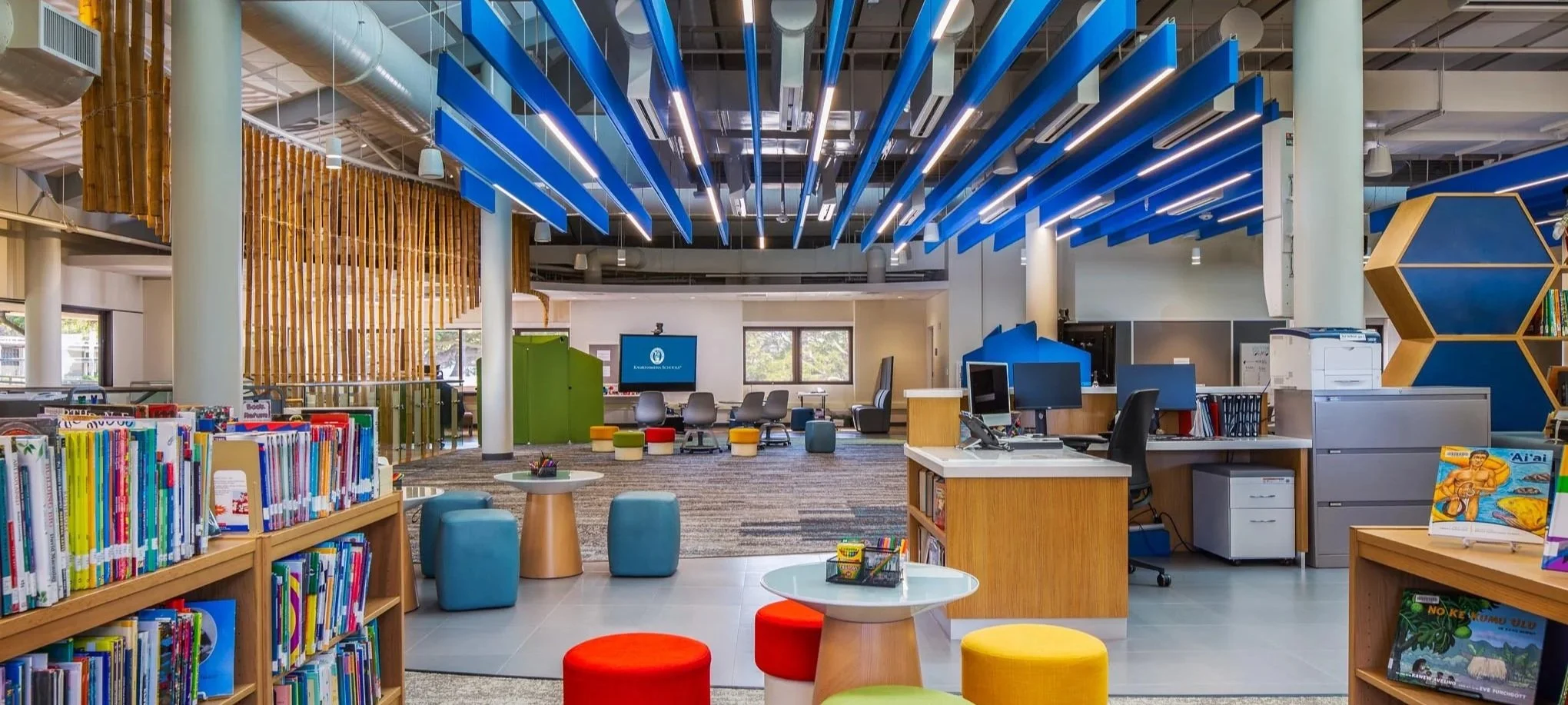
LEARNING CENTER AT KS KAPĀLAMA CAMPUS
KS ELEMENTARY SCHOOL RENOVATION
WEST HAWAII EXPLORATIONS ACADEMY
KALANI HS GIRLS’ ATHLETIC LOCKER ROOM
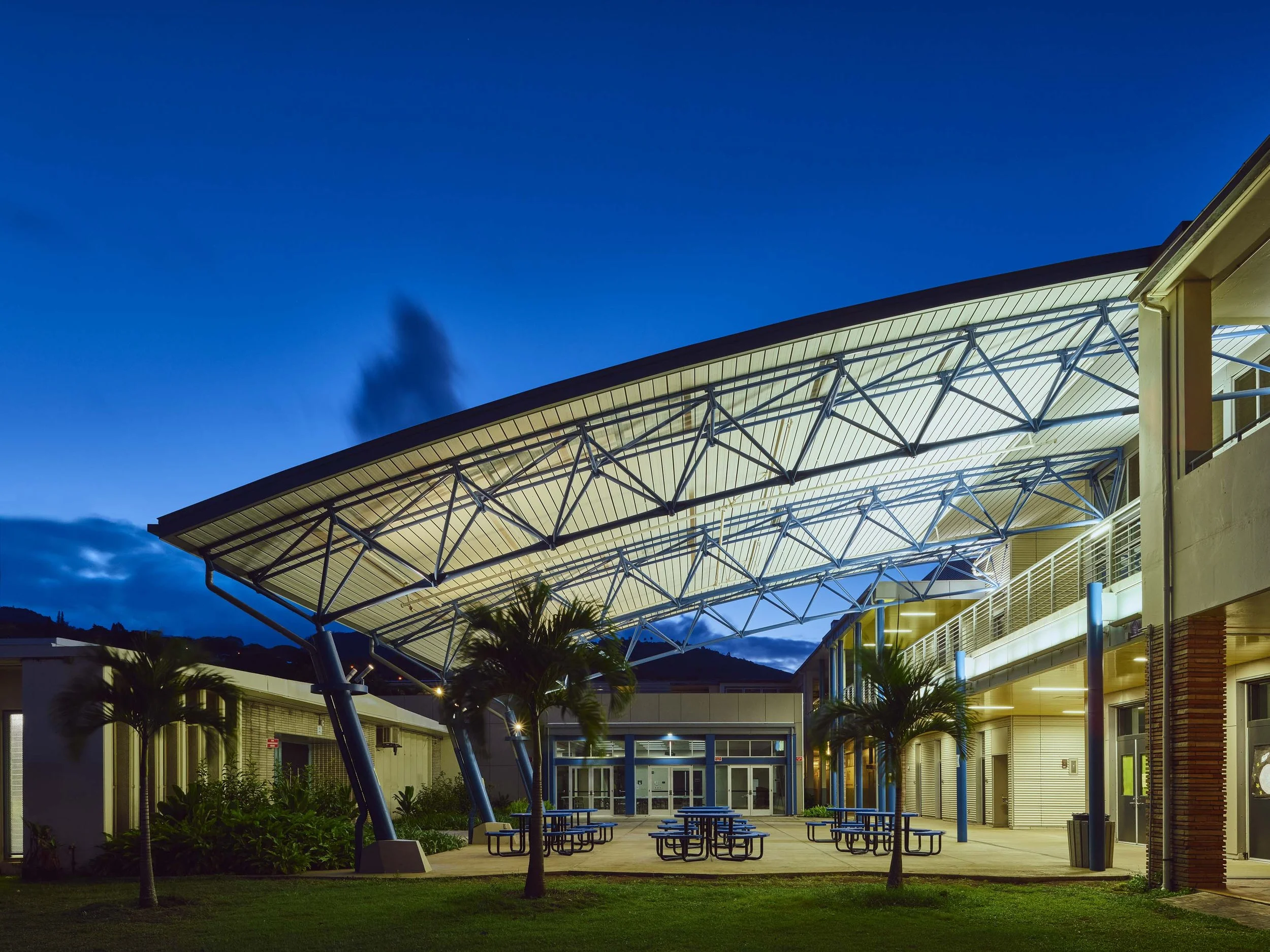
STEVENSON MS SCIENCE & TECH CTR
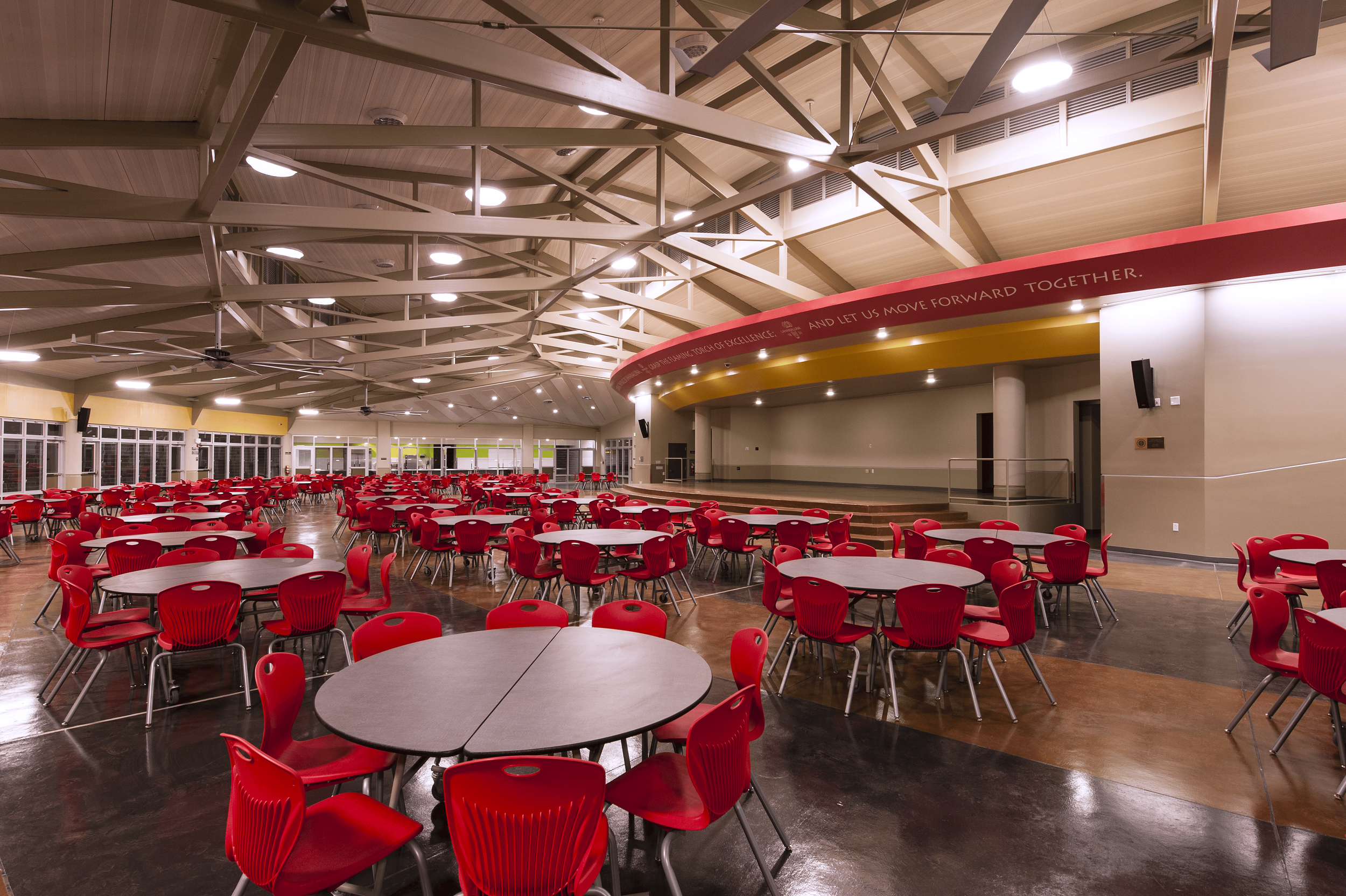
LAHAINALUNA HS CAFETERIA
EAST KAPOLEI ELEMENTARY SCHOOL (EKES)
Ewa Beach, Hawai‘i
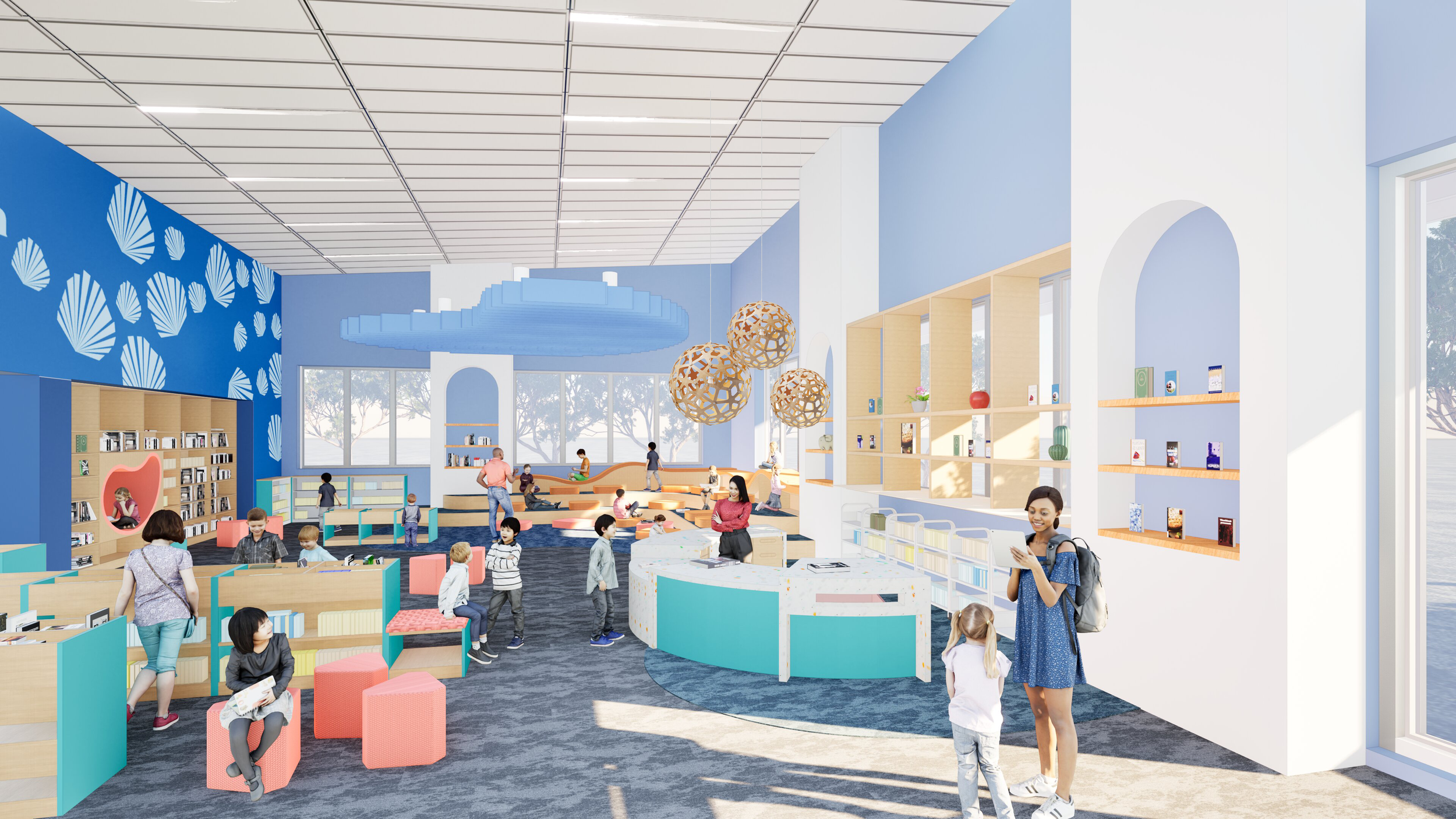
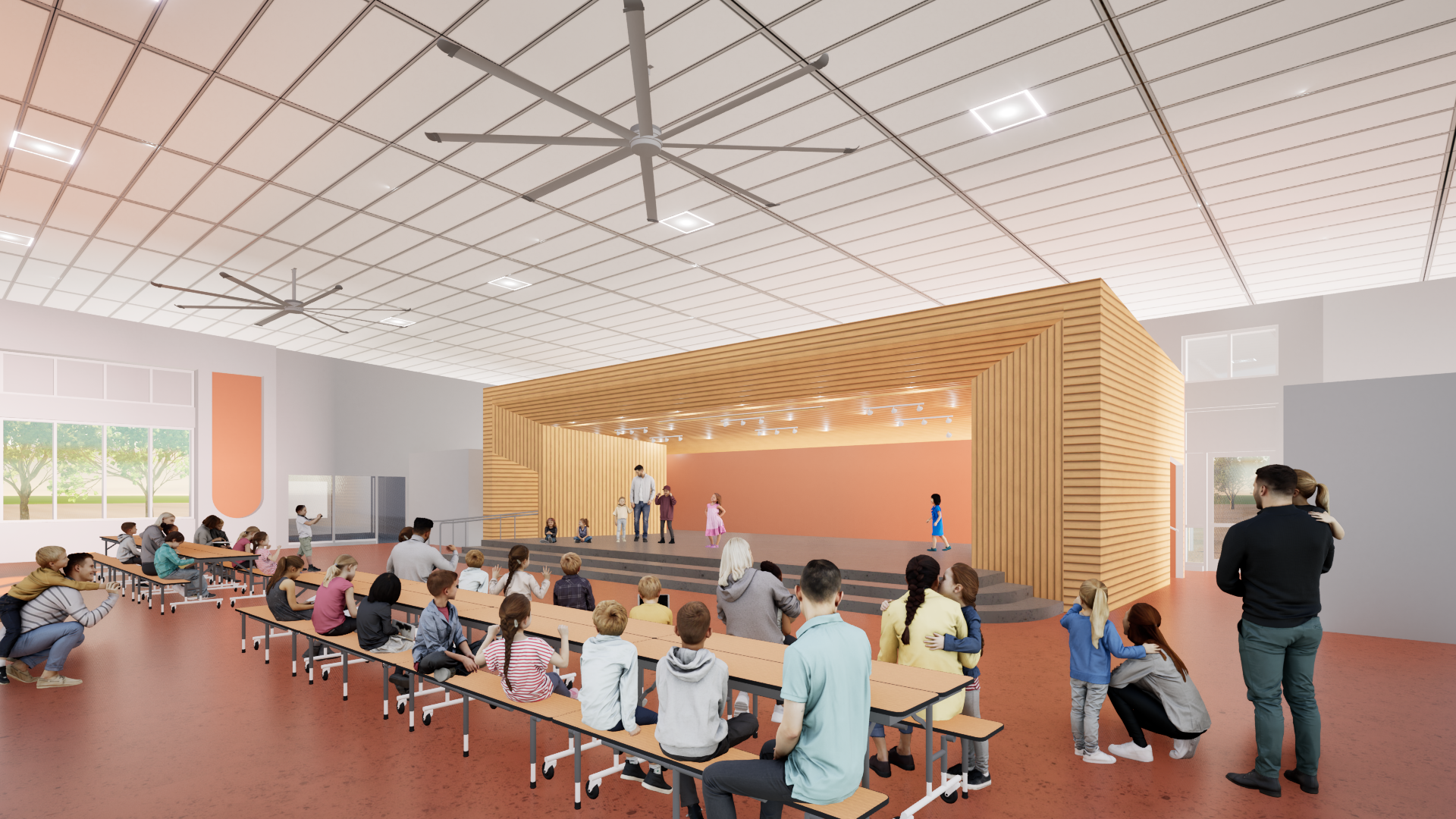
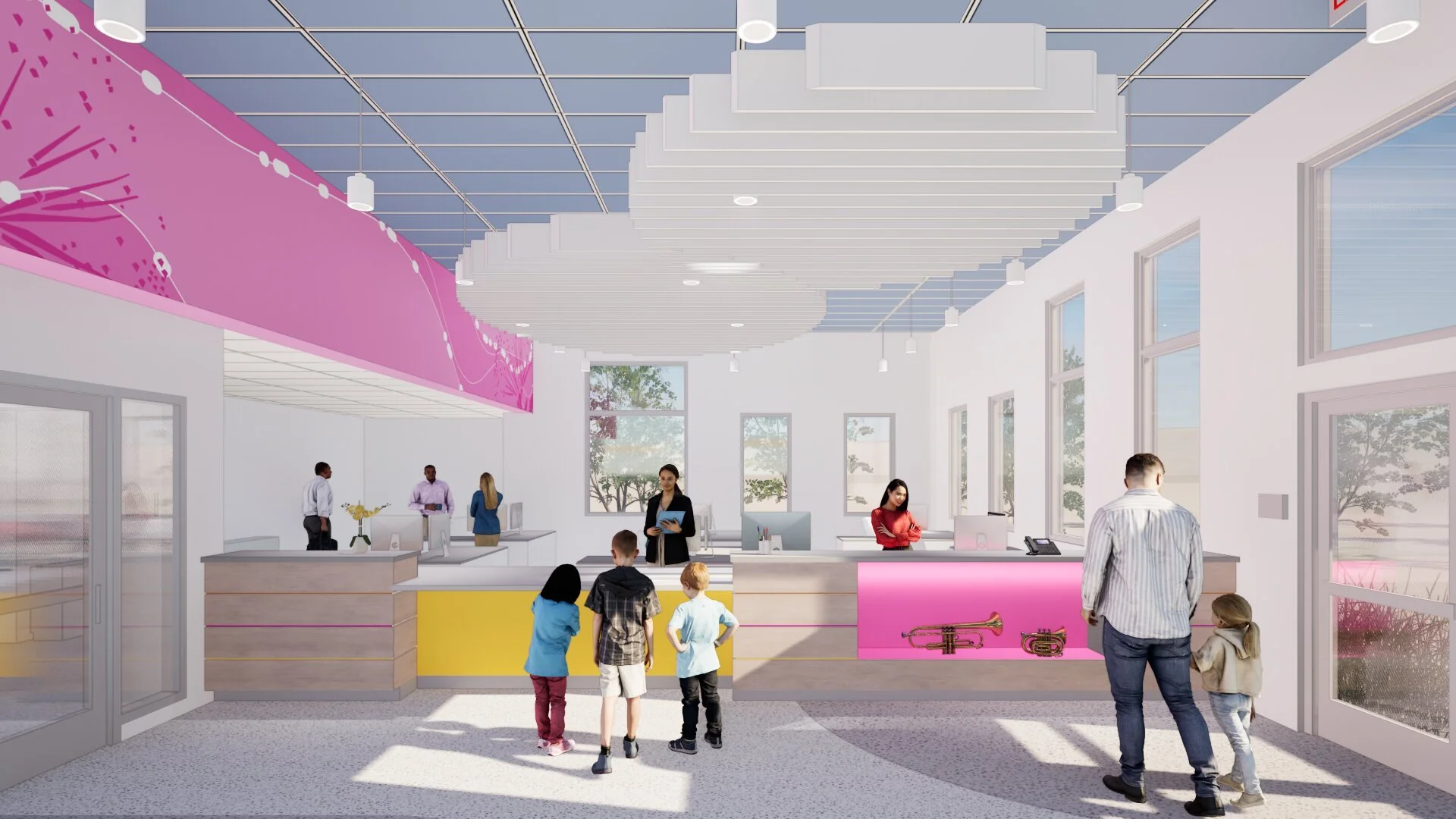
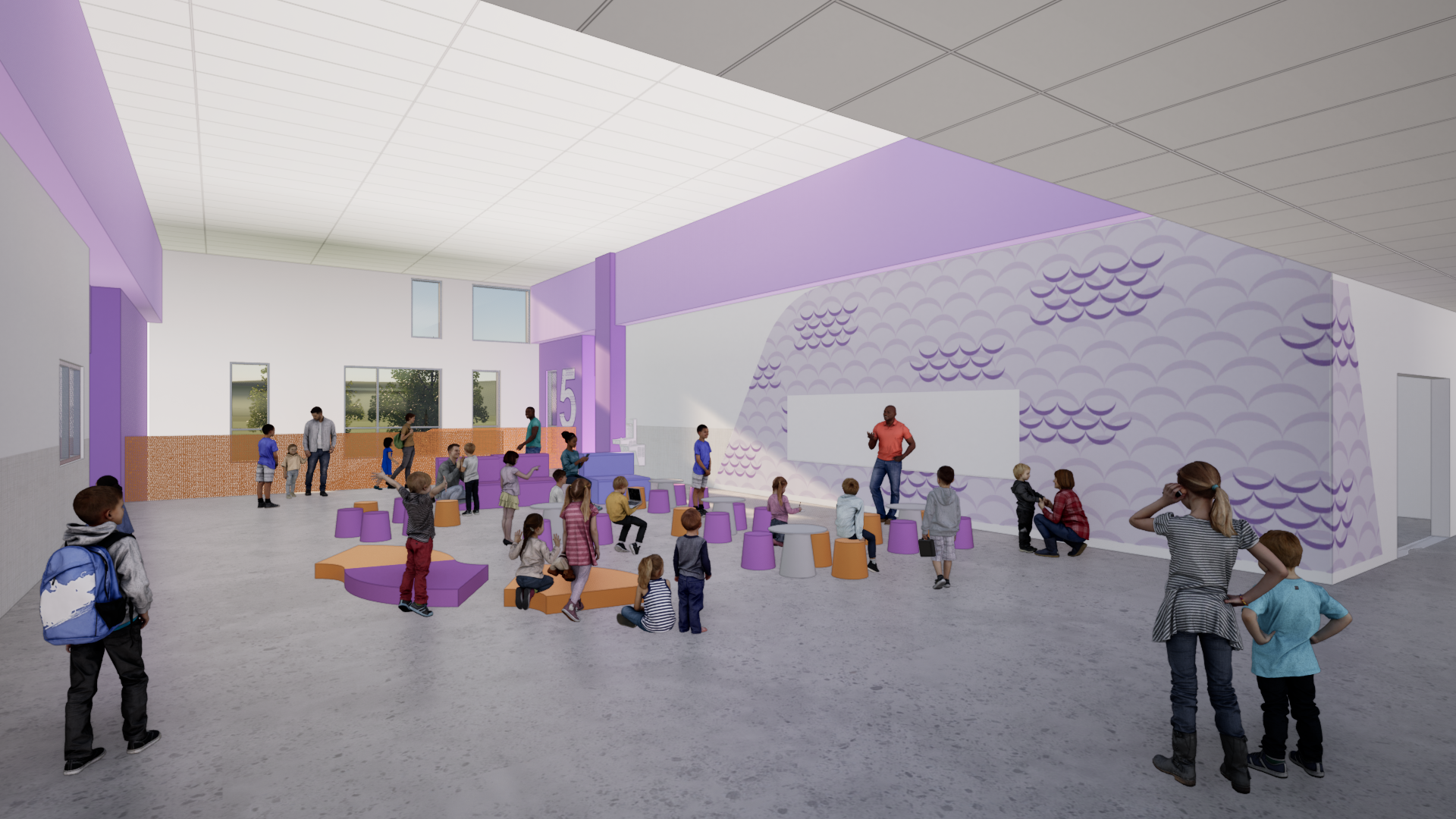
East Kapolei Elementary is a purpose-built campus designed to nurture the unique needs of early learners—balancing structured instruction with the freedom to explore, discover, and grow. Rooted in student-centric design, the school fosters curiosity through dynamic learning environments and culturally inspired architecture.
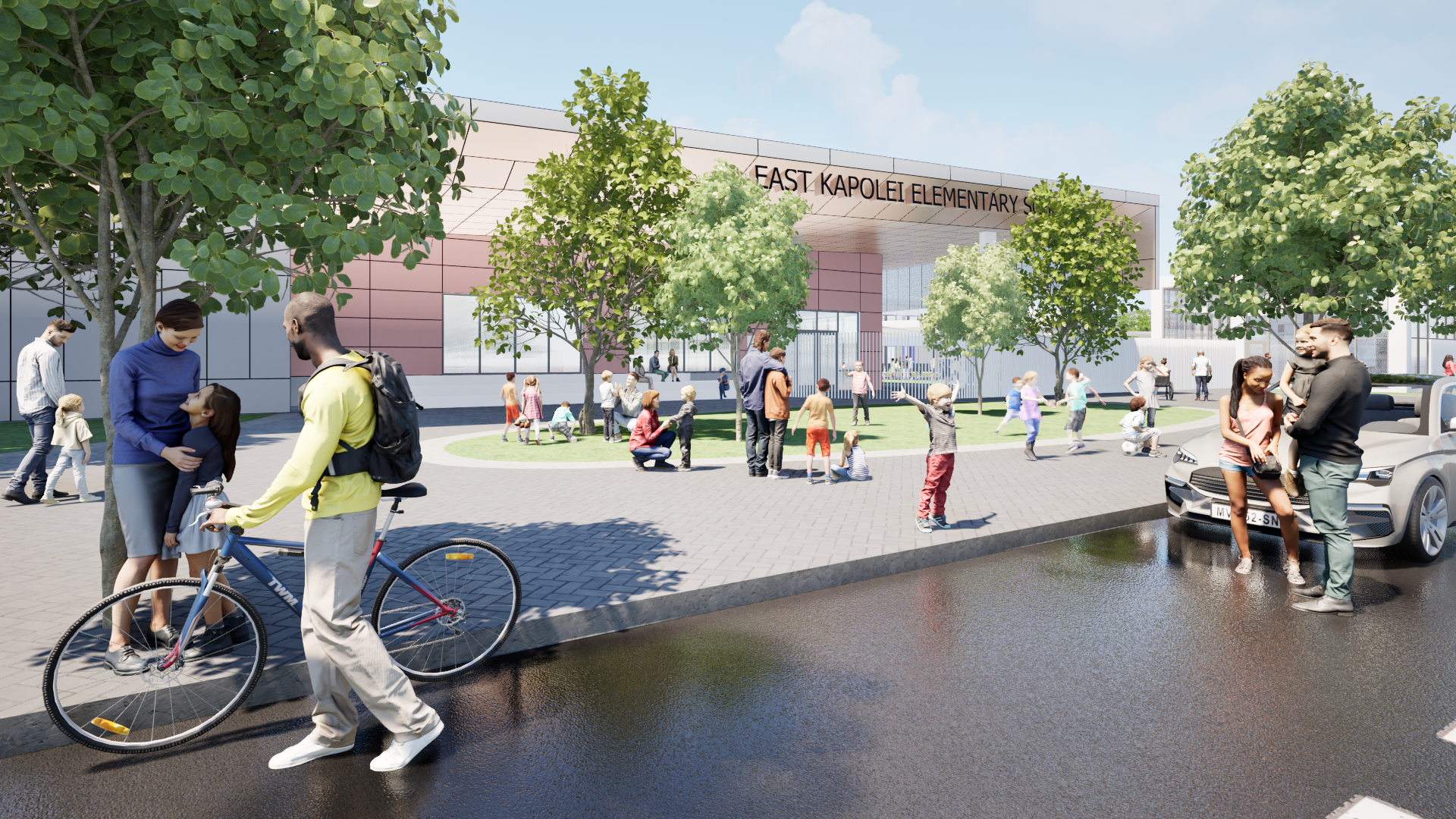
Commissioned by the Hawai‘i State Department of Education, Ferraro Choi led the full design effort for this new elementary school serving the expanding East Kapolei and ʻEwa Beach communities. Situated on a 12-acre site within the Ho‘opili development, the 145,000-square-foot campus will welcome approximately 750 students from Pre-K through Grade 5.
Anticipated Completion: 2028
Service Type: Architecture + Interiors
Size: 145,000 Sq. Ft.
-
East Kapolei Elementary is a purpose-built campus designed to nurture the unique needs of early learners—balancing structured instruction with the freedom to explore, discover, and grow. Rooted in student-centric design, the school fosters curiosity through dynamic learning environments and culturally inspired architecture.
Commissioned by the Hawai‘i State Department of Education, Ferraro Choi led the full design effort for this new elementary school serving the expanding East Kapolei and ʻEwa Beach communities. Situated on a 12-acre site within the Ho‘opili development, the 145,000-square-foot campus will welcome approximately 750 students from Pre-K through Grade 5.
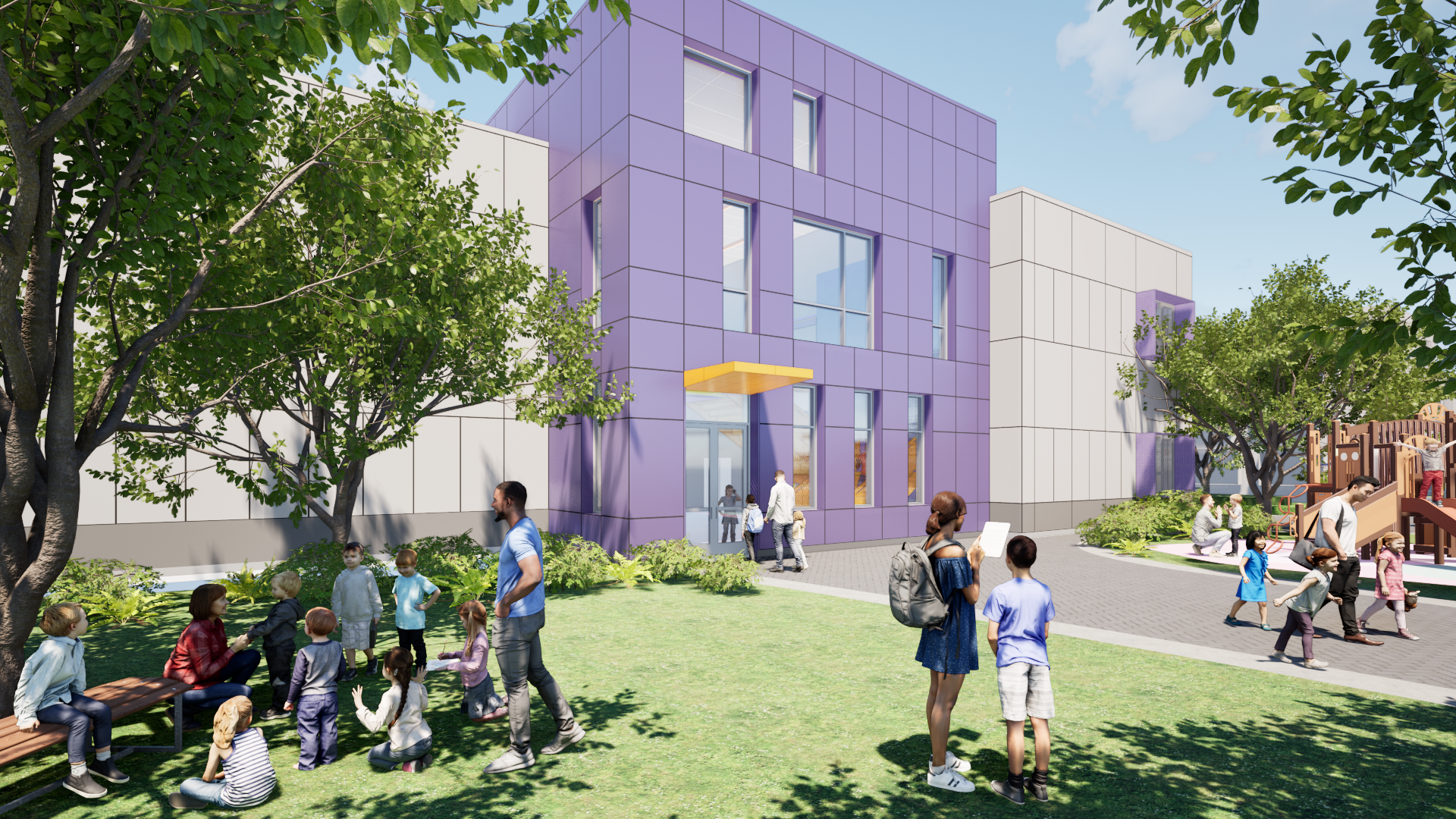
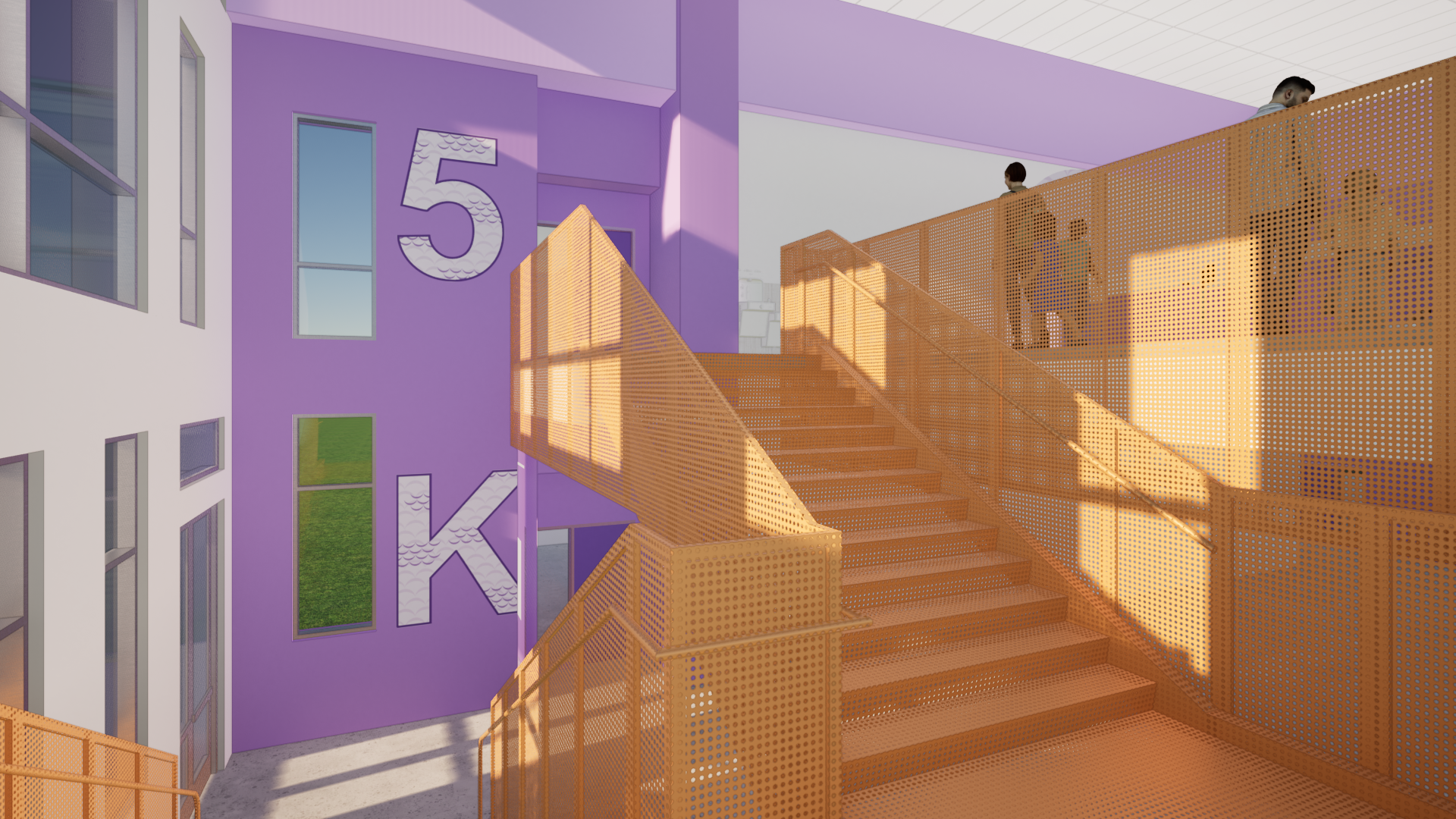
The school’s five buildings are arranged around a central park, featuring a performance lawn, playgrounds, native landscaping, a teaching garden, and outdoor learning spaces. Each building tells a story—developed through cultural research and expressed through thematic color palettes and custom graphics that reflect its location and purpose.
Guided by 21st-century learning principles, the campus offers flexible learning nodes, including a vibrant Learning Commons with a traditional reading room, tiered seating, cozy nooks, and dedicated spaces for media, fabrication, and collaborative instruction. Grade-level neighborhoods are anchored by their own learning commons, designed to support both large-group and breakout learning experiences.
Sustainability is central to the design. The school targets LEED v4 Silver certification, with potential for Gold through renewable energy integration. Passive design strategies and high-efficiency mechanical systems reduce energy consumption, while daylighting and dedicated HVAC systems enhance comfort in every instructional space. The campus also encourages walking and biking from the surrounding Ho‘opili neighborhood.
Ferraro Choi provided comprehensive services, including entitlement processing, programming, site planning, architectural design, and construction documentation—creating a learning environment where Hawai‘i’s keiki can thrive.
HONOULIULI MIDDLE SCHOOL
Ewa Beach, Hawai‘i
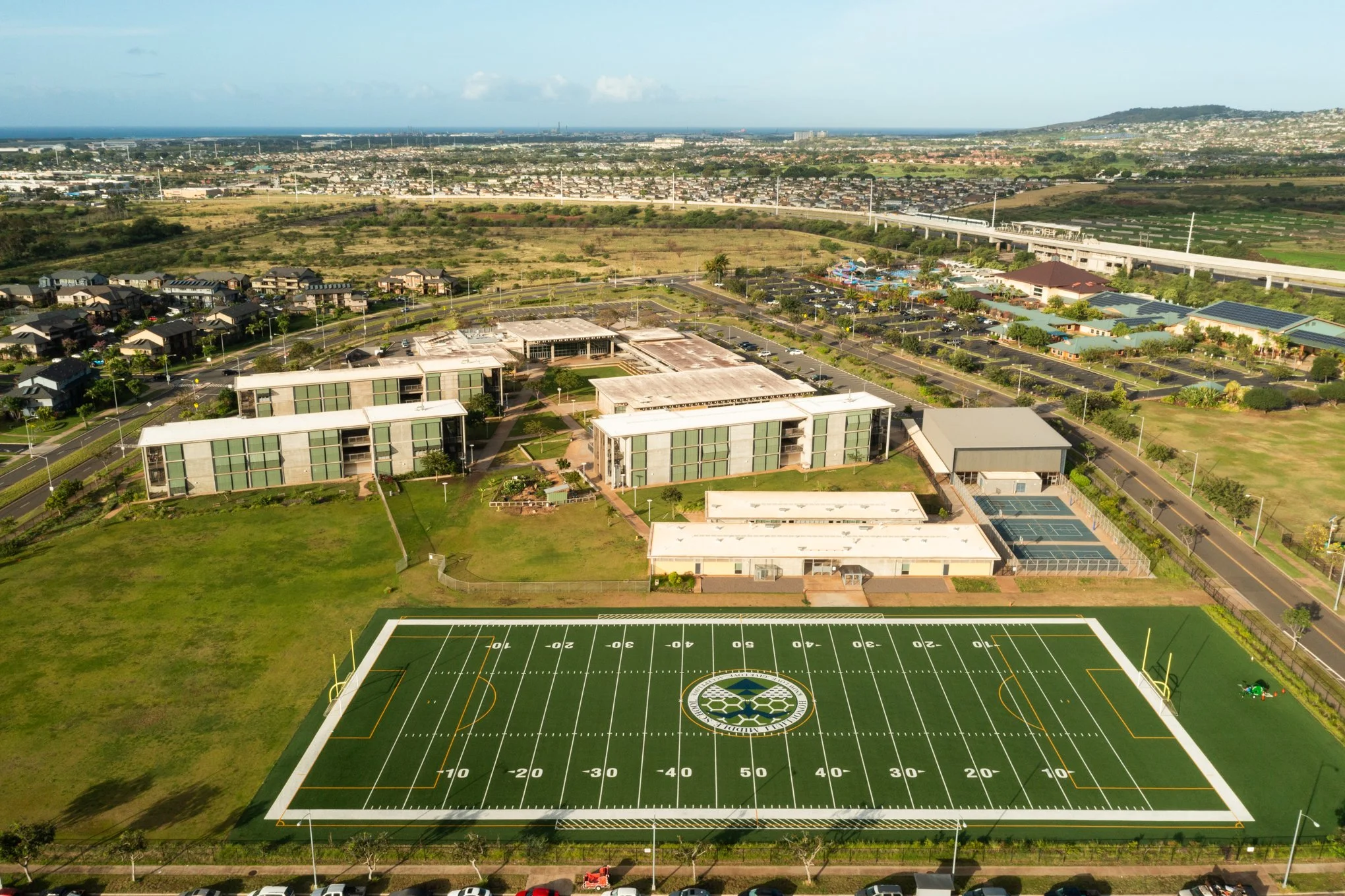
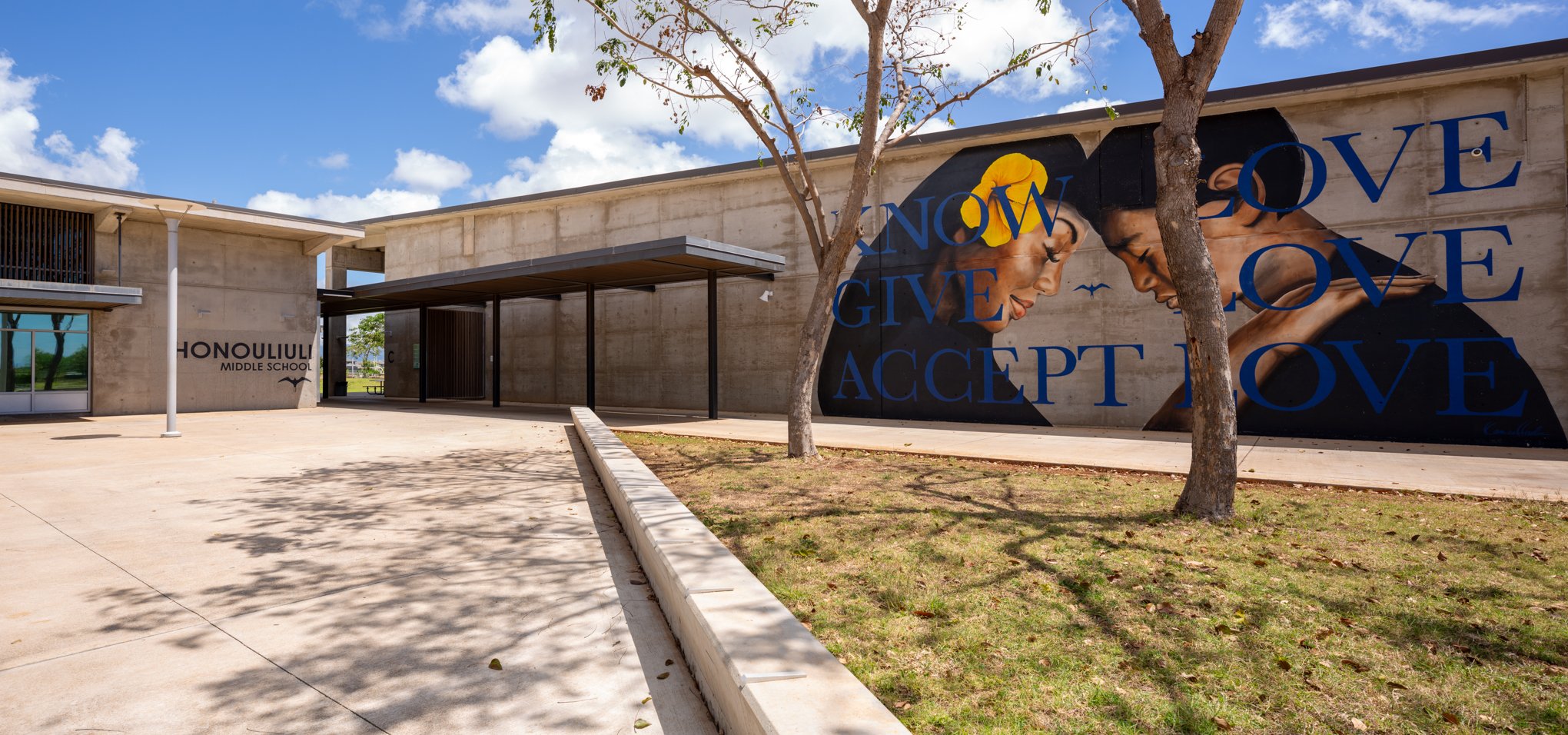
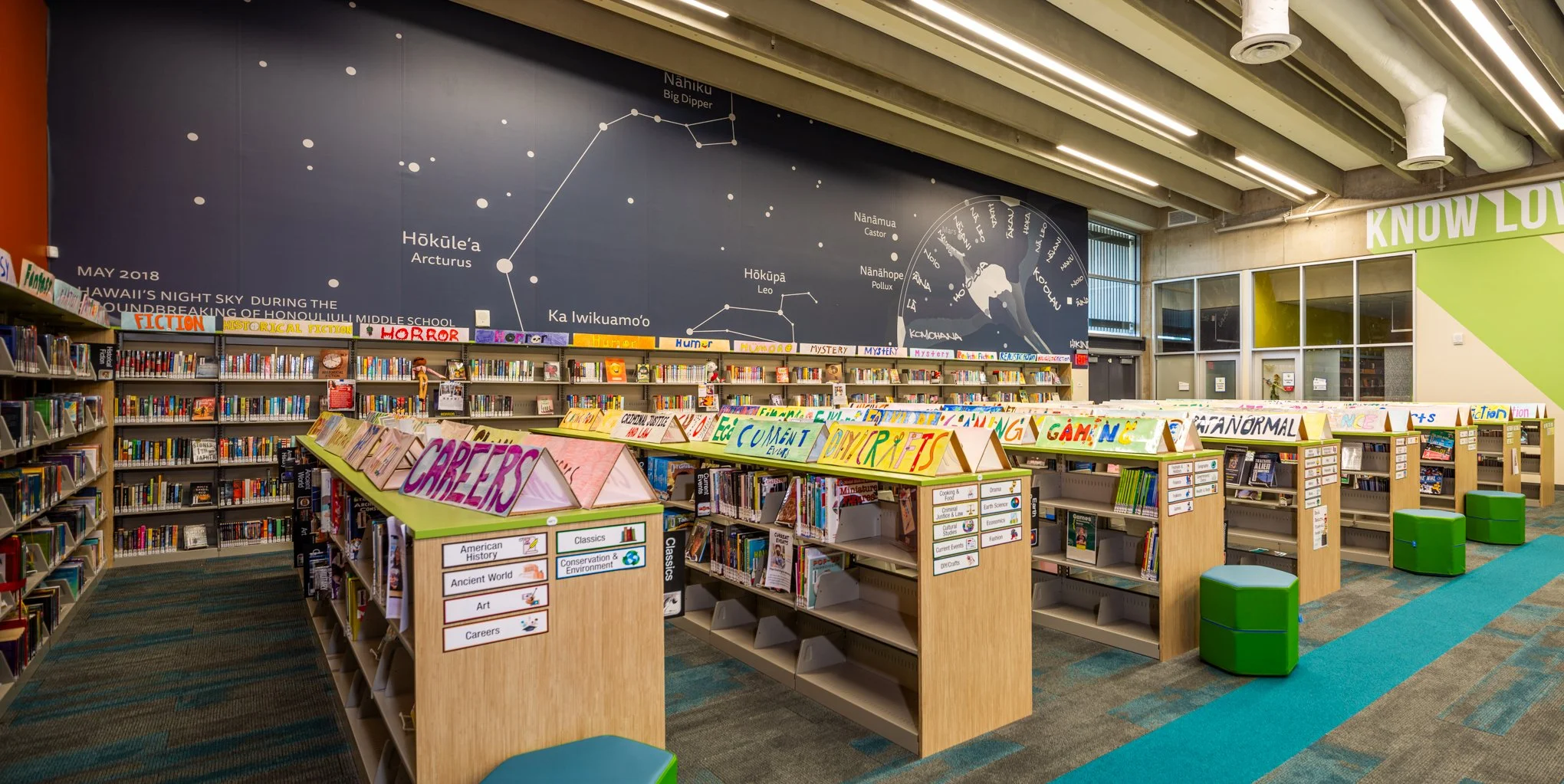
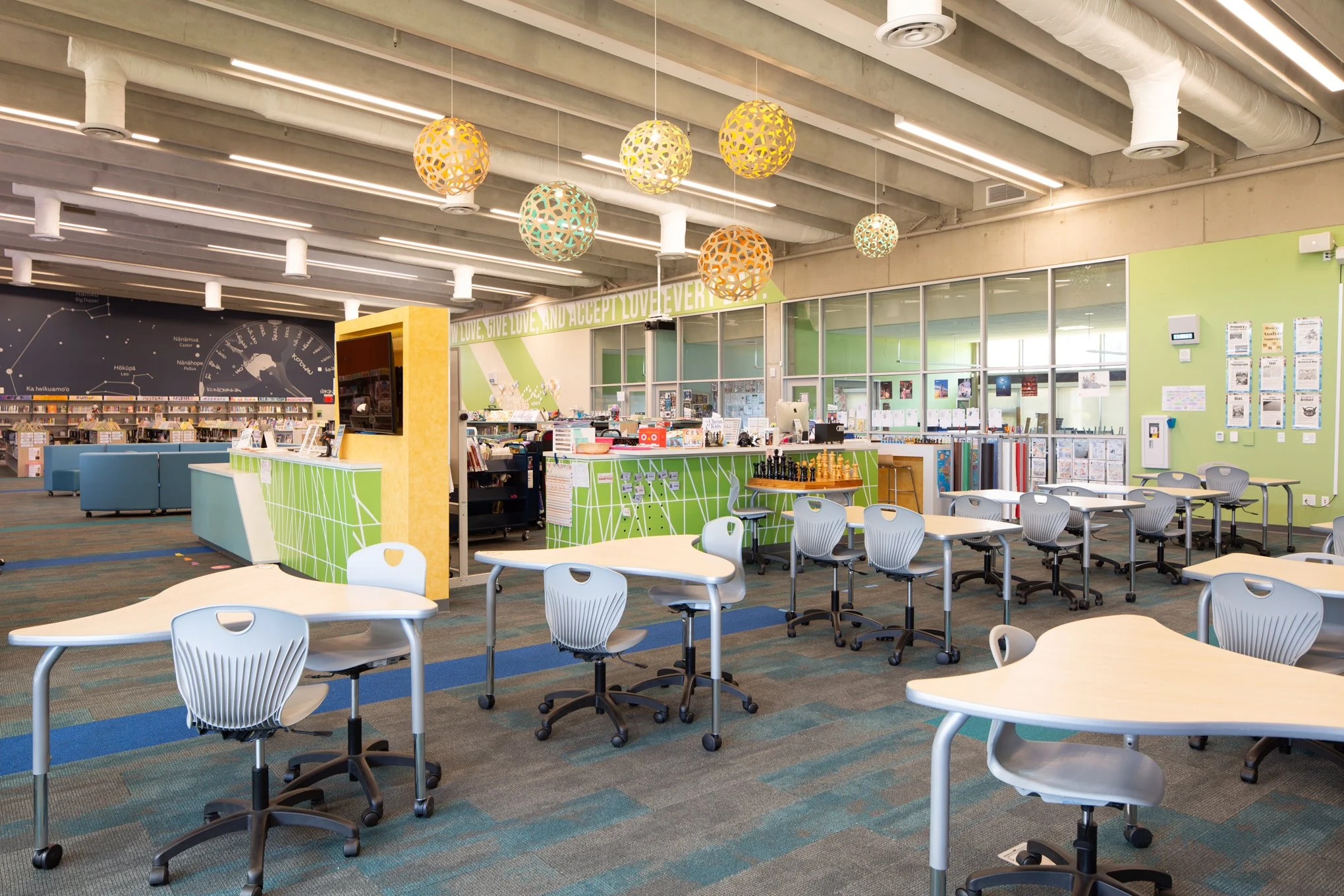
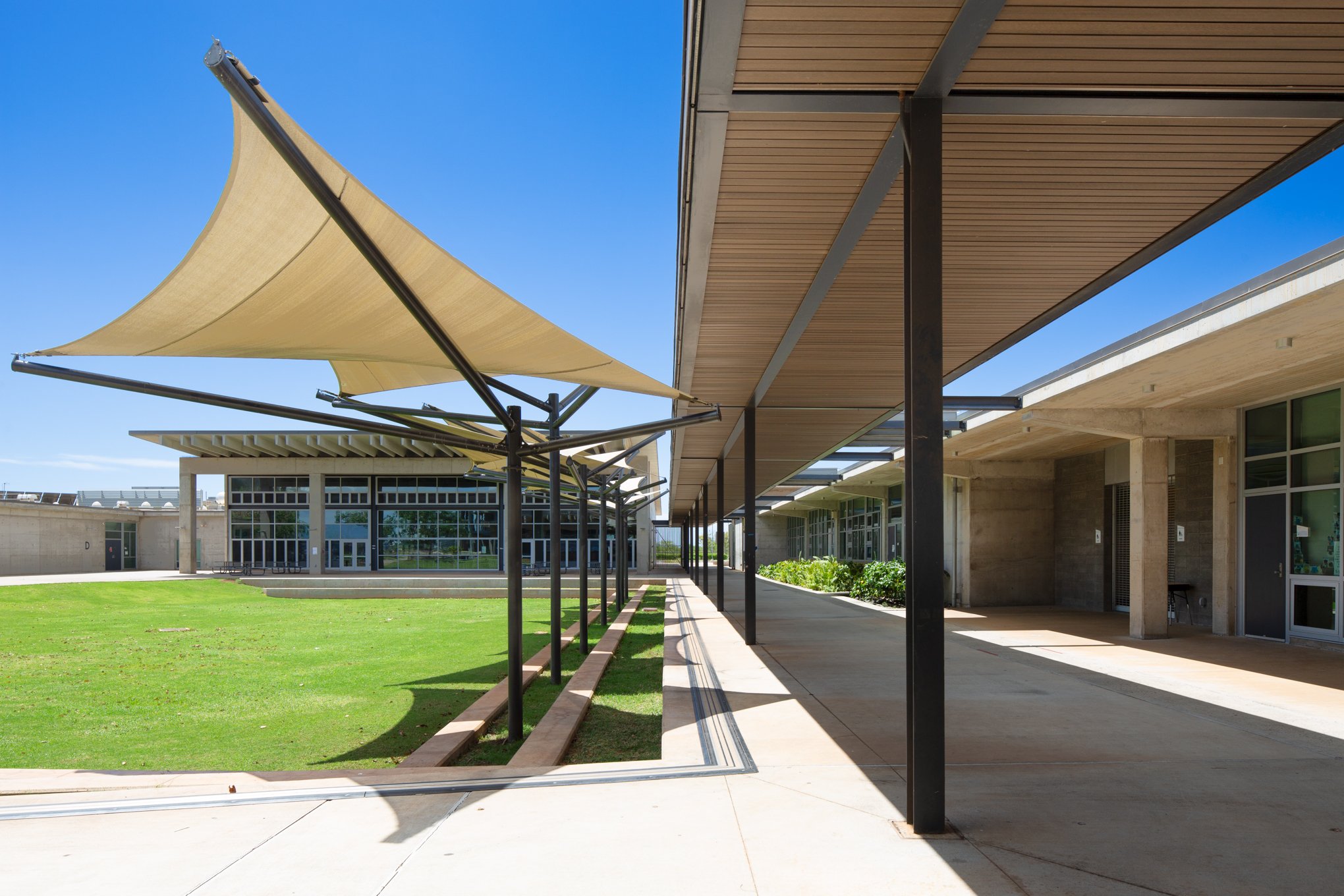
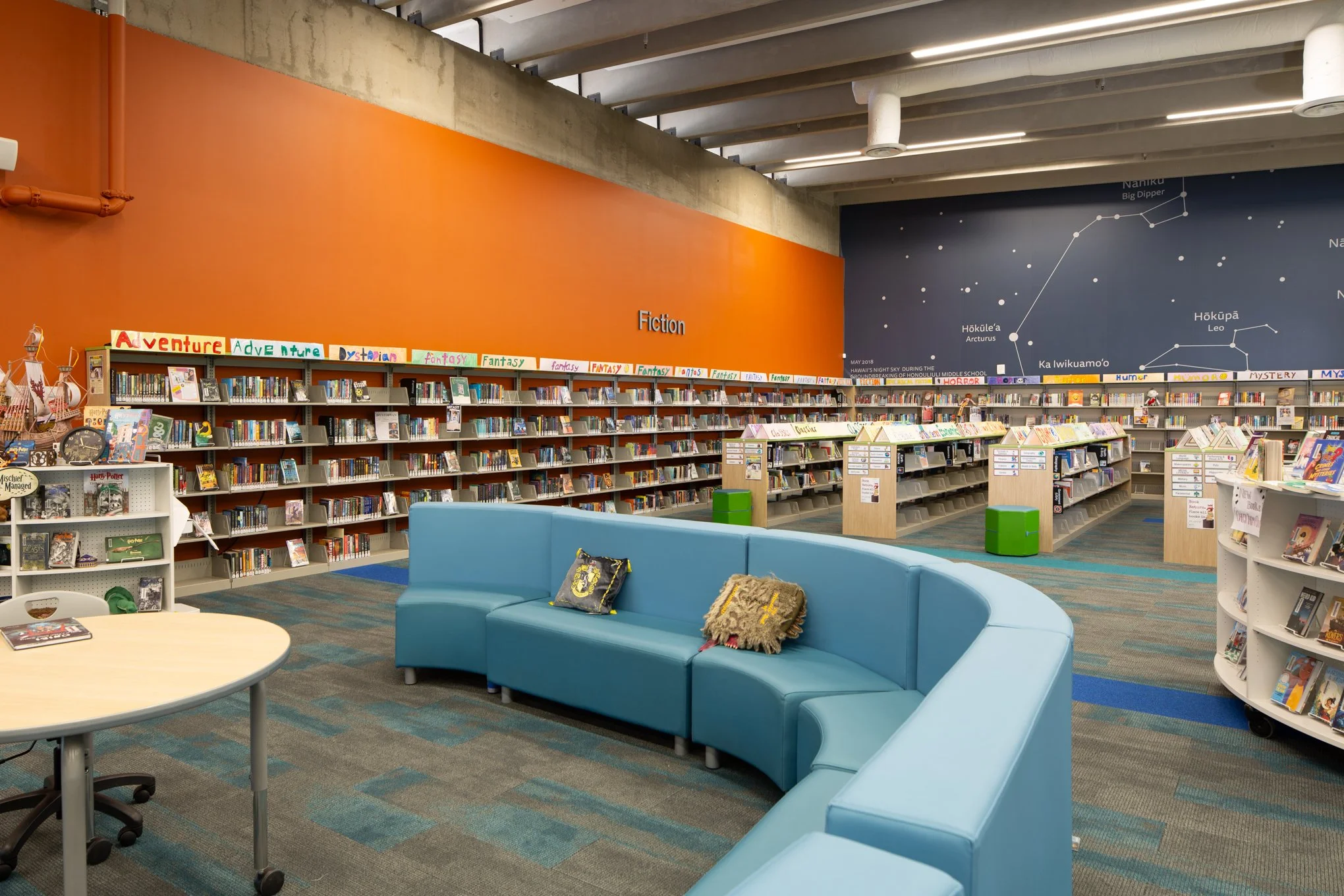
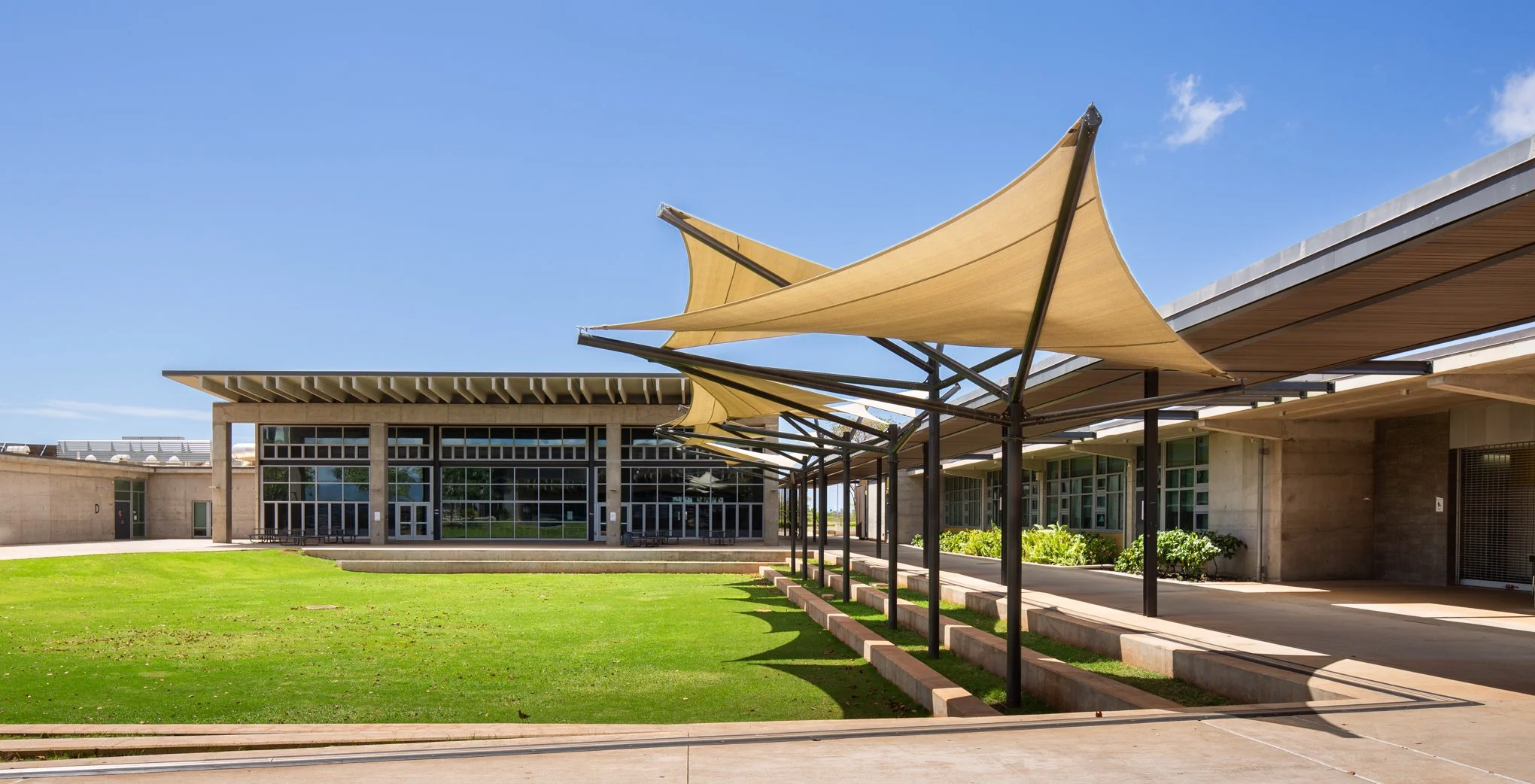
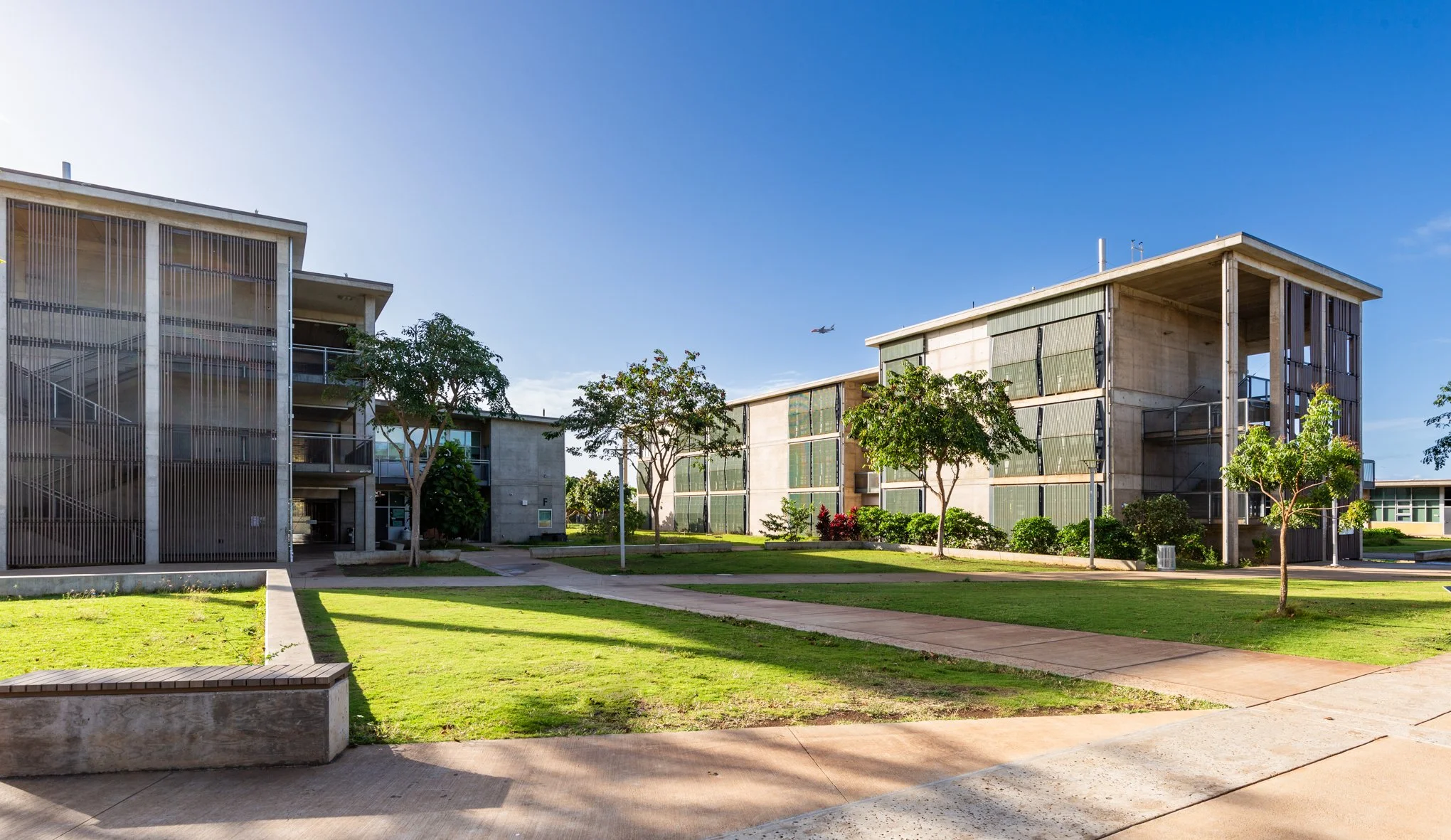
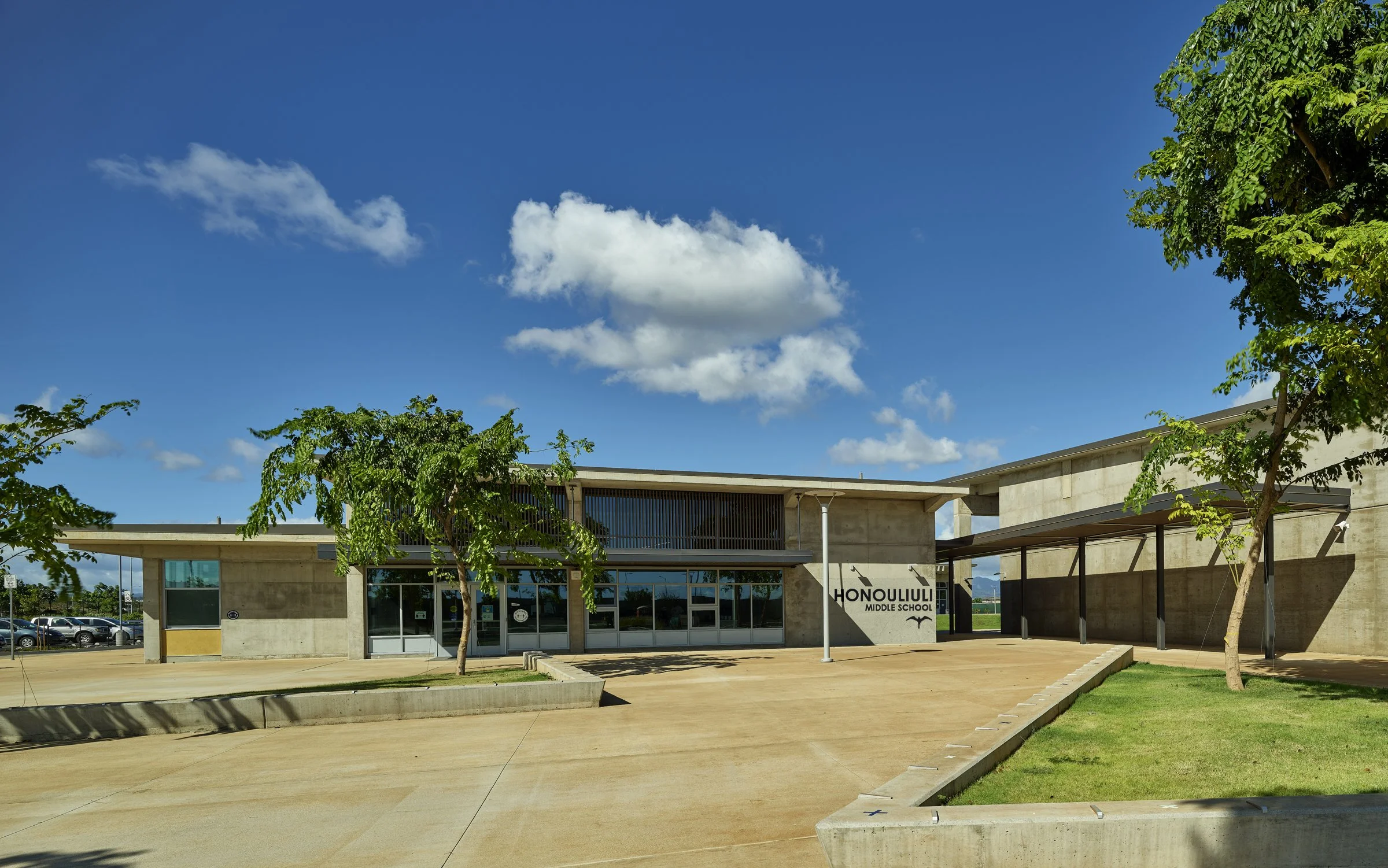
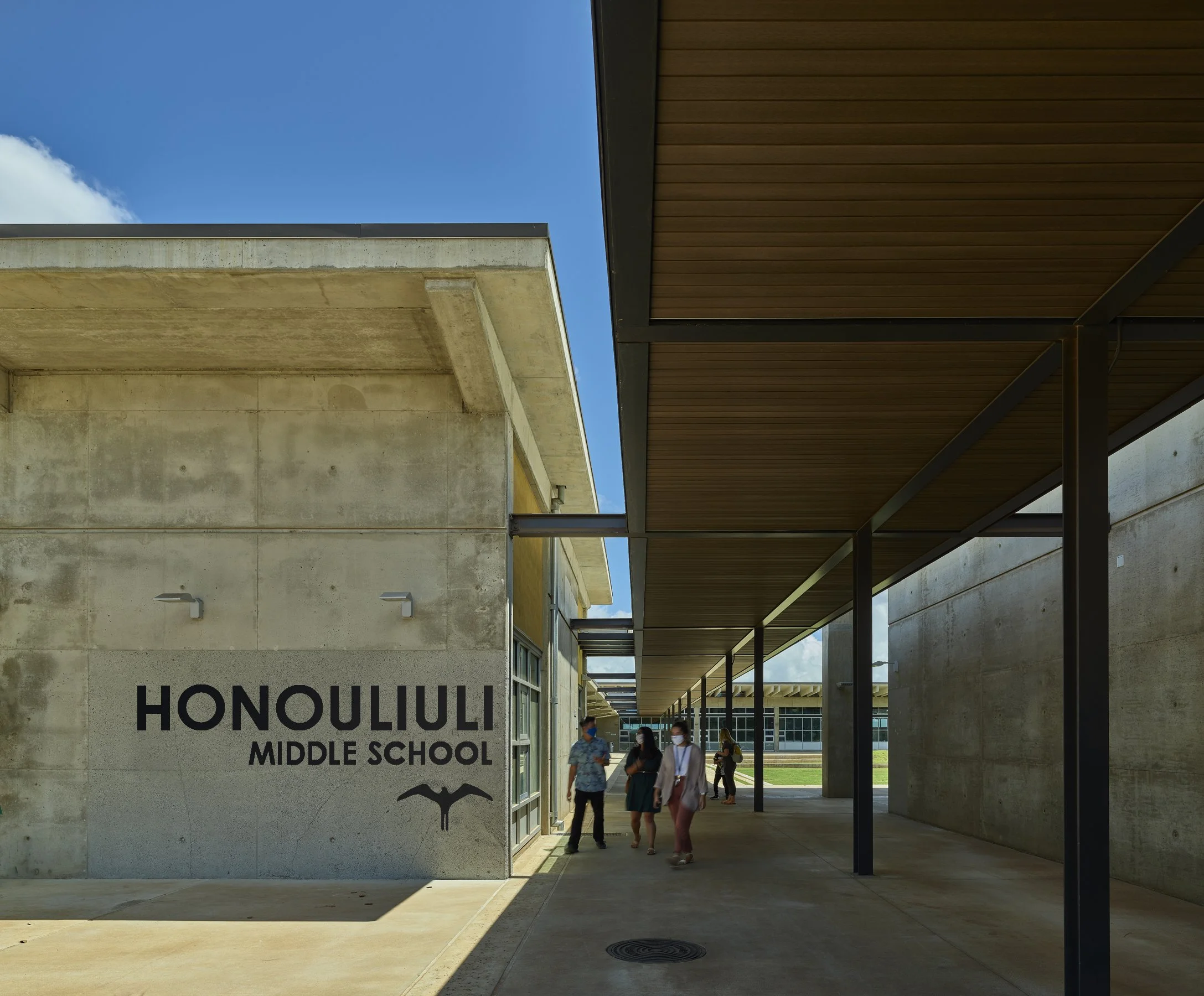
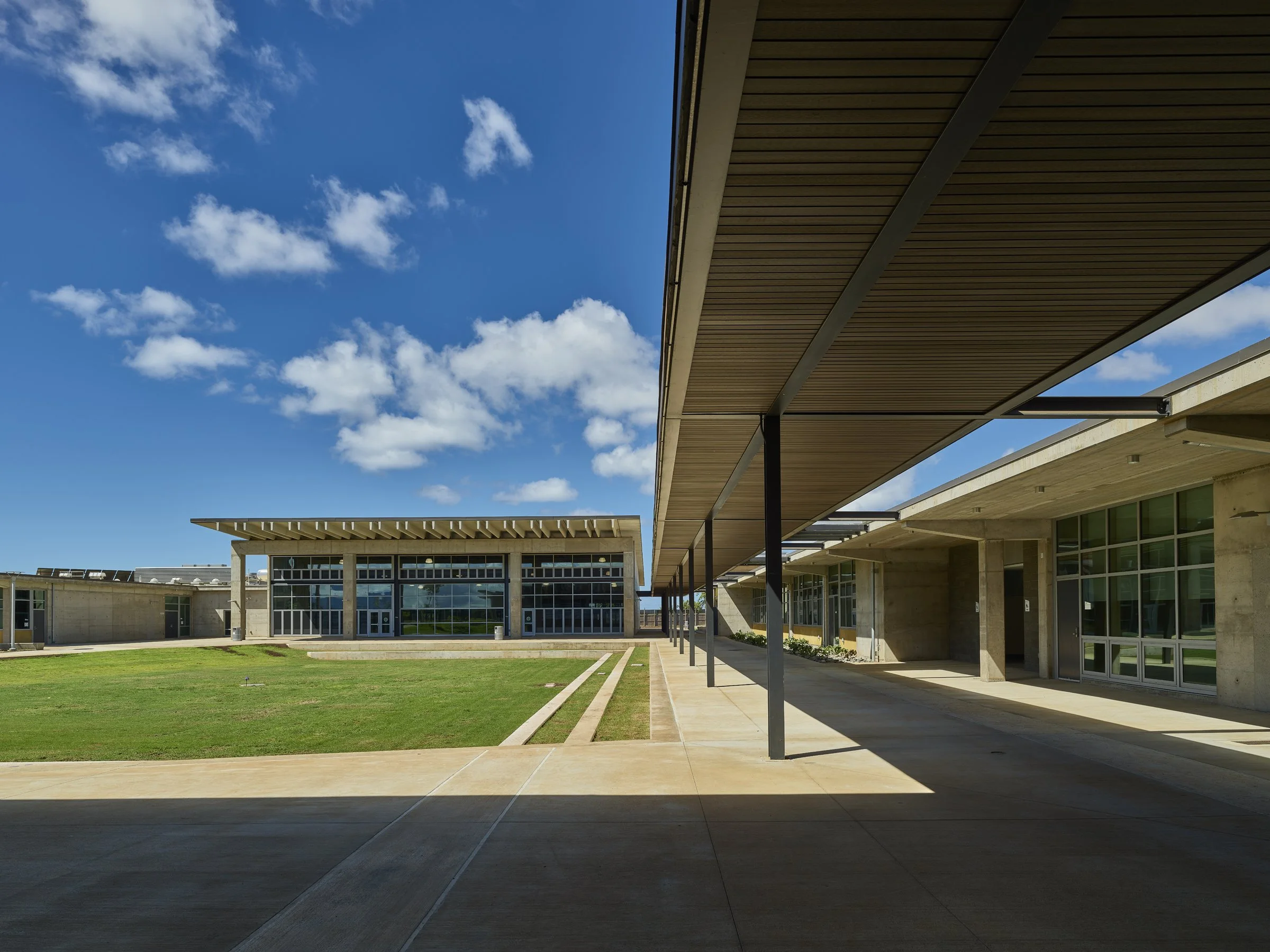
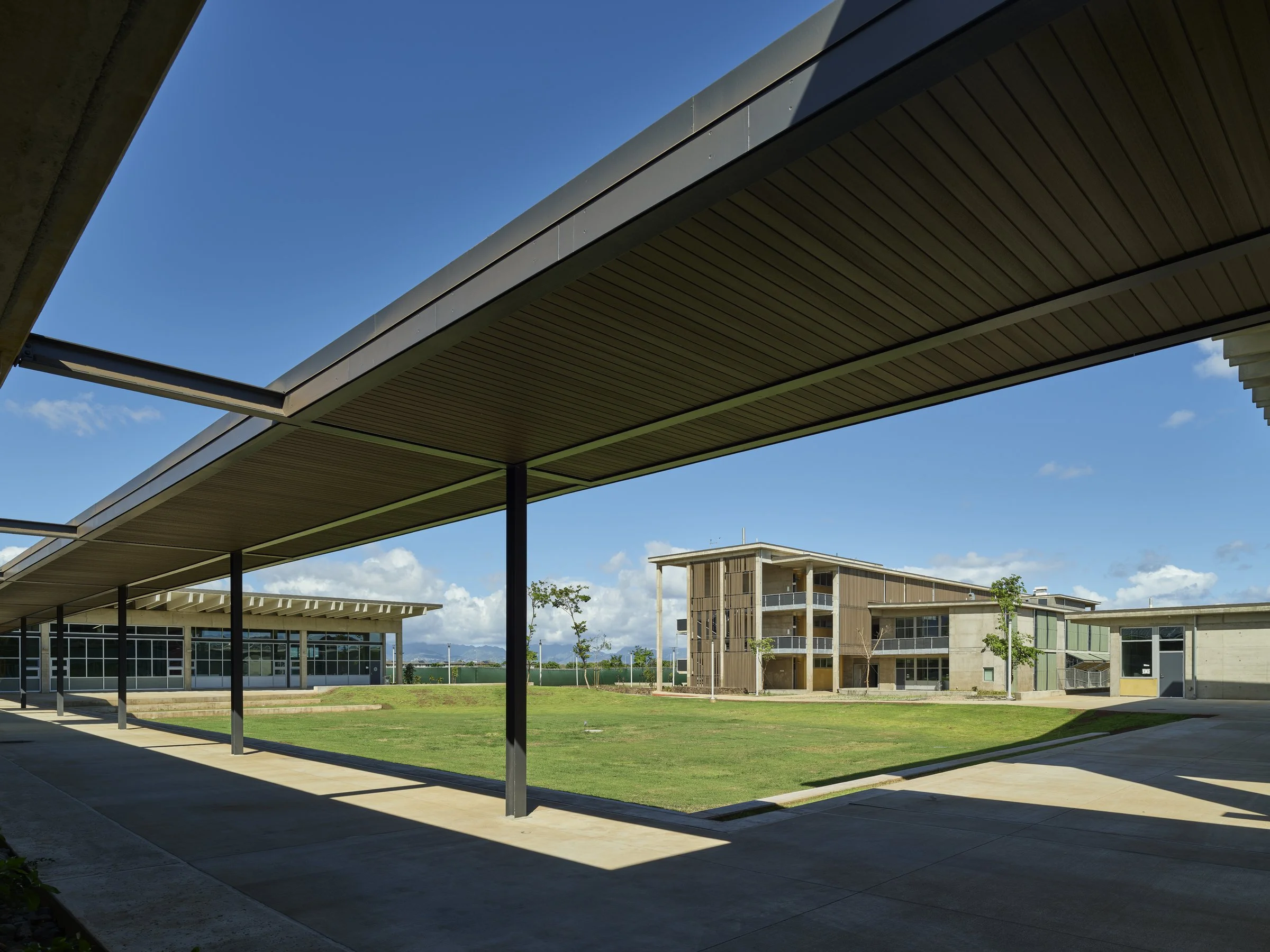
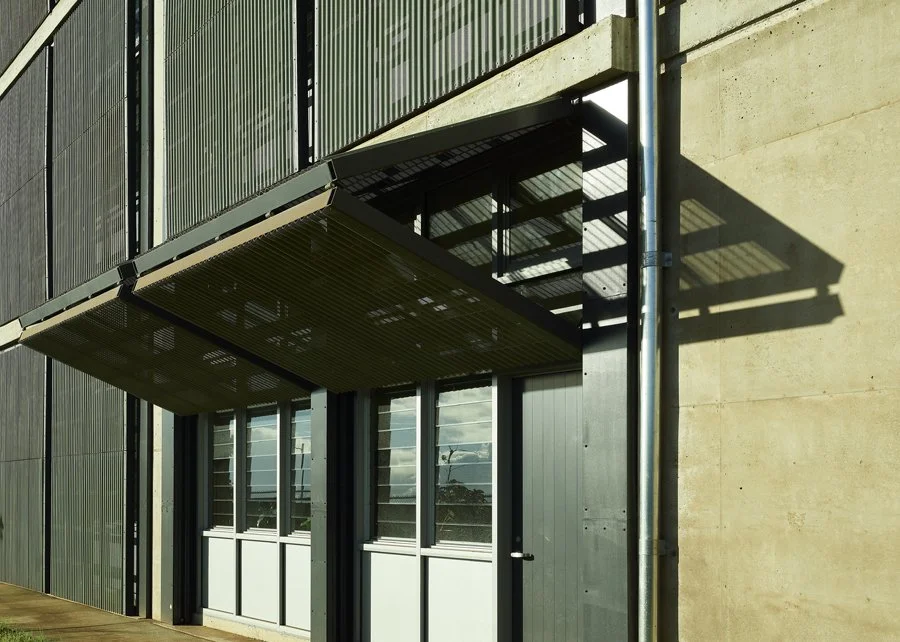
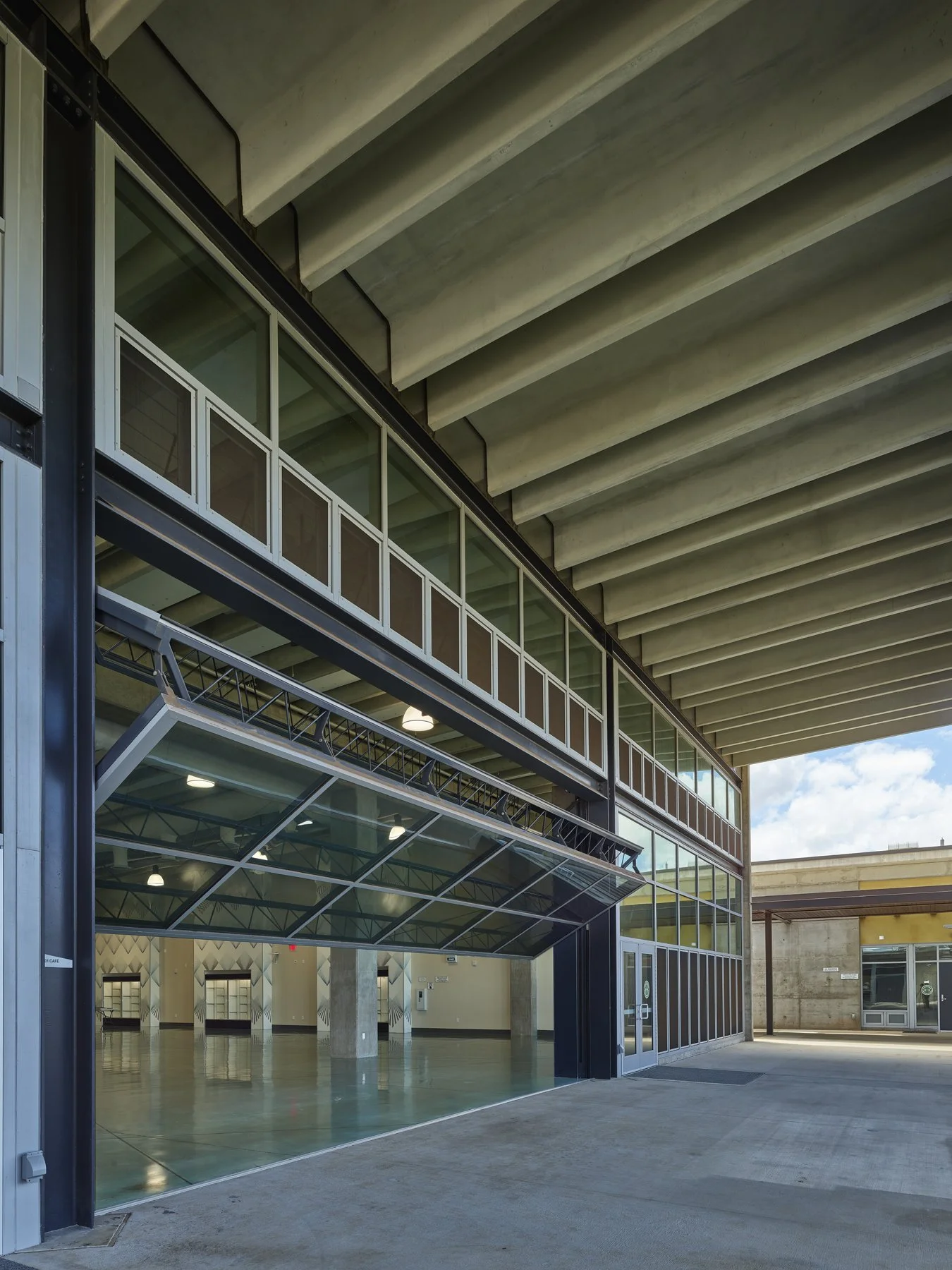
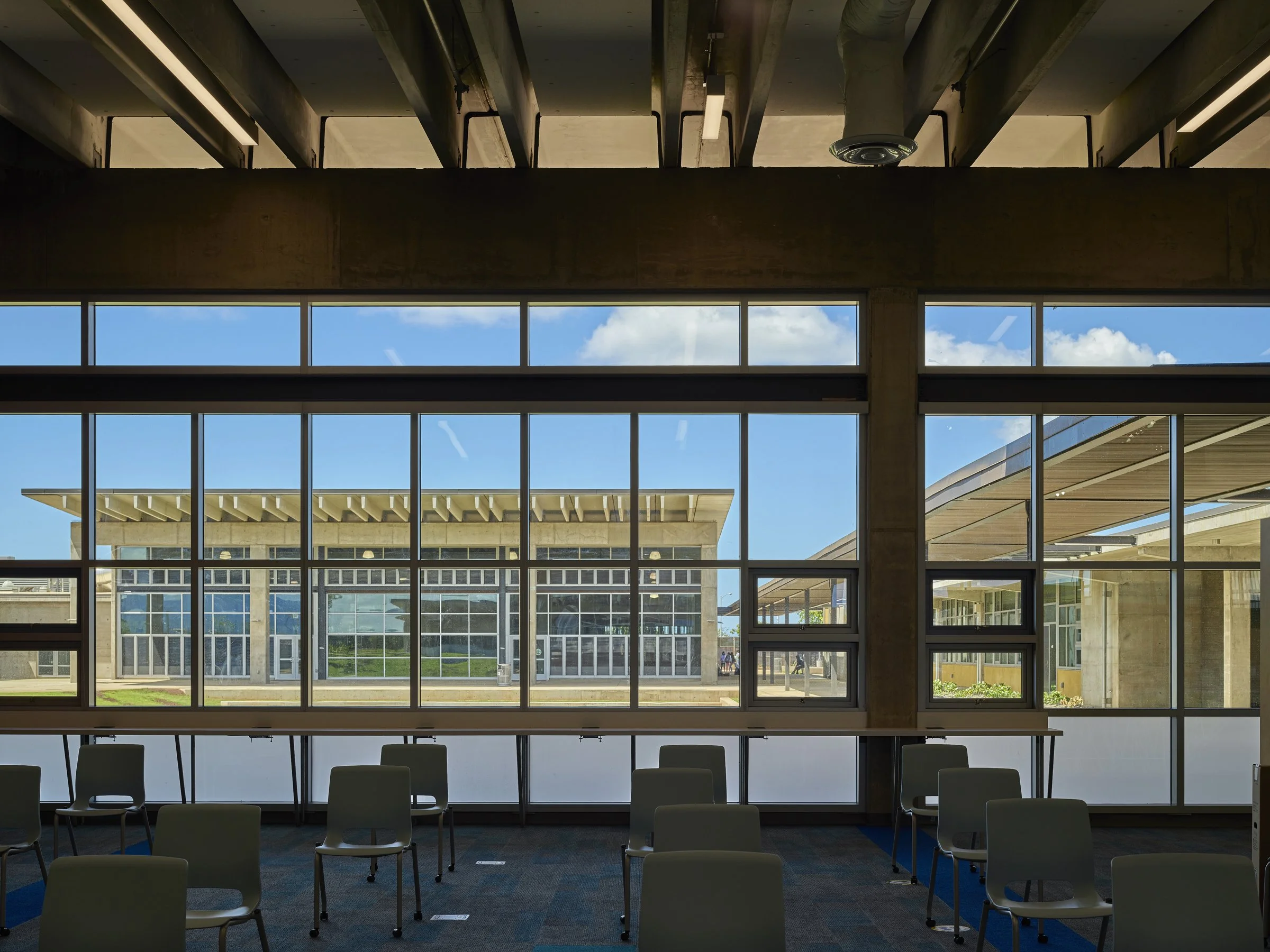
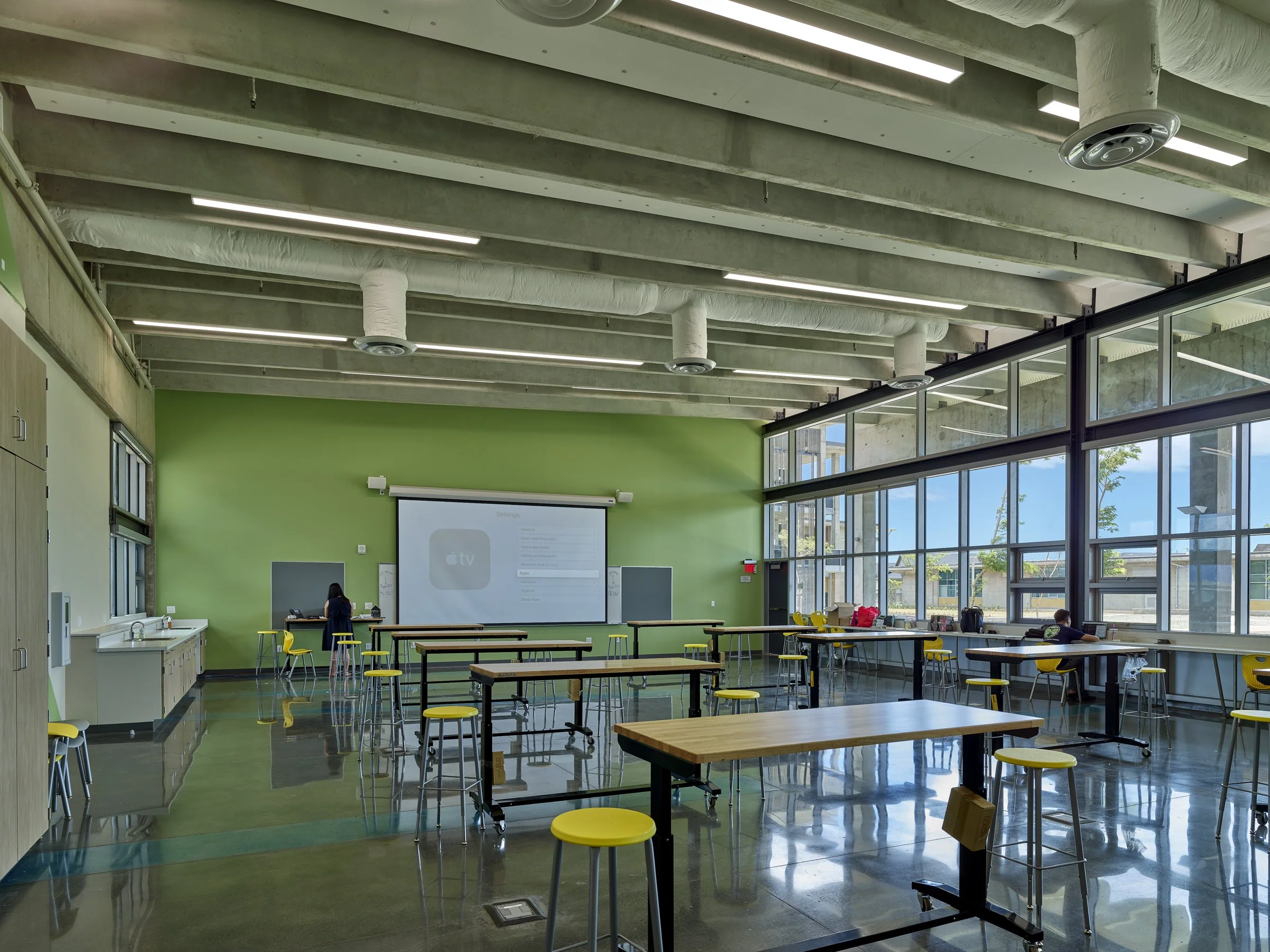
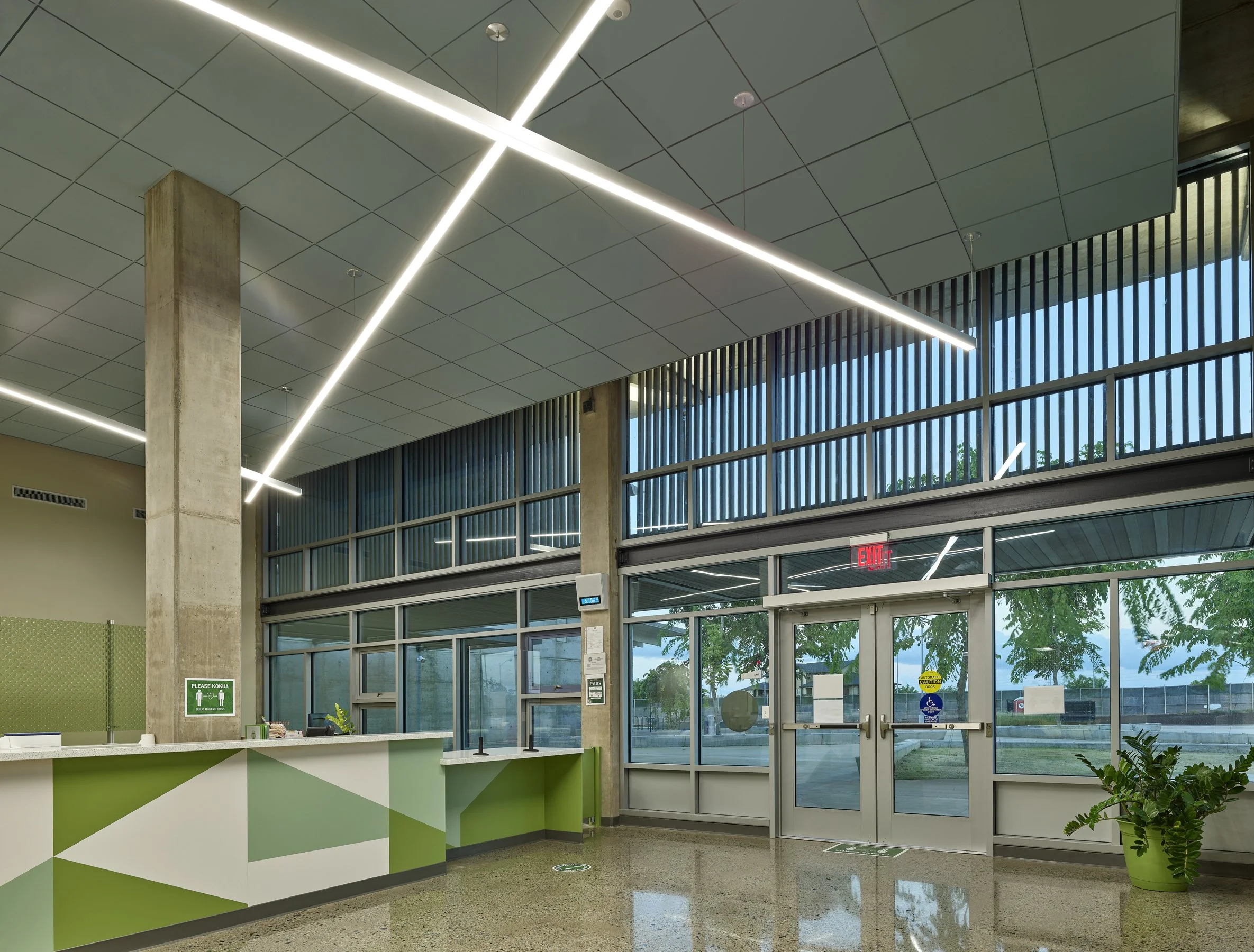
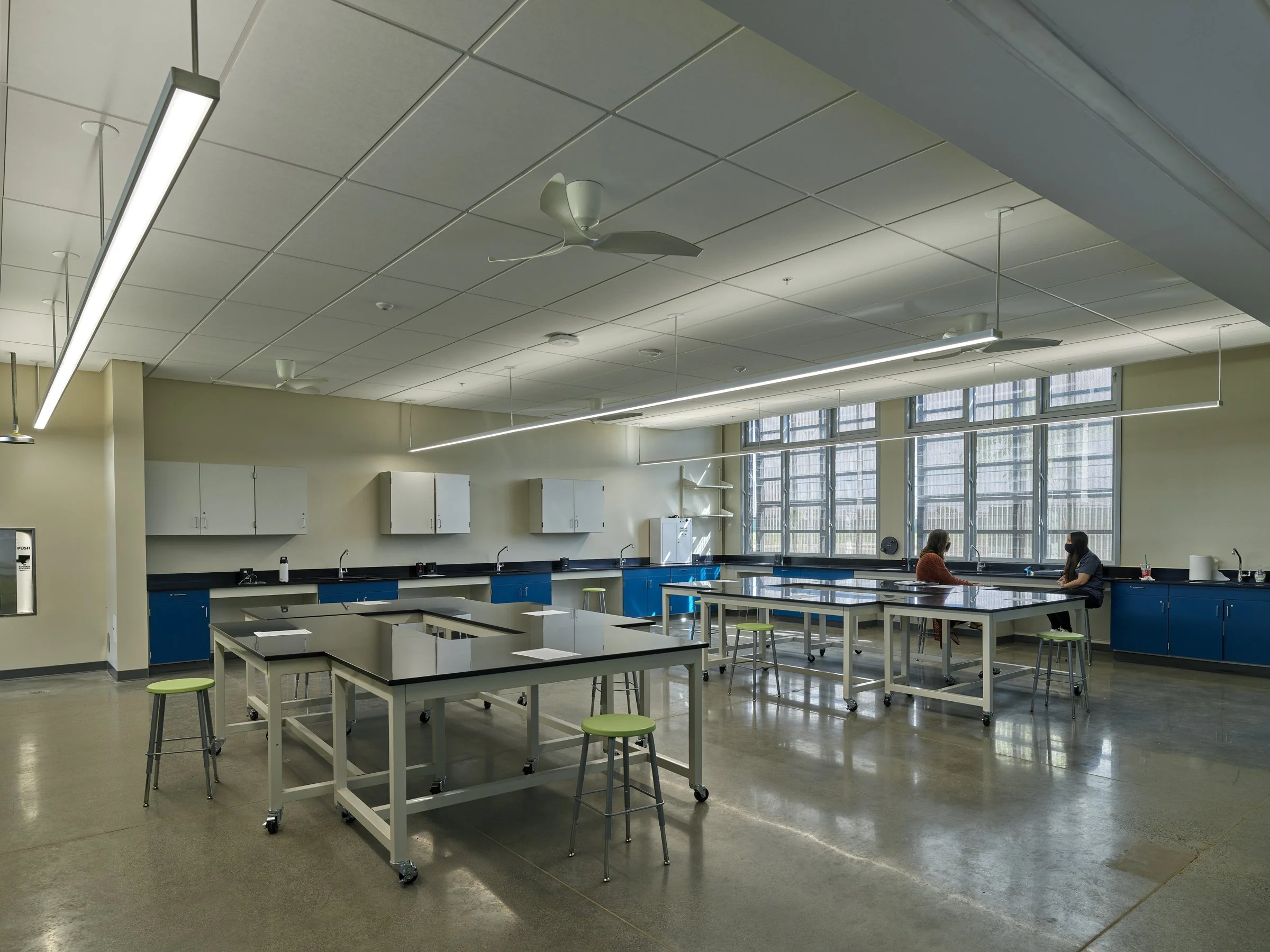
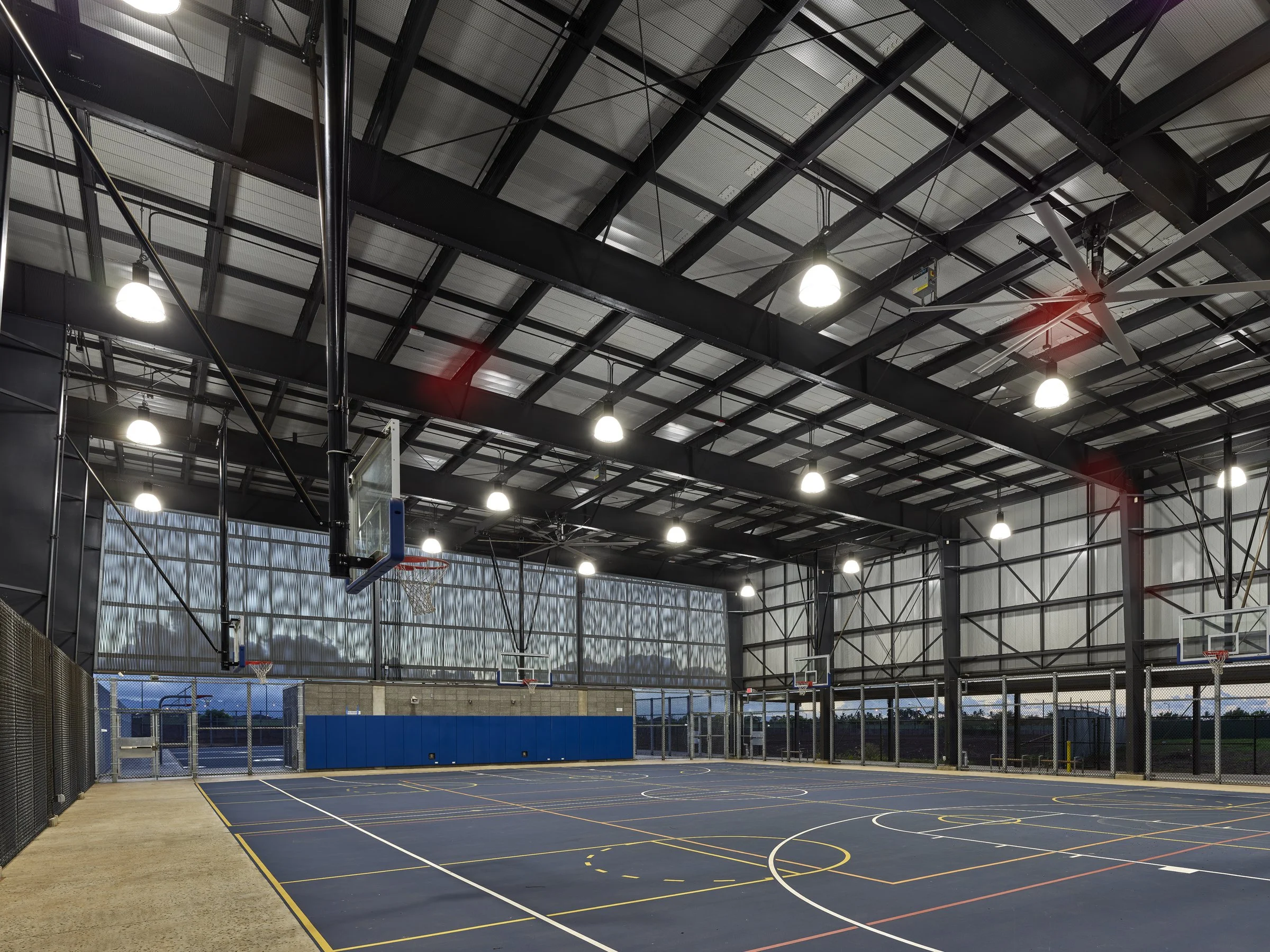
Honouliuli Middle School sets a new benchmark for education in Hawaii. Designed by Ferraro Choi and Miller Hull, this campus blends cutting-edge 21st-century learning principles with vibrant outdoor spaces to create an inspiring environment for 1,150 students. Featuring flexible classrooms, collaborative areas, and a strong emphasis on STEM through Project Lead the Way, the school empowers every learning style. The campus includes modern academic buildings, athletic facilities, and a signature football field. As Hawaii’s first HI-CHPS Verified campus, Honouliuli champions sustainability, health, and high performance—delivering a future-ready learning experience. Schools that meet HI-CHPS criteria are defined as high-performance learning environments that are healthy, comfortable, conserve energy, water, resources, and are safe, adaptable, and easy to operate and maintain.
Year Completed: 2024
Service Type: Architecture + Interiors
Size: 212,000 Sq. Ft.
-
One Front Door. The school’s main entry plaza welcomes all through a single-entry point to campus, strengthening the identity of place through a shared sense of belonging.
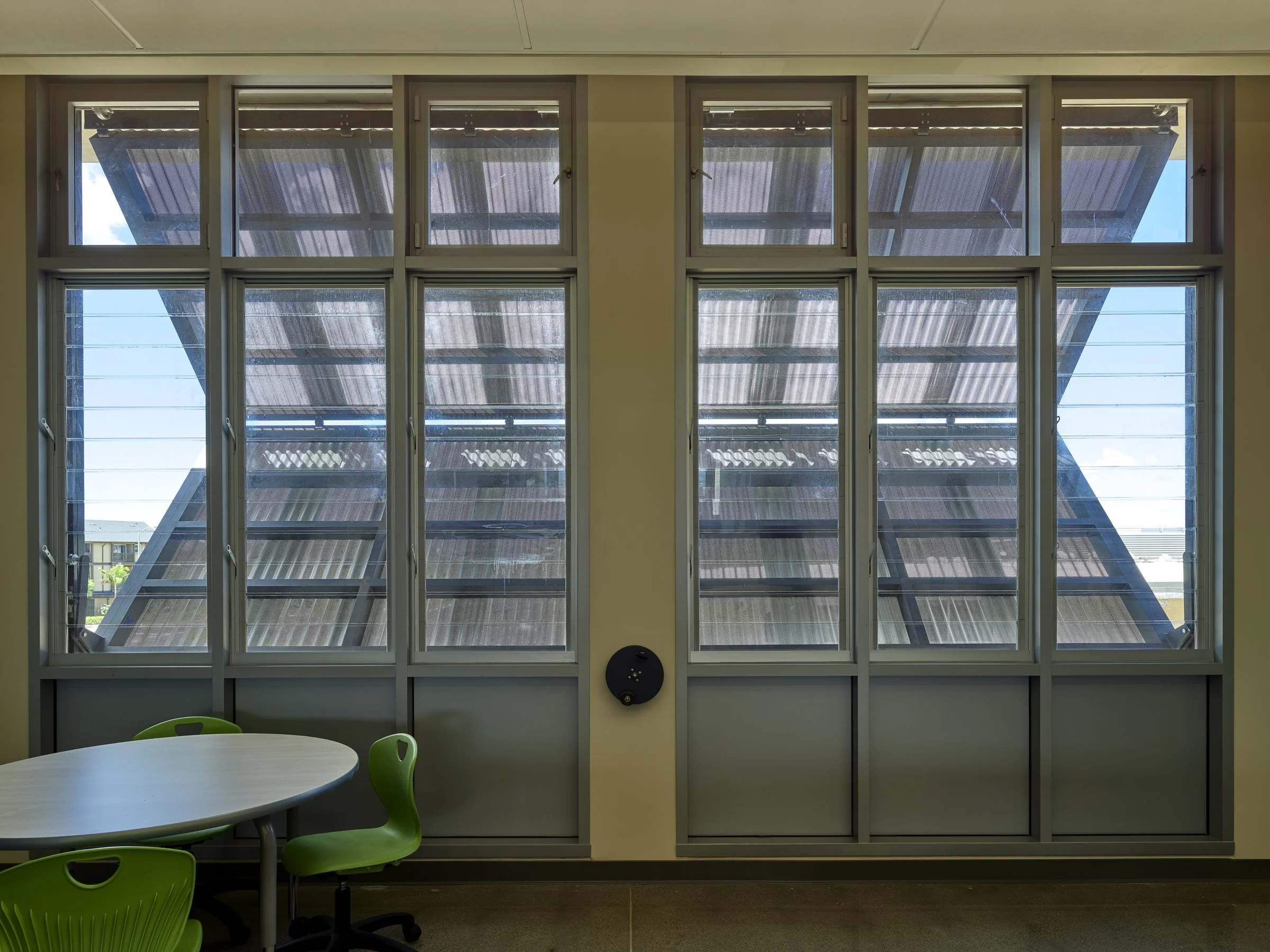
Optimized Occupant Comfort. The campus was planned to situate high-use spaces, suitable for natural ventilation, on the windward side of buildings – perpendicular to the trade winds – for optimal cross ventilation and comfort under the ASHRAE Standard 55.
Durability and Low Maintenance. The design employs a restrained palette of locally sourced, resilient materials. Precast concrete functions simultaneously as structure, exterior finish, and thermal mass, complemented by masonry, stucco, and aluminum hurricane shutters for long-term performance and minimal upkeep.
Community-Centered Campus. The campus is envisioned as a network of distinct buildings organized around a central outdoor commons. This shared hub fosters collaboration, resource exchange, and collective learning, embodying the principles of a 21st-century educational environment.



GYMNASIUM AT ROOSEVELT HIGH SCHOOL
Honolulu, Hawai‘i
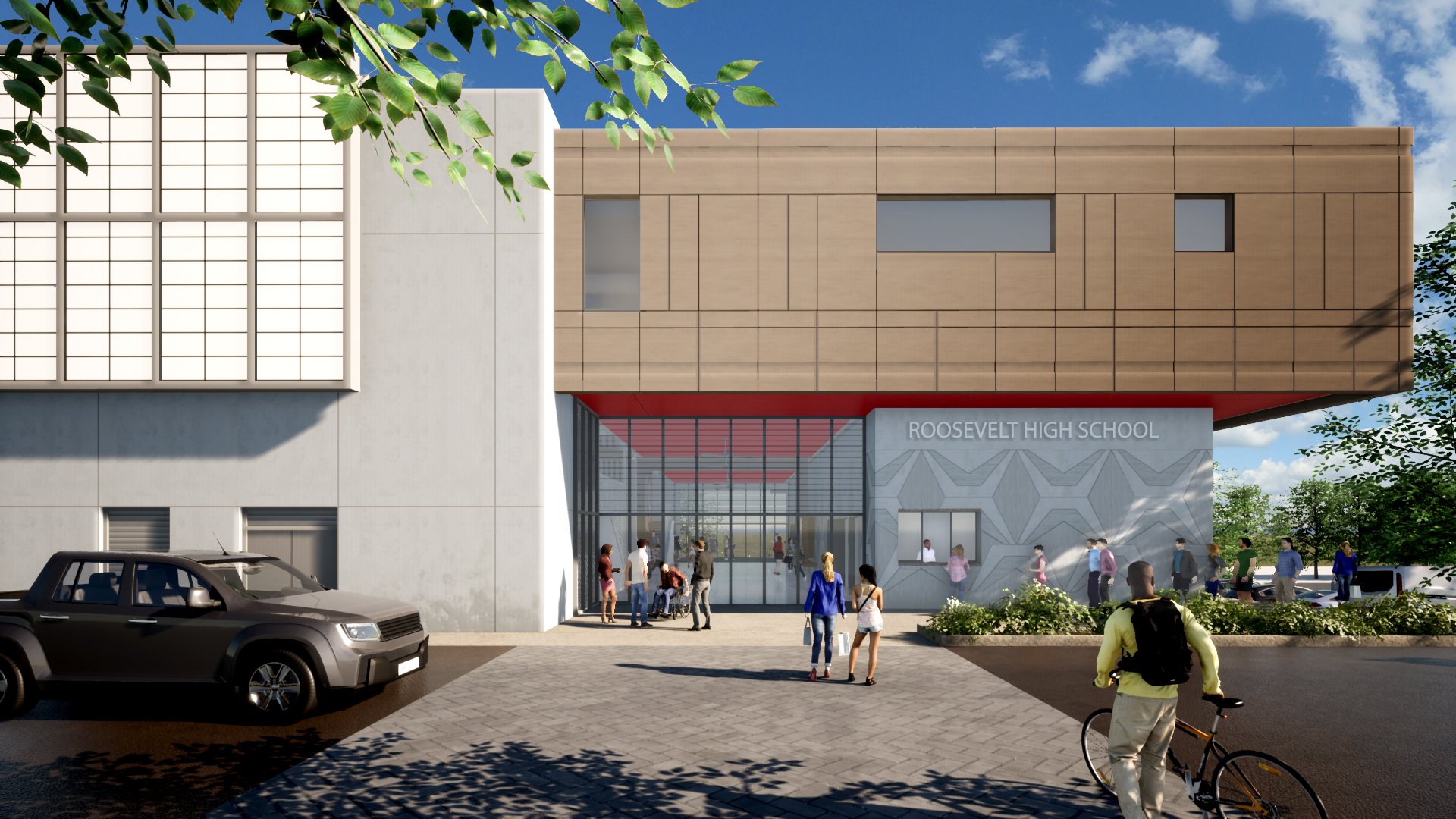
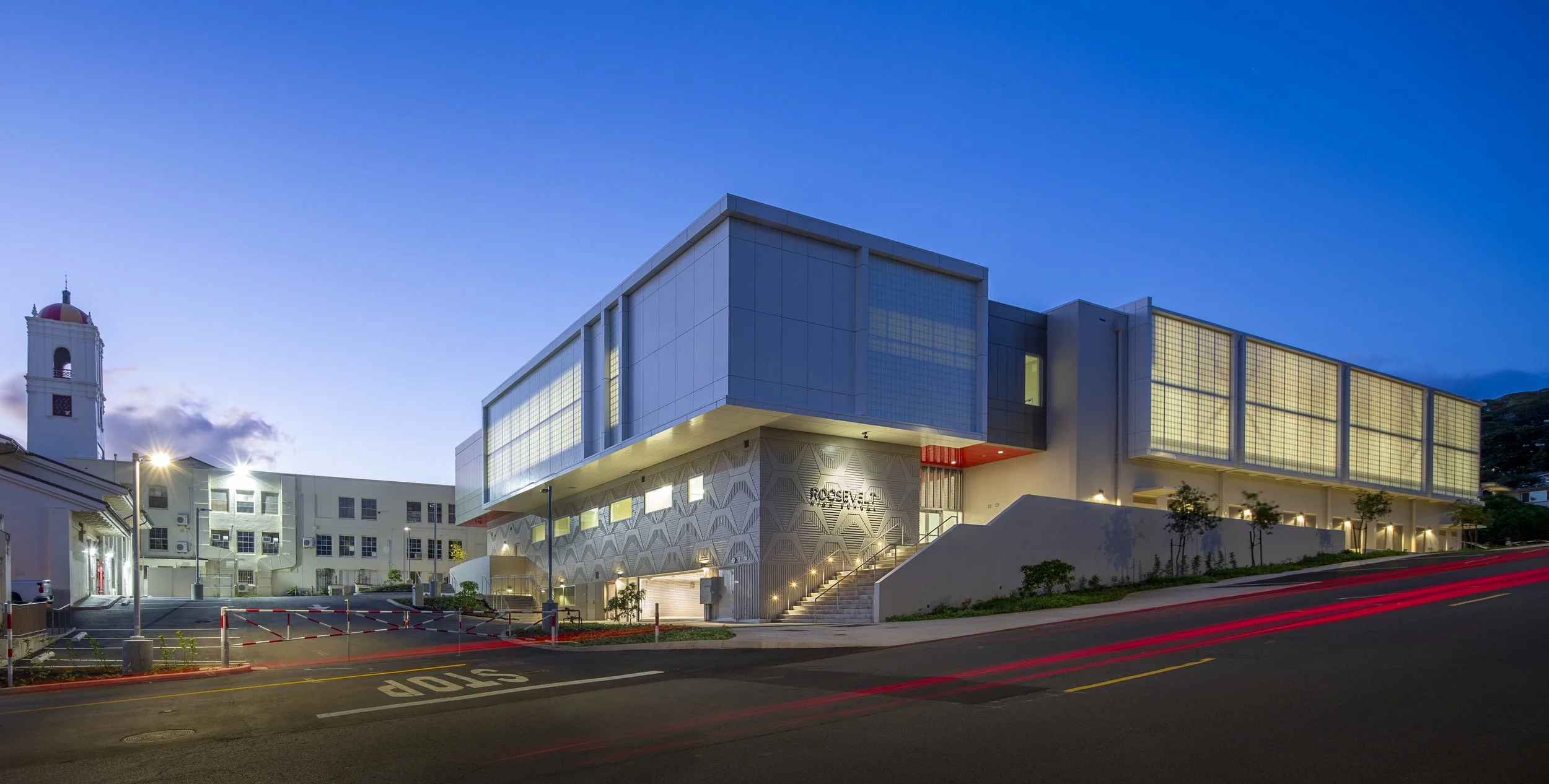
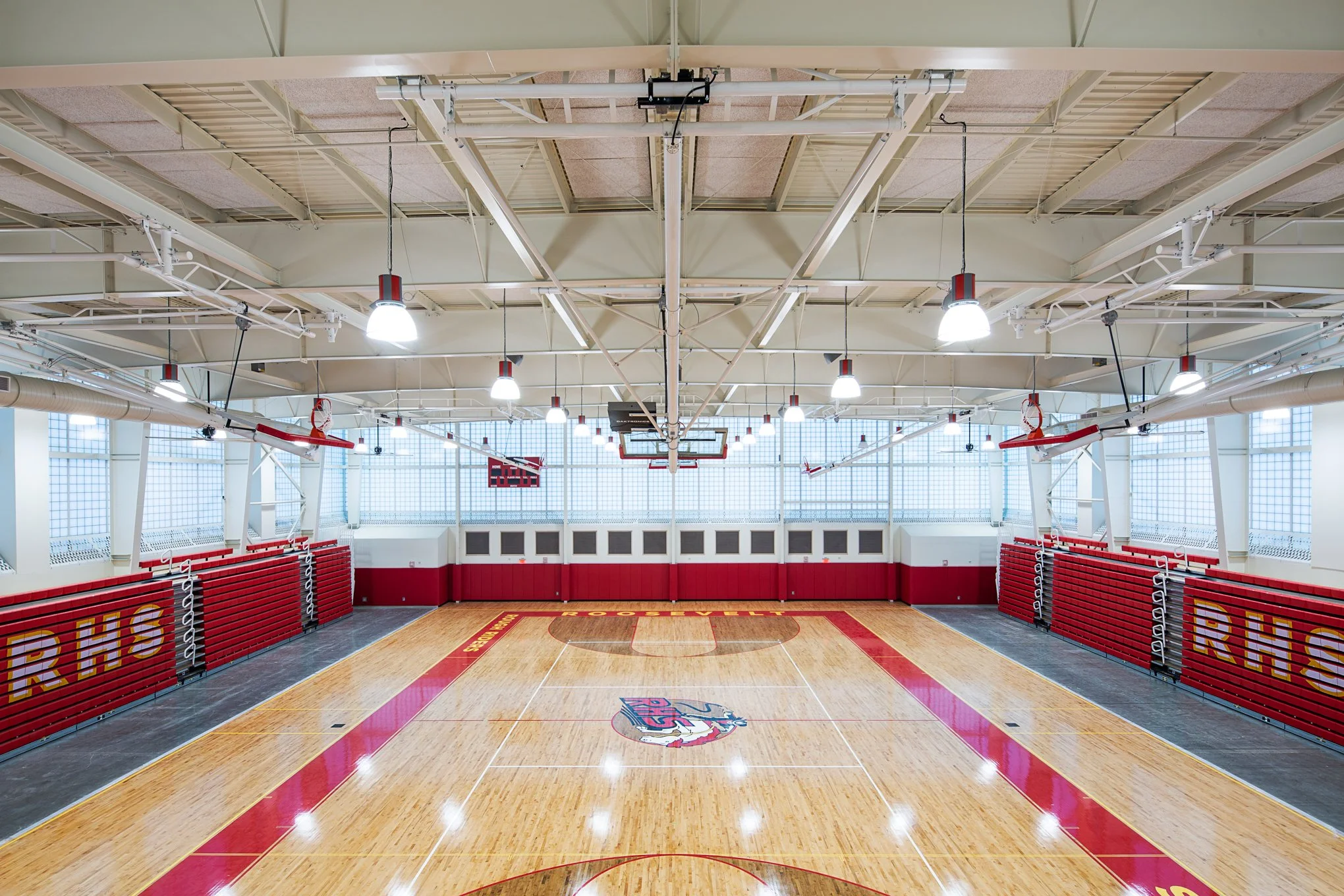
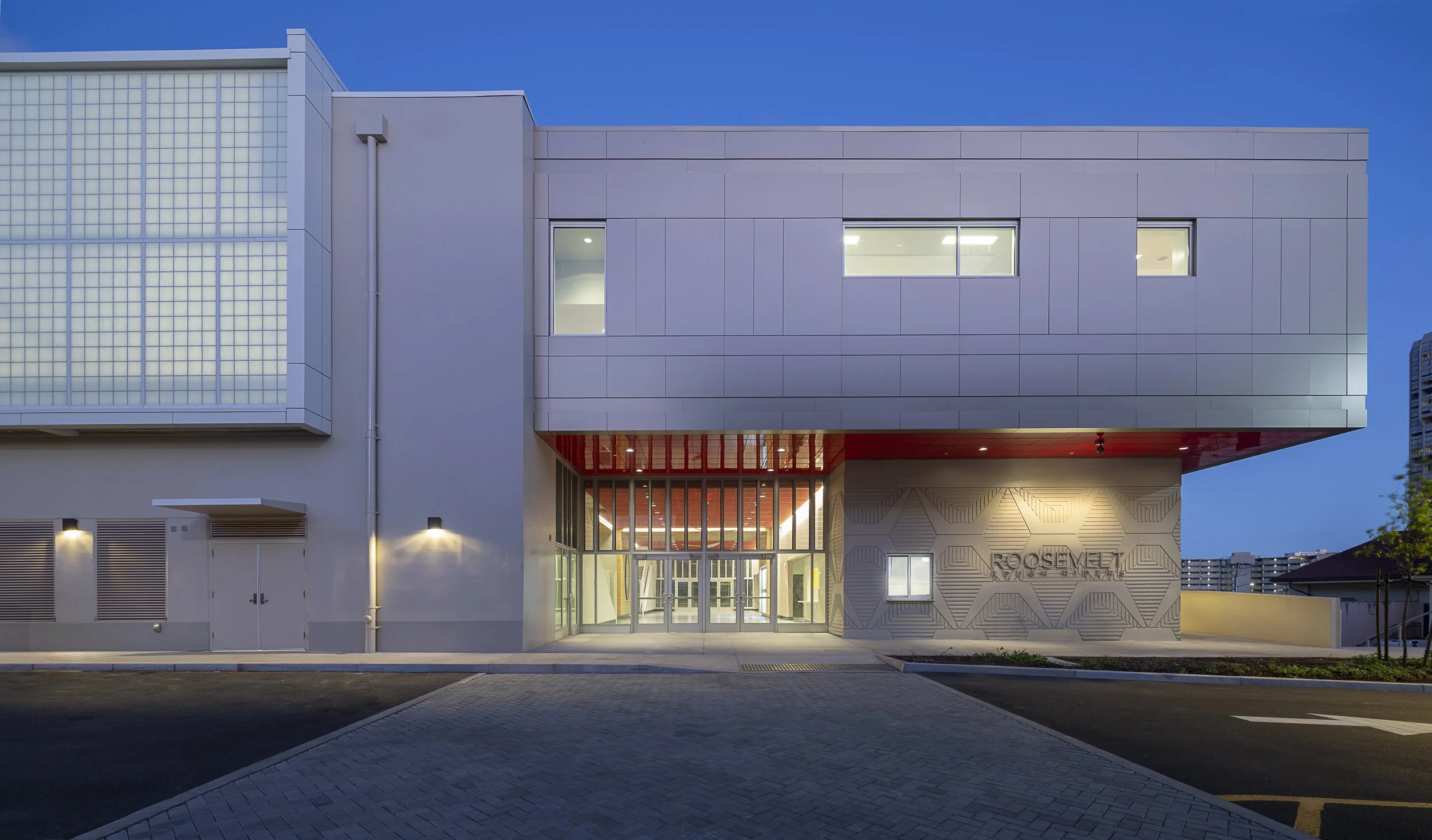
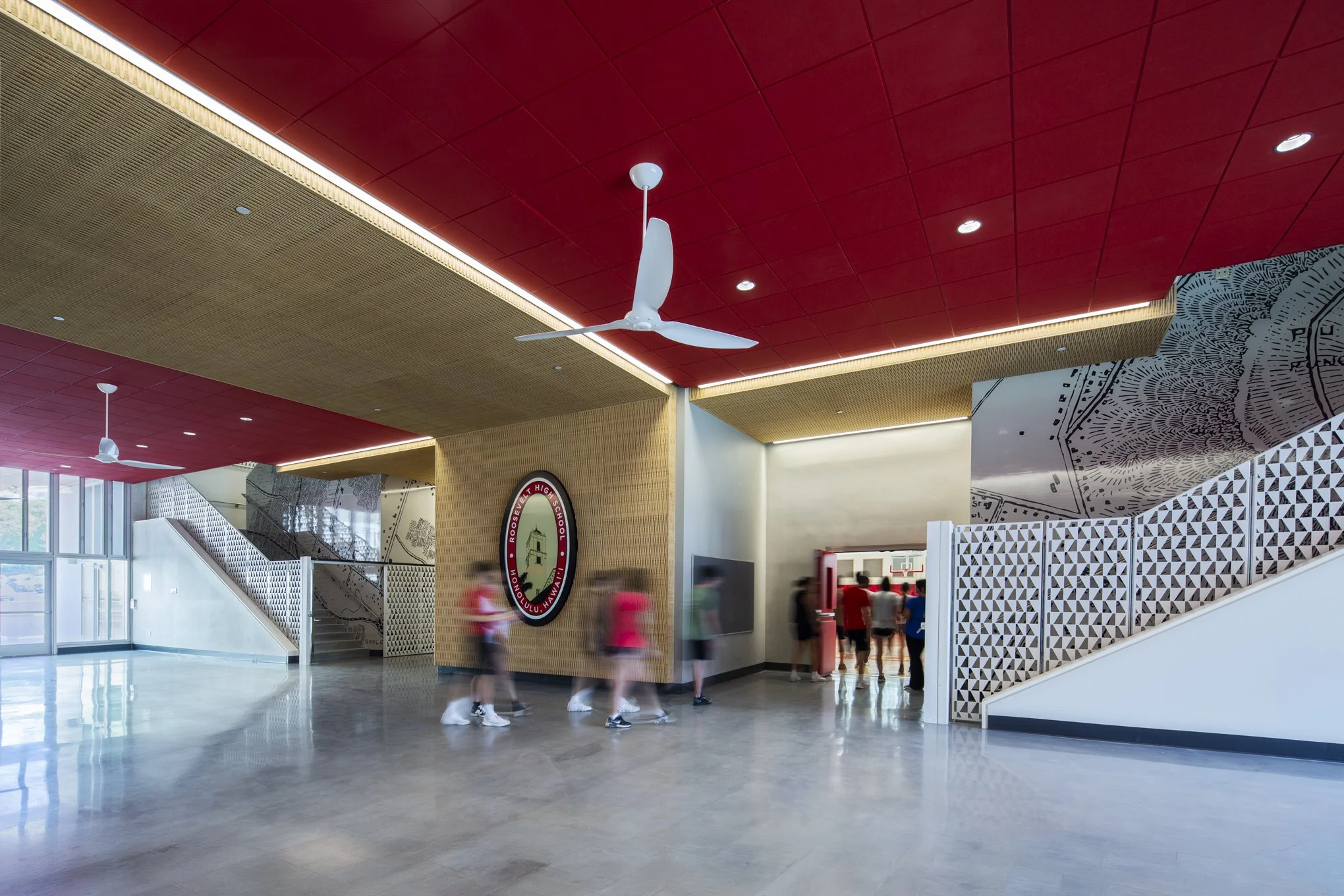
President Theodore Roosevelt High School (RHS) was founded in 1930. Its existing gym has roots to the earliest years of the RHS campus as an openair compound with grass play courts for girls. Later in the 60s, it was enclosed to act as a formal gymnasium but has always been limited by its size and has not provided adequate space and support functions meeting Department of Education (DOE) standards.
Ferraro Choi was commissioned by the State of Hawaii Department of Education (DOE) in 2014 to develop a Masterplan for the campus and present options for a new gym location. Based on that Masterplan, a new gymnasium site was selected for the campus on the location of its existing gym as a centerpiece for the pride of the school and the community it serves.
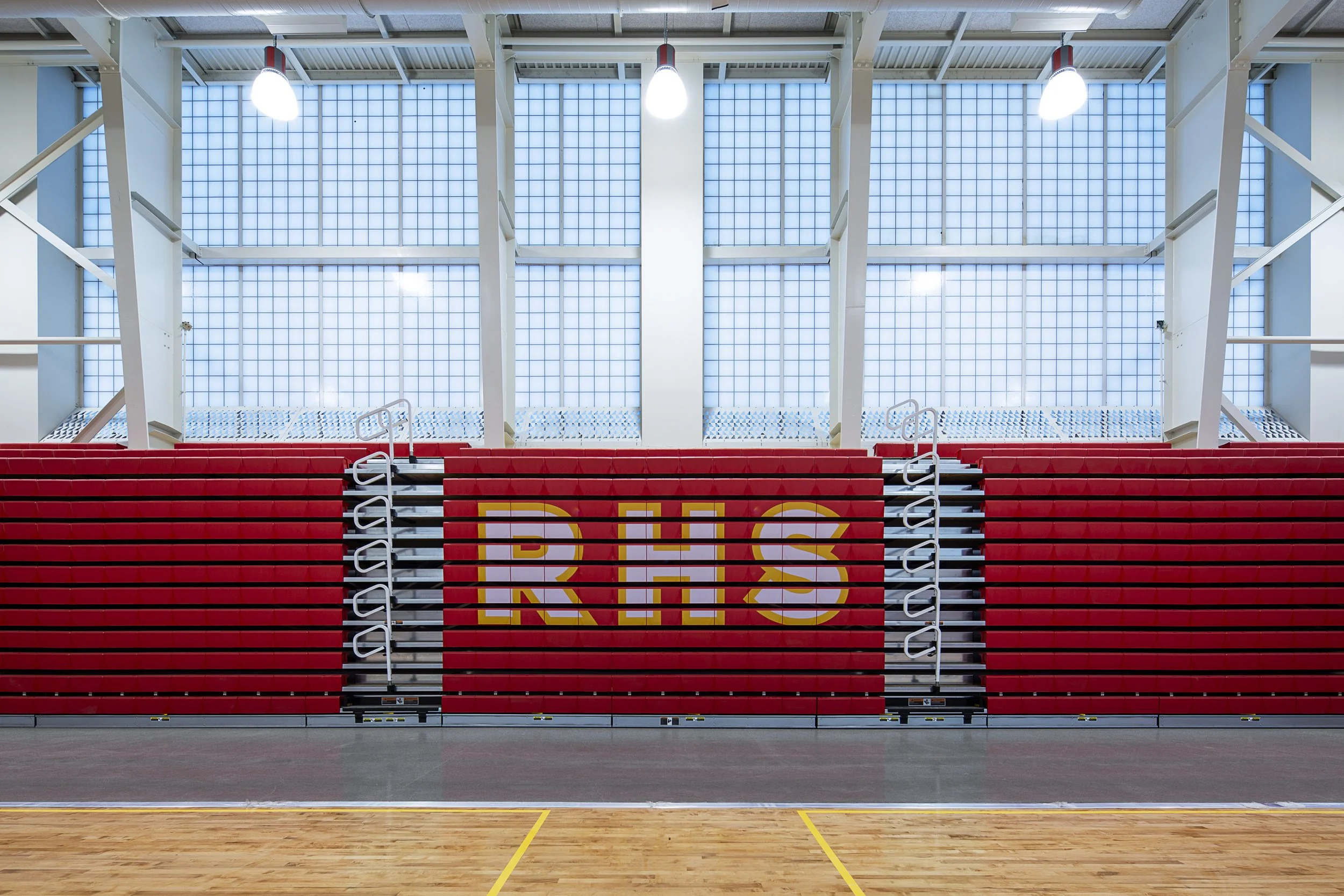
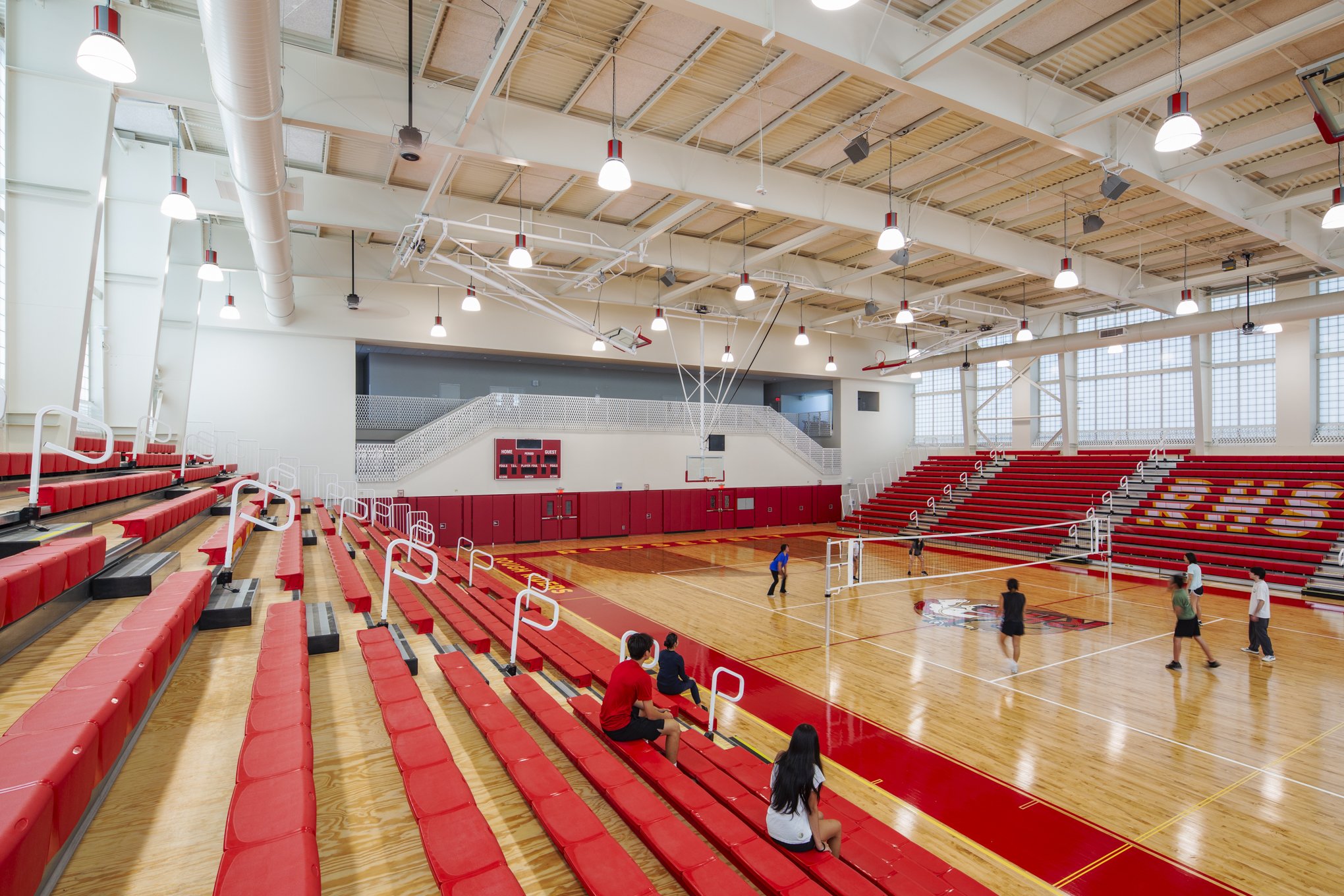
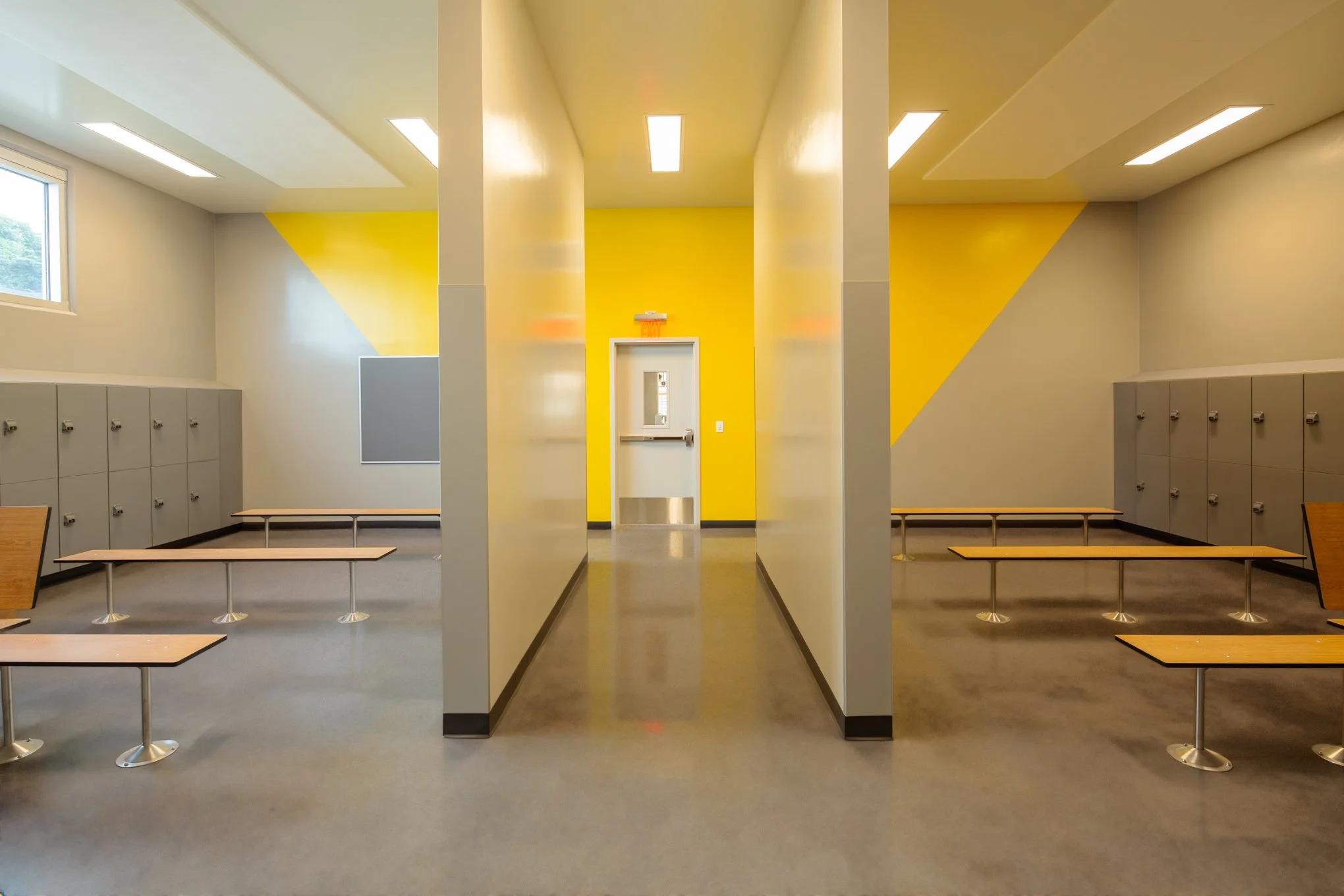
The new gym includes seating for 1500 spectators, Varsity and Junior Varsity locker rooms, weight training, wrestling, cheerleading and instructional spaces. It also incorporates an underground parking lot to utilize the sloped site and add parking to the campus. The original entry drive into the campus will be reconfigured to provide a functional one-way circulation path and dedicated loading zones.
Year Completed: 2026
Service Type: Architecture + Interiors
Size: 55,000 Sq. Ft.
LEARNING CENTER AT KAMEHAMEHA SCHOOLS KAPĀLAMA CAMPUS
Honolulu, Hawai‘i
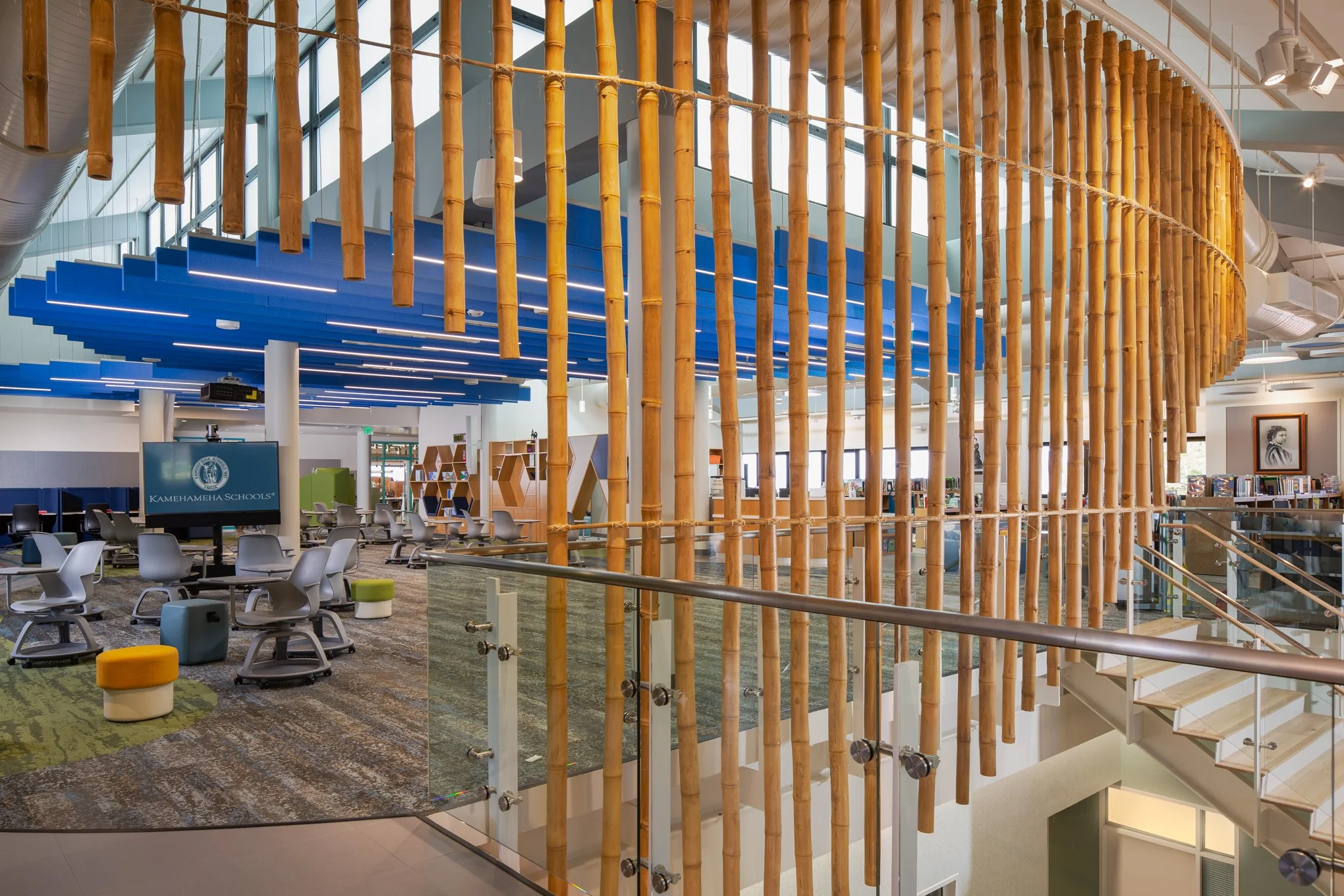
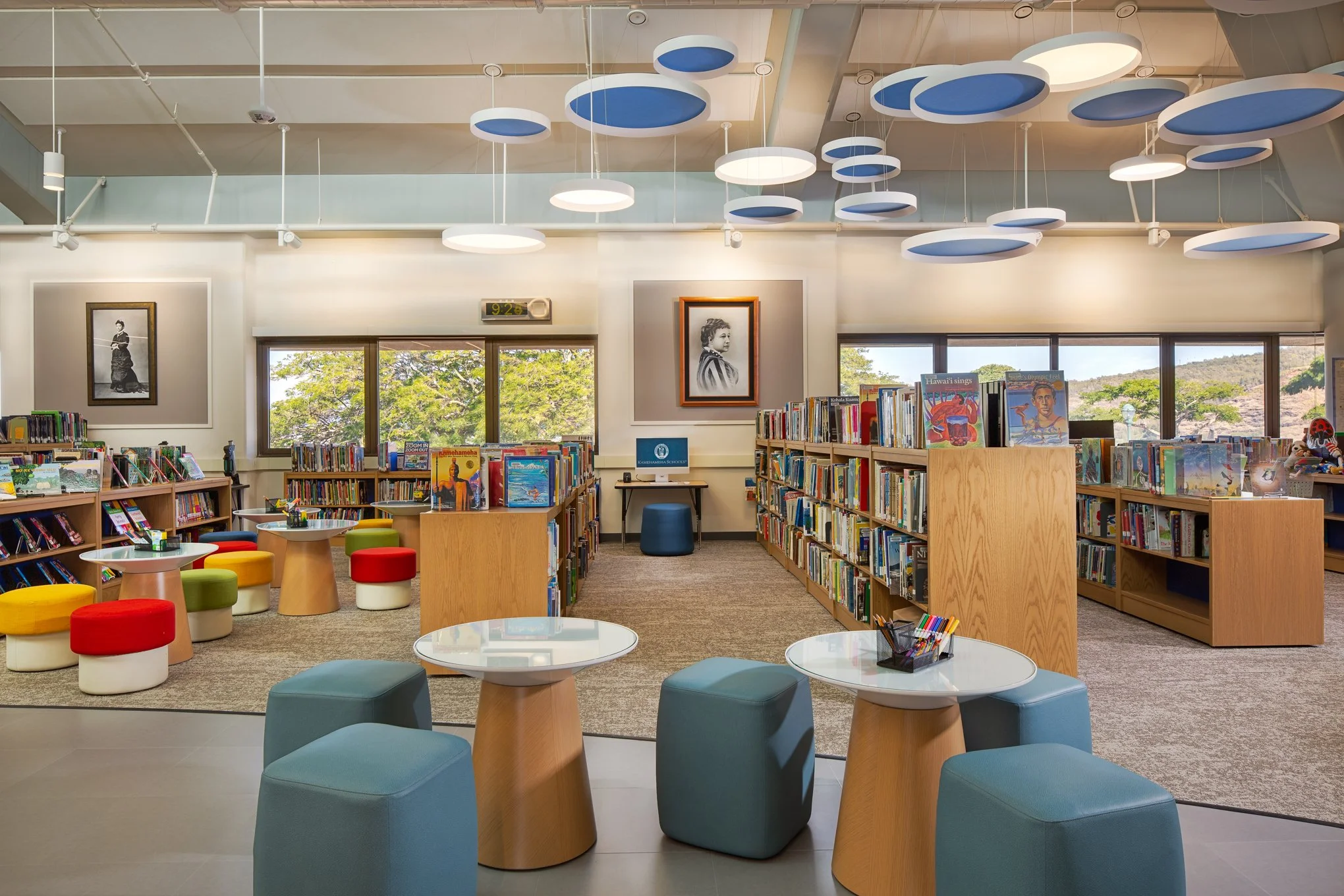
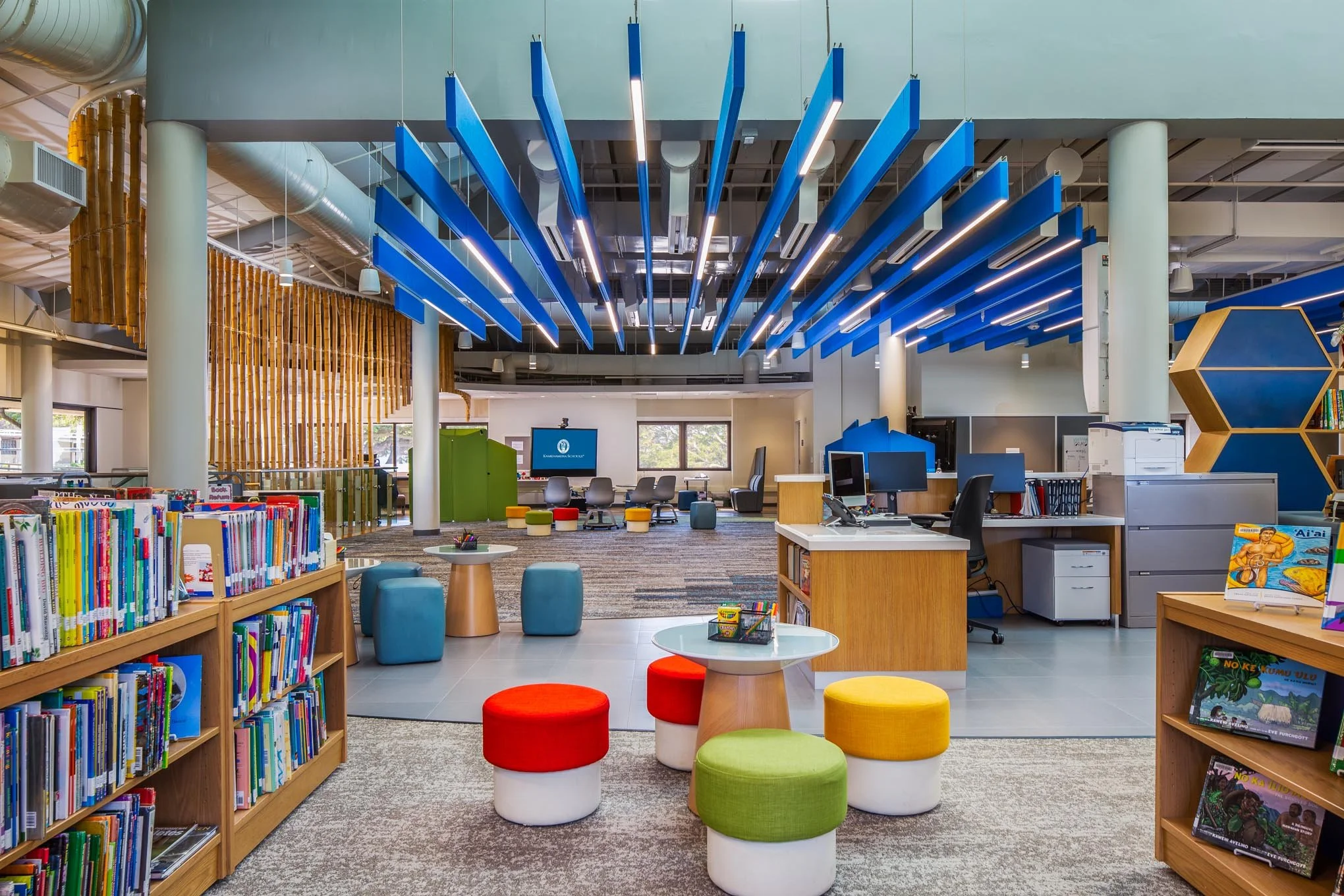
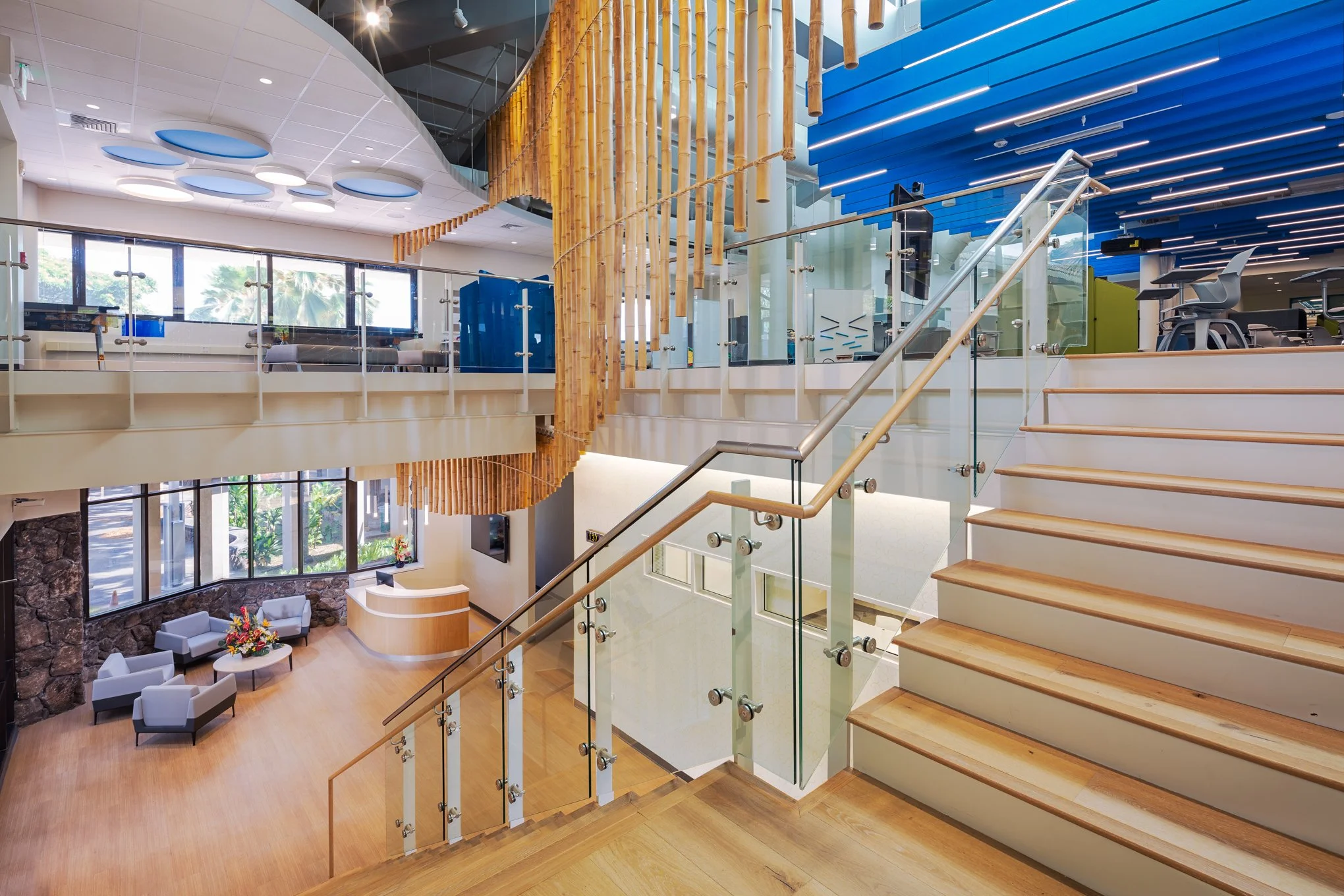
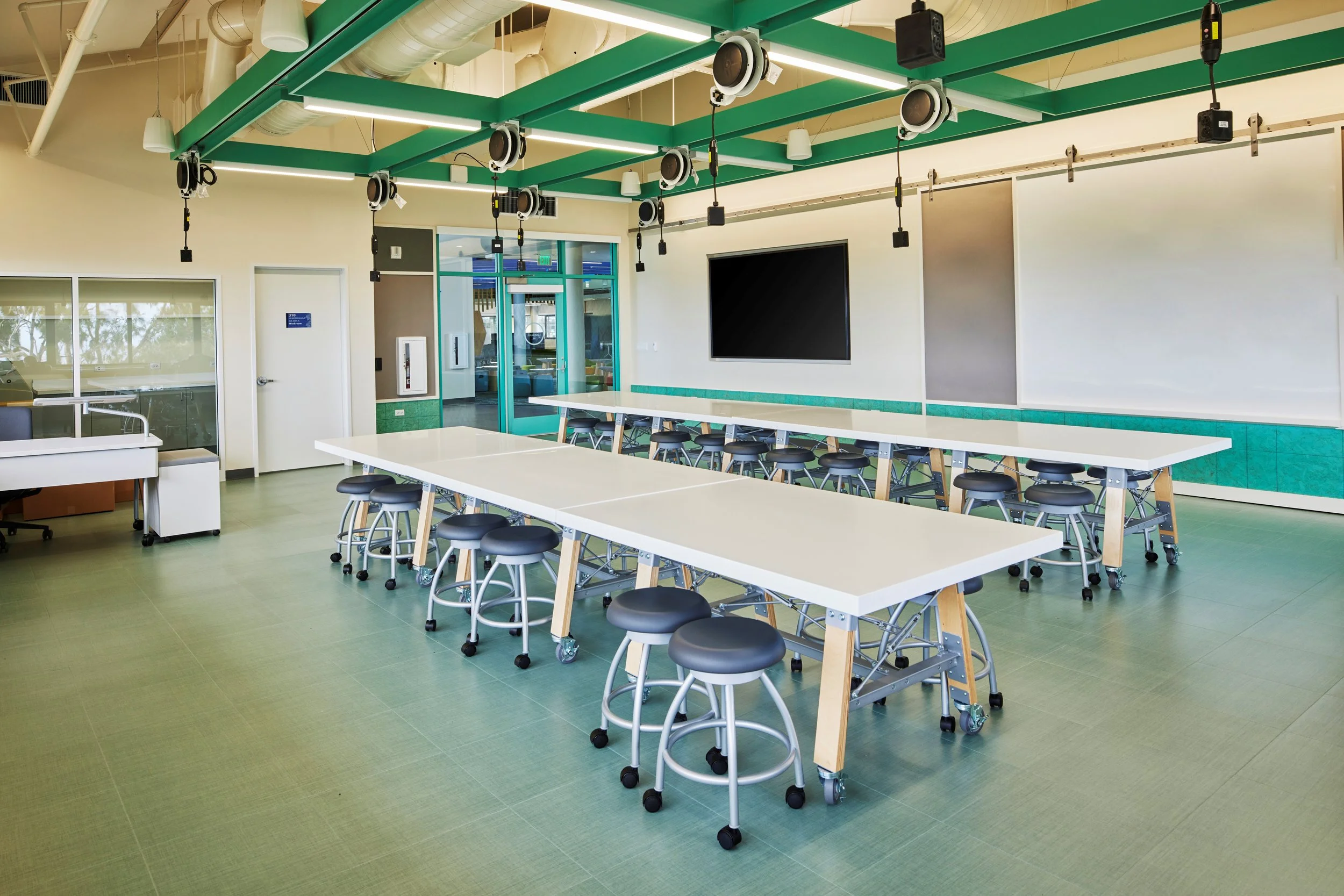
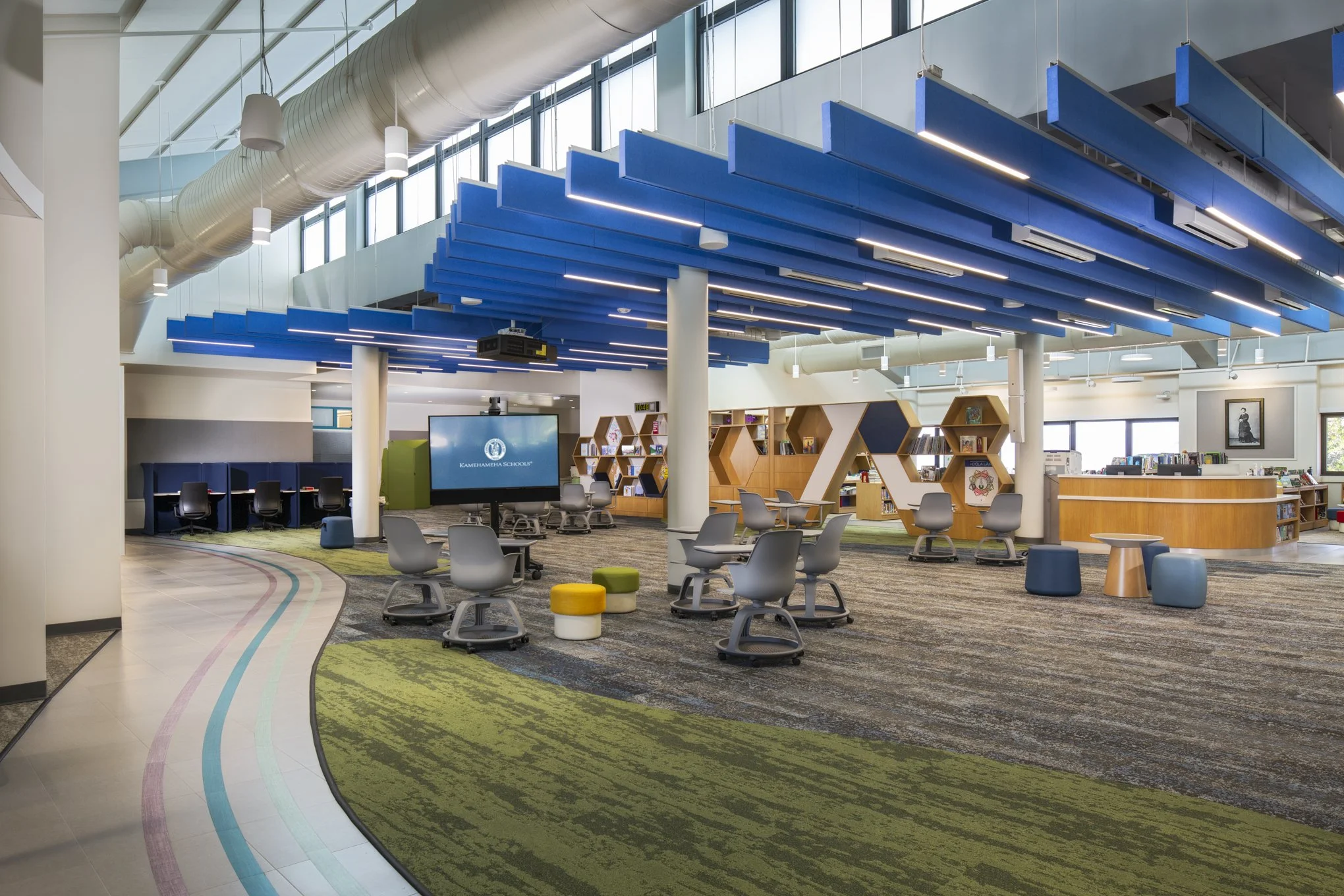
The Kekelaokalani Building has been renovated into a state-of-the-art Learning Center by Ferraro Choi. The second floor features offices, conference rooms, and staff support spaces, while the third floor houses the heart of the Learning Center with flexible teaching spaces, collaboration areas, an innovation lab, a maker space, and a media center.
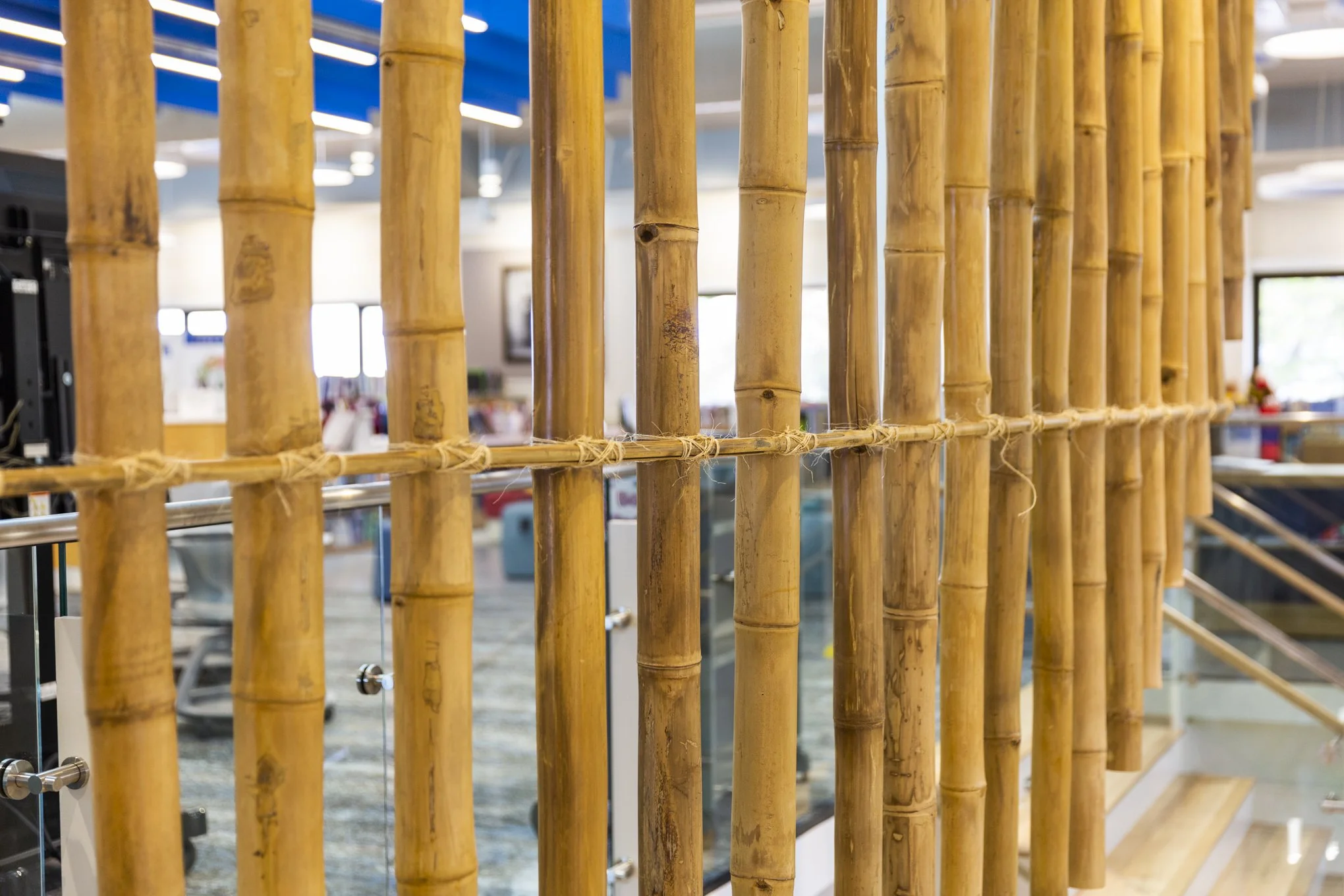
We designed the Learning Center with a strong connection to Native Hawaiian culture and identity, rooted in the Kapālama ahupua‘a. The design draws inspiration from the traditional Hawaiian technological innovation of the loko i‘a and the murmuring waters of Pu‘uhale as described in ‘Ōlelo No‘eau #1732.
The Learning Center features a gathering place within the lokoi‘a and is designed with flexibility in mind. Connections between the second and third floors are represented by the mākāhā (gates) that connect the ocean to the fishponds. The design includes organic grass mounds, playful reading nooks, movable storage, writable surfaces, and flexible furniture to support diverse learning environments for both teachers and students. The Learning Center is equipped with modern technology such as projection screens, TV monitors, 3D printers, laser cutters, and ample data and power to support new and innovative technology.
Year Completed: 2022
Service Type: Architecture + Interiors
Size: 31,000 Sq. Ft.
SCIENCE AND TECHNOLOGY CENTER at ROBERT LOUIS STEVENSON MIDDLE SCHOOL
Honolulu, Hawai‘i
Ferraro Choi was commissioned by the State of Hawaii Department of Education (DOE) to design a new science center for Robert Louis Stevenson Middle School. Founded in 1937, Stevenson recently became the DOE’s first Science Signature School. The 21,500 net sq.ft. facility combines state-of-the-art technology with a sustainable architectural design to create a 21st Century Learning environment for students. The Science Center provides: Physical Science, Biology, Earth/Space, and STEM/Robotics classrooms; a covered science plaza; and a multipurpose building. A south facing stargazing telescope deck on the second floor supplements the school’s Astronomy Program. The double height STEM/Robotics space is designed to facilitate viewing of interschool robotics competitions involving 24 Oahu schools.
Year Completed: 2020
Service Type: Interiors
Size: 12,000 Sq. Ft.
Design Recognition: LEED for Schools - Silver Equivalent
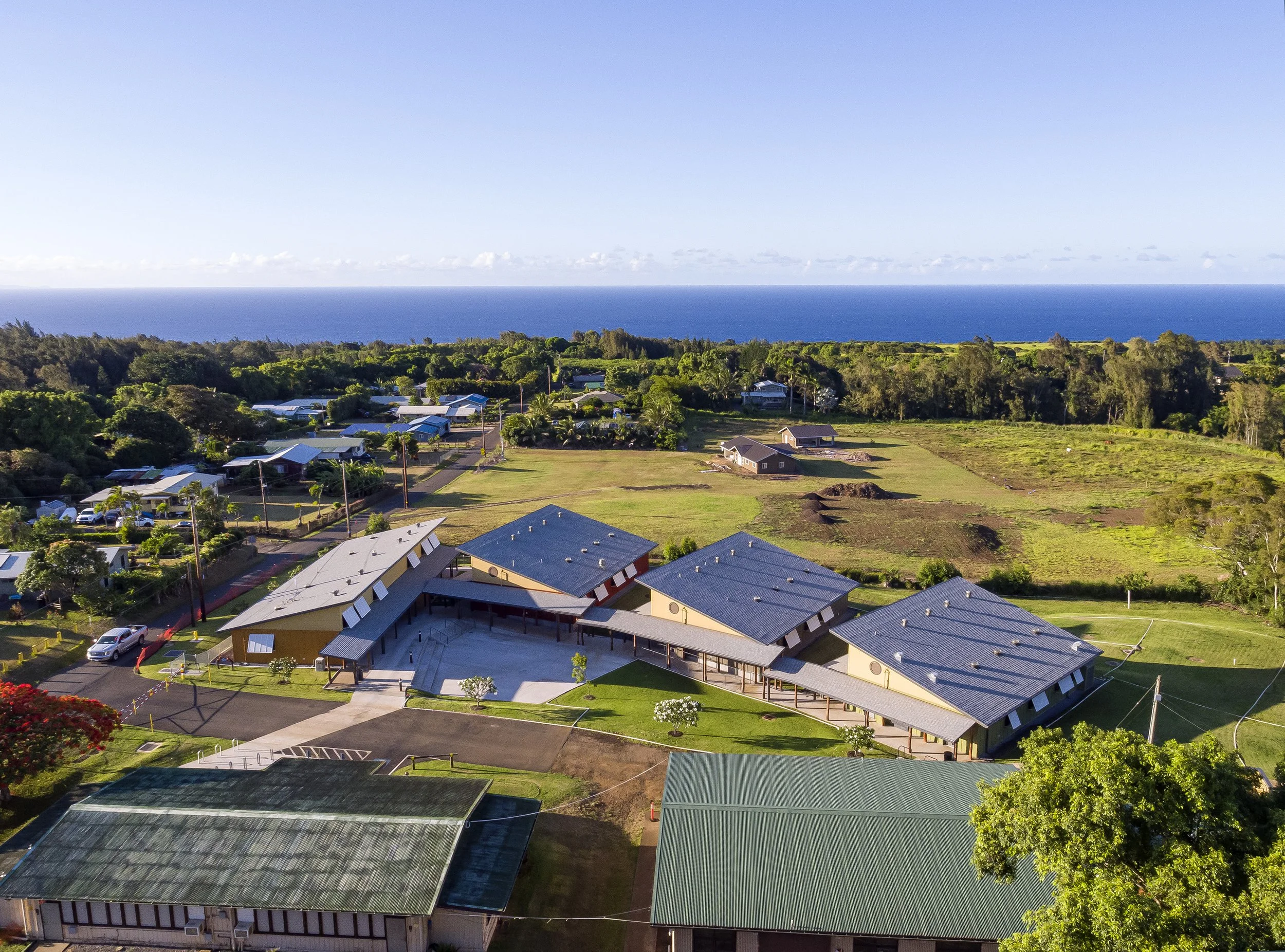
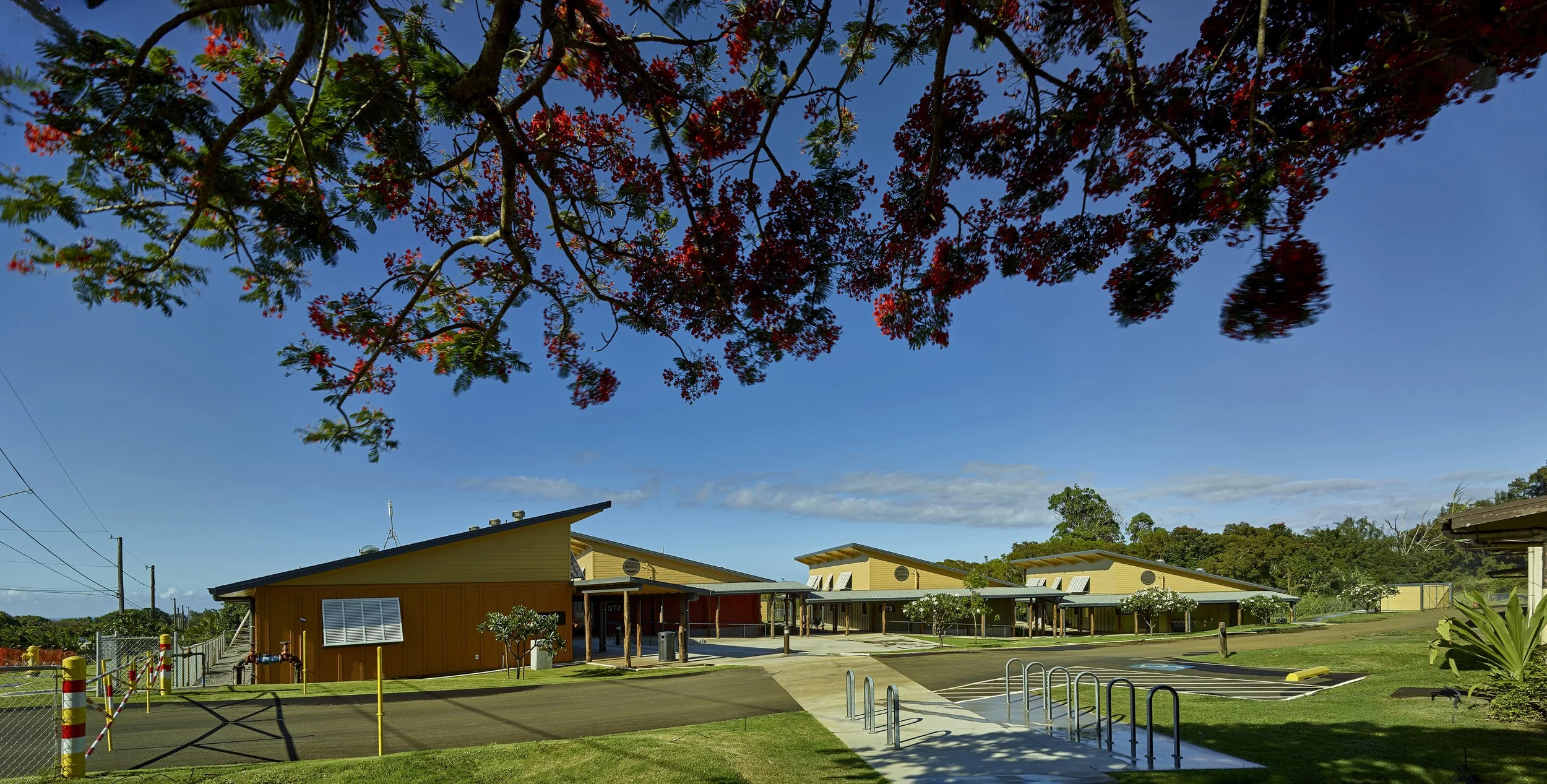
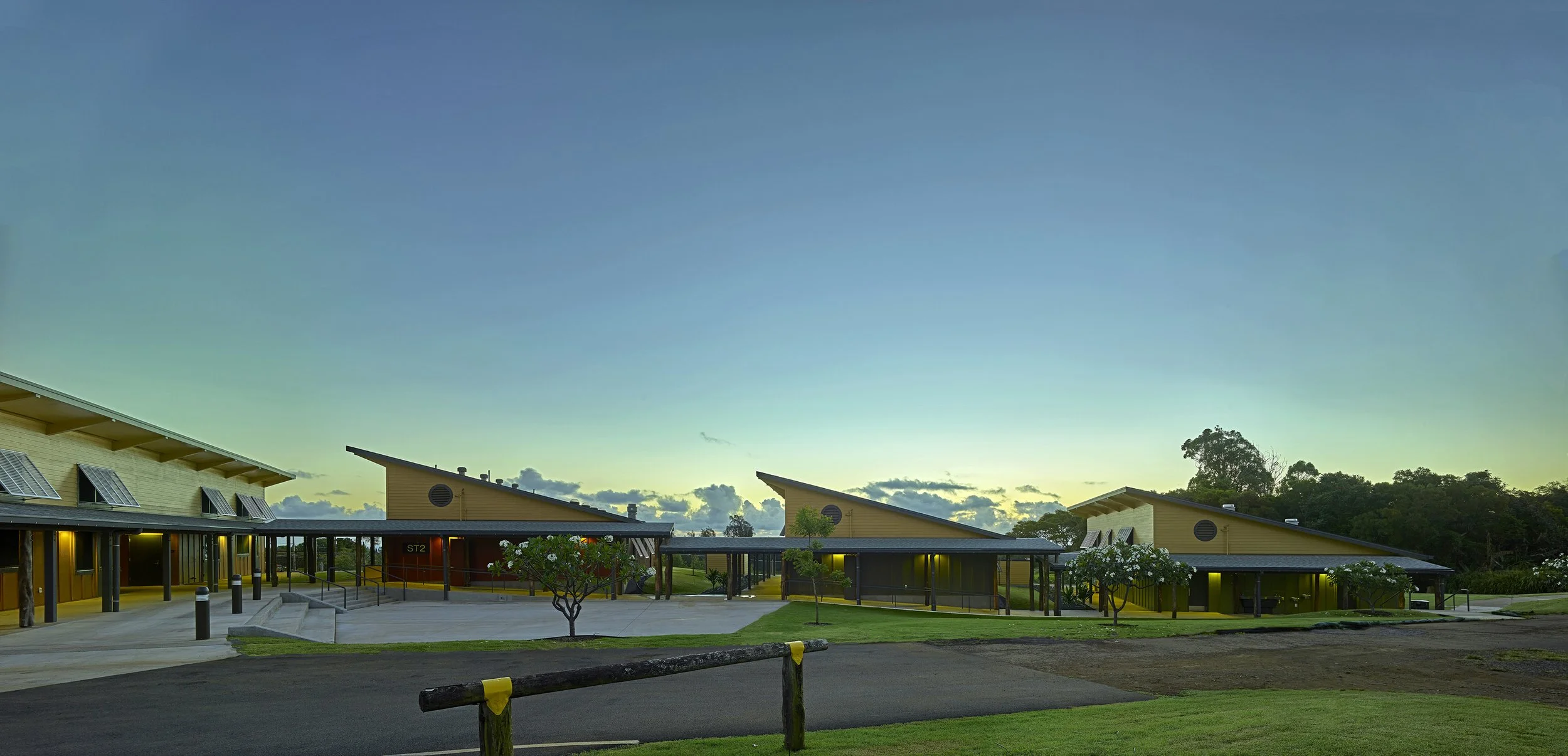
STEM/SCIENCE FACILITY at KOHALA HIGH SCHOOL
Kapa ‘au, Hawai‘i
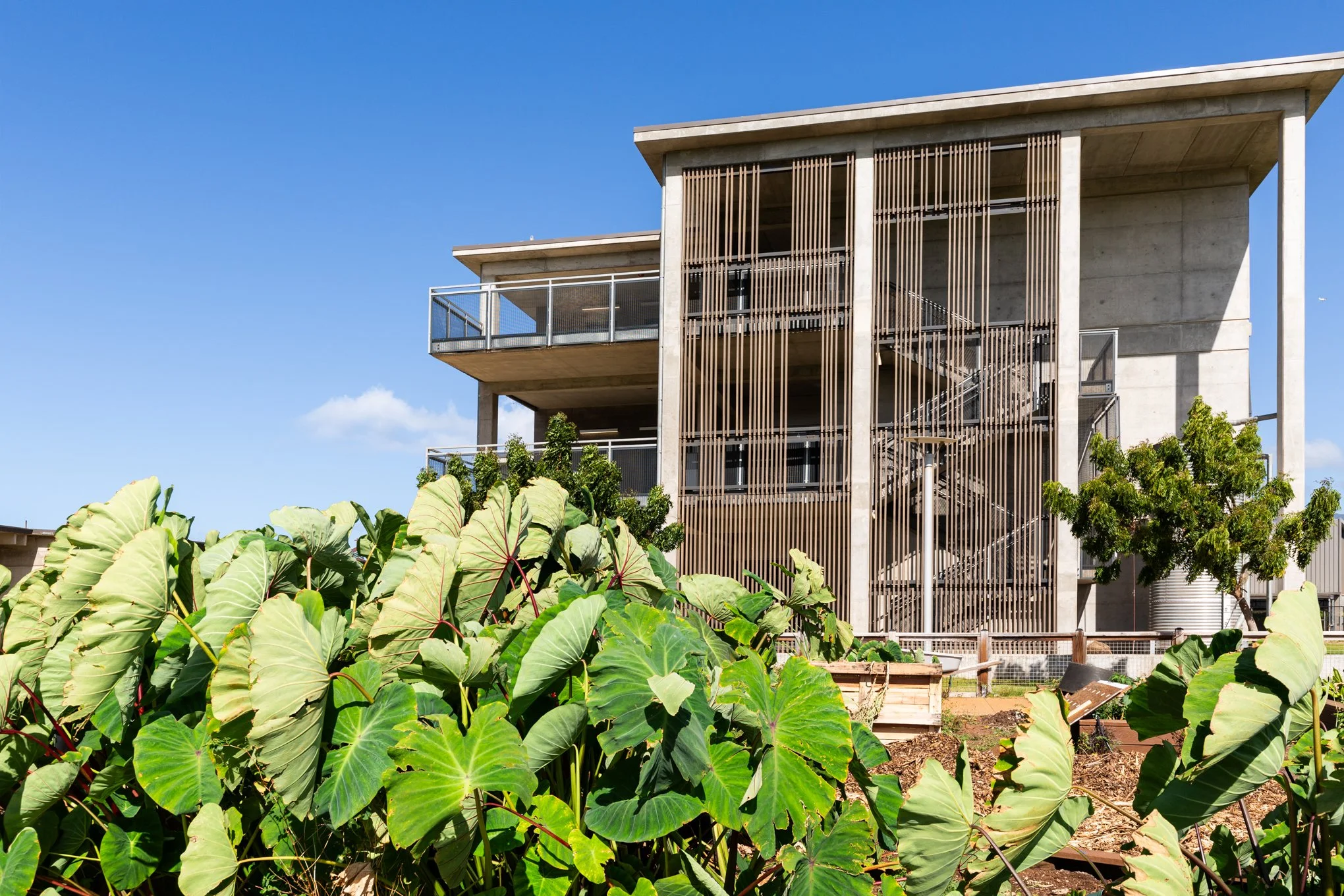
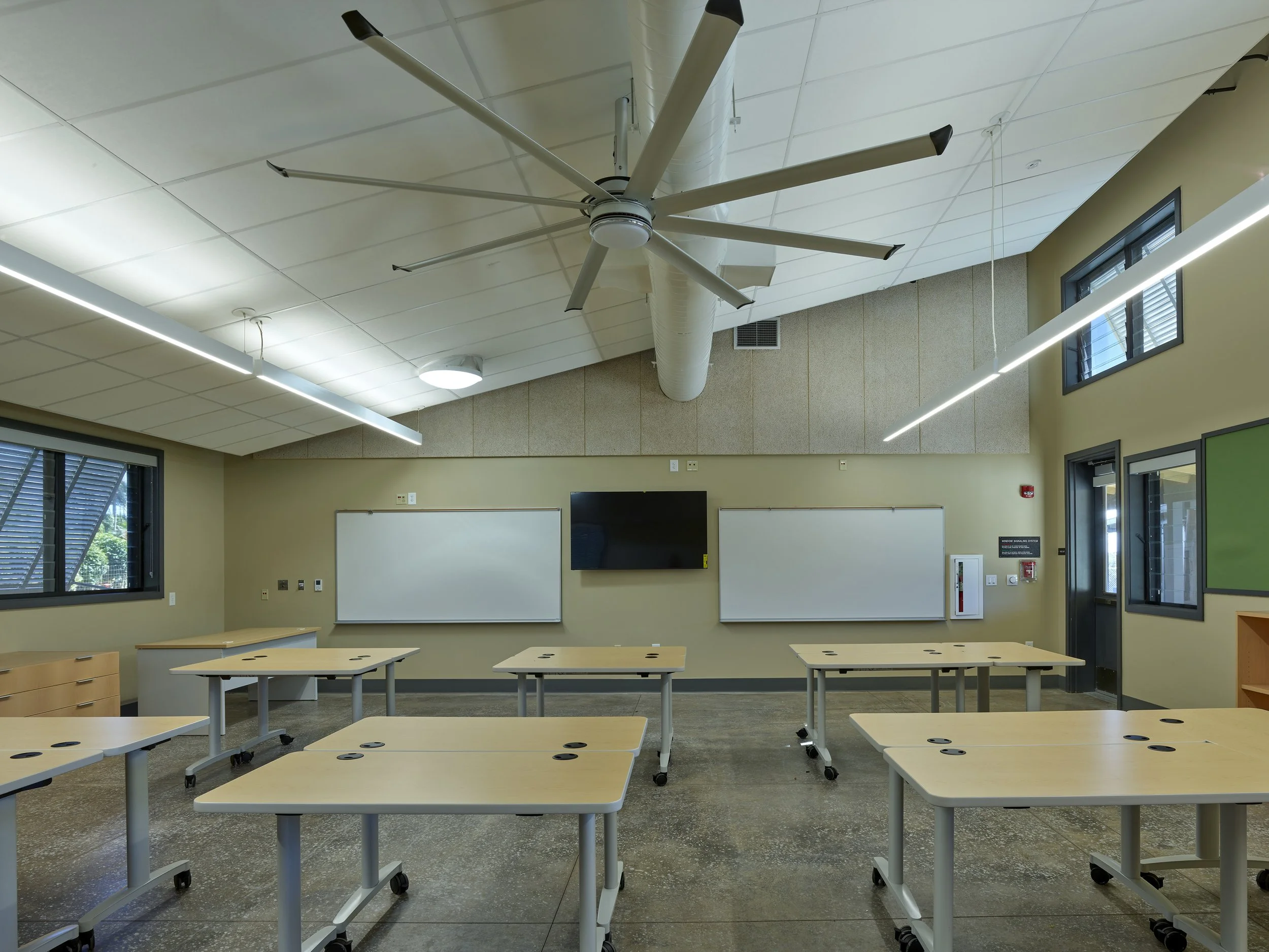
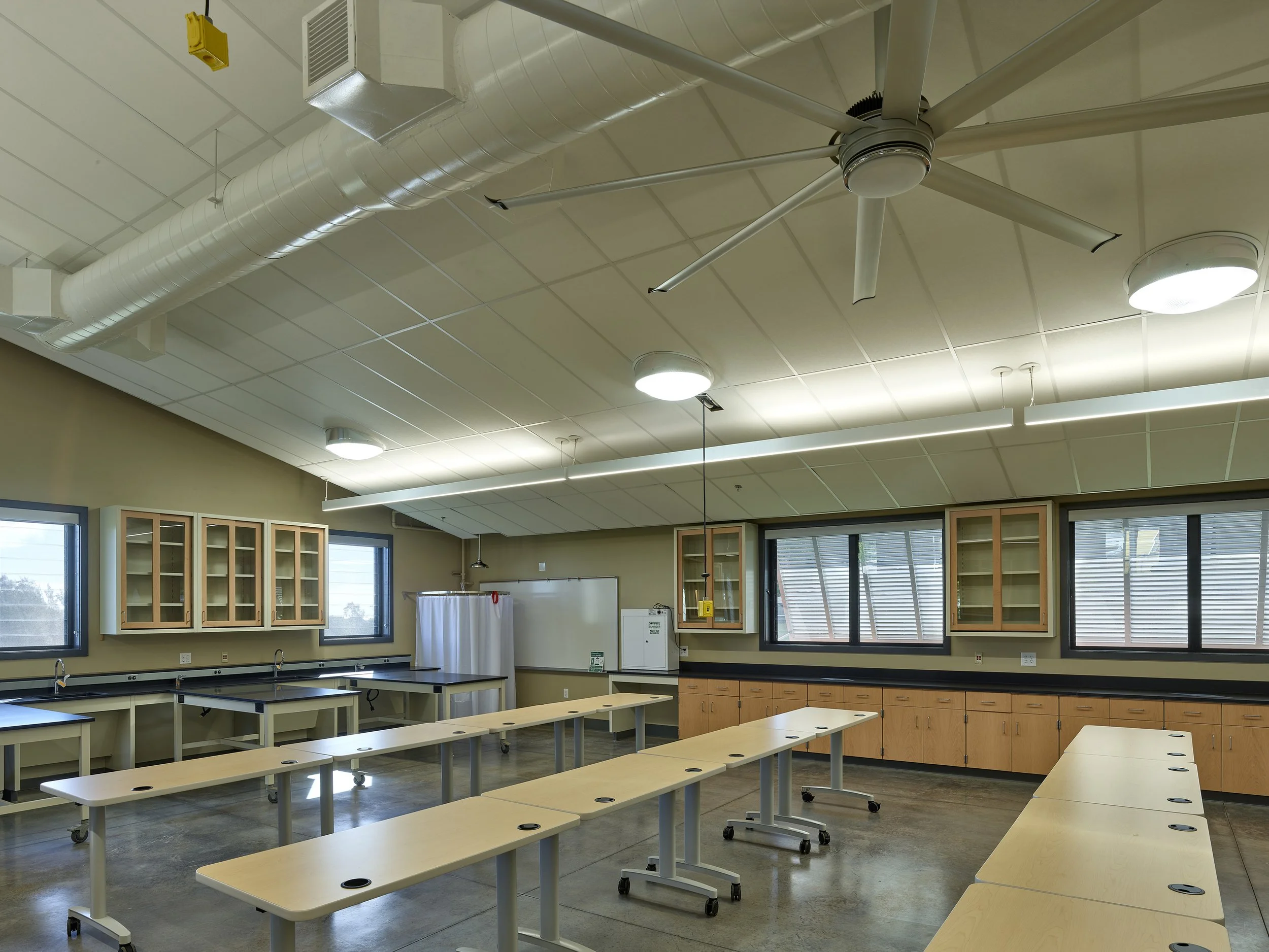
The new Kohala High School STEM/Science facility is the first public school STEM/Science project designed to achieve Hawaii-Collaborative High-Performance Schools (HI-CHPS) Verified certification. Schools that meet HI-CHPS criteria are defined as high-performance learning environments that are healthy, comfortable, conserve energy, water, resources, and are safe, adaptable, and easy to operate and maintain.
The project consists of one general classroom building, one Physical Science classroom building, one Biochemistry classroom building, and one Natural Resources classroom building. The structures are sited to take advantage of prevailing winds and are organized along a covered walkway, which also provides access to an entry plaza, outdoor learning lanai, and learning gardens.
Project highlights include:
Utilization of a strong community-based design process.
Building design and orientation to suit cross ventilation, stack ventilation, indirect daylighting, and effective shading.
Computer modeling to confirm ventilation, daylighting, shading, and thermal comfort effectiveness.
Effective design for mixed-mode ventilation on a seasonal basis to maintain occupant comfort in either mode (natural or air-conditioning) while conserving energy costs.
Year Completed: 2018
Service Type: Architecture
Size: 11,480 Sq. Ft.
Award: NAIOP Kukulu Hale Awards 2022 Green Category AIA Honolulu 2021 Excellence in Energy-Efficient Design
Design Recognition:
HI-CHPS Verified Certification
Net-Zero Energy Design Equivalent

KAMEHAMEHA ELEMENTARY SCHOOL RENOVATION
Honolulu, Hawai‘i
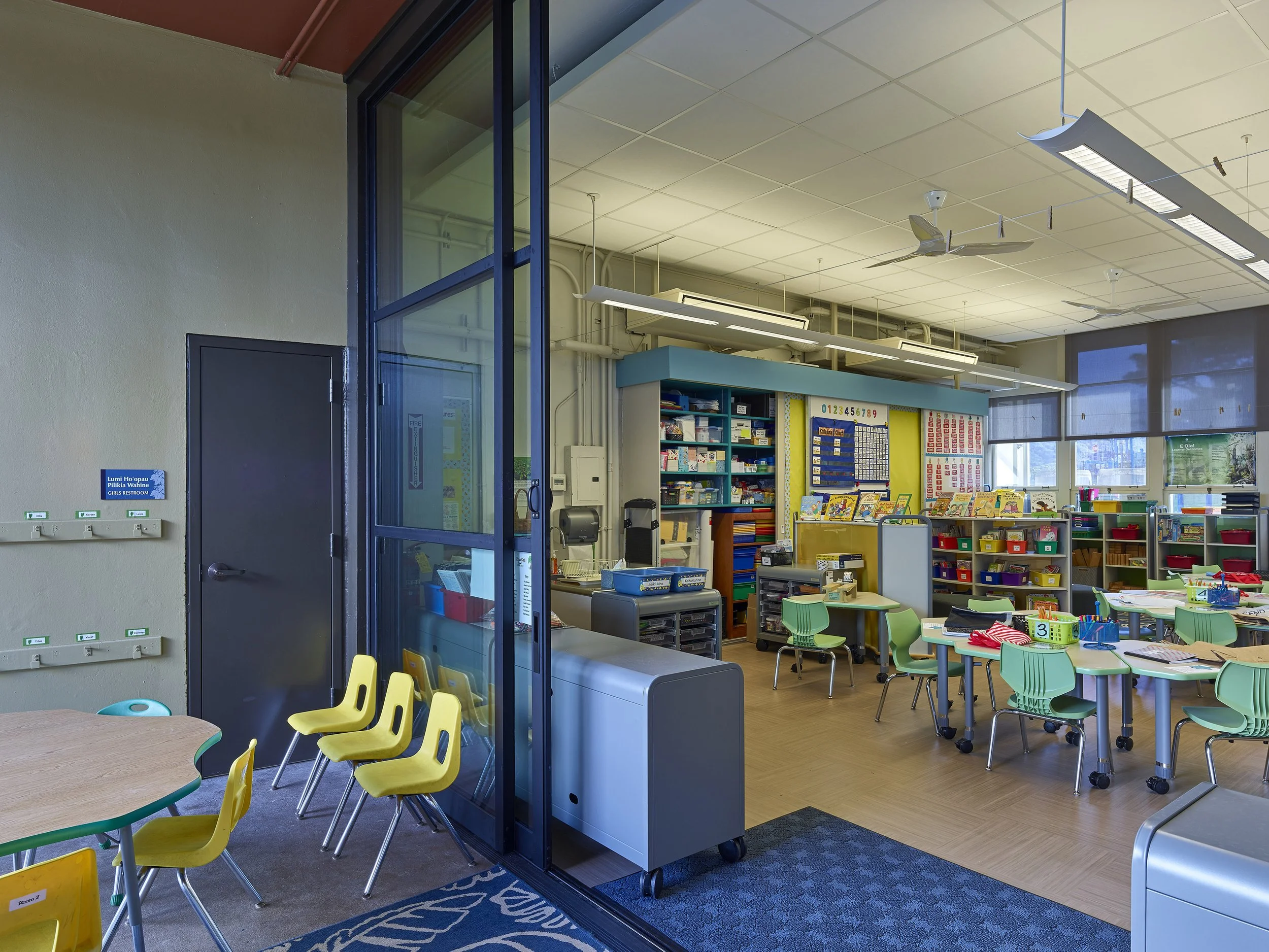
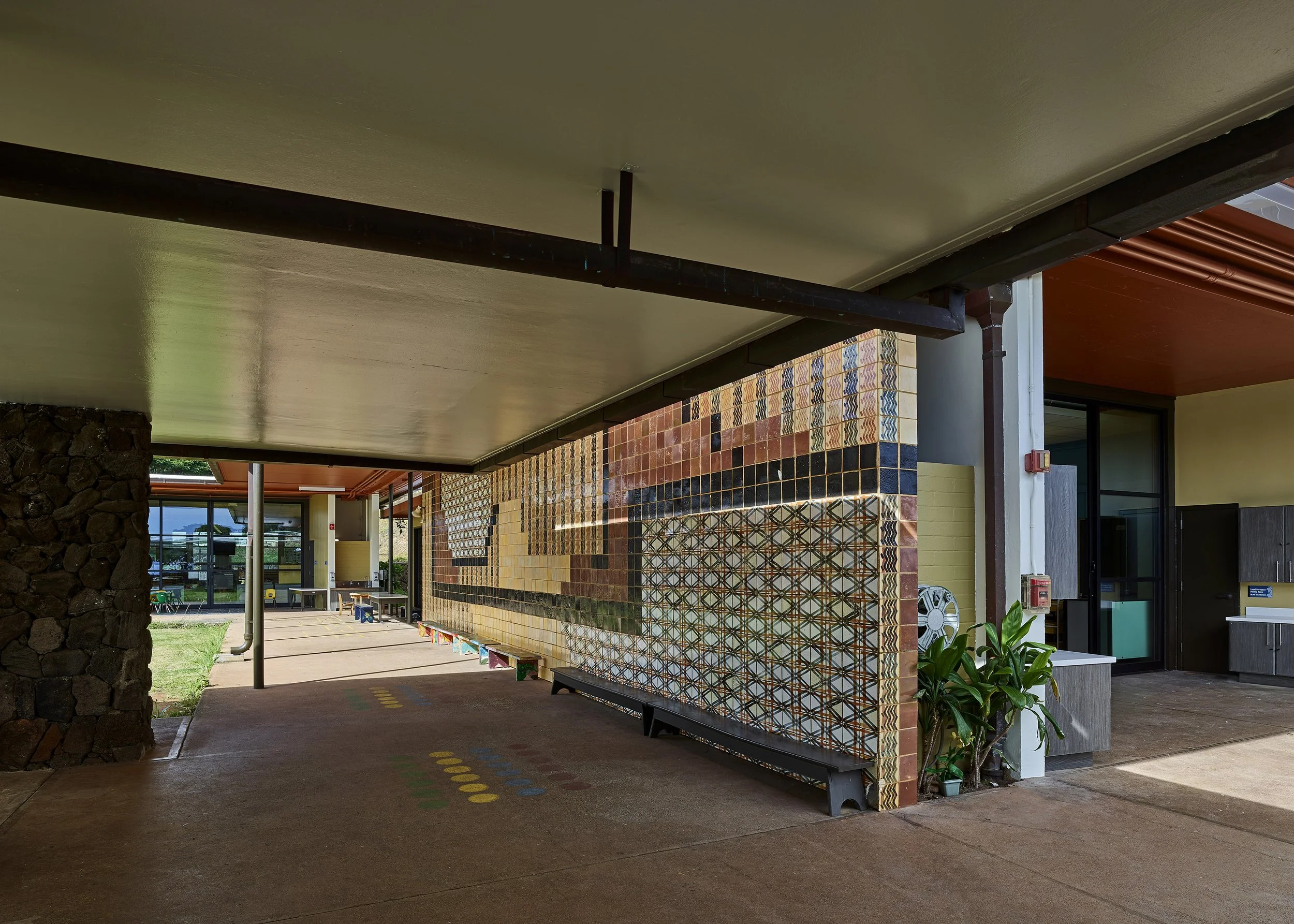
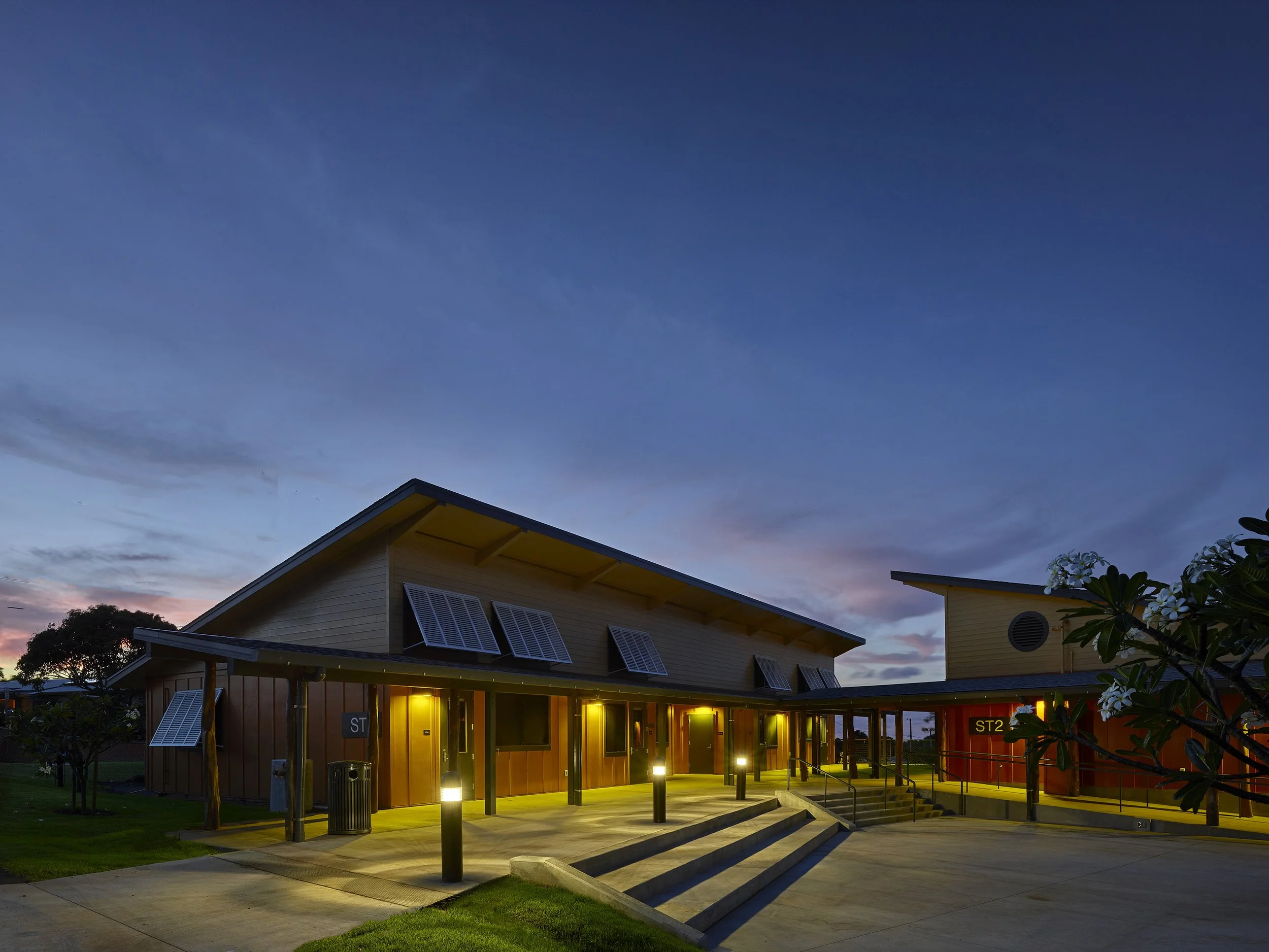
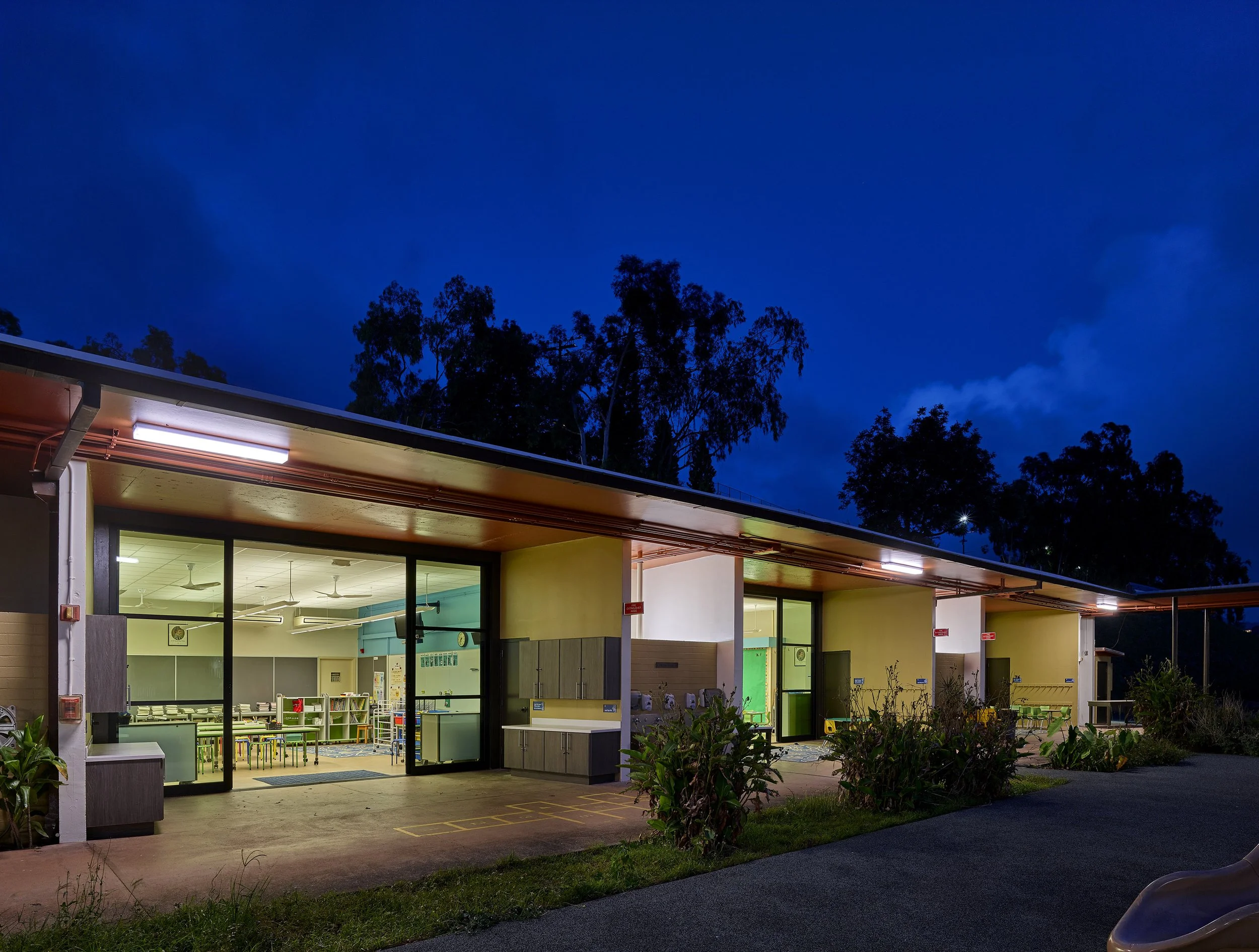
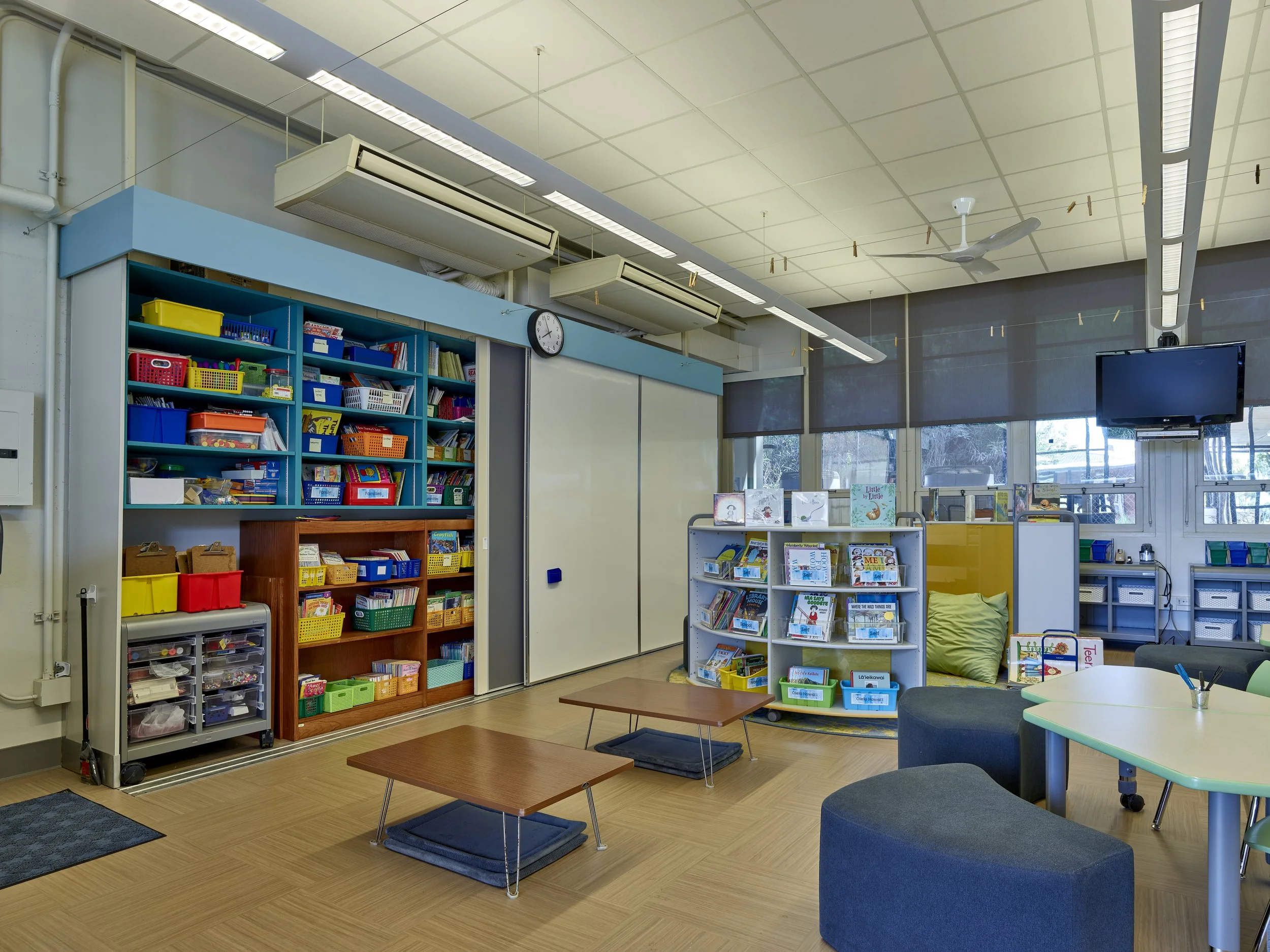
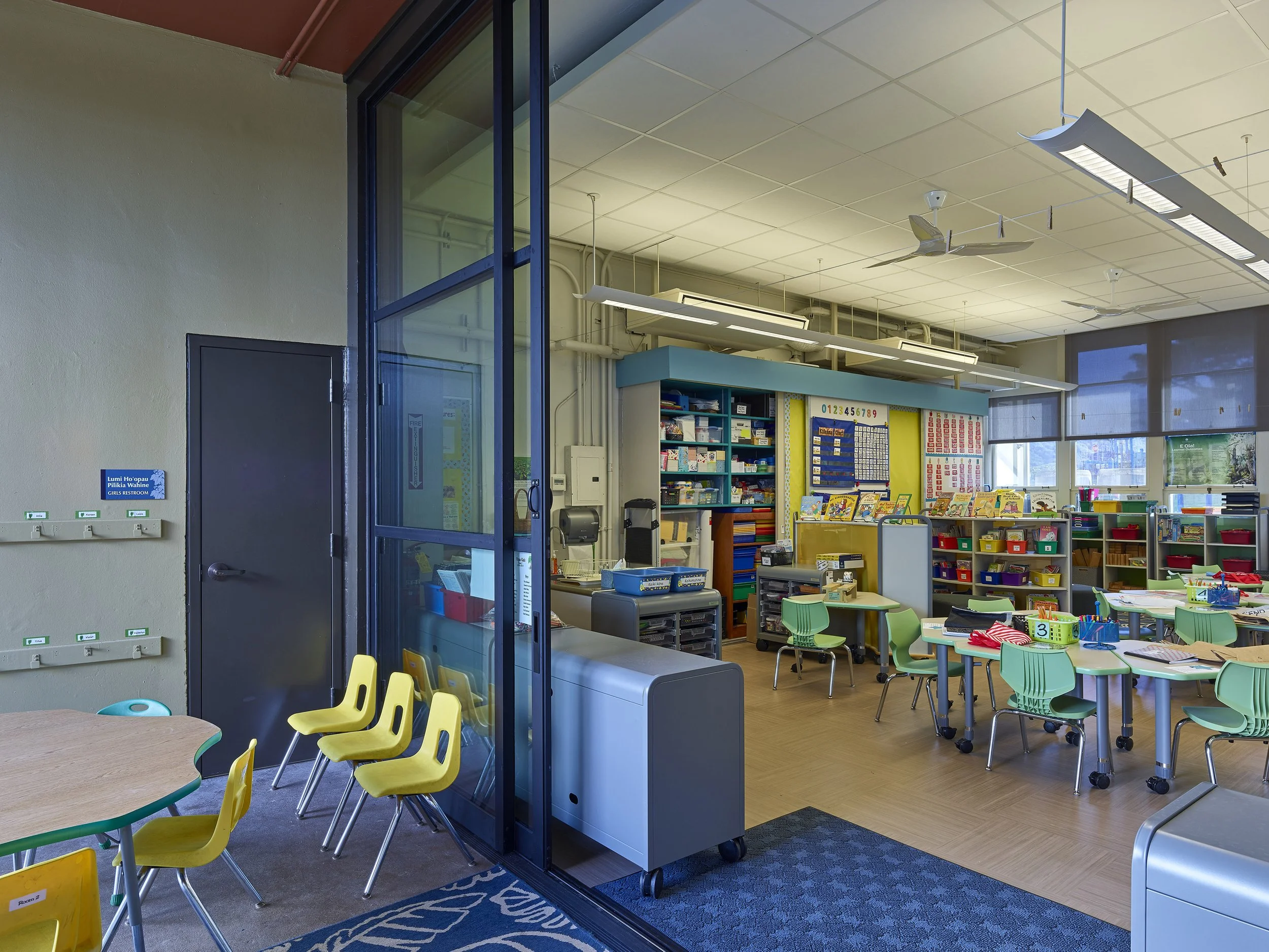
In 2016, Ferraro Choi was retained by Kamehameha Schools to assist with the renovation of the Nahienaena, Kanekapolei, Keolaokalani, and Kuiheilani buildings, which comprise the 25,000 sq.ft. upper portion of its Elementary School at the Kapālama Campus. Originally designed by Merrill Simms & Roehrig and constructed by Walker-Moody Construction in 1954, these buildings are connected by covered breezeways and lanais. One exterior wall of each building was adorned with ceramic tiles with Hawaiian kapa patterns produced by the 1957 and 1958 kindergarten art students. The four-building complex is eligible for both the National and State Registers of Historic Places. Although designed for natural cross ventilation, air conditioning was added in 1987 as part of a Kamehameha Schools modernization program. The project involved a total gut of the classroom interiors except for air conditioning, which was left in place. Interior improvements included power, lighting, finishes, storage walls behind sliding teaching panels, and new flexible furniture systems. Exterior improvements included new storefronts with sliding glass doors at classroom entries, re-roofing, and new exterior paint. Completed in 2017, the project delivered refreshed, comfortable and flexible classrooms reflective of Kamehameha School’s transition towards a 21st Century Learning environment compatible with its World-Class Hawaiian Culture-Based Education objectives.
Year Completed: 2017
Service Type: Interiors
Size: 12,000 Sq. Ft.
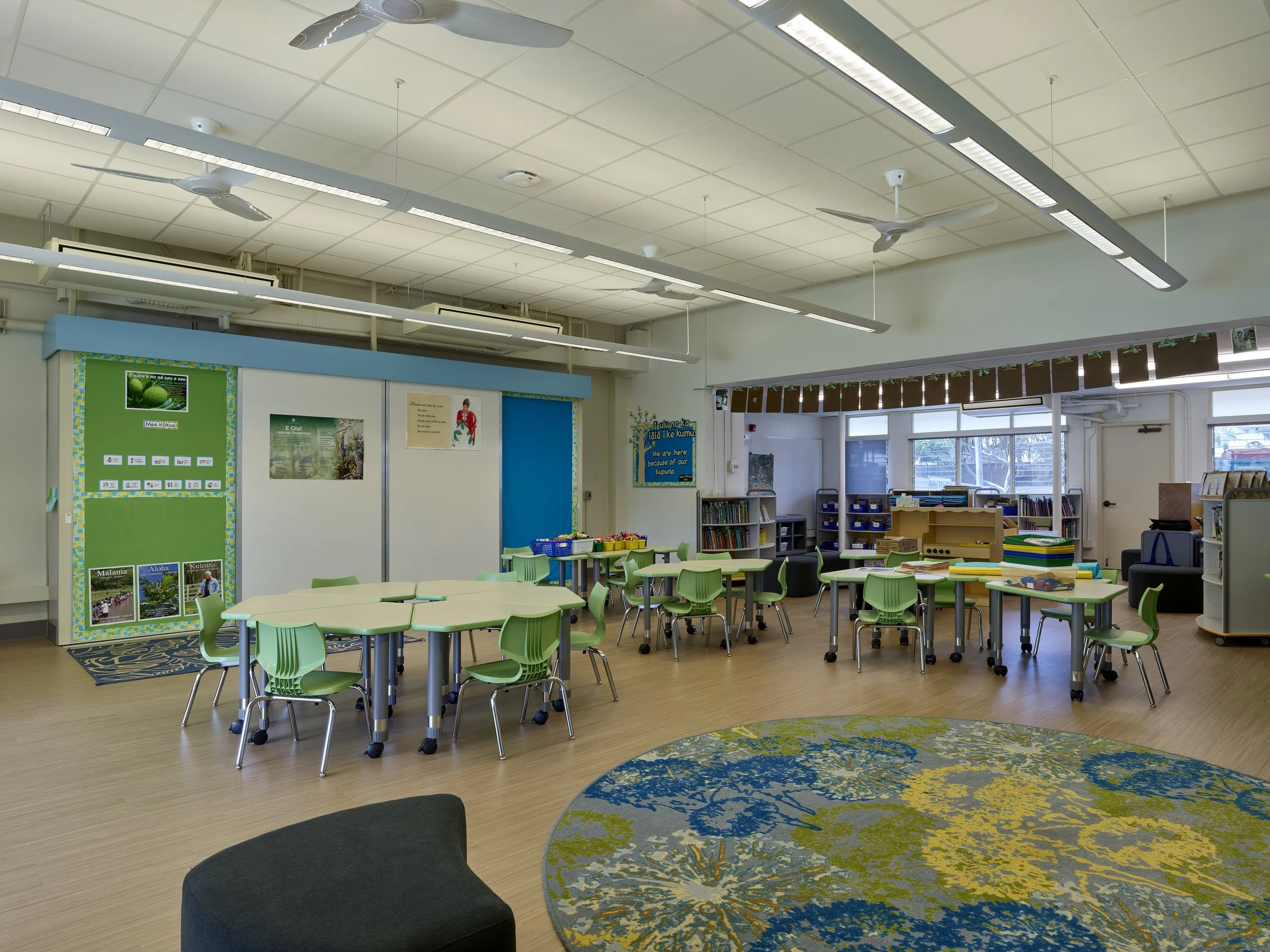
WEST HAWAII EXPLORATIONS ACADEMY
Kailua-Kona, Hawai‘i
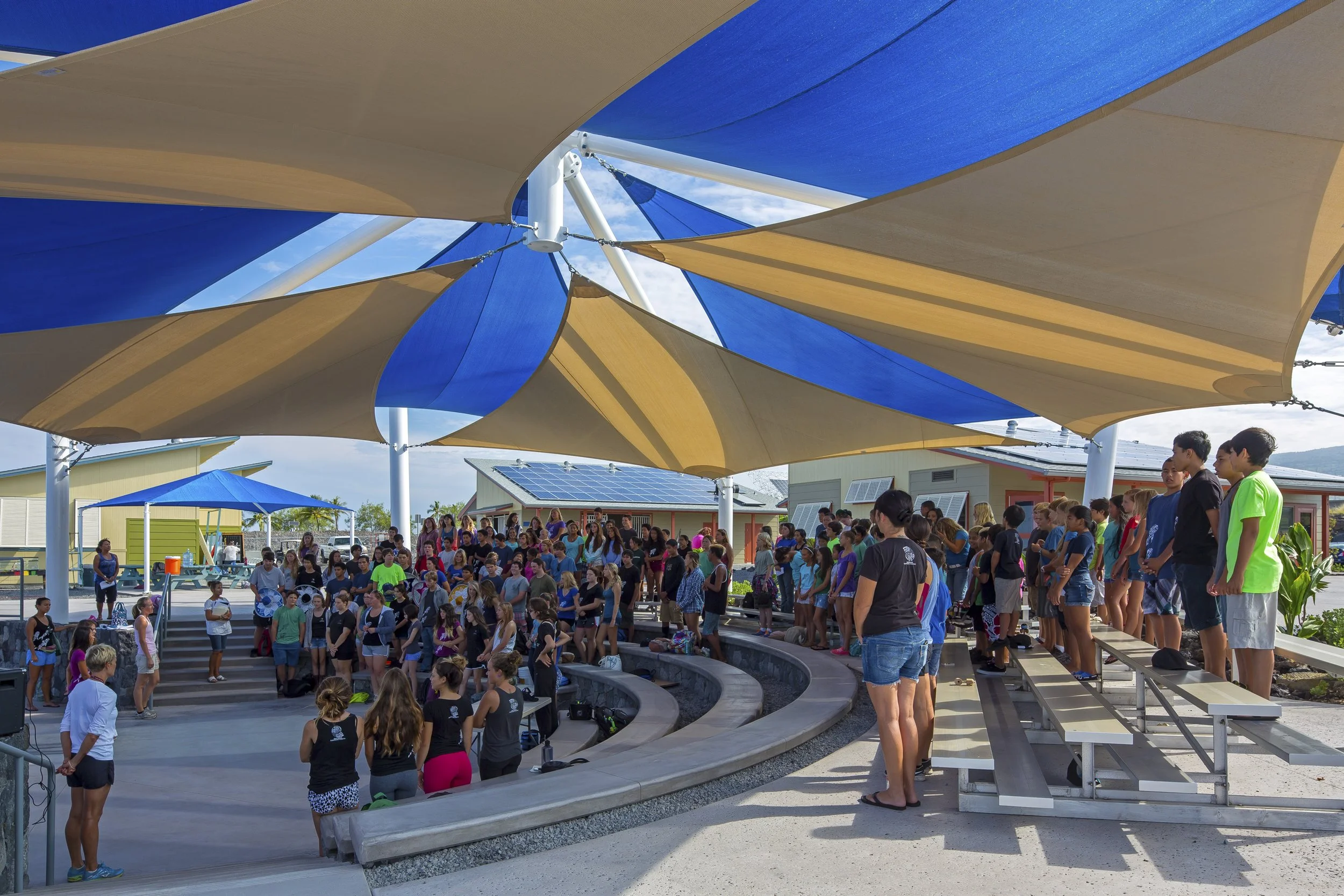
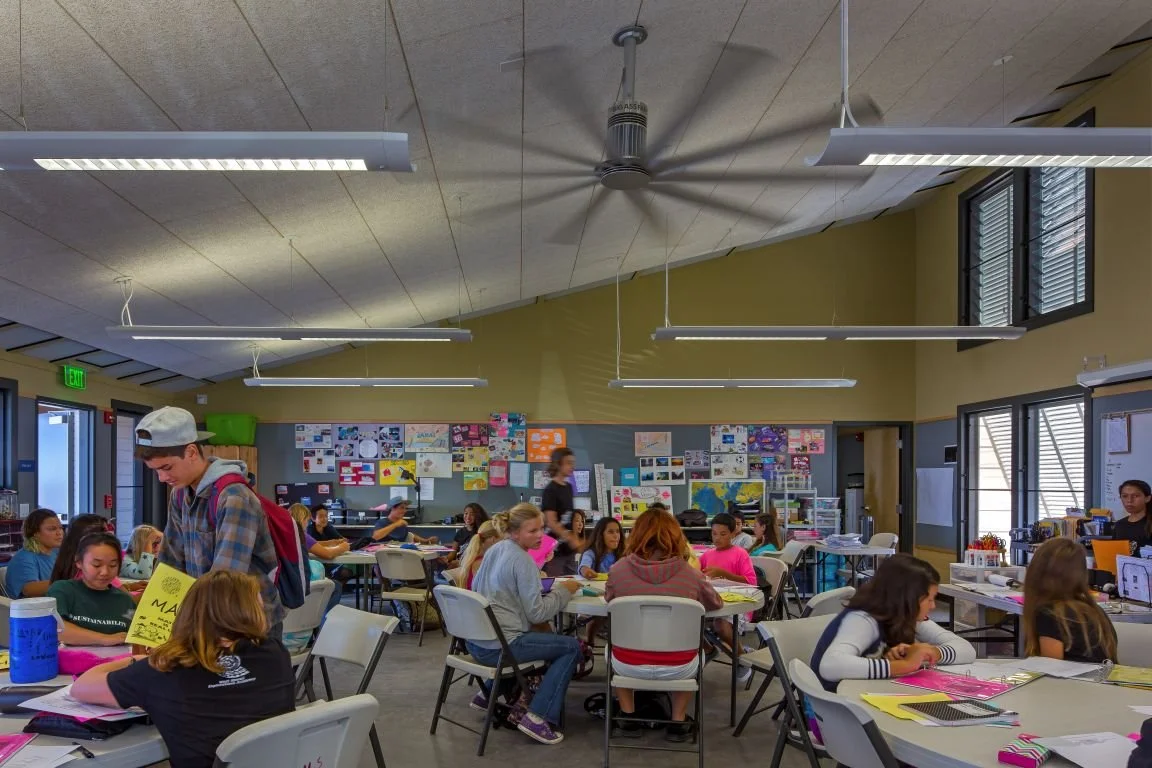
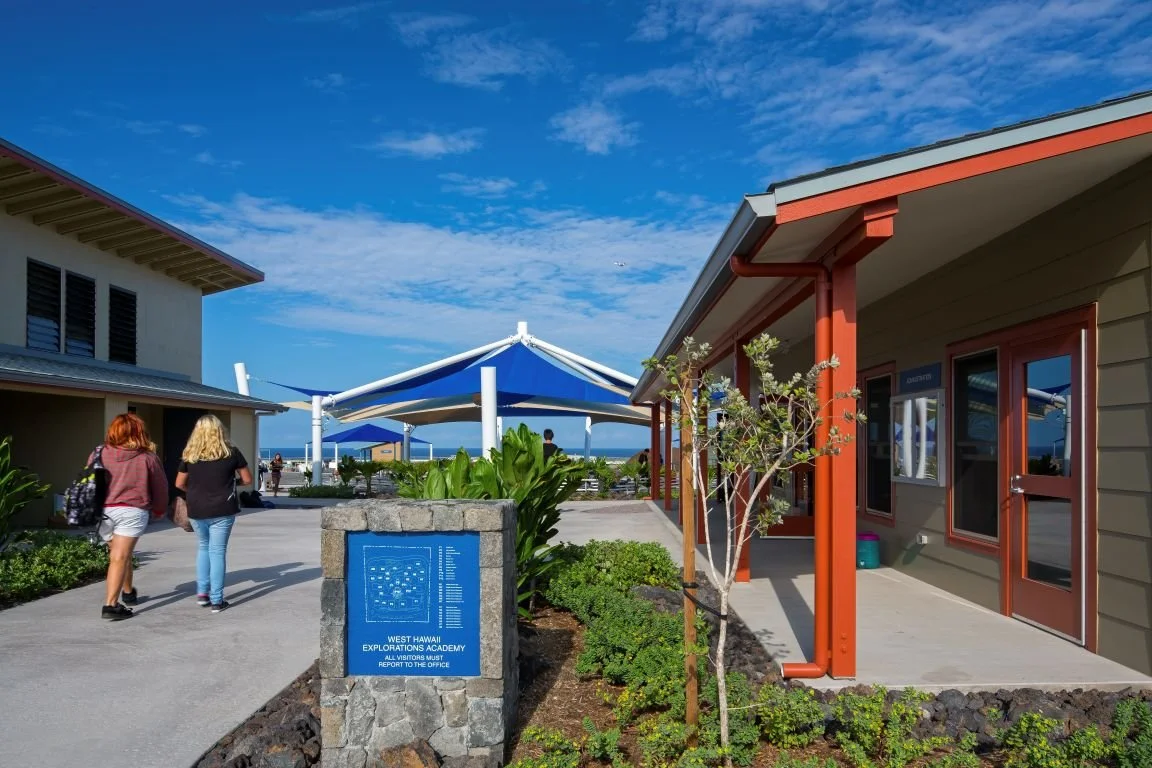
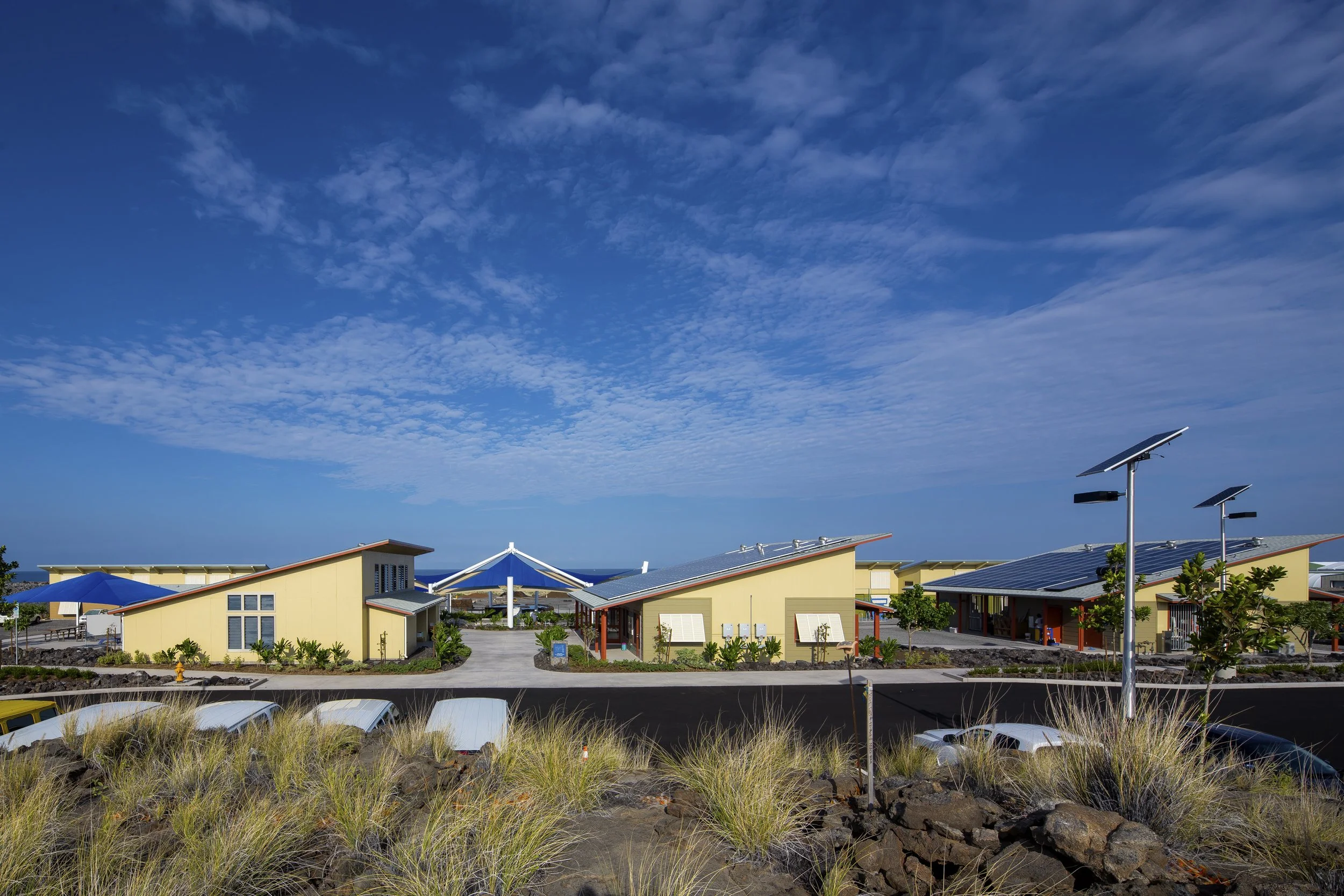
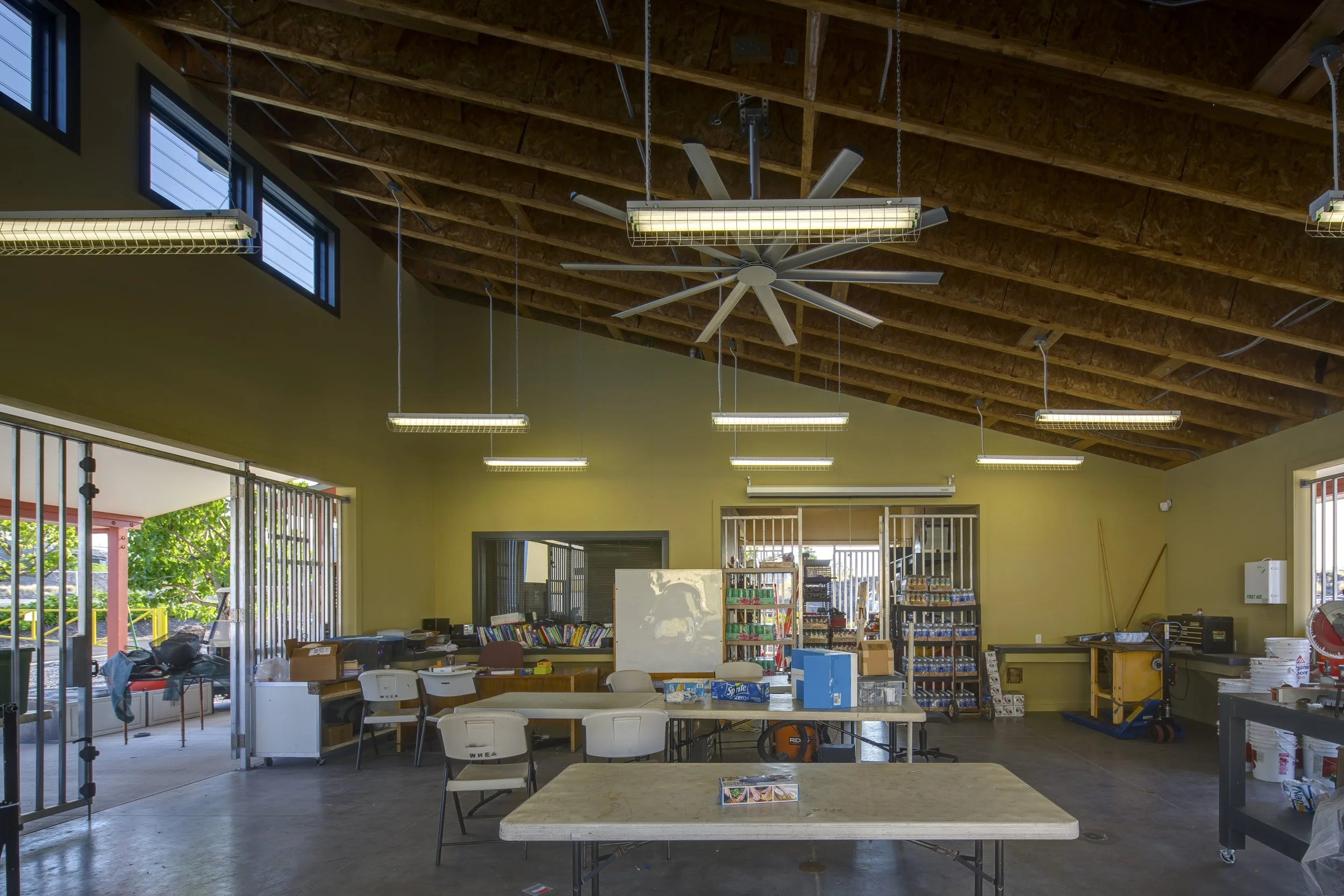
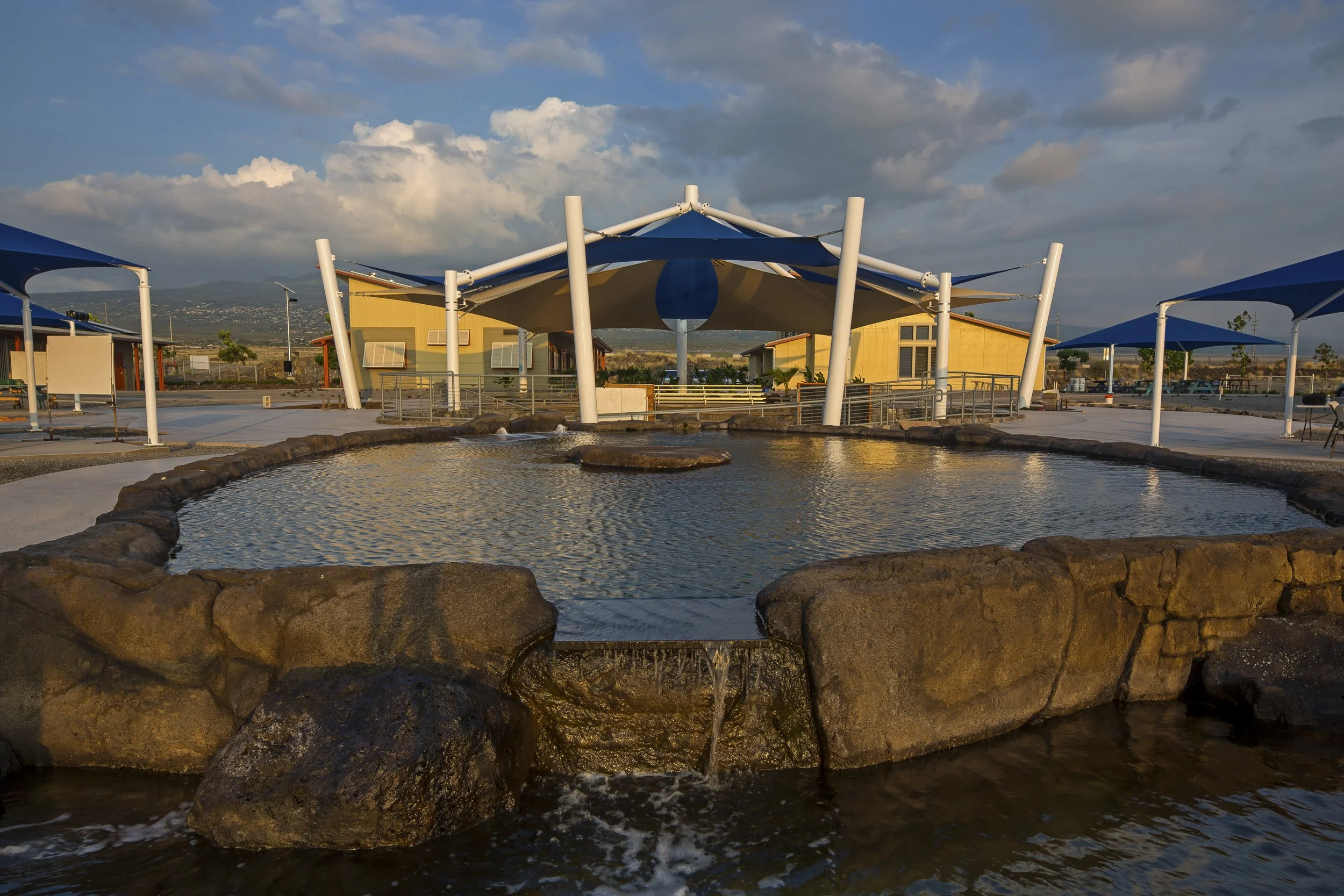
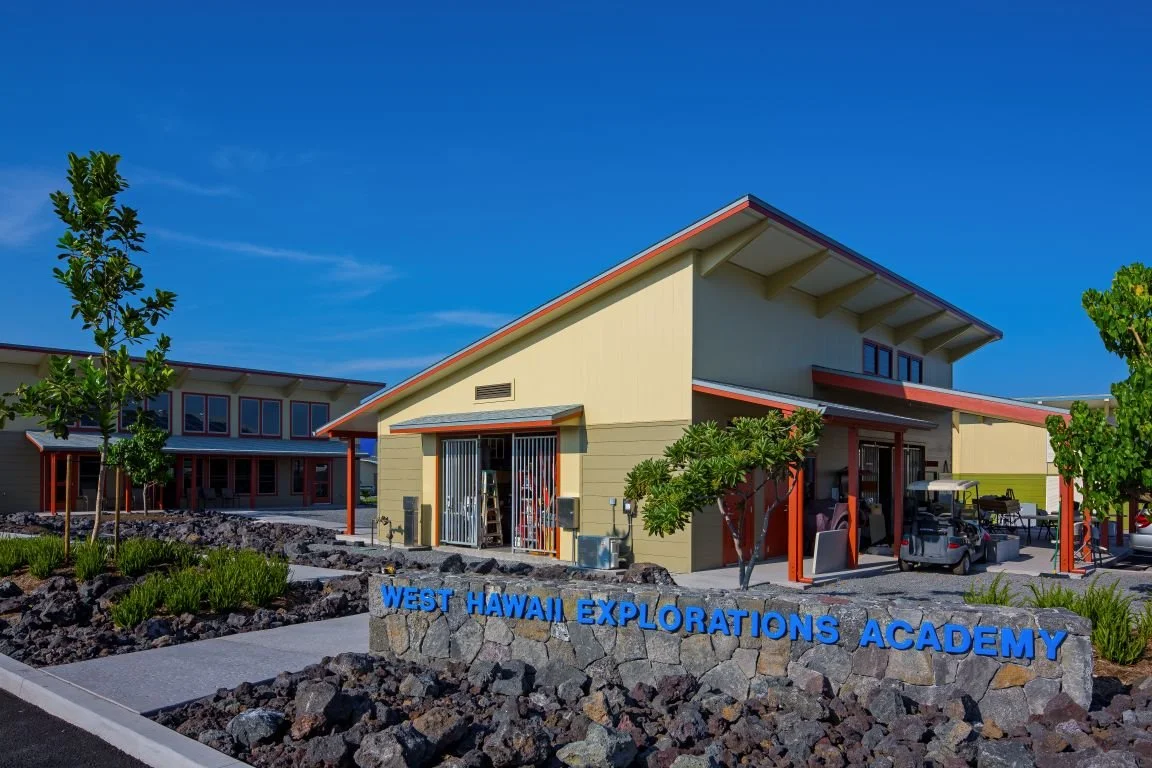
The West Hawaii Explorations Academy (WHEA) is Hawaii’s first Charter High and Middle School. The school is a Project-Based Learning (PBL) institution, providing an innovative, hands-on science-focused education in an outdoor learning environment. The motto of the Academy’s leadership is “No Child Left Indoors.” It is a nationally recognized laboratory school serving as a “magnet” for science-focused, outdoor, hands-on education. It features large-scale, long-term projects that meet or exceed the performance demands of traditional “standards based” education. The program works best for students seeking to challenge themselves in a self-directed, science-focused learning environment. The curriculum is writing intensive and college preparatory, but “Can-Do” attitude almost always outshines innate ability. While WHEA’s pedagogy has been developed in the context of STEM (science, technology, engineering and mathematics) education, it is actually designed to be transferable to nearly all academic subjects.
Ferraro Choi served as lead architectural consultant for Programming, Site Planning, Design, Construction Documents, Bidding, Building Permitting, and Construction Administration Services.
Year Completed: 2014
Service Type: Architecture
Size: 11,500 Sq. Ft.
Design Recognition:
LEED for Schools - Platinum Equivalent
Net-Zero Energy Design Equivalent
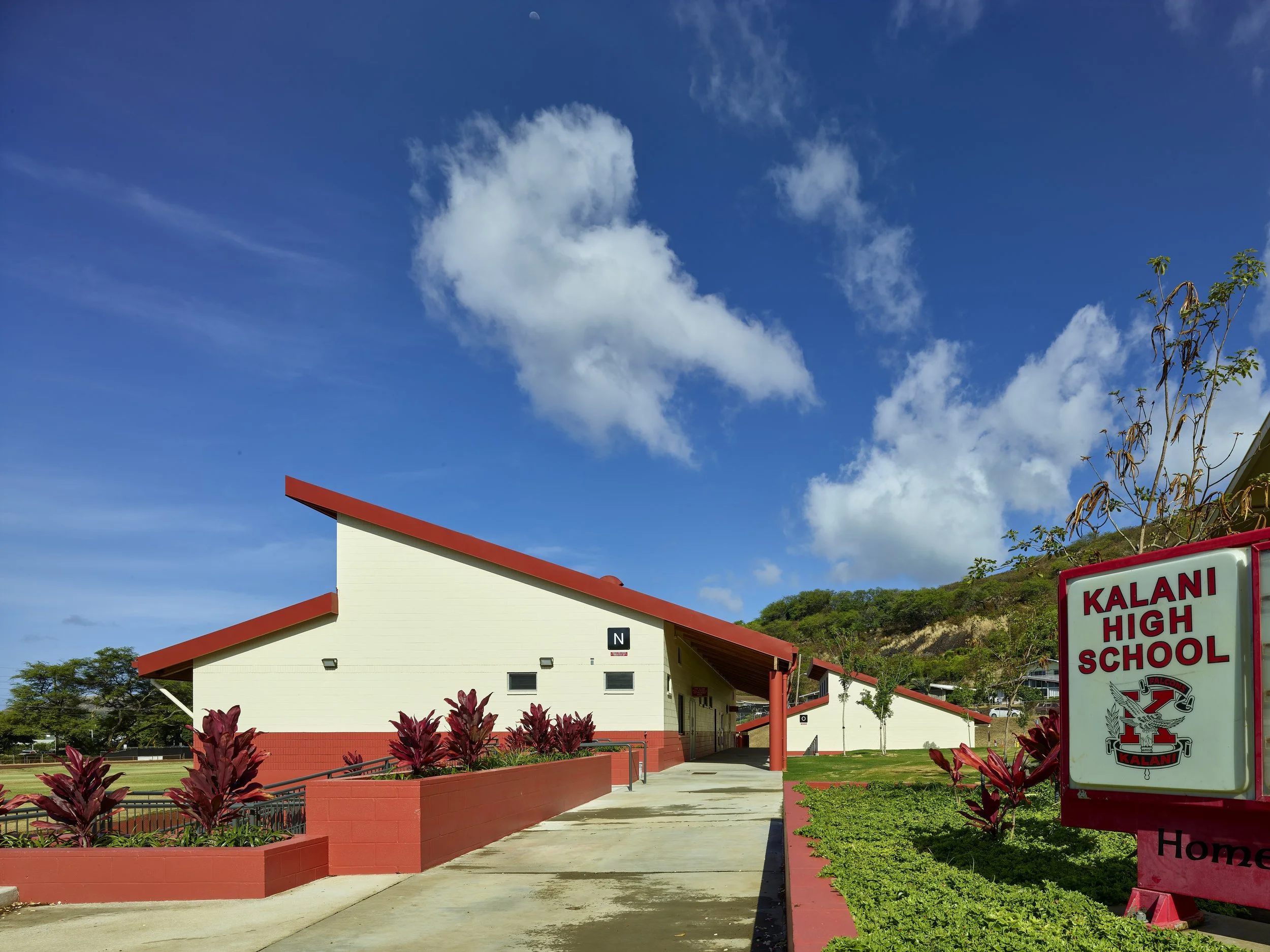
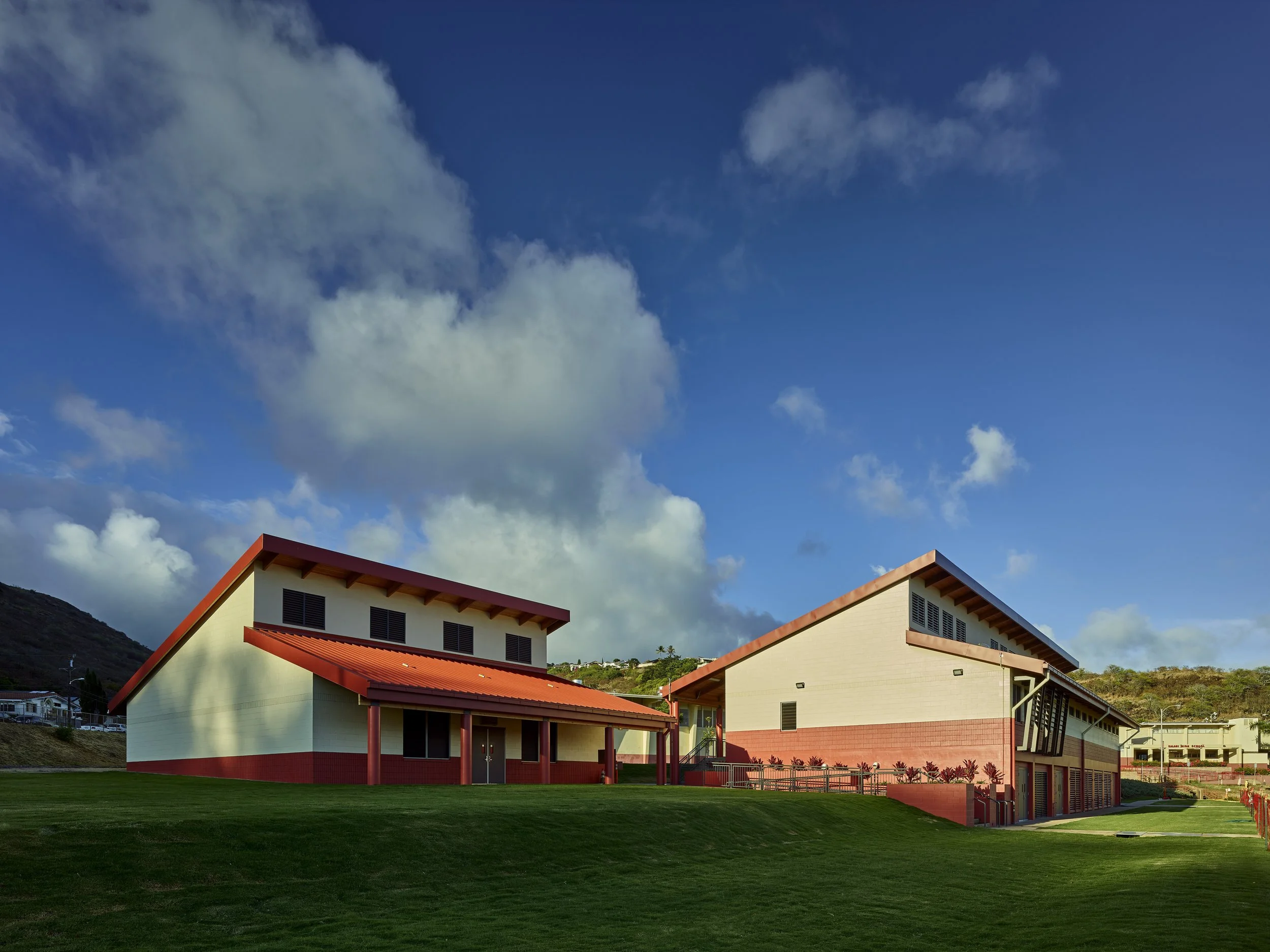
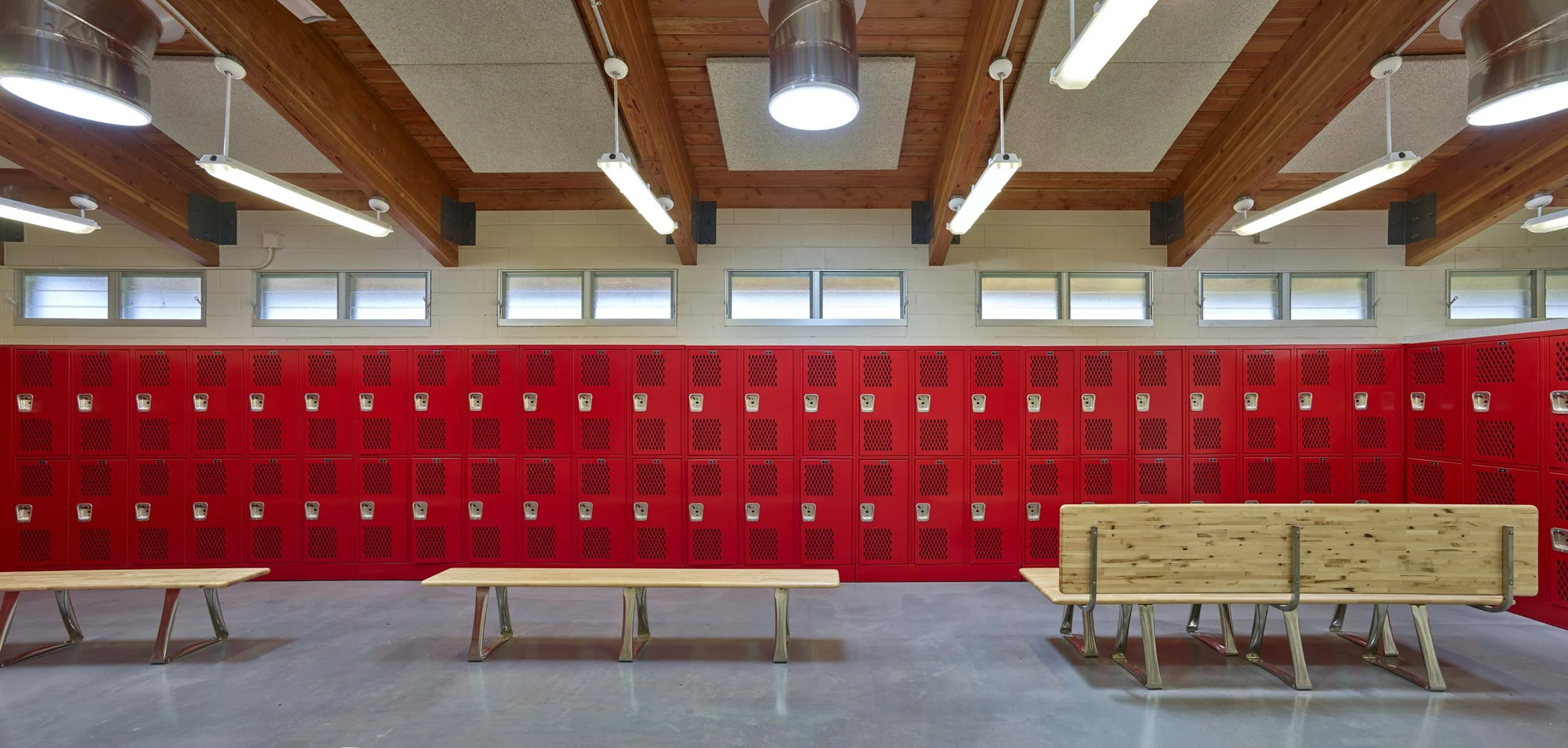
GIRLS’ ATHLETIC LOCKER ROOM at KALANI HIGH SCHOOL
Honolulu, Hawai‘i
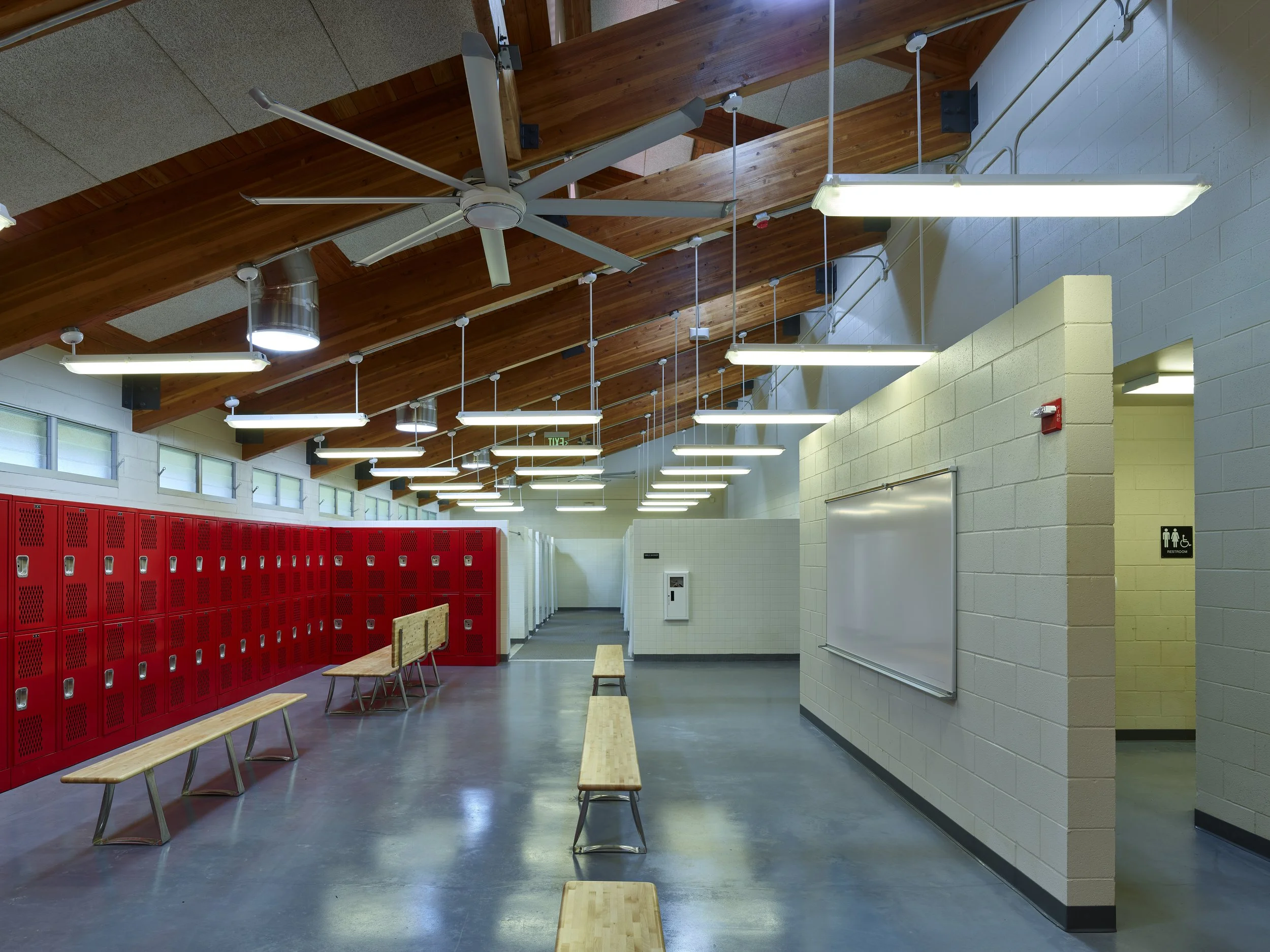
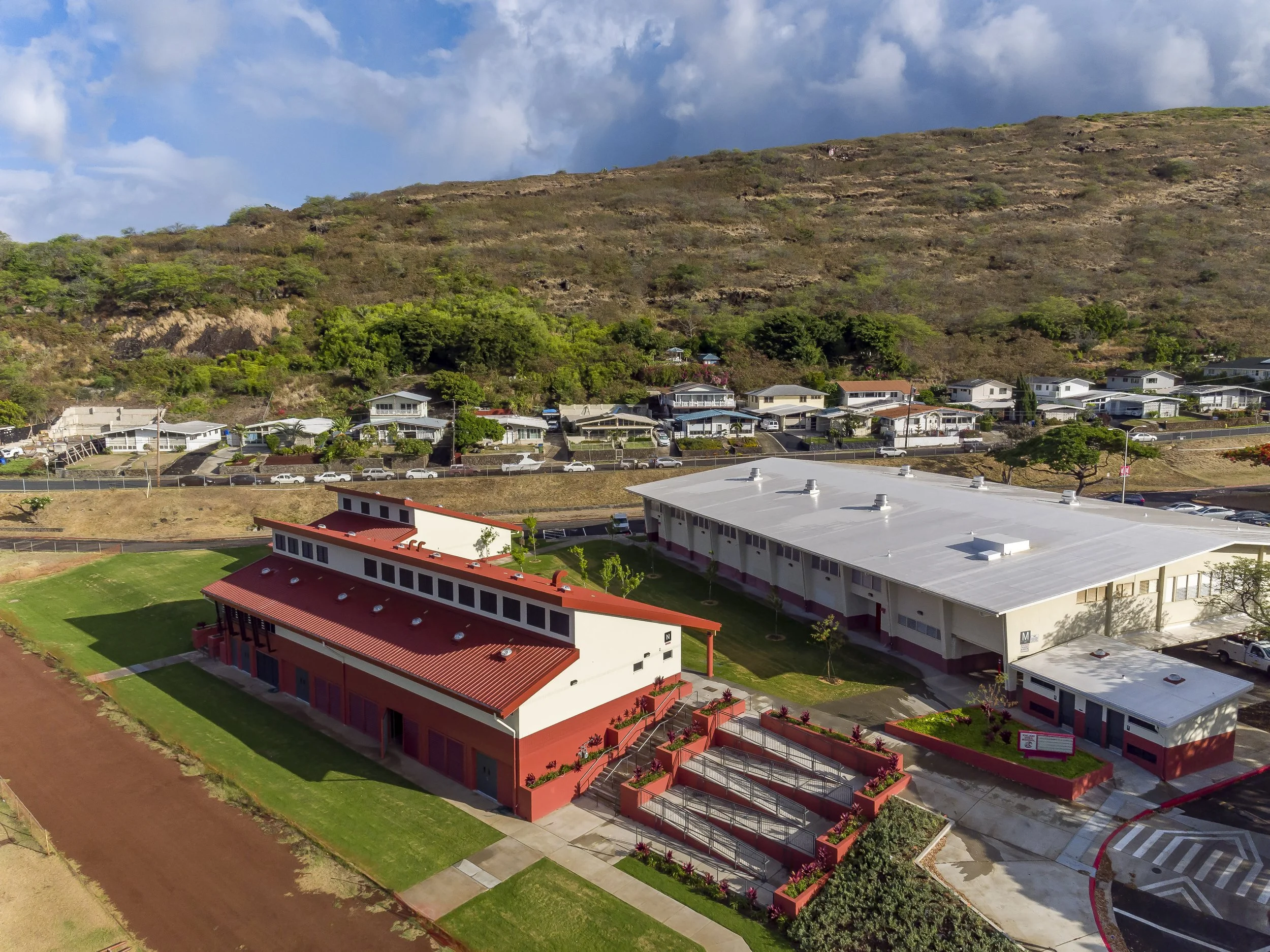
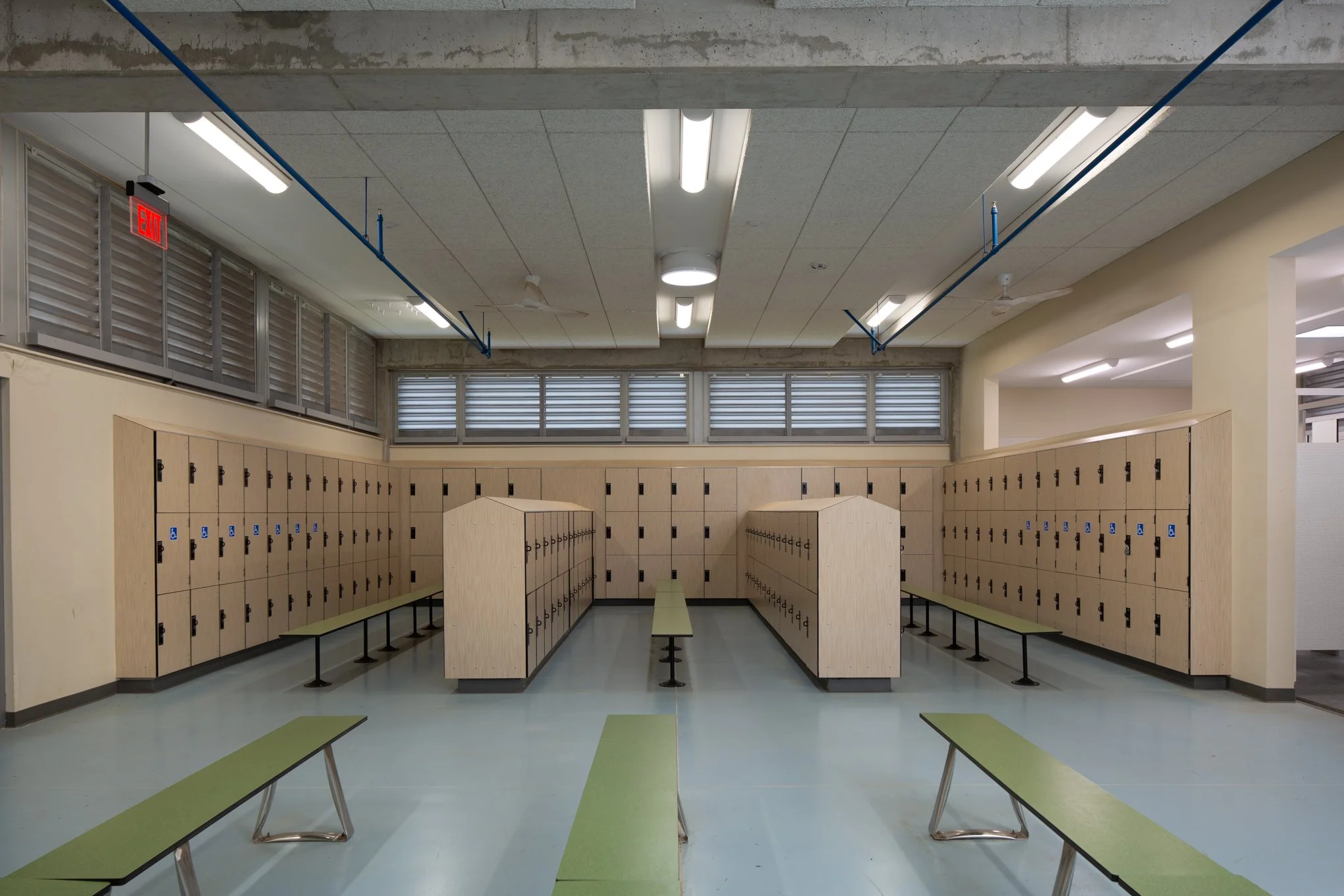
The project consists of a new Girls’ Athletic Locker Room facility with a Trainer’s Room and basement for Field Storage, a separate Judo/Wrestling building, renovation of the existing Girls’ PE Locker/ Shower facilities, and a new field restroom building. Included in the project was planning for a future Weight Training building and a multi-purpose covered lanai overlooking Track and Field. The lanai will be central to the athletic locker room building, Judo/Wrestling building, and future Weight Training buliding.
Year Completed: 2018
Service Type: Architecture
Size: 19,300 Sq. Ft.
Design Recognition:
LEED for Schools - Silver Equivalent
CAFETERIA at LAHAINALUNA HIGH SCHOOL
Lahaina, Maui, Hawai‘i
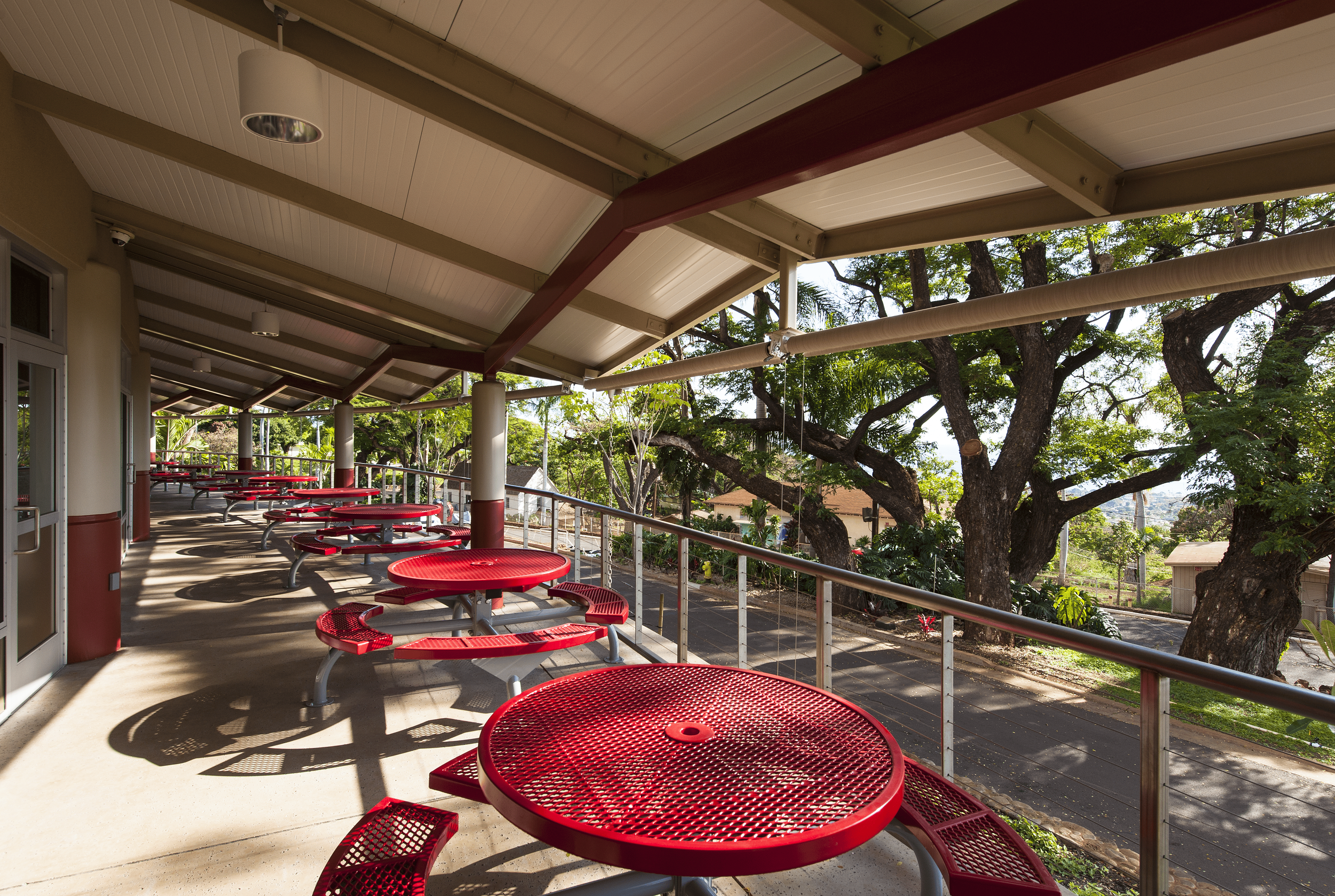
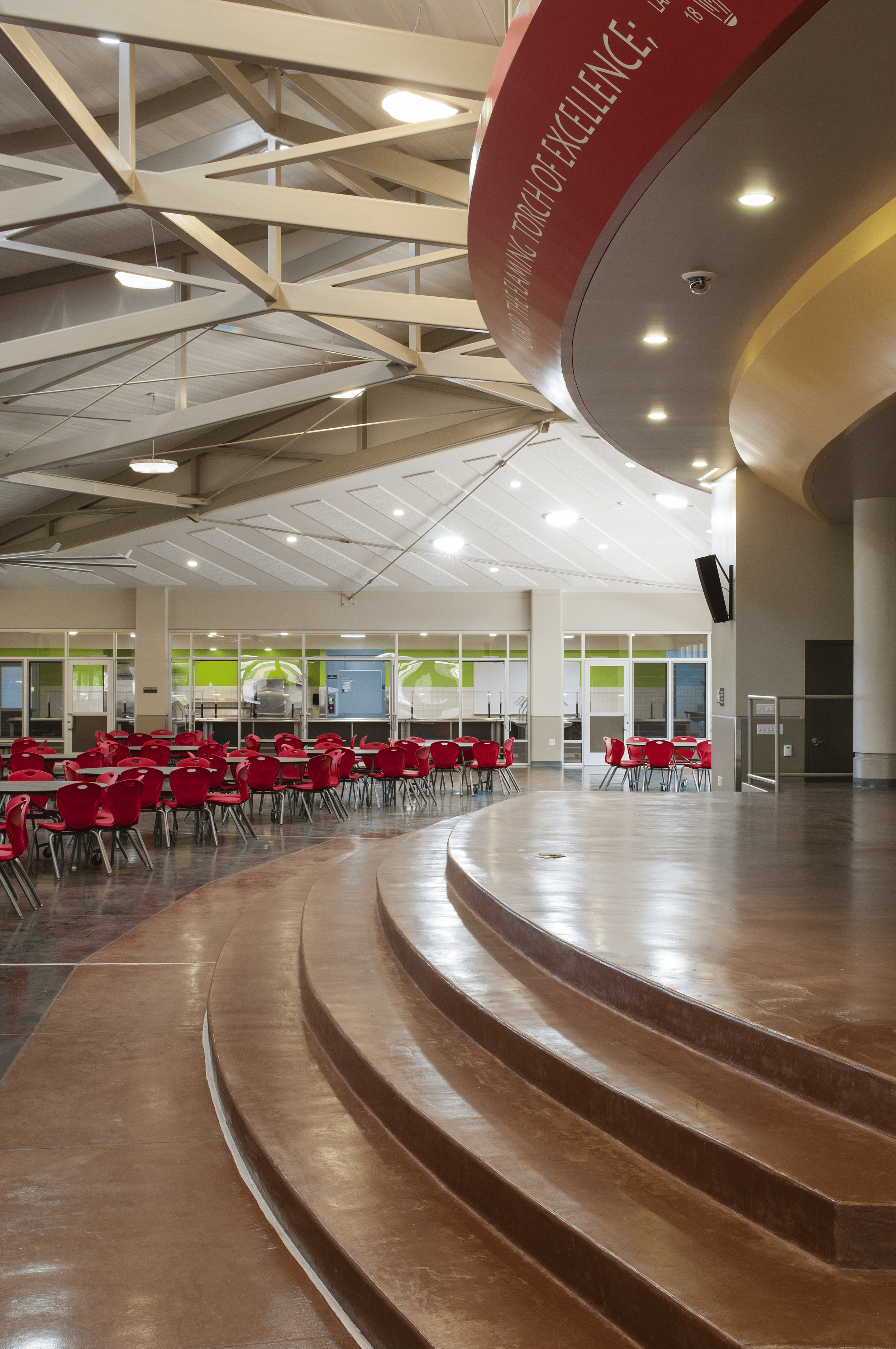
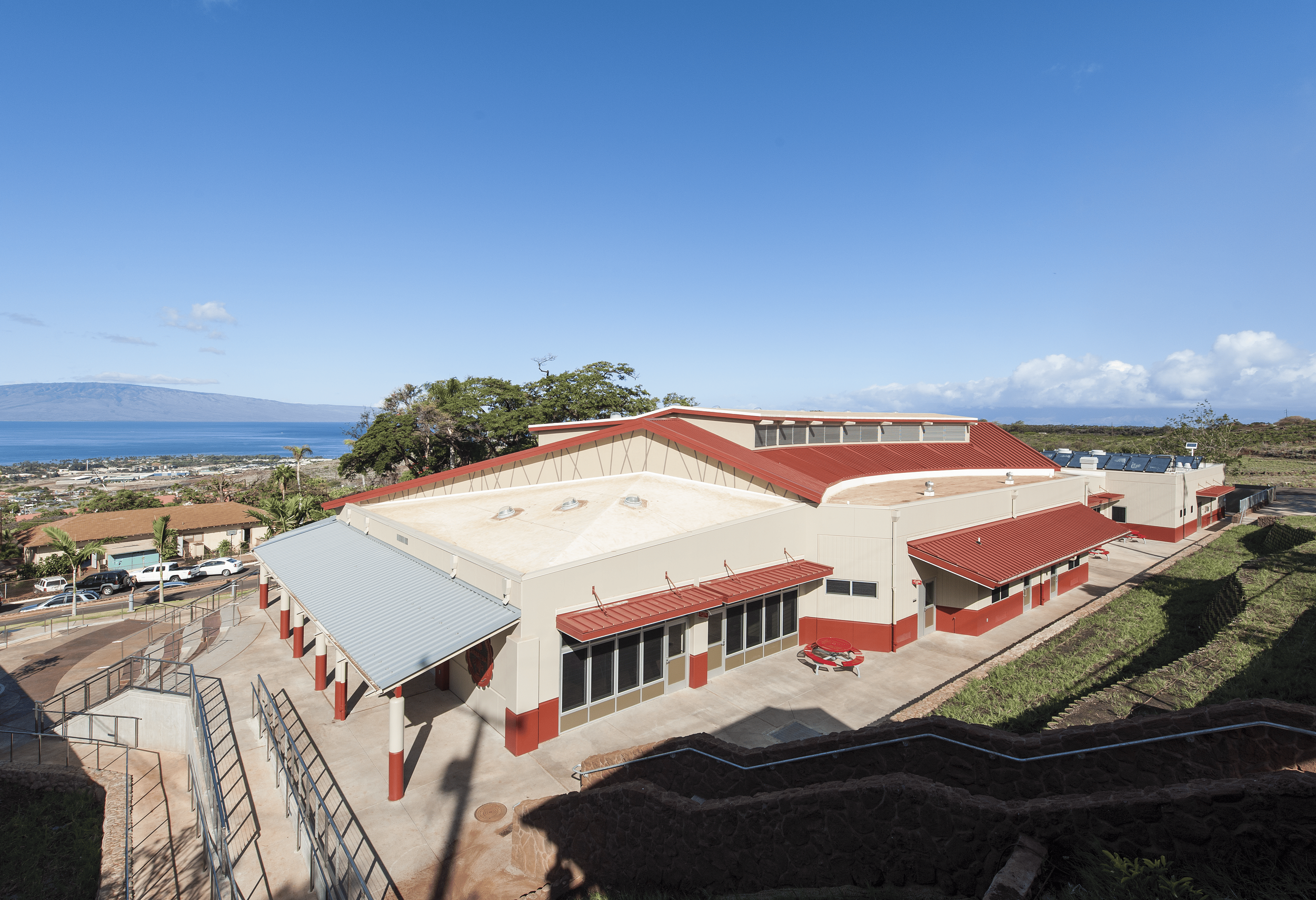
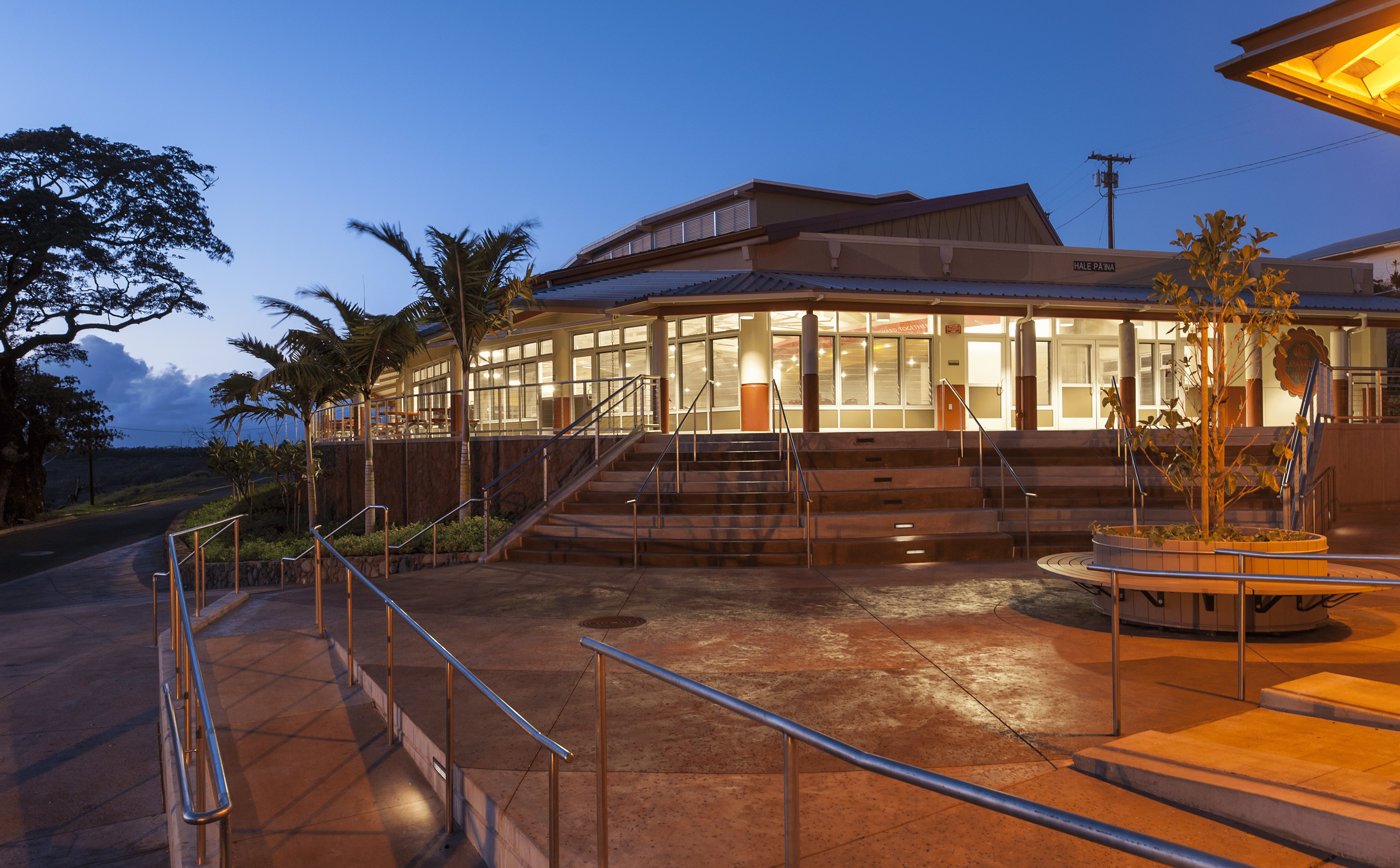
The Lahainaluna High School Cafeteria features 20,000 sq. ft. of modern cooking, dining, and assembly space for 1,100 students and faculty. The LEED® Silver equivalent building meets the diverse needs of a growing campus and community. The naturally ventilated dining room emulates the sloping hillside and takes advantage of commanding views of West Maui and the neighboring island of Lanai. Perimeter glass jalousie windows allow for maximum ventilation and visibility, while high-bay louvers allow for heat exhaust. Multiple dimmable solar tubes provide users with controlled daylight without solar heat gain. A unique wrap-around lanai provides shaded exterior dining integrated with an open-air entry plaza and seating area.