COMMUNITY DESIGN
ʻŌlelo Noʻeau #2621
Peʻapeʻa maka walu. Eight-eyed Peʻapeʻa.
One who is wide awake and very observant; one who is skilled.
PEOPLE & ENVIRONMENT
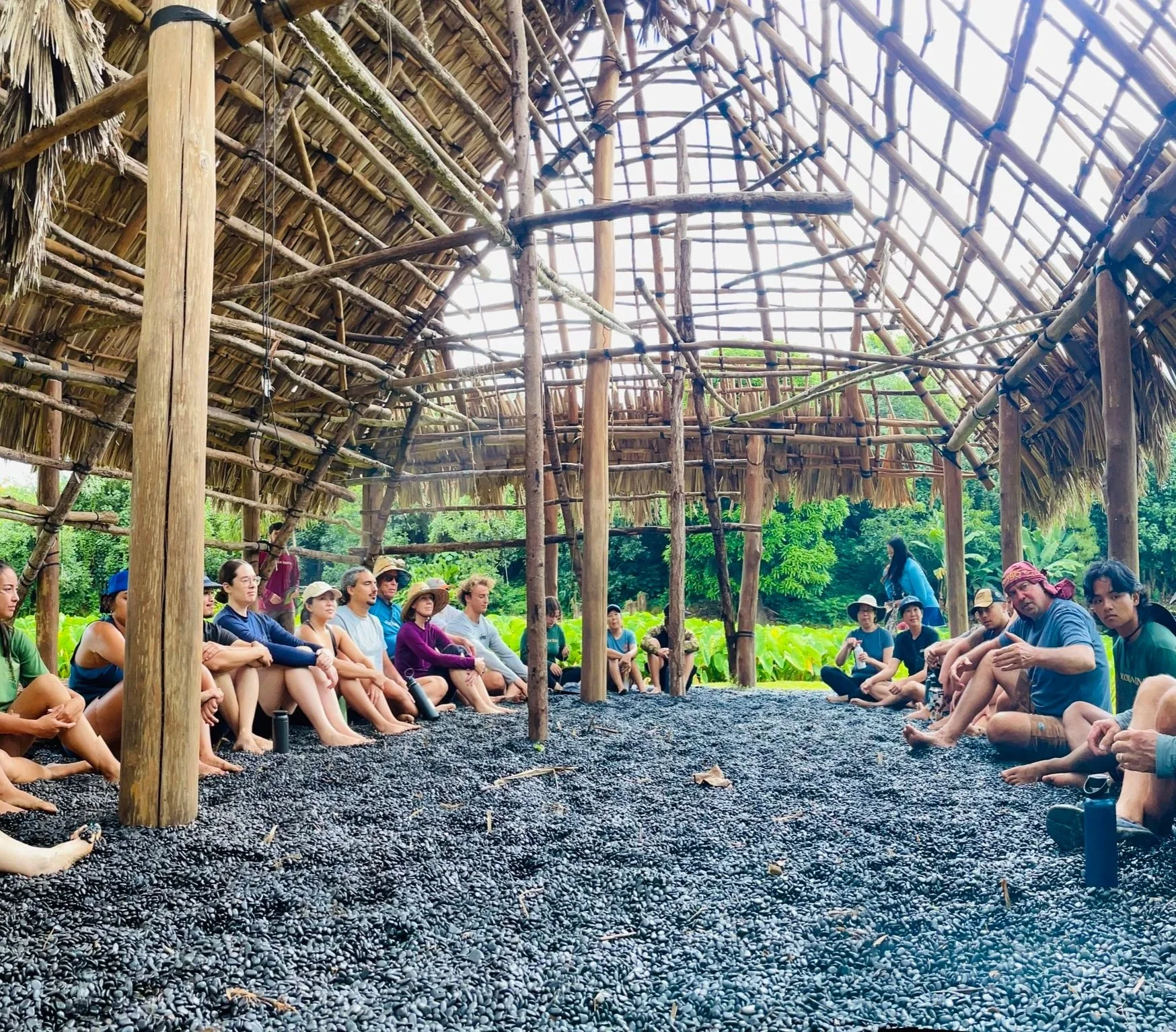
Culture has evolved to have many interpretations and understandings of its meaning. ʻŌlelo Noʻeau #2621 references the eight-eyed Peʻapeʻa as a reminder for us to make space for many layered perspectives and sources of information. This can applied to how we interact with culture as a lense to understand relationships in social interactions, with our environments, as well as with ourselves. To observe culture, is to peer through a complex and rich database to illustrate social, emotional, physical, and spiritual practices of people and the environments that we are part of.
THE BUILT ENVIRONMENT
As designers with the purpose to create spaces that serve and celebrate our environment, culture, and community, prioritizing a meaningful integration of cultural understandings brings a richness to our design process to even more deeply connect to the people and places that we design with. Through the process itself, we as designers develop a deeper love for and responsibility to the people we serve and the places that care for us.
FEATURED COMMUNITY PROJECTS
MĀHUALAUHĪNANO
KEAUKAHA RESILIENCY CENTER FOR LEARNING MASTER PLAN
Hilo, Hawai‘i
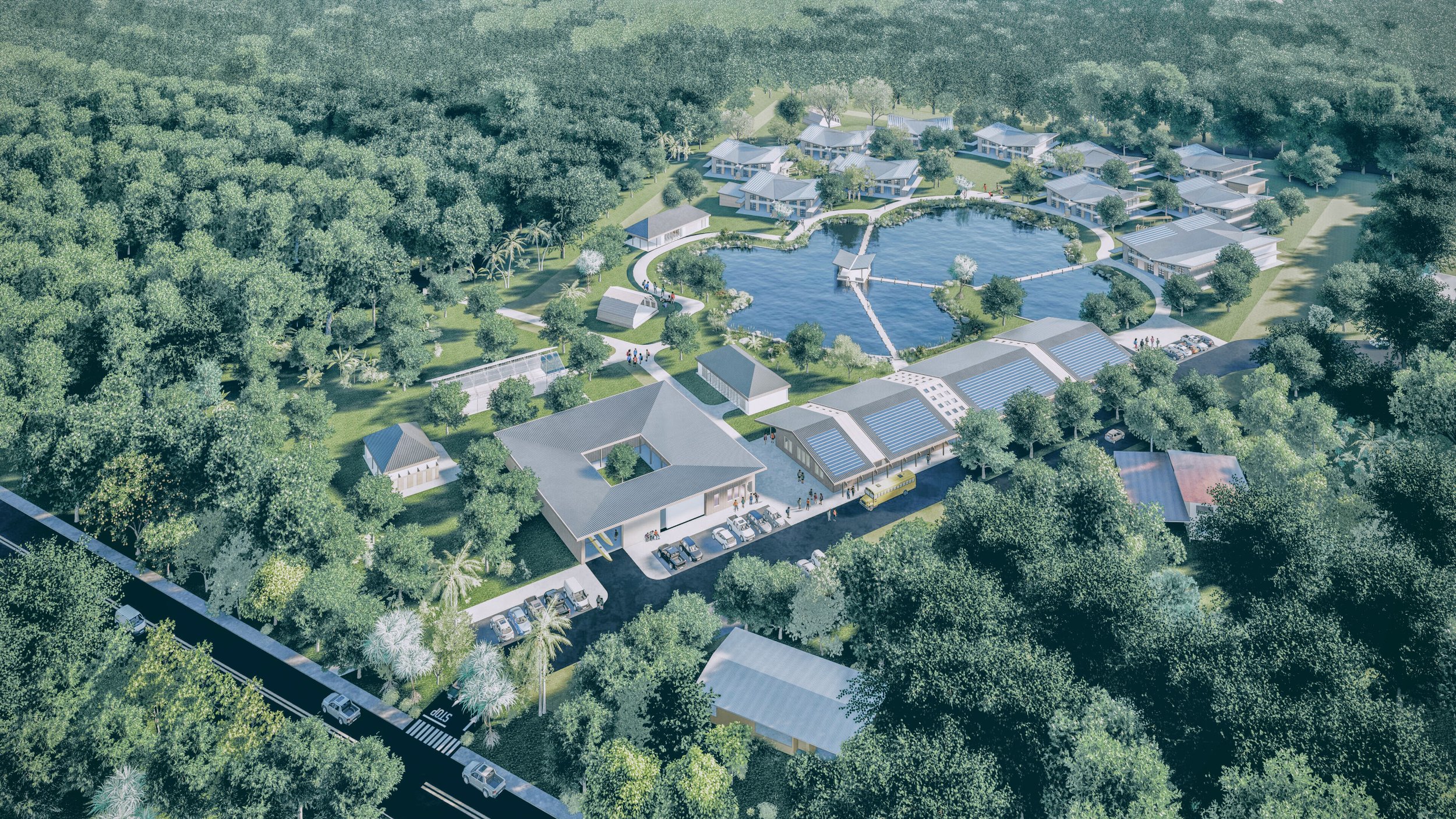
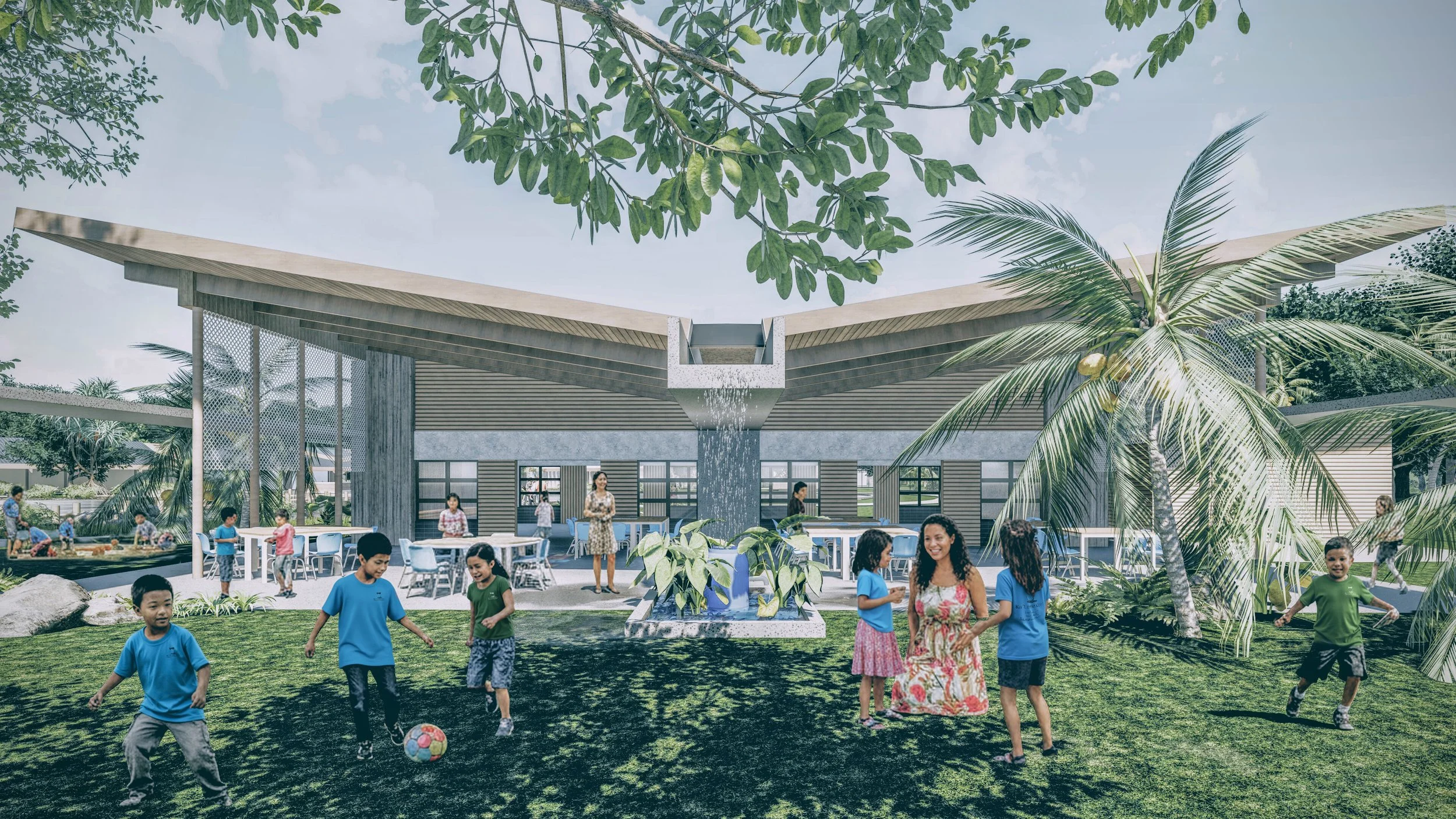
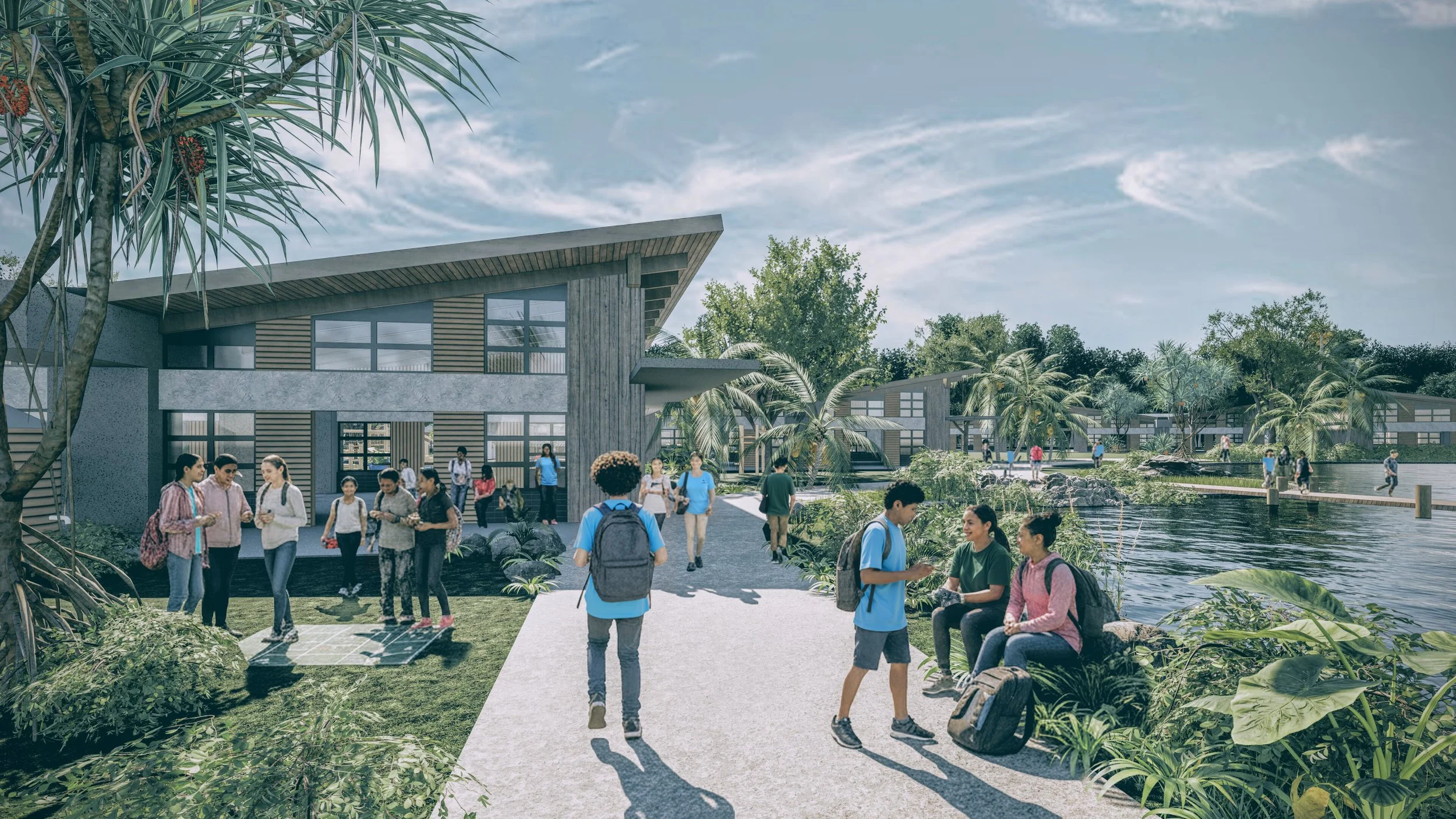
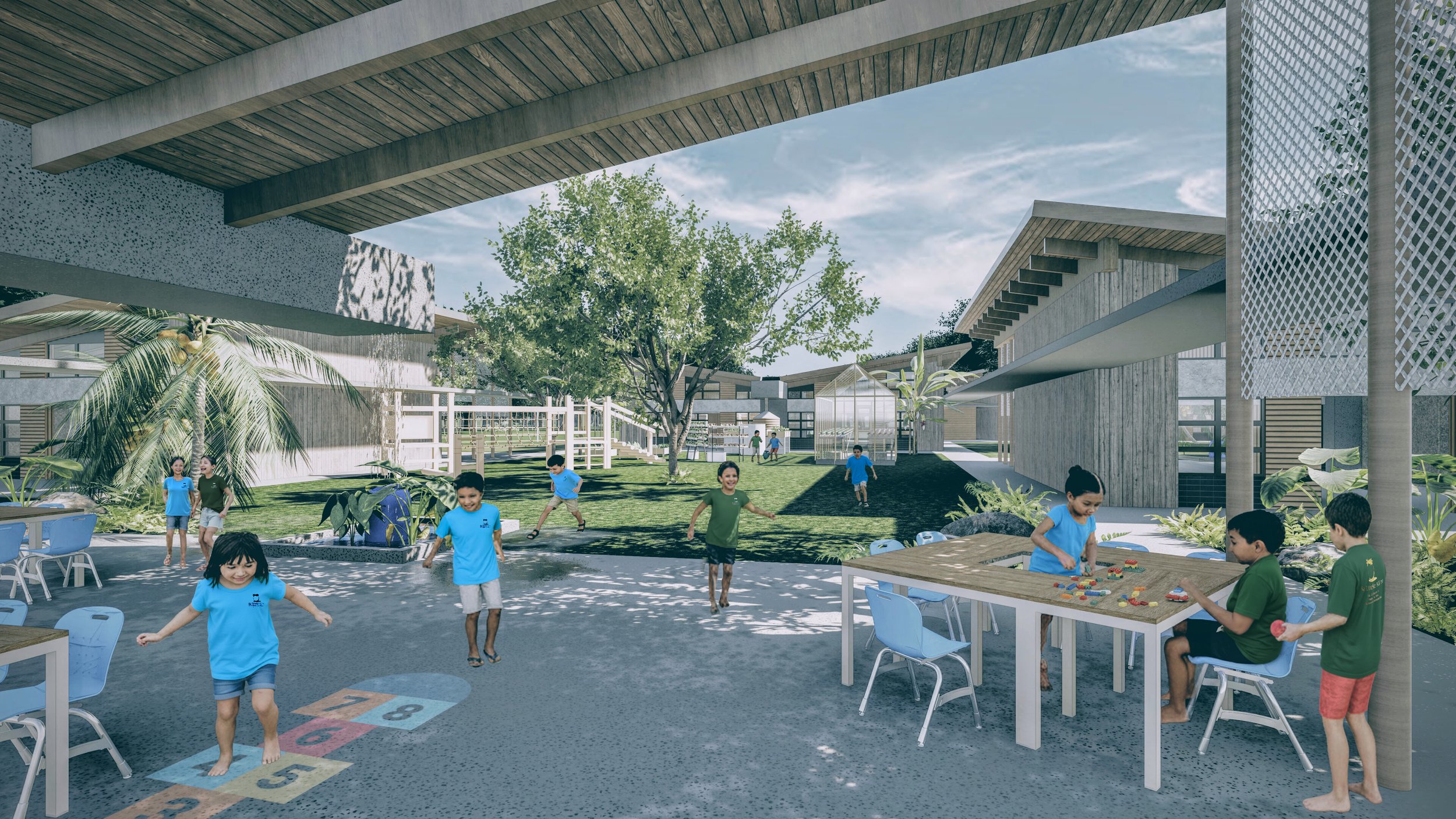
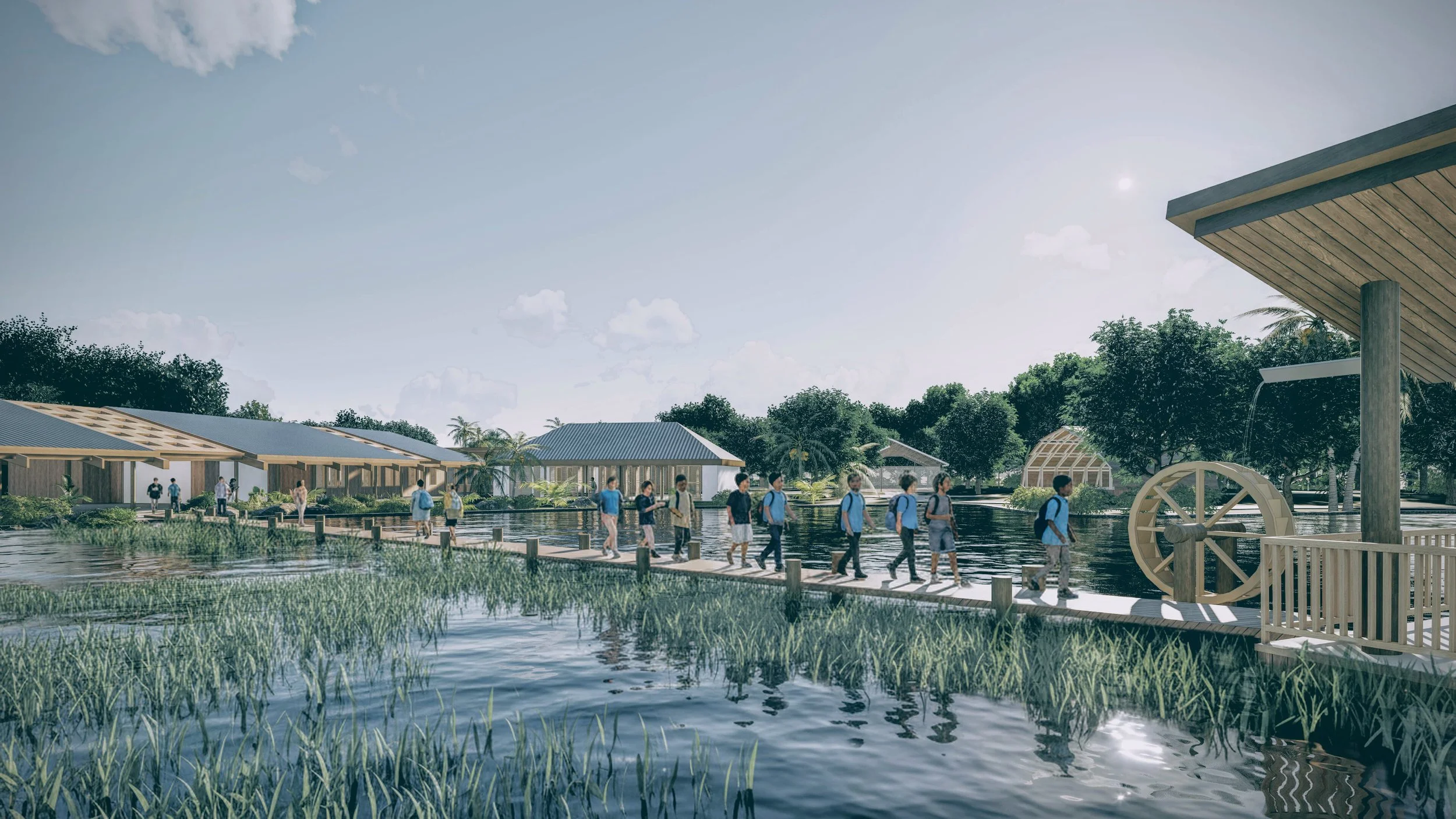
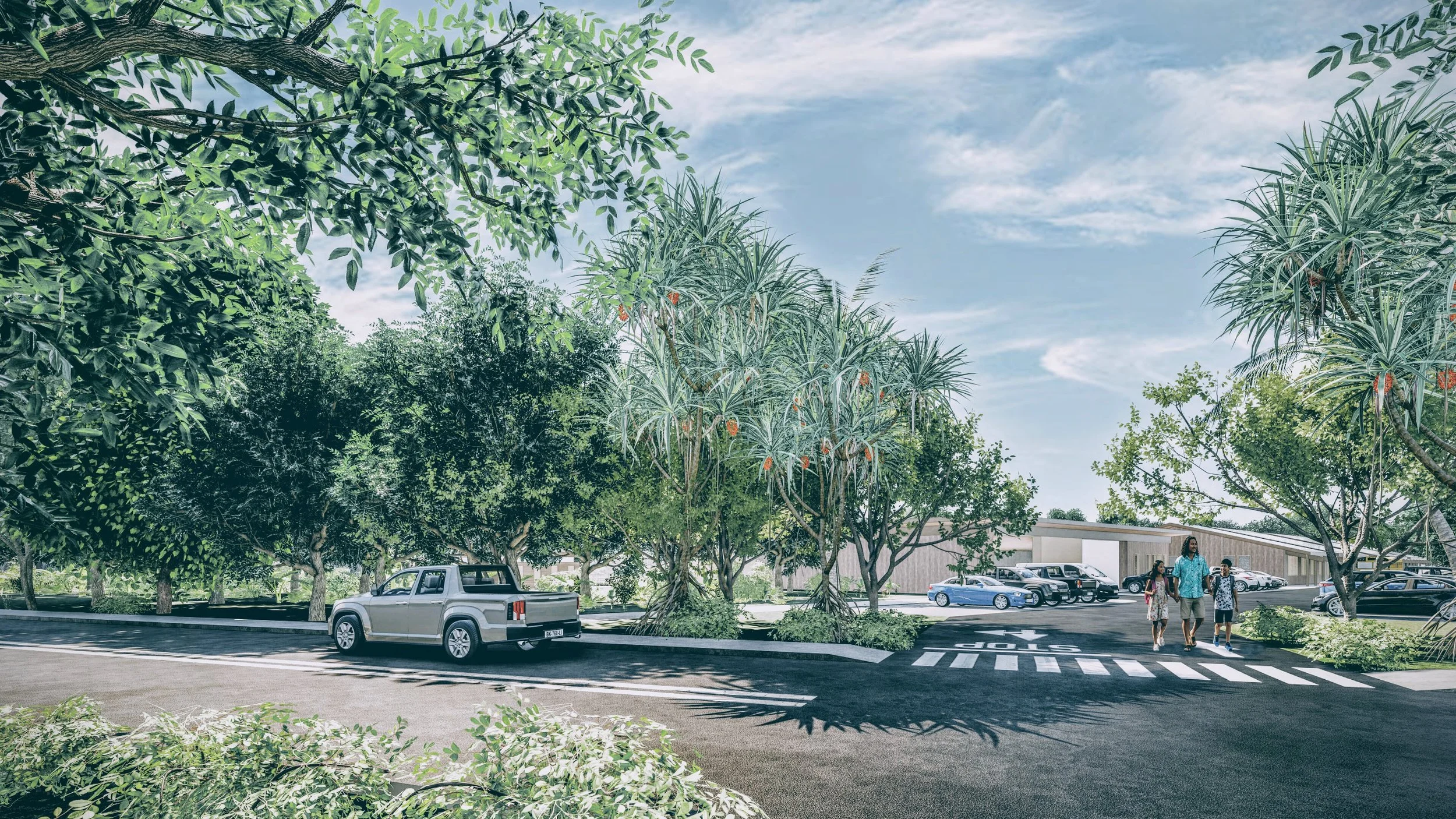
The Māhualauhīnano master plan translates a vision for a resilient Kīpuka in Keaukaha, home to Ka ʻUmeke Kāʻeo and Hui Hoʻoleimaluō, into a conceptual site design that supports education, cultural continuity, ʻāina stewardship, and climate resilience. Developed through community engagement, organizational priorities, and site research, the master plan incorporates facilities for 450 students with specialized spaces like a hālau, wet lab, and hale waʻa, while also serving as an emergency shelter with hurricane-protected areas, and renewable energy systems. the design emphasizes advancing Hawaiian language and knowledge, honoring Keaukaha’s heritage, improving resilience, fostering community and environmental connections, ensuring generational longevity, and leveraging innovative solutions.
Service Type: Master Planning + Architecture
Size: 80,000 Sq. Ft.
-
1. REFLECT & CONNECT COMMUNITY
Create a community hub for Keaukaha to congregate, discuss, organize, and celebrate together.
Connect to other sites in Keaukaha that are cared for by Hui Hoʻoleimaluō and Ka ʻUmeke Kāʻeo
Architecture should look like it belongs in Keaukaha
Design should give other communities the feeling that they could do something like this for themselves
Design should allow for community participation in building and construction as much as possible to foster community ownership
2. PLAN FOR LONGEVITY IN A GENERATIONAL FACILITY
Māhualauhīnano: the proliferation and permeation of ancestral ʻike throughout Keaukaha like the scent of hīnano
Create a long-term home for Ka ʻUmeke Kāʻeo and Hui Hoʻoleimaluō to continue educating students through Hawaiian language and culture
Simple and adaptable design that is easy to clean and manage over time by a small staff and volunteers
Quality materials should be used that can withstand the coastal and wet environment in Keaukaha
3. REFLECT & CONNECT ENVIRONMENT
Use local and native materials where possible
Seamless with the environment, open to extend indoor spaces to outdoors
Design should minimize any negative or burdensome impact on surrounding environments and communities
Facilities should not be overly extravagant or wastefully luxurious but should be high quality and Thoughtful
4. IMPROVE CLIMATE & DISASTER RESILIENCE
Design buildings to allow operation through climate related disasters
Create additional connection points for community safety and access during evacuation scenarios
Provide gathering space to be used to disseminate critical information for community safety
Design utility systems with backup power and communication capabilities
HO‘OKUA‘ĀINA
PĀLĀWAI RESILIENCE HUB MASTER PLAN
Kailua, Hawai‘i
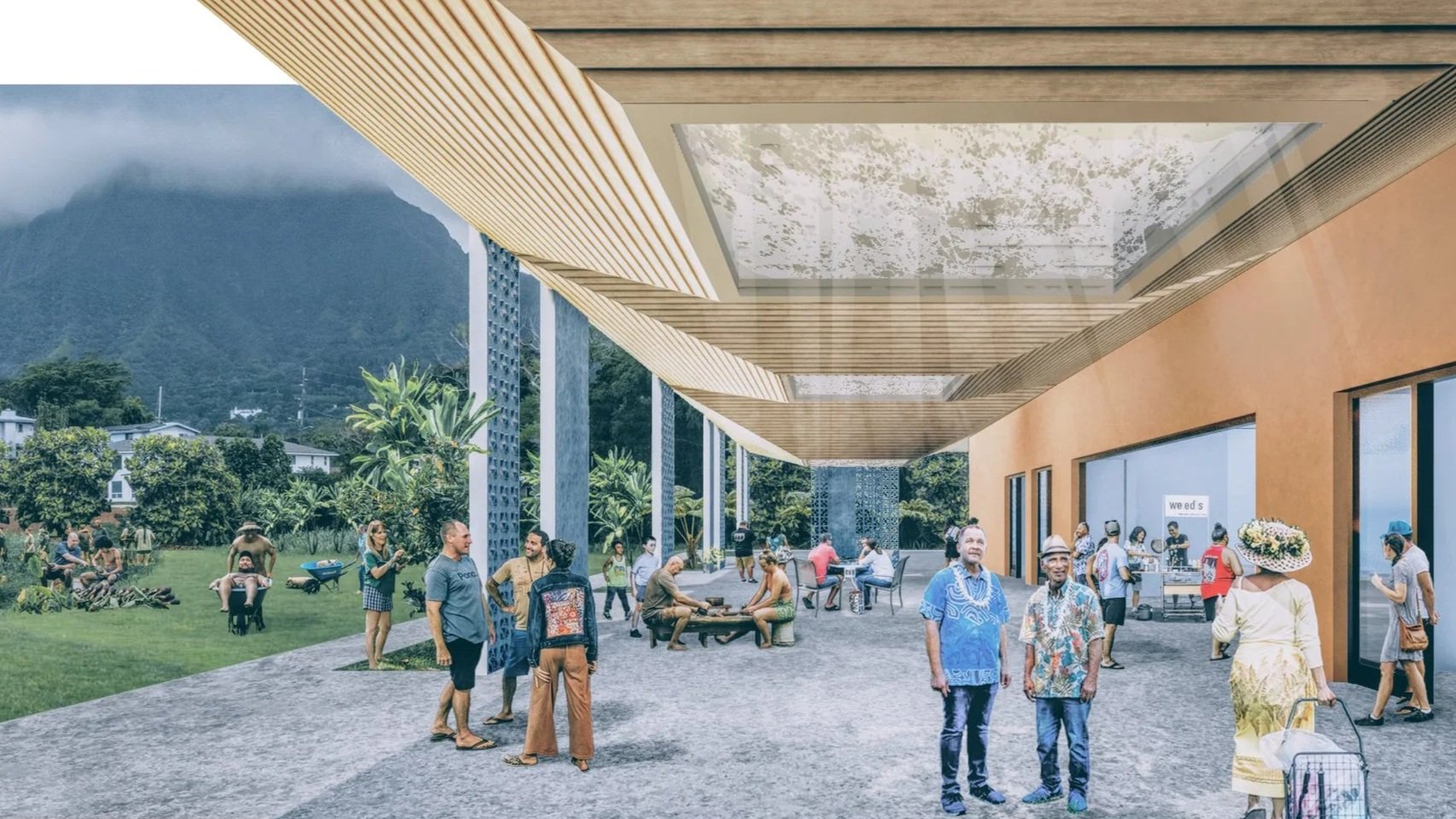
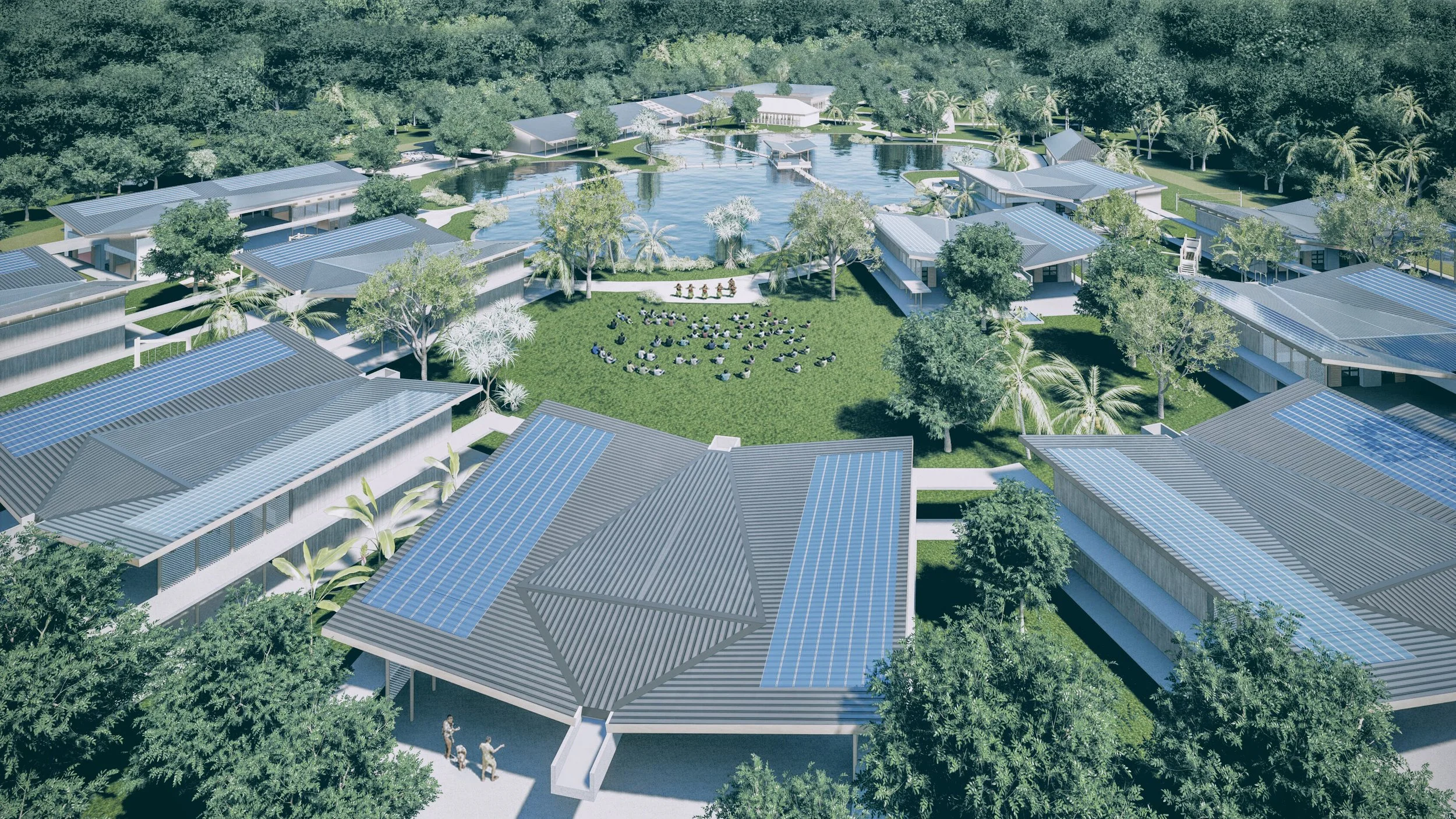
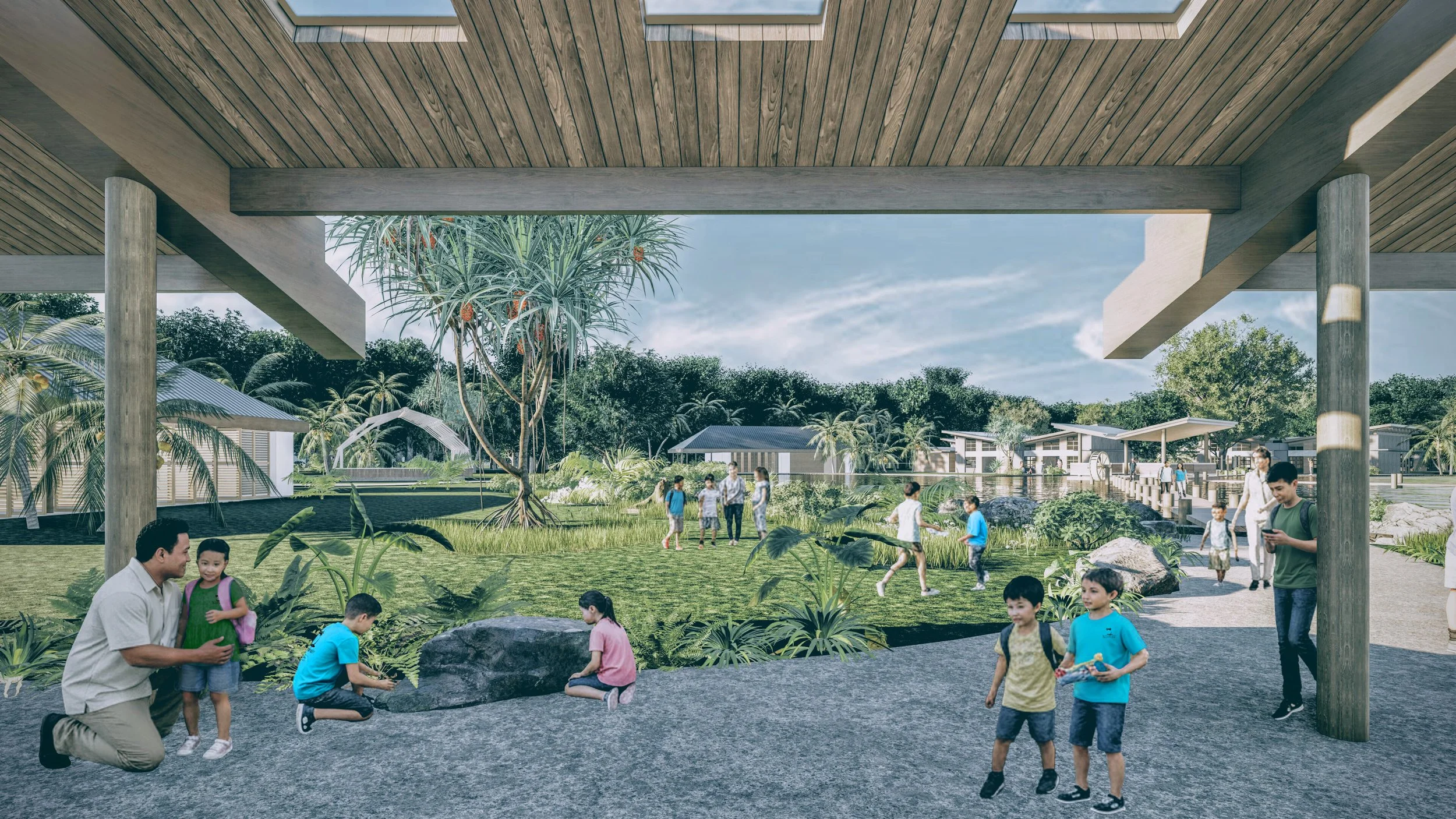
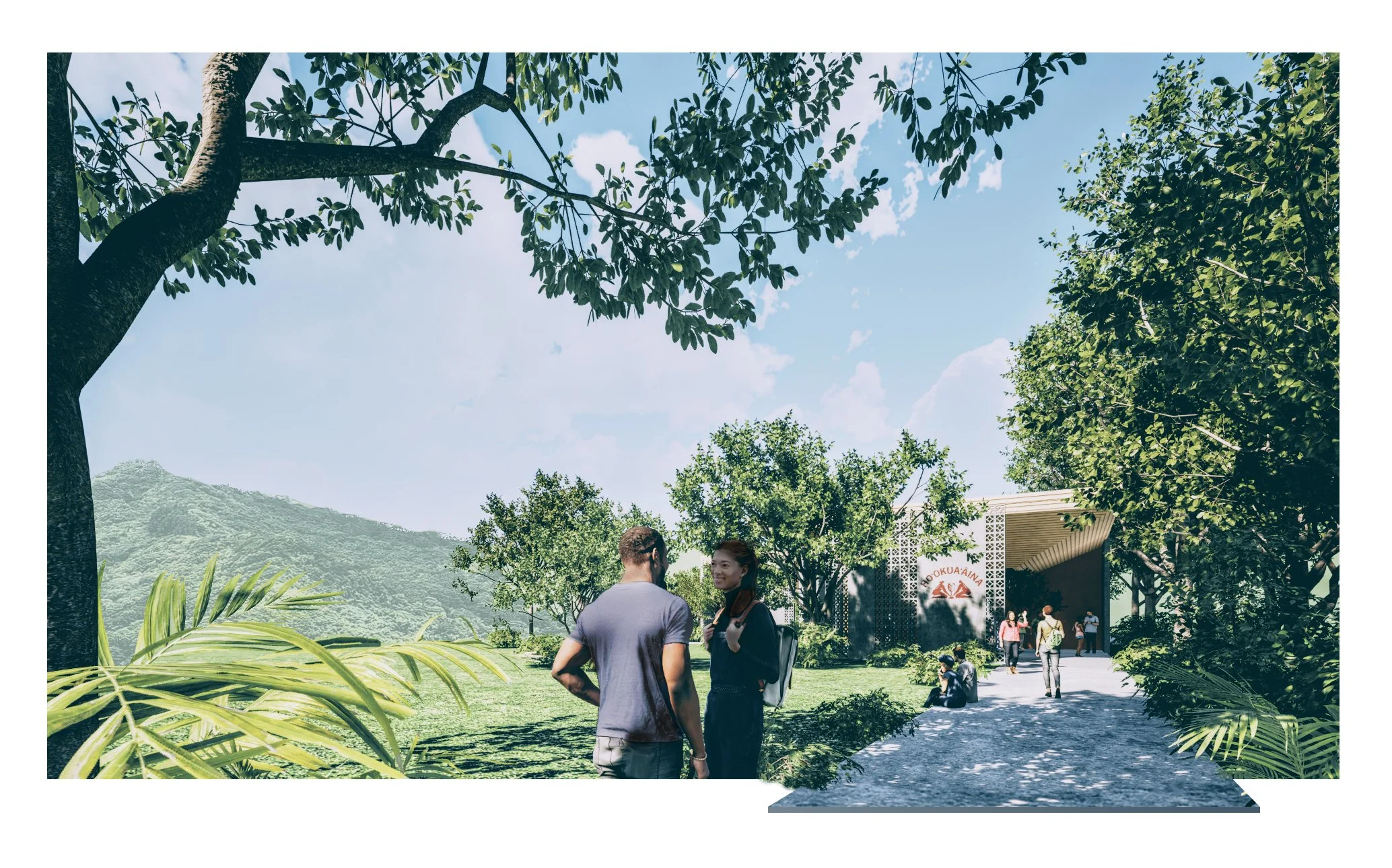
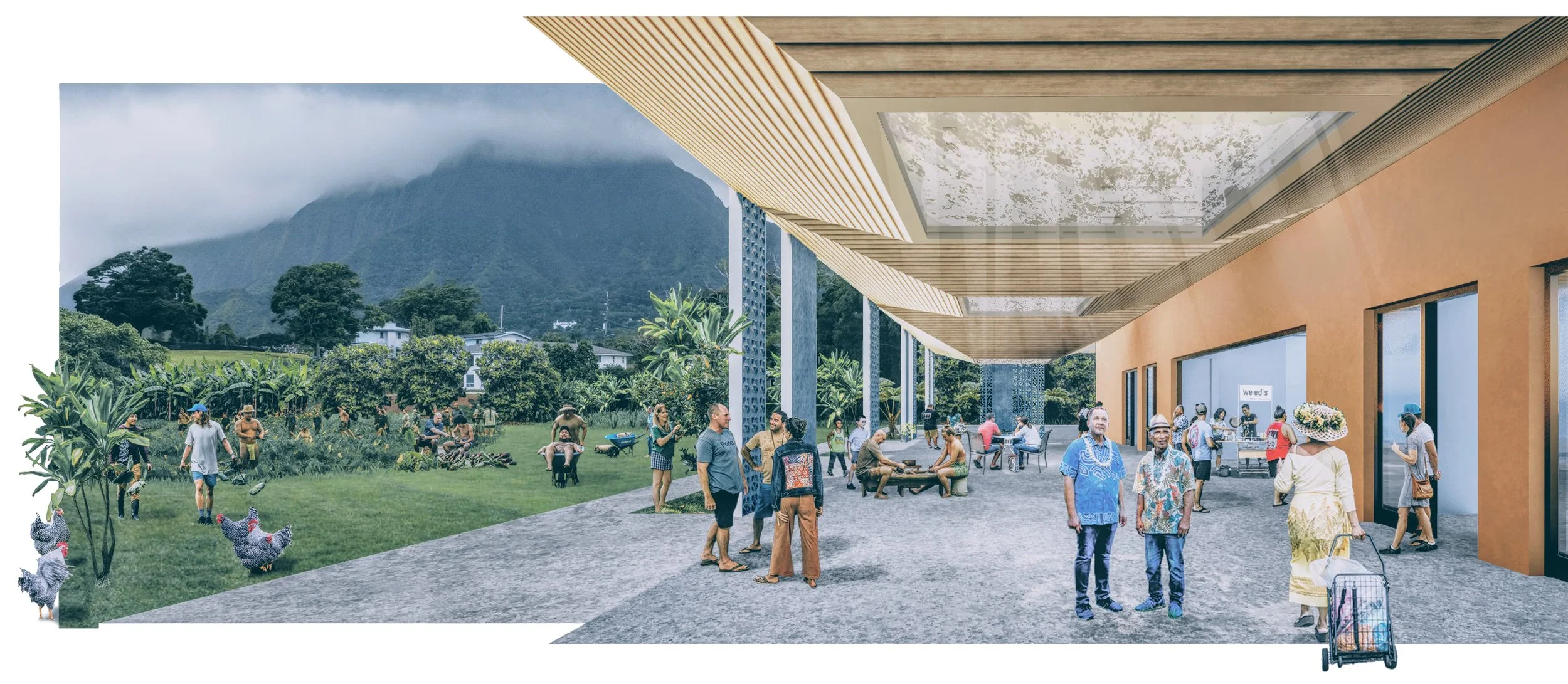
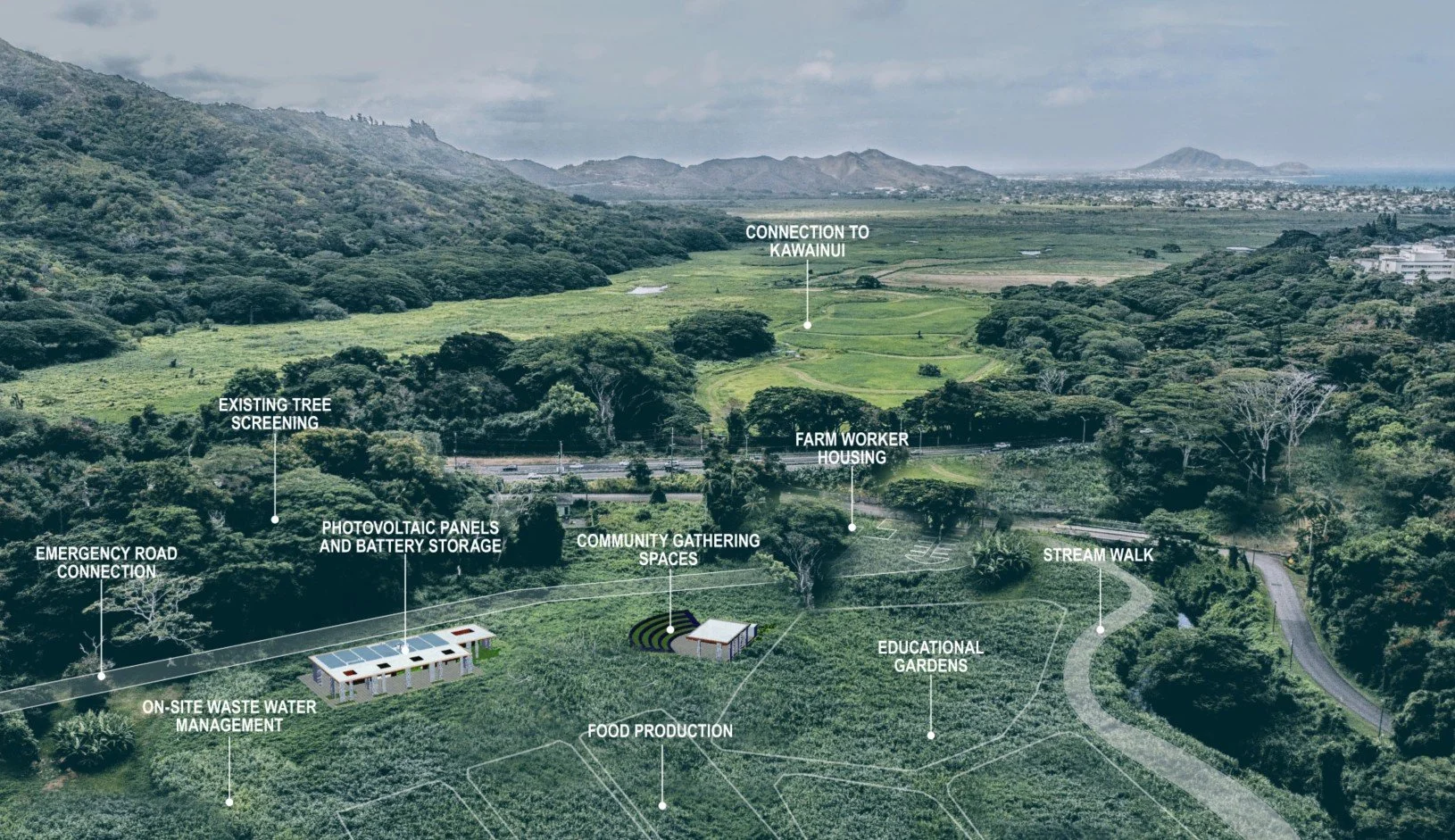
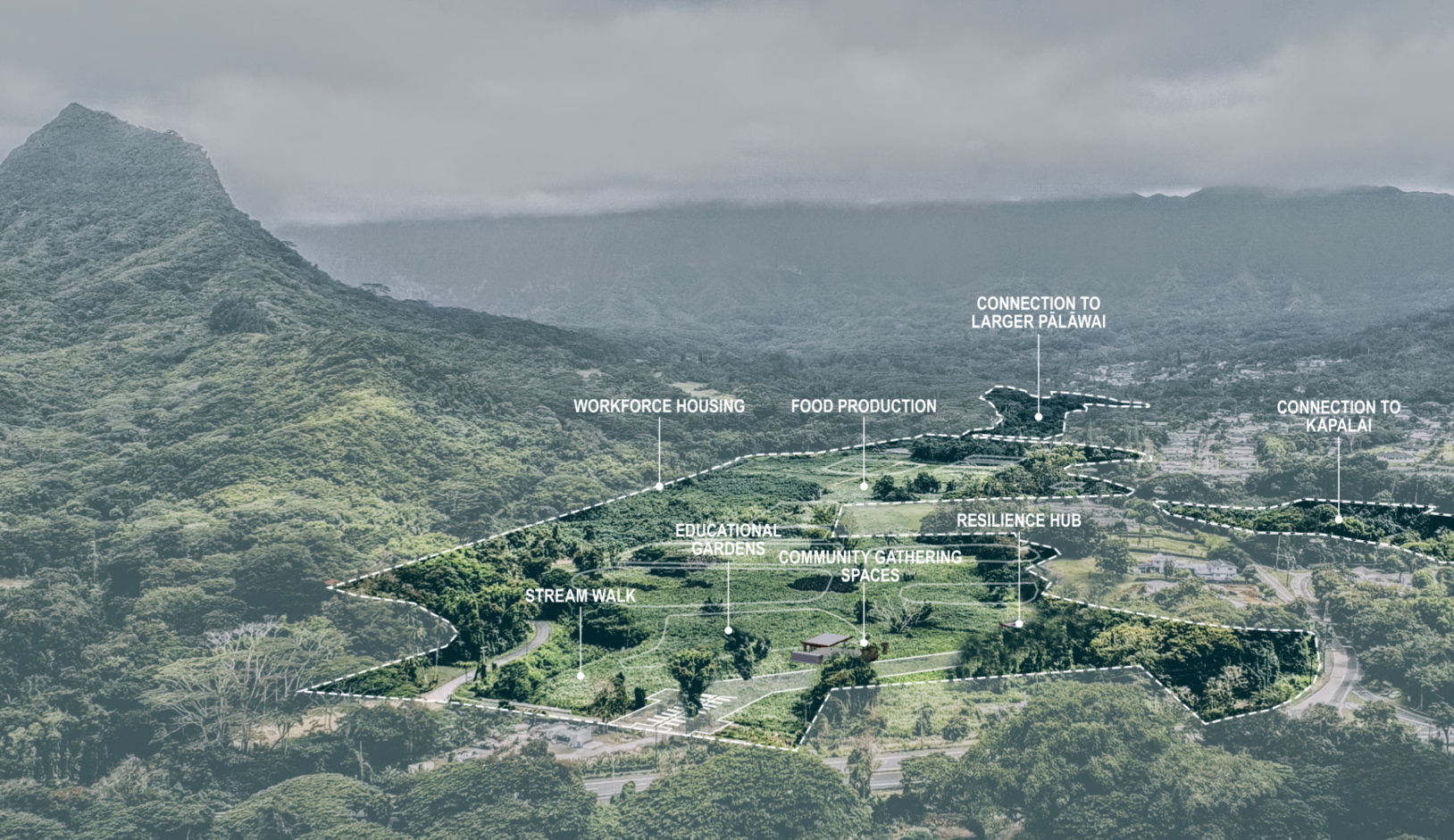
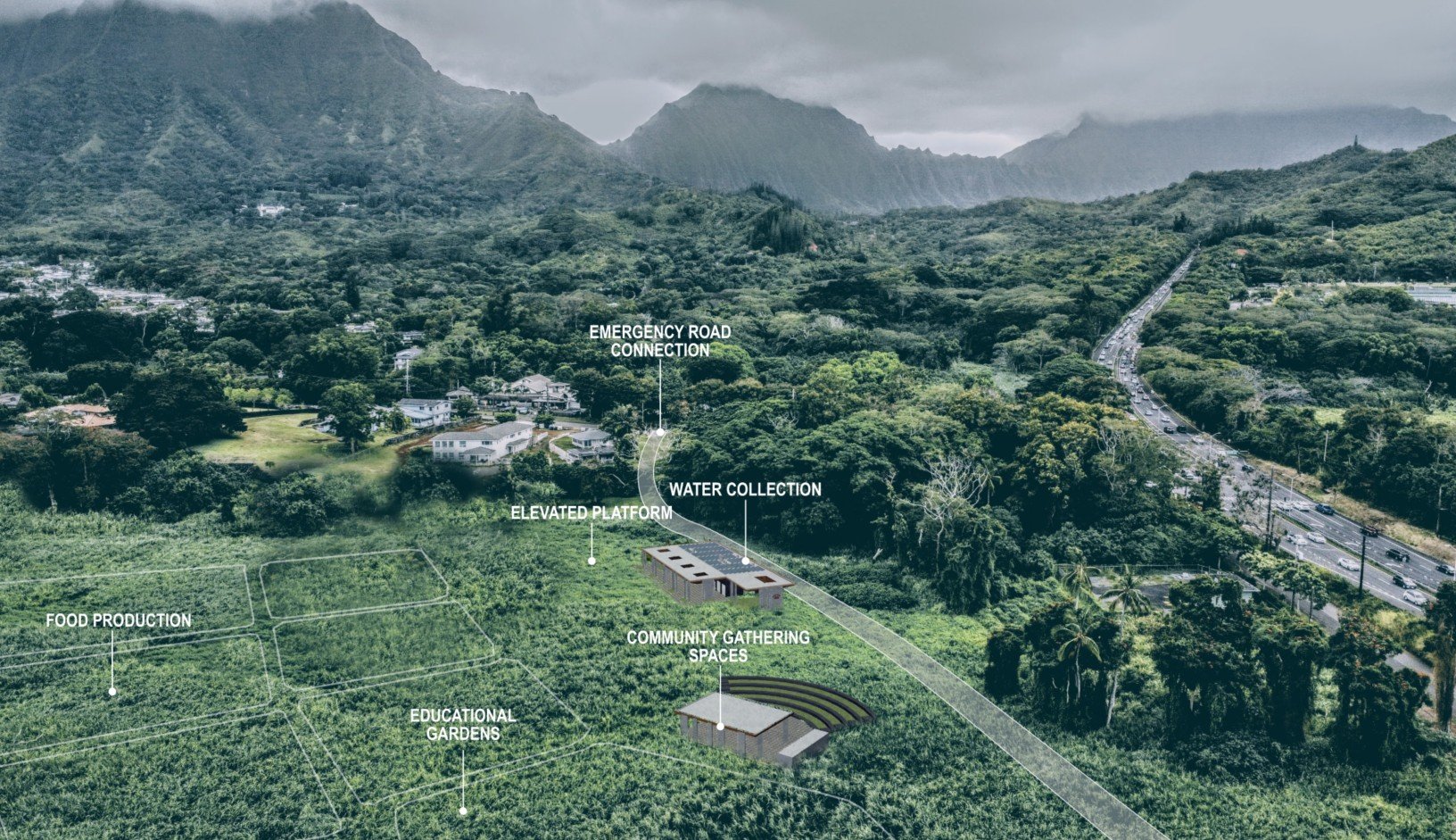
This master plan envisions a puʻuhonua - a place of refuge - where ancestral wisdom, innovation, and economic empowerment converge to strengthen Kailua’s ahupuaʻa. In addition to the resilience hub, the plan focuses on restoring life-giving water pathways and Maunawili Stream to heal ecosystems and enhance climate resilience, while advancing food sovereignty through culturally grounded, sustainable agriculture that increases local food access and reconnects families to ʻāina. It also establishes leadership and green job pathways rooted in Hawaiian values and ʻāina stewardship, ensuring a sustainable resident workforce dedicated to mālama ʻāina for generations to come.
Service Type: Master Planning + Architecture
Size: 116 acres
HĀLAU OF ʻŌIWI ART
HAWAIIAN CULTURAL CENTER
Wailuku, Hawai‘i
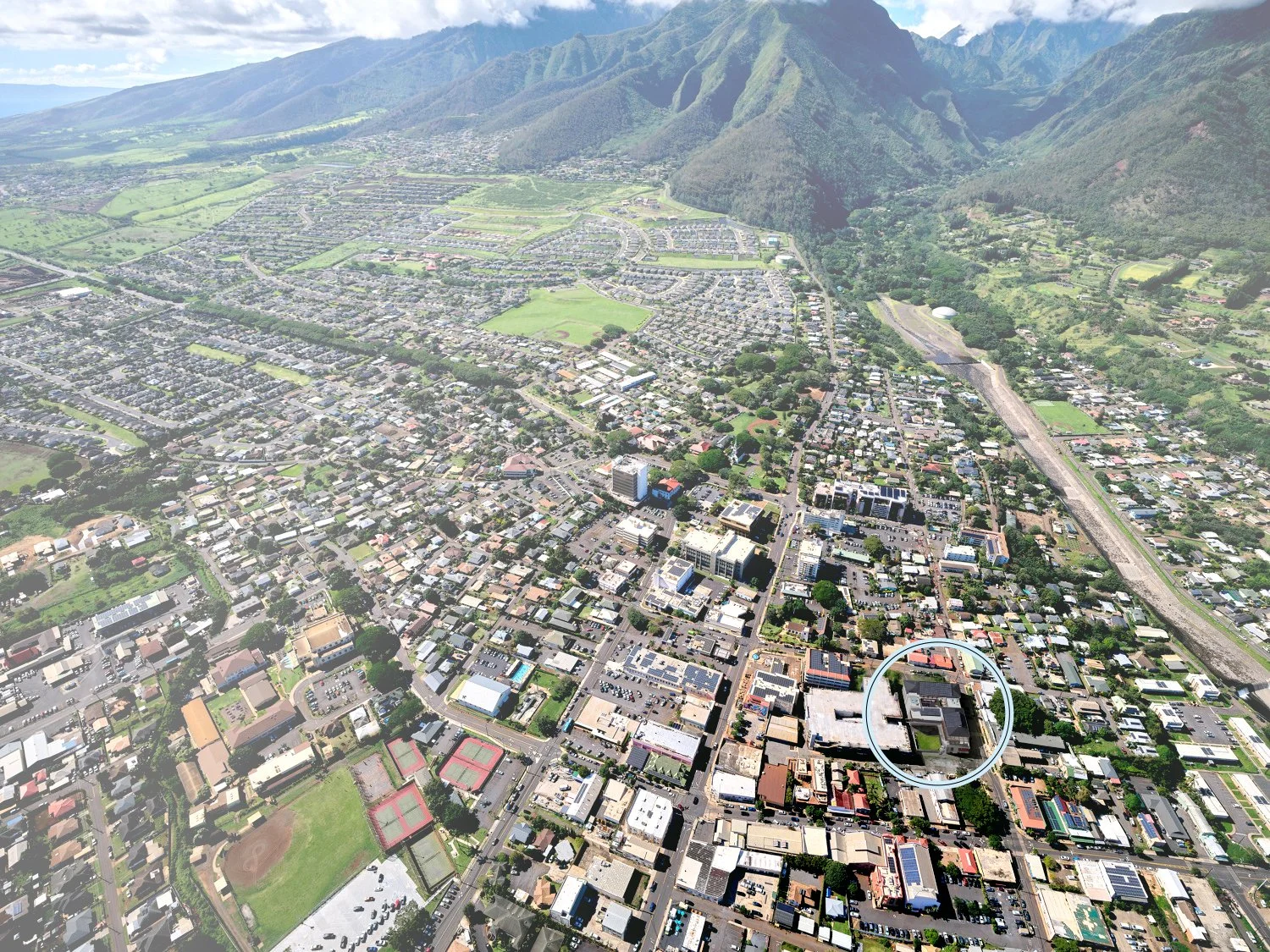
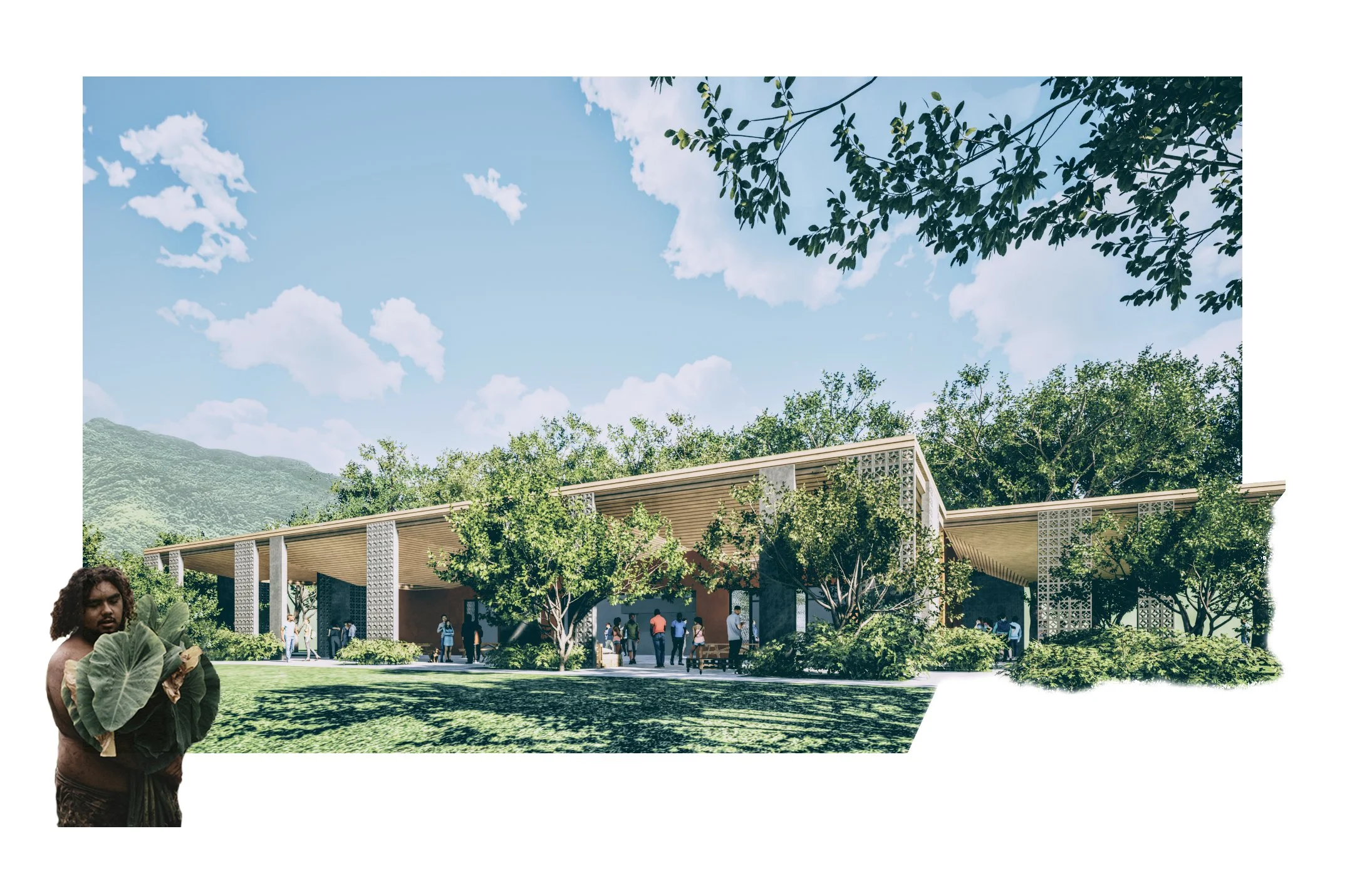
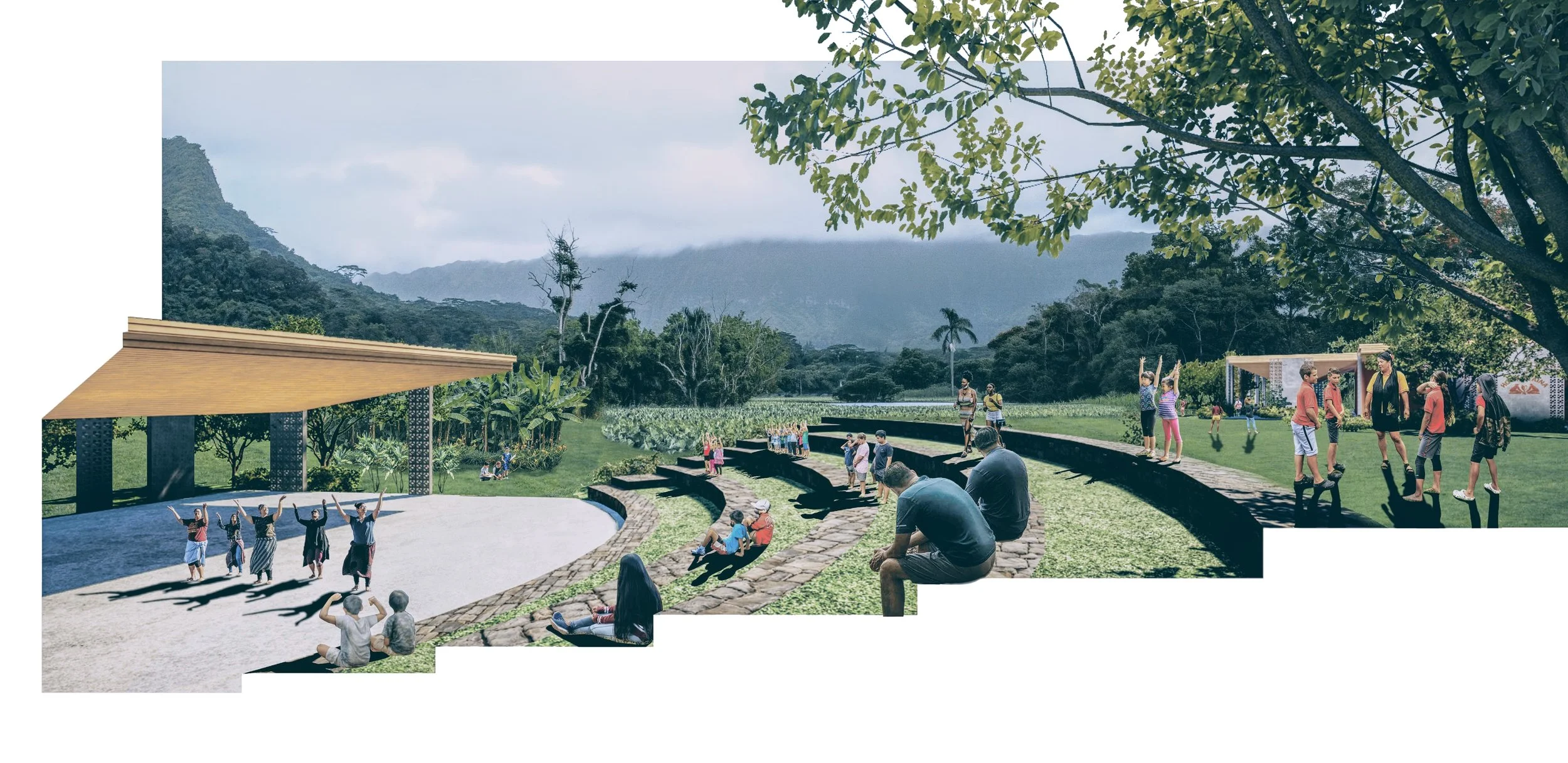
The Hālau of ʻŌiwi Art (HOA Maui), currently under construction, will serve as a permanent home for the study, practice, and perpetuation of hula and other ʻōiwi arts. It represents a shared vision to nurture Hawaiian cultural traditions, strengthen community connections, and honor the artistry of our kūpuna. This unique space will bring keiki, kūpuna, and kumu together to learn, celebrate, and sustain the living rhythms of hula and the many interconnected forms of ʻōiwi expression, ensuring their vitality for generations to come.
The facility will provide a central meeting space for hālau hula, as well as classrooms, indoor and outdoor event spaces, and areas for cultural gatherings. It will also house a resiliency and recovery center, a shelter space, and Kaunoa Senior Services programs. Designed with deep respect for the past and a clear vision for the future, HOA Maui will be a place where Hawaiian culture remains a vibrant, evolving practice
Anticipated Completion: 2027
Service Type: Master Planning + Architecture + Interiors
Size: 47,000 Sq. Ft.
-
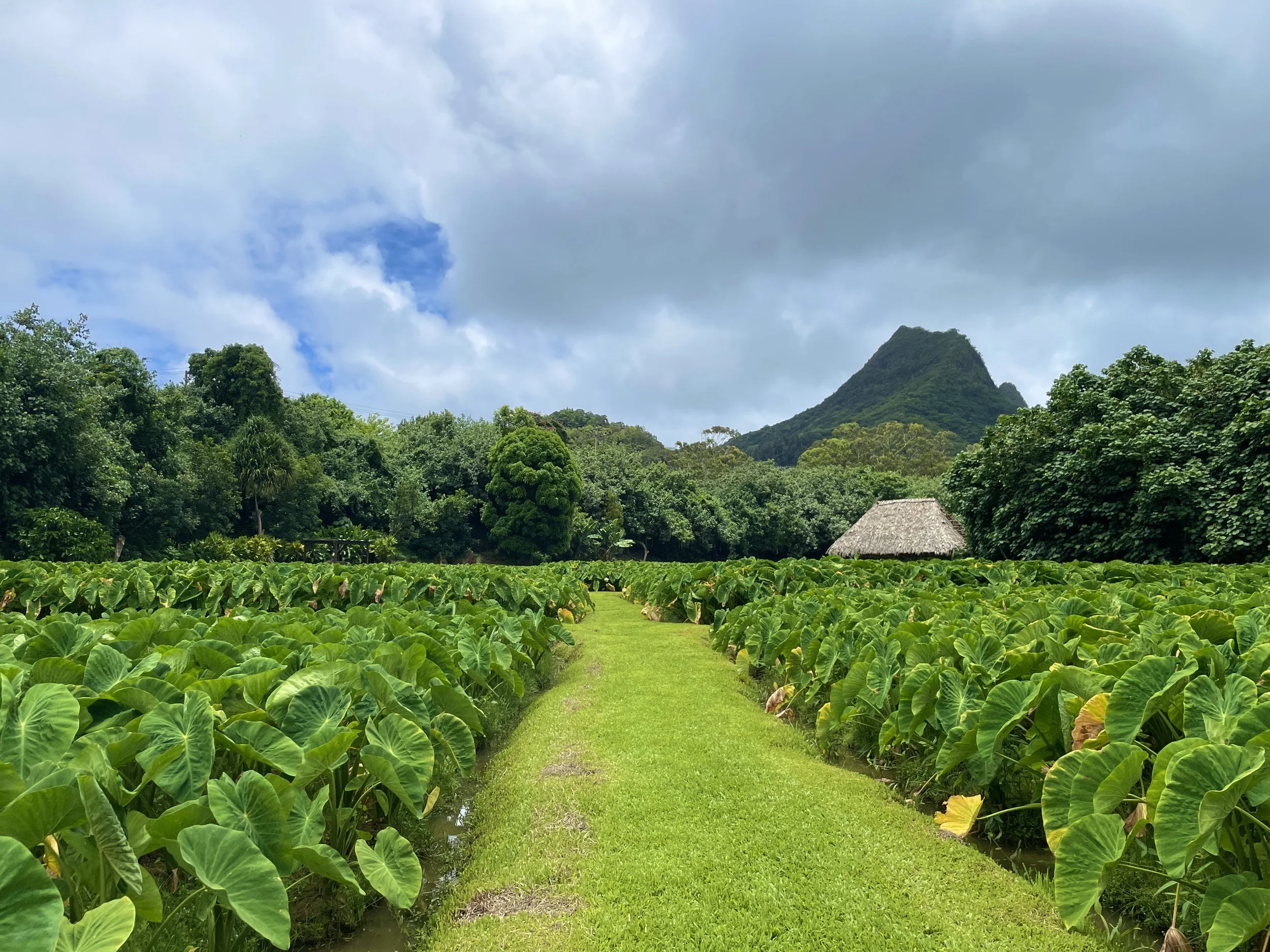
The design of the Hālau of ʻŌiwi Art will center its inspiration on the expansive practice of Hula and the ʻike associated with it. Each component of ʻike hula relates back to the ideas of hoa and hōʻā through the symbolism of water as a carrier, kalo as lineage, and clouds as both protectors and symbols of enlightenment.
WAILUKU CIVIC COMPLEX
PARKING GARAGE
Wailuku, Hawai‘i
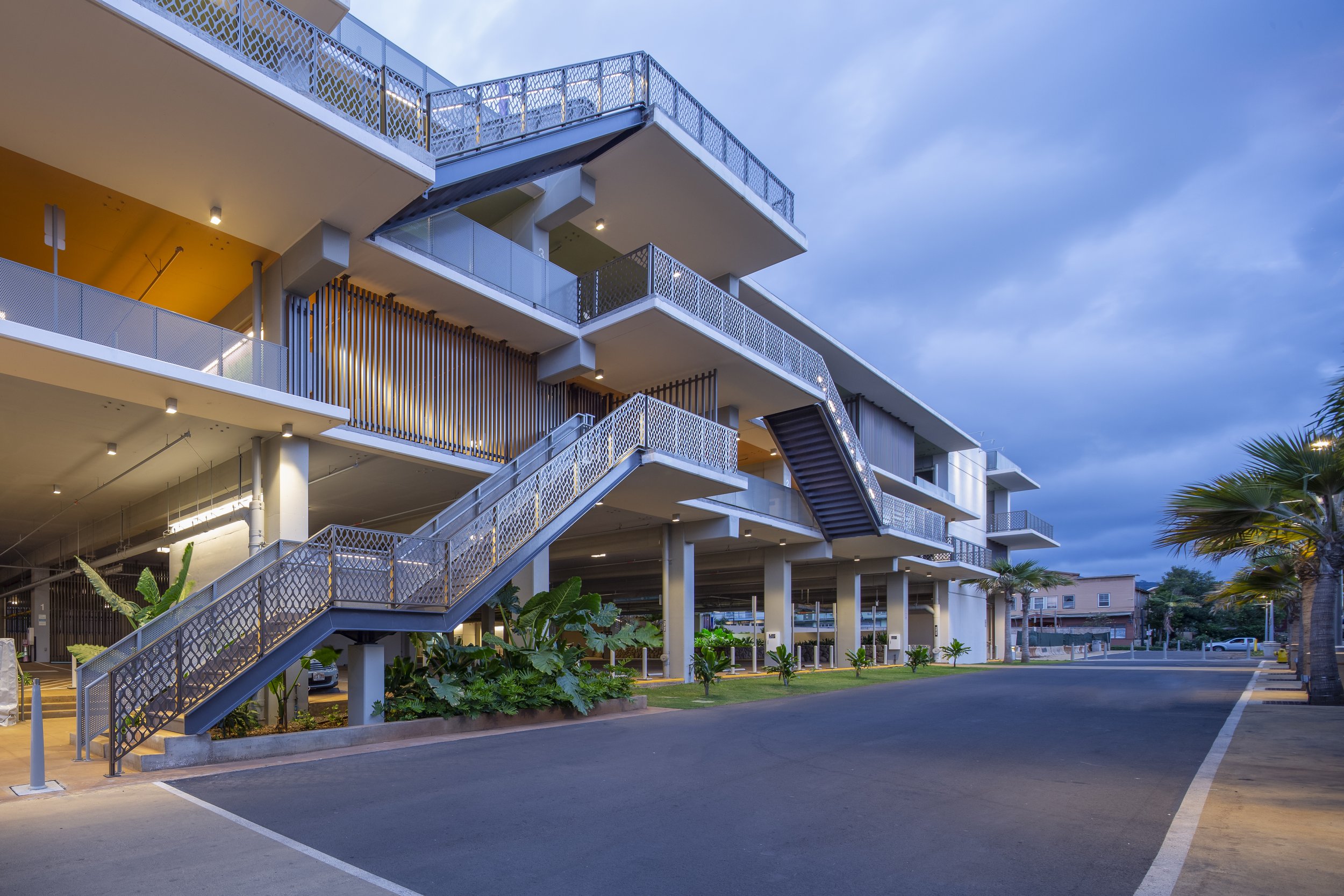
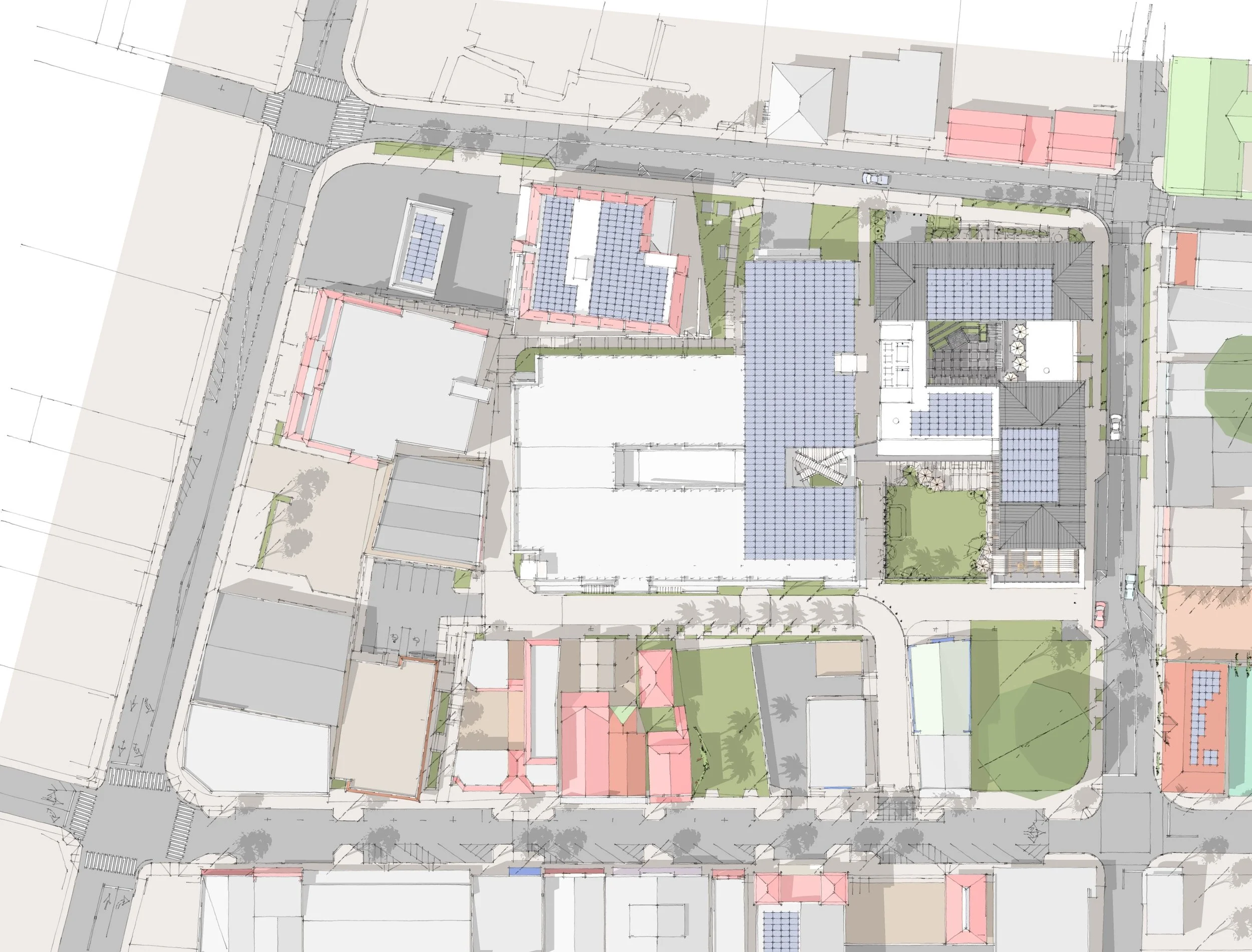
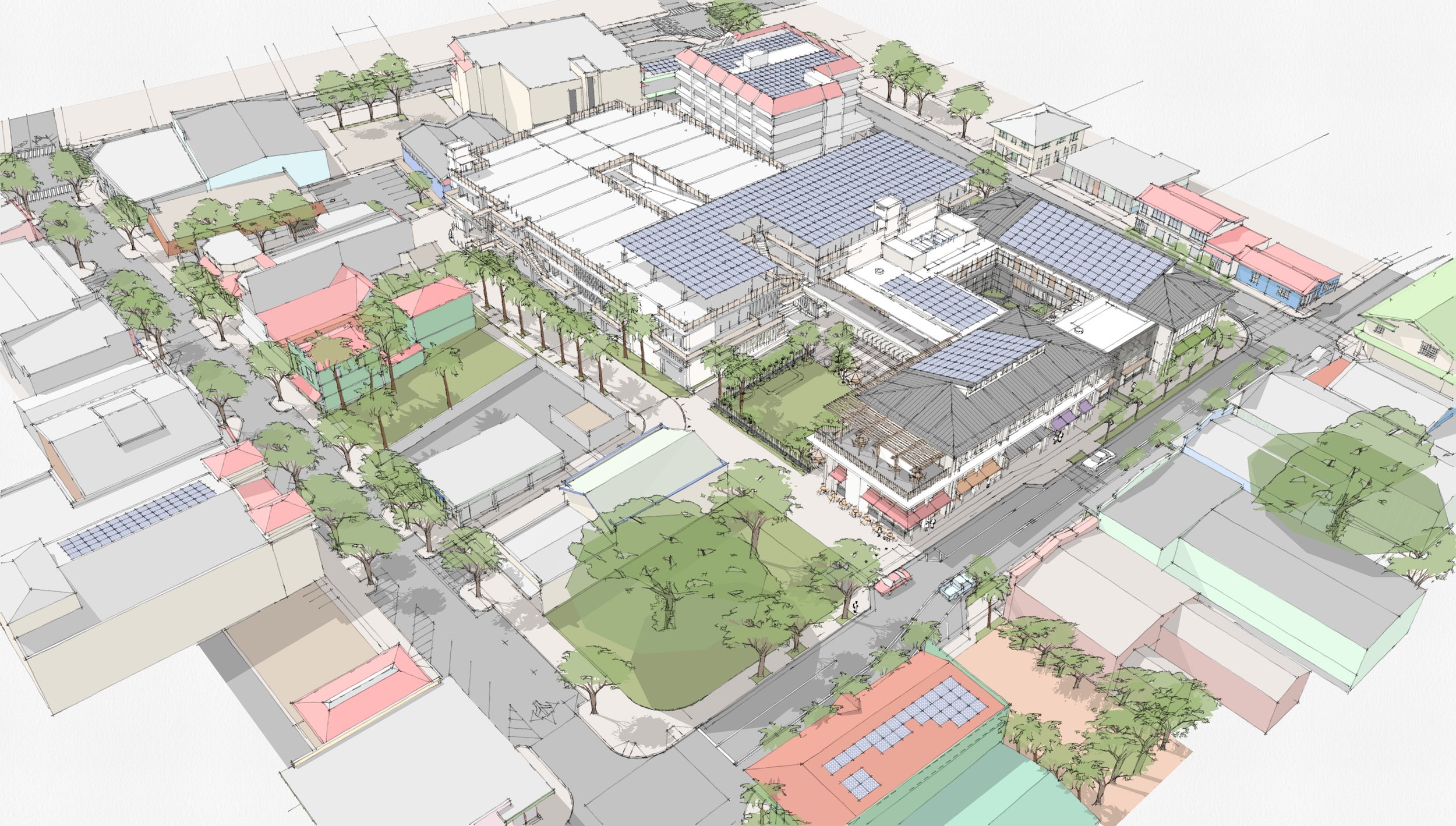
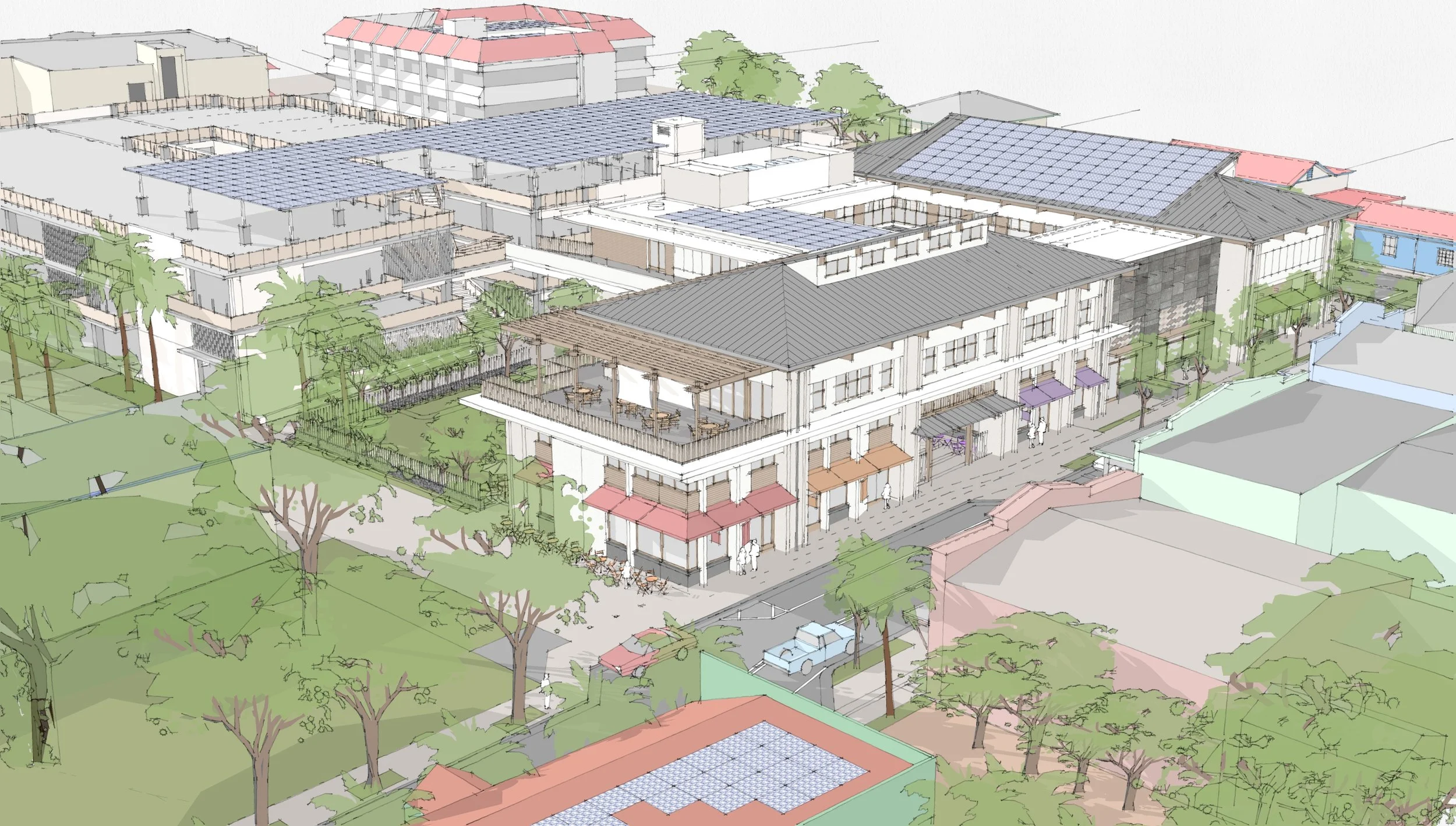
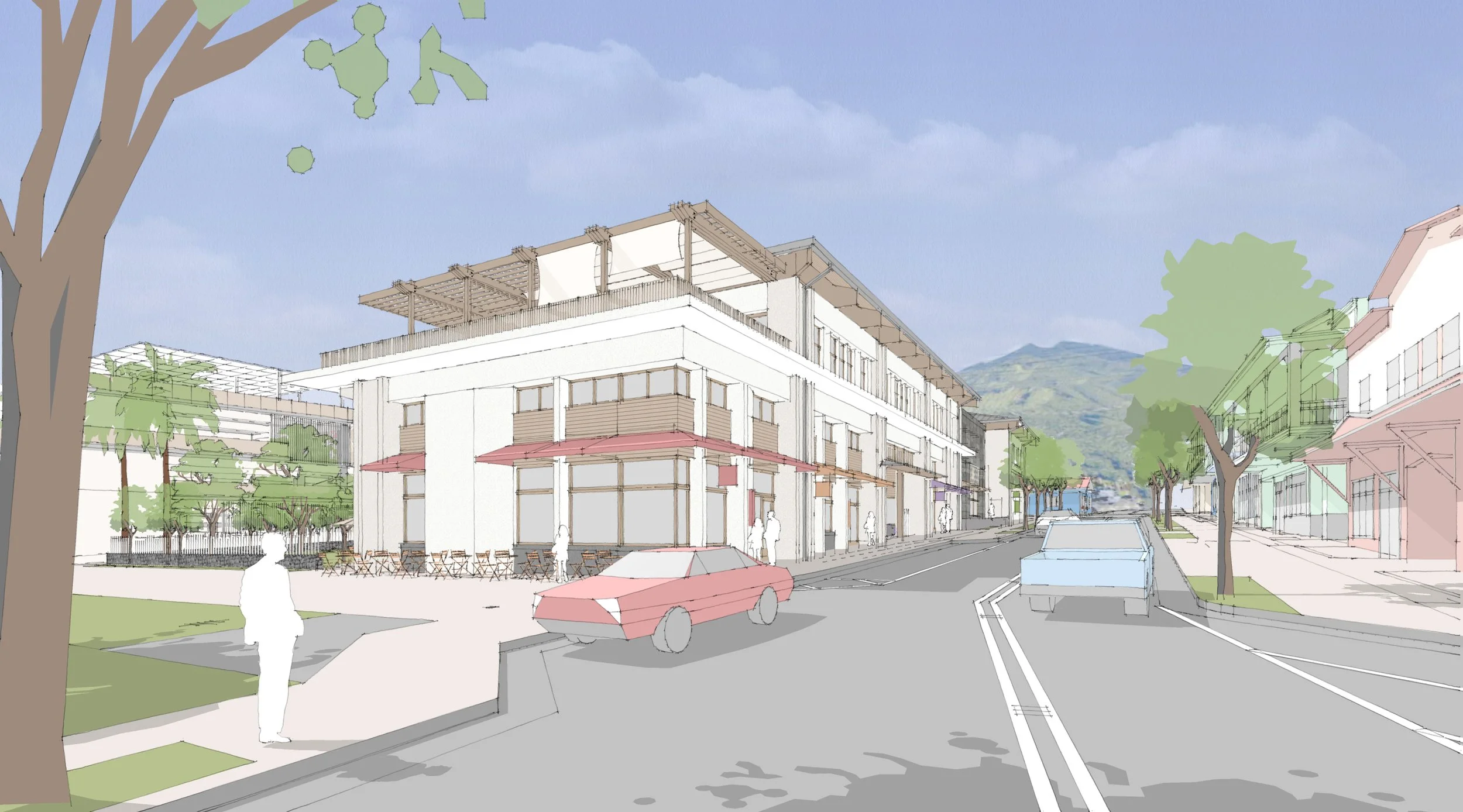
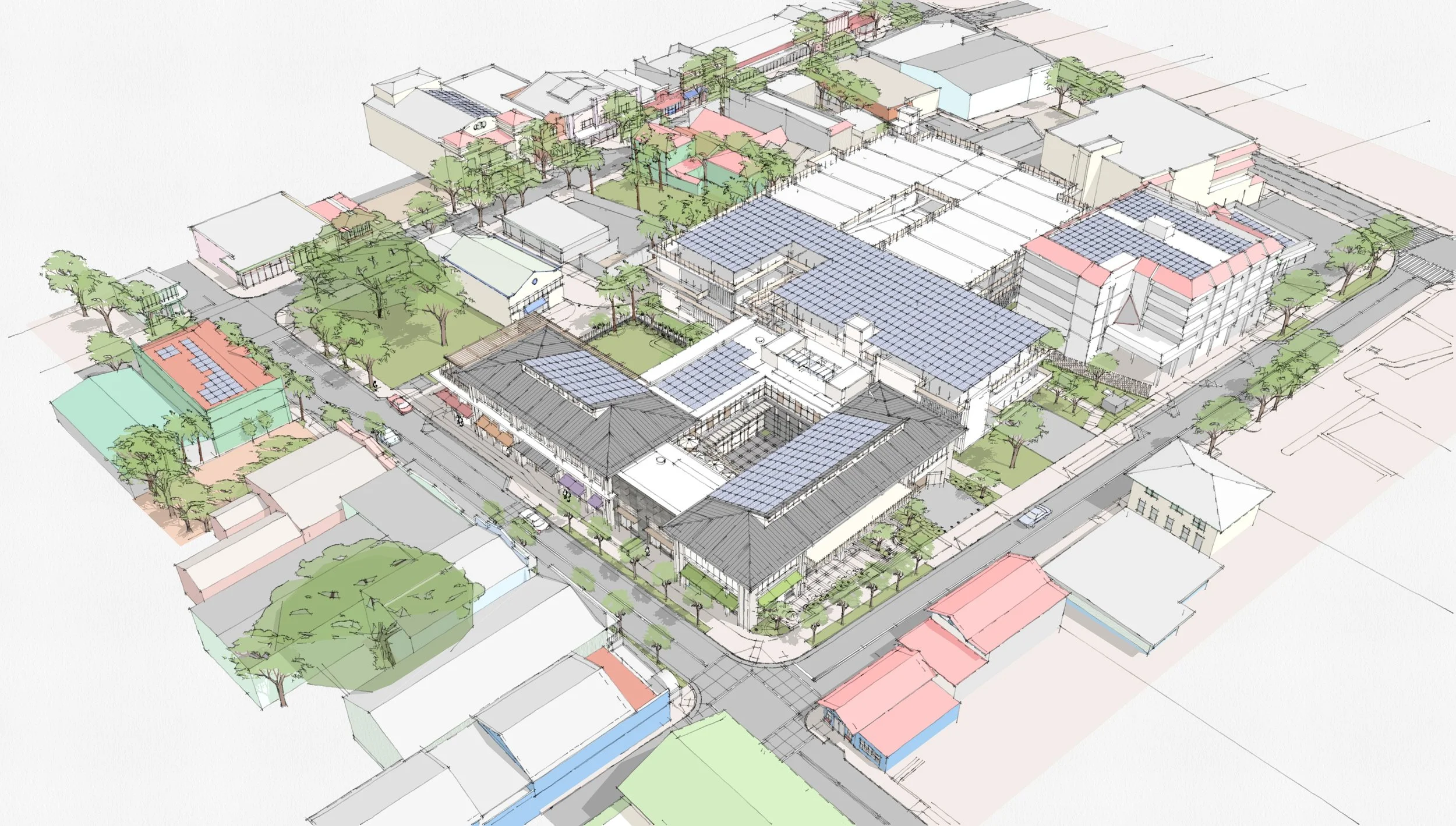
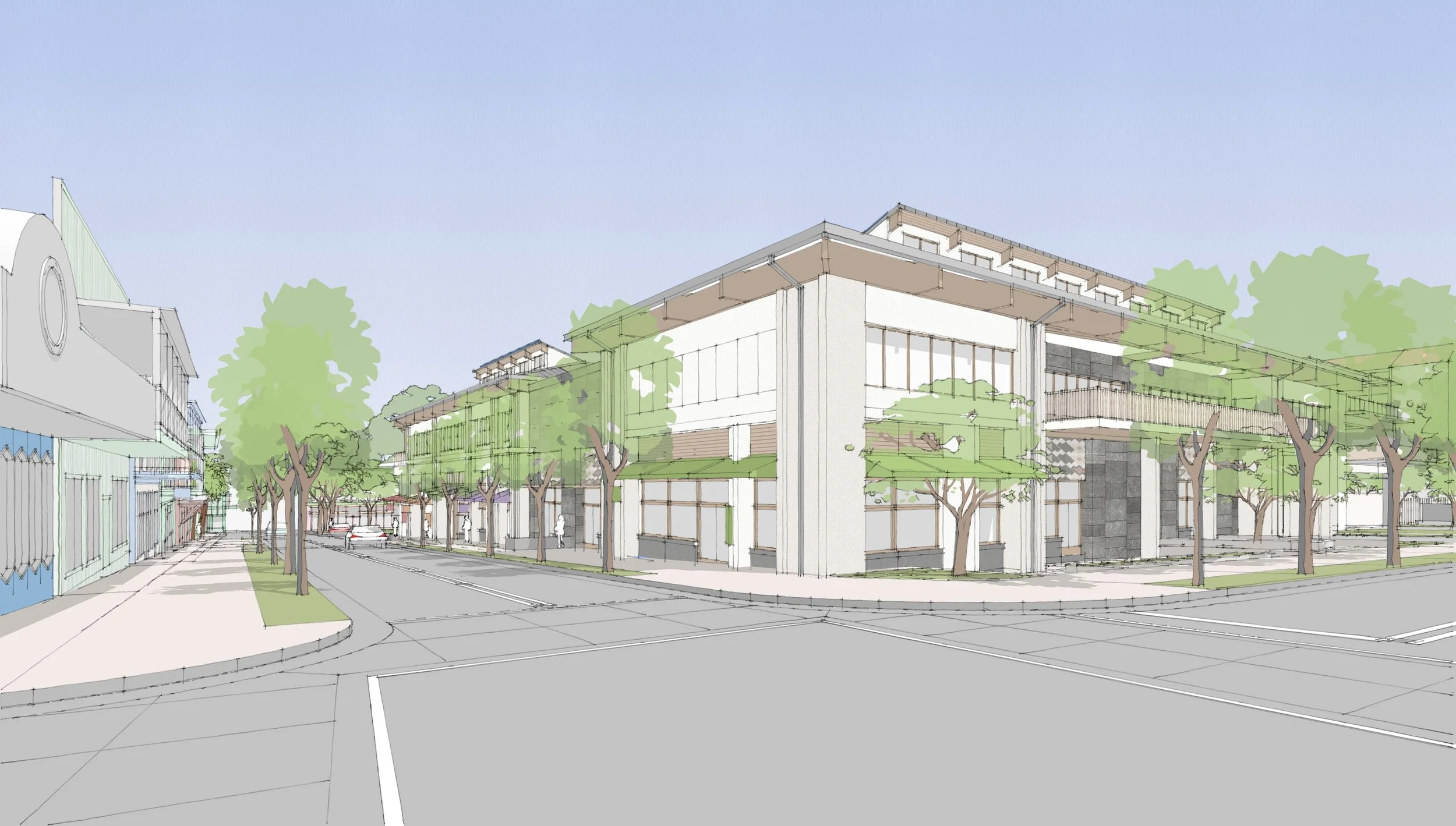
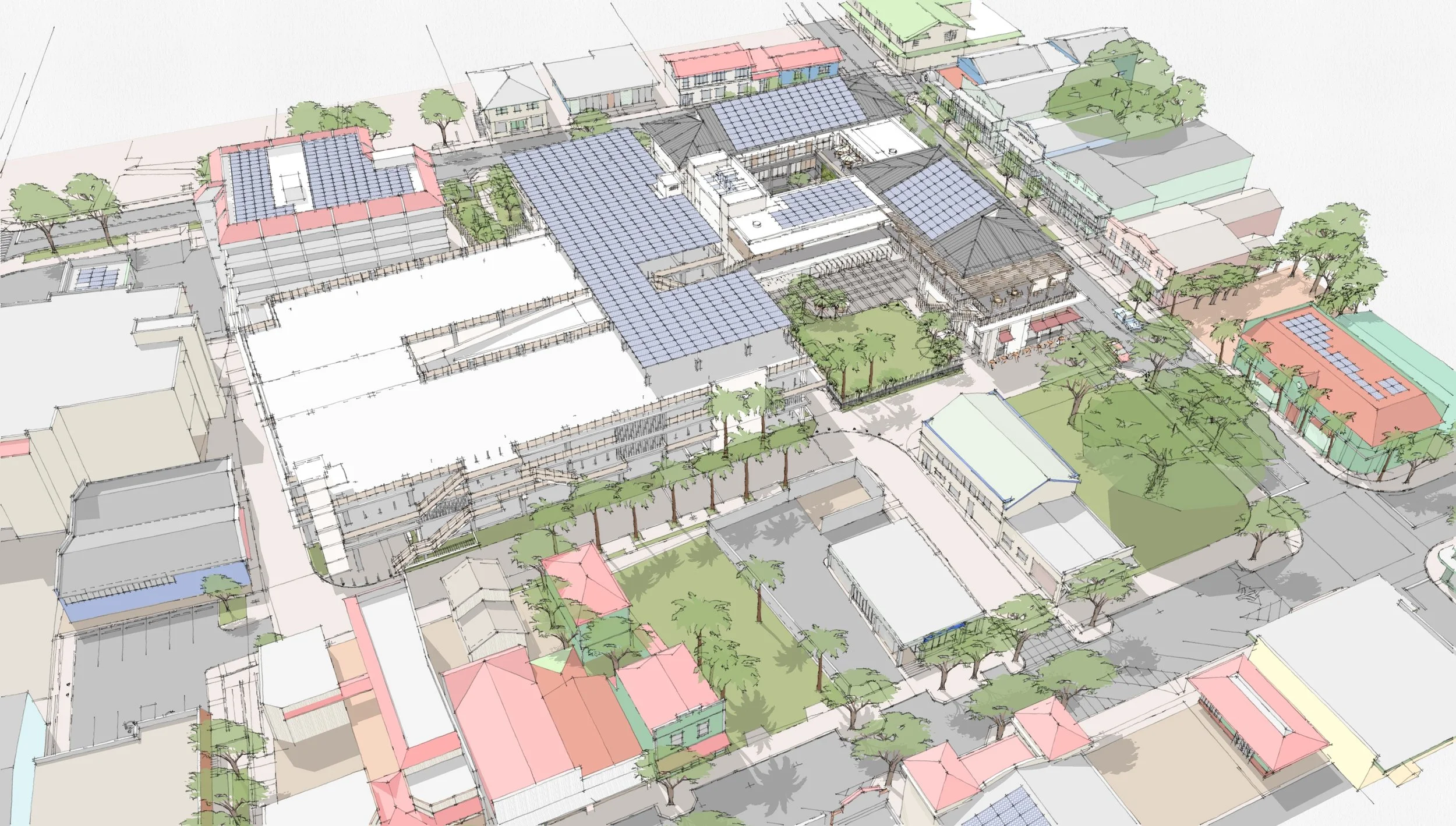
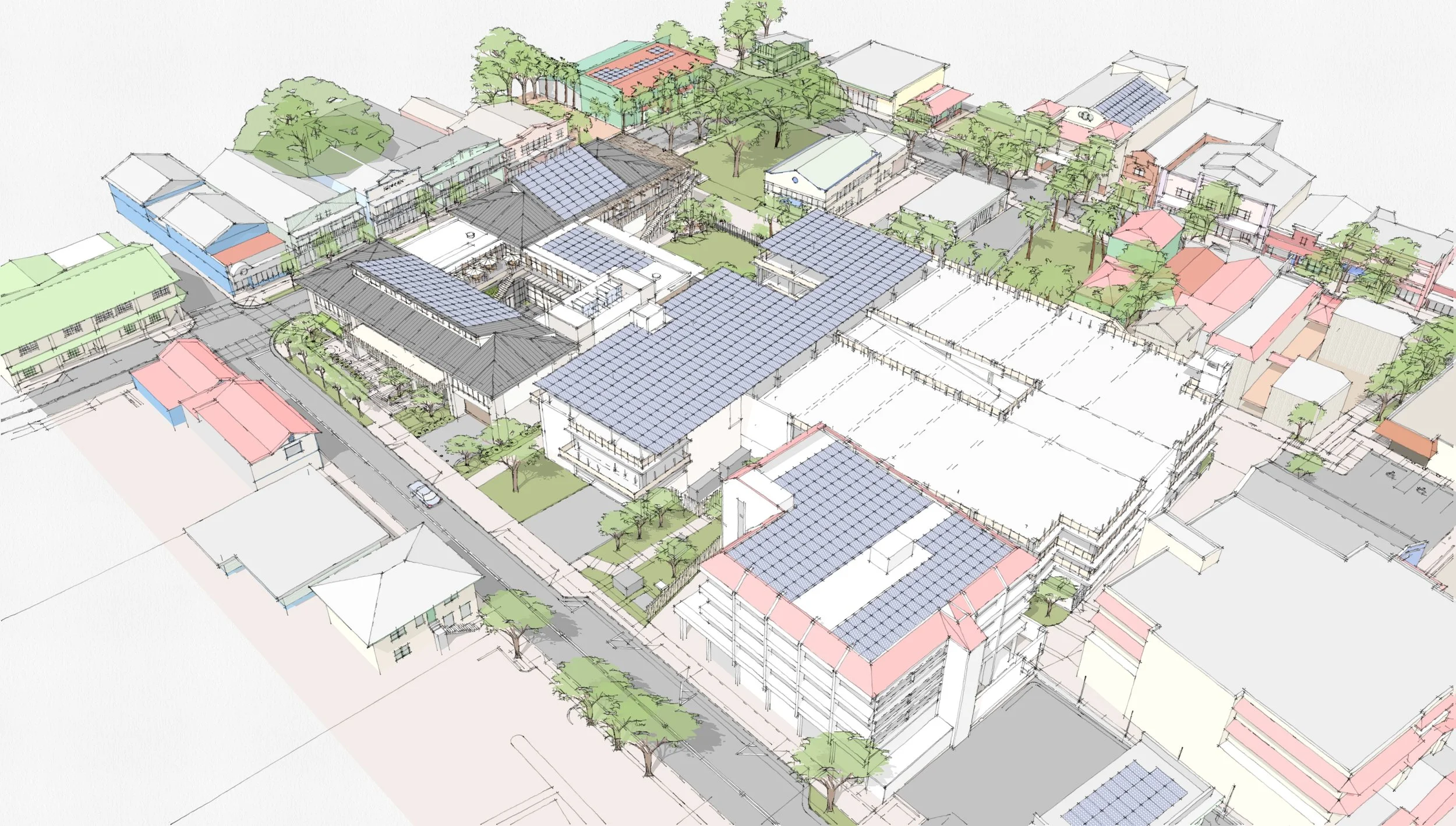
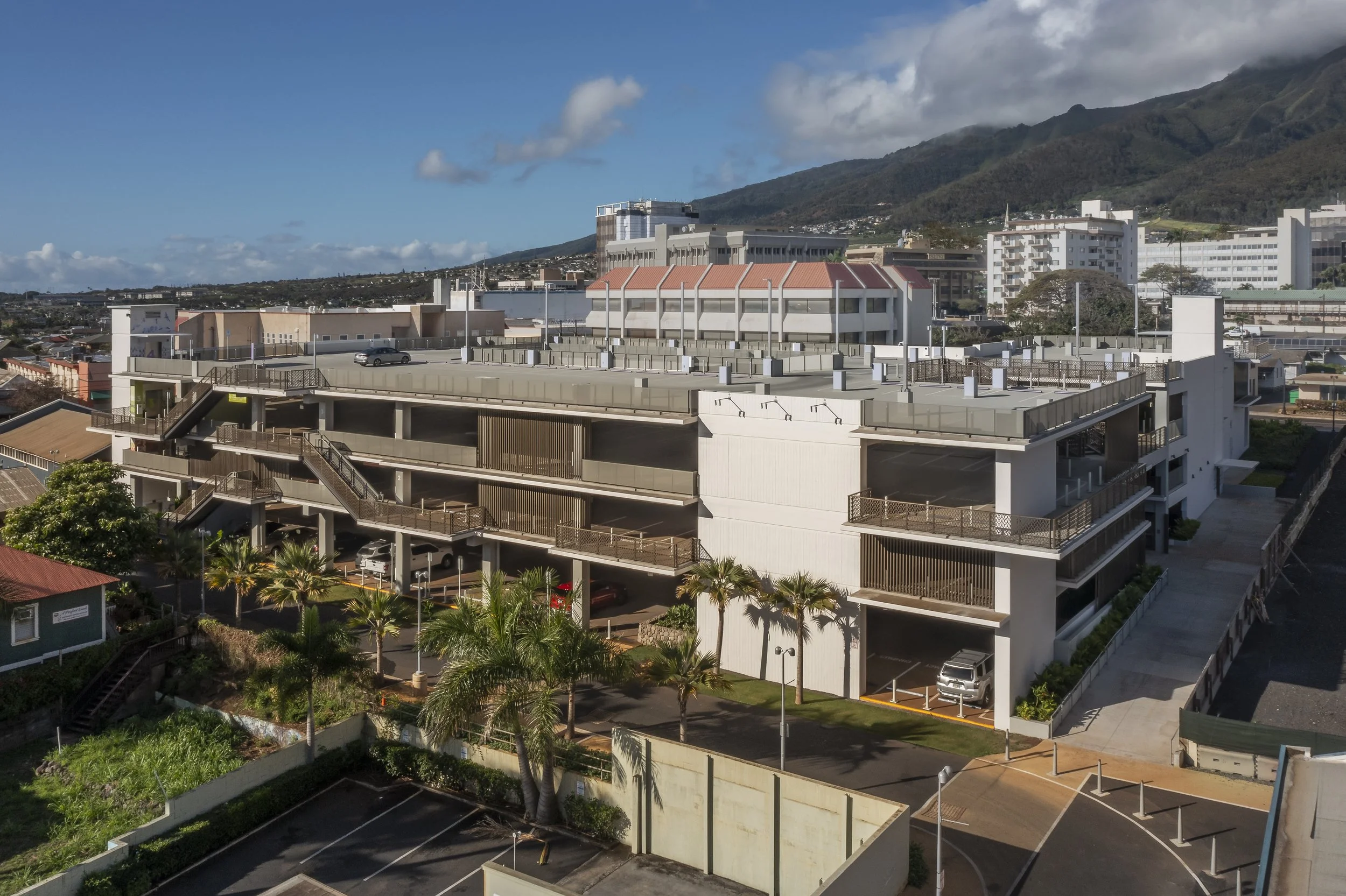
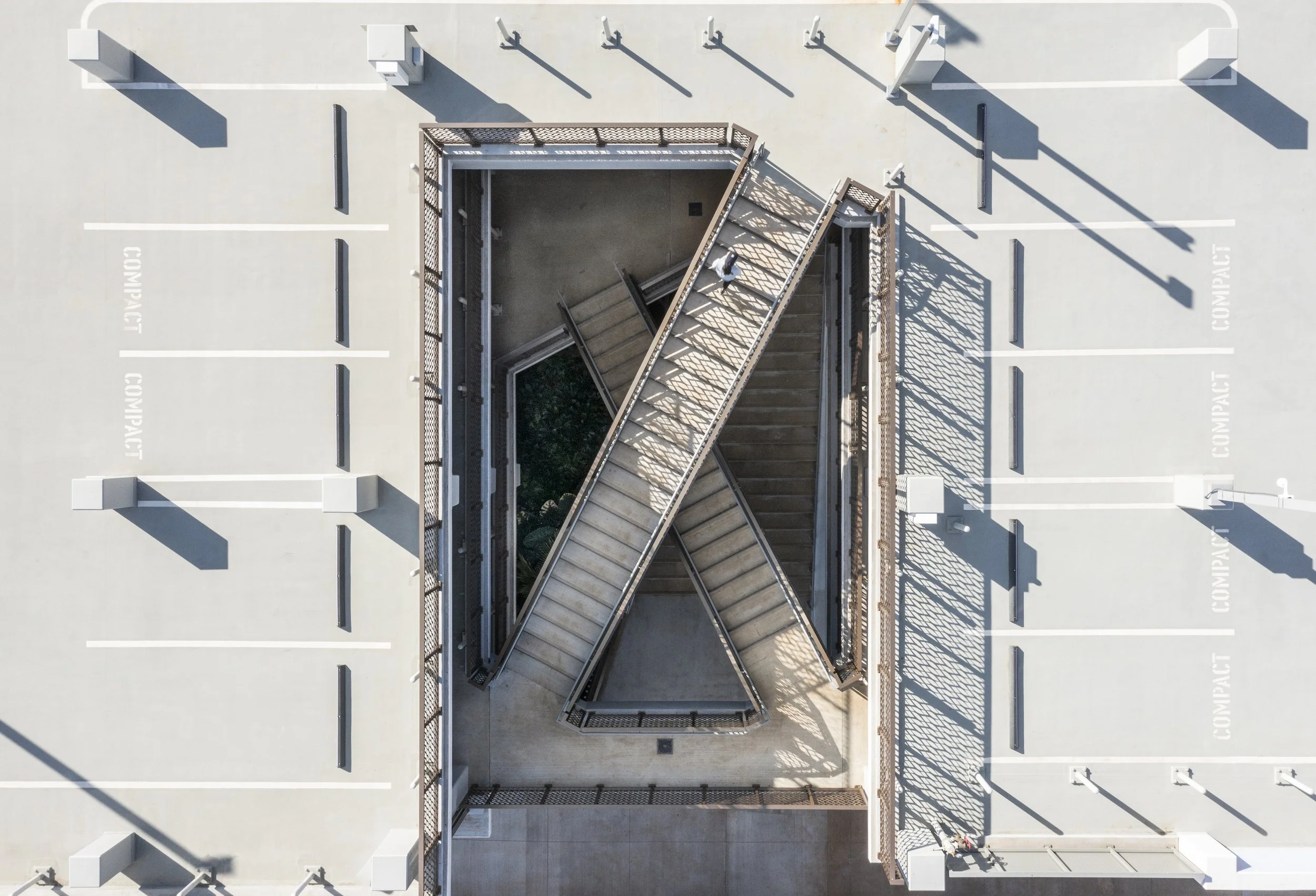
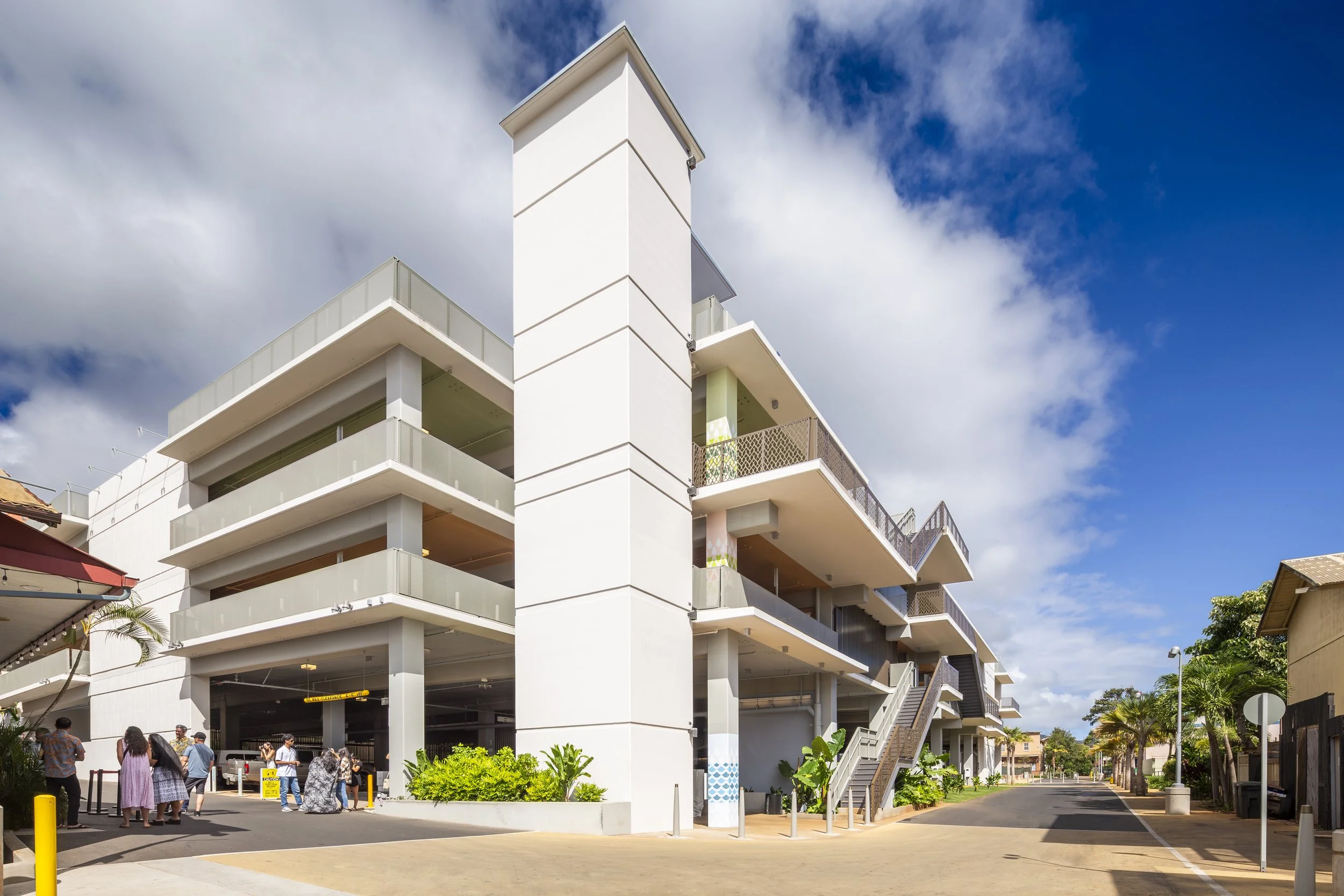
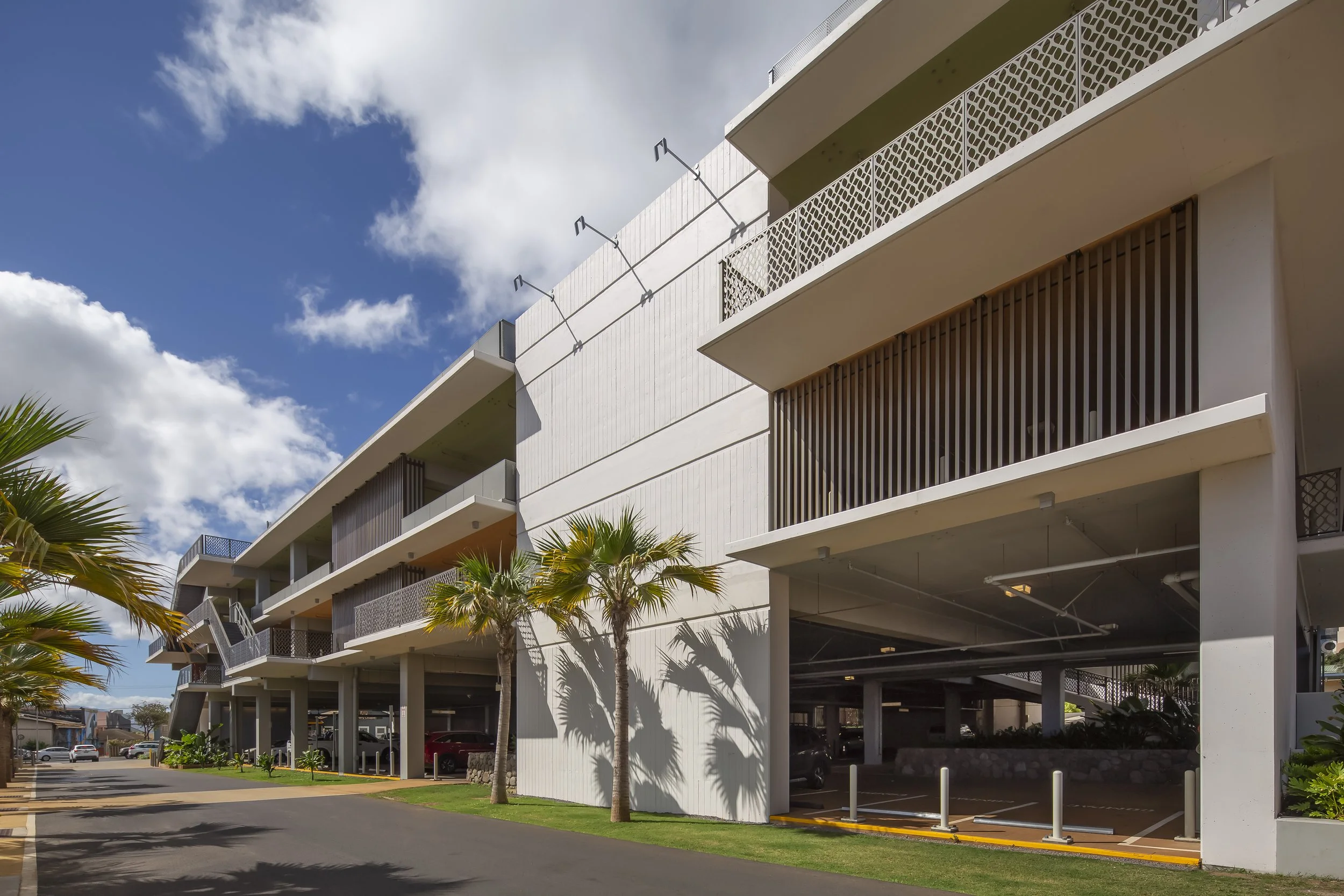
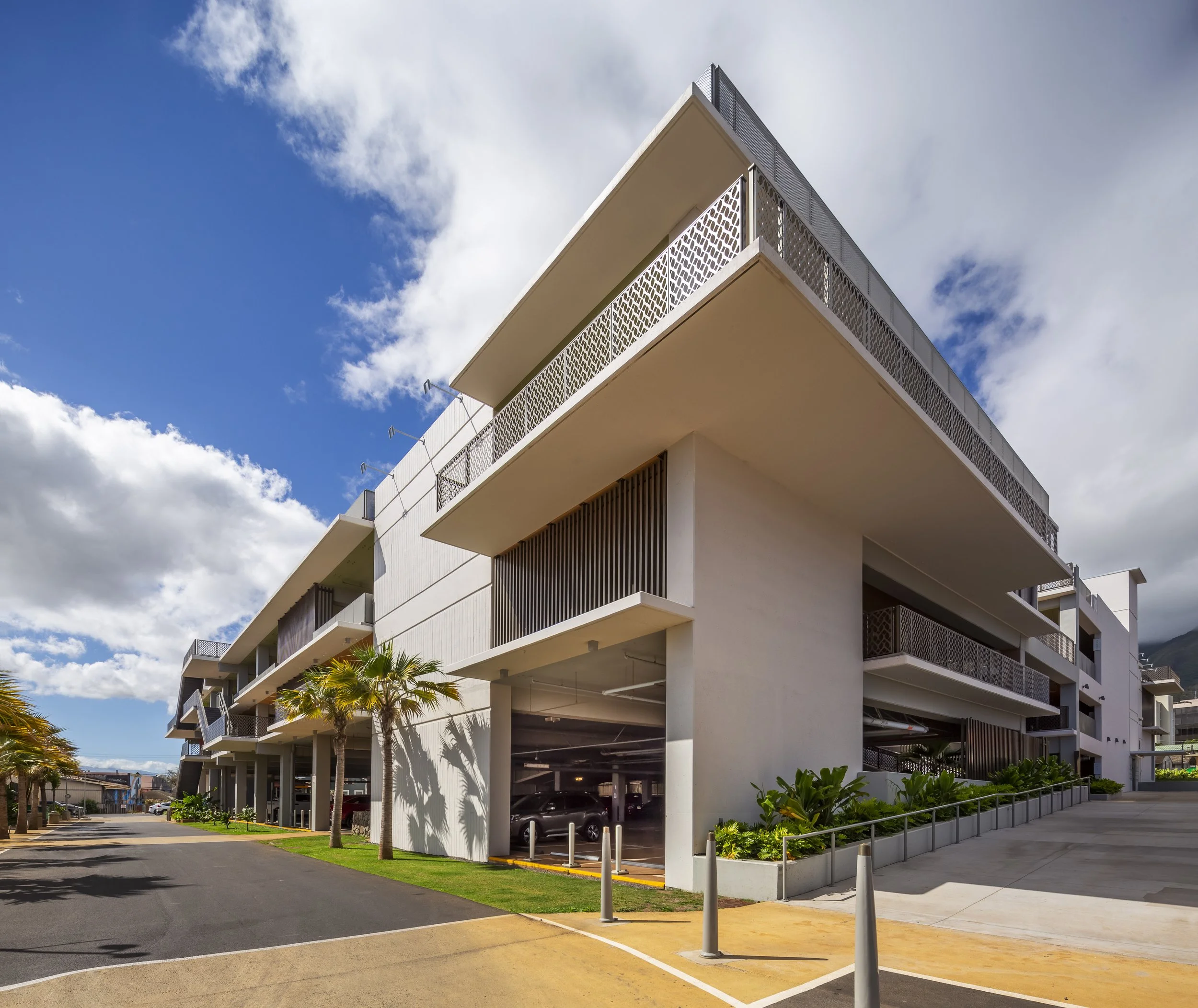
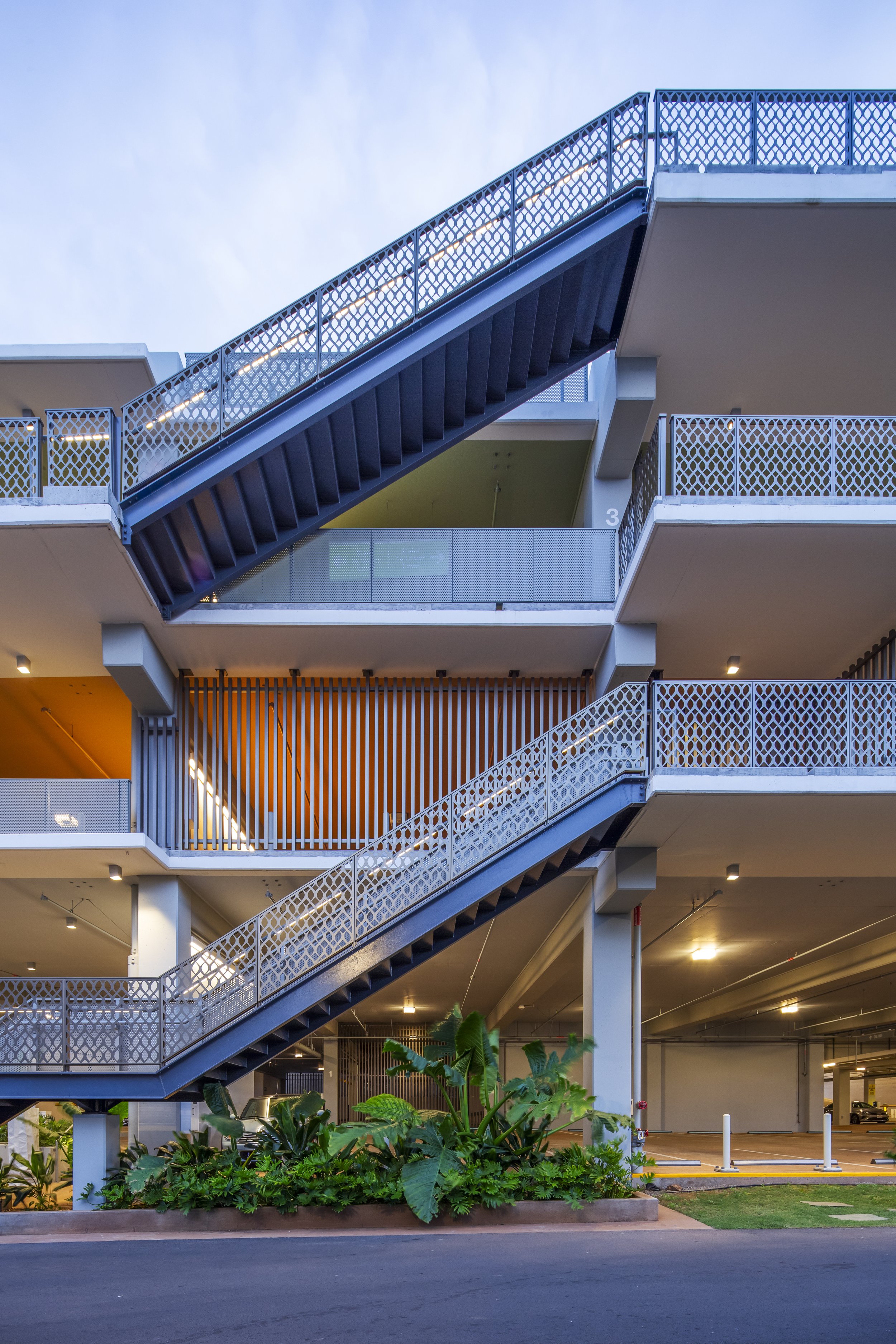
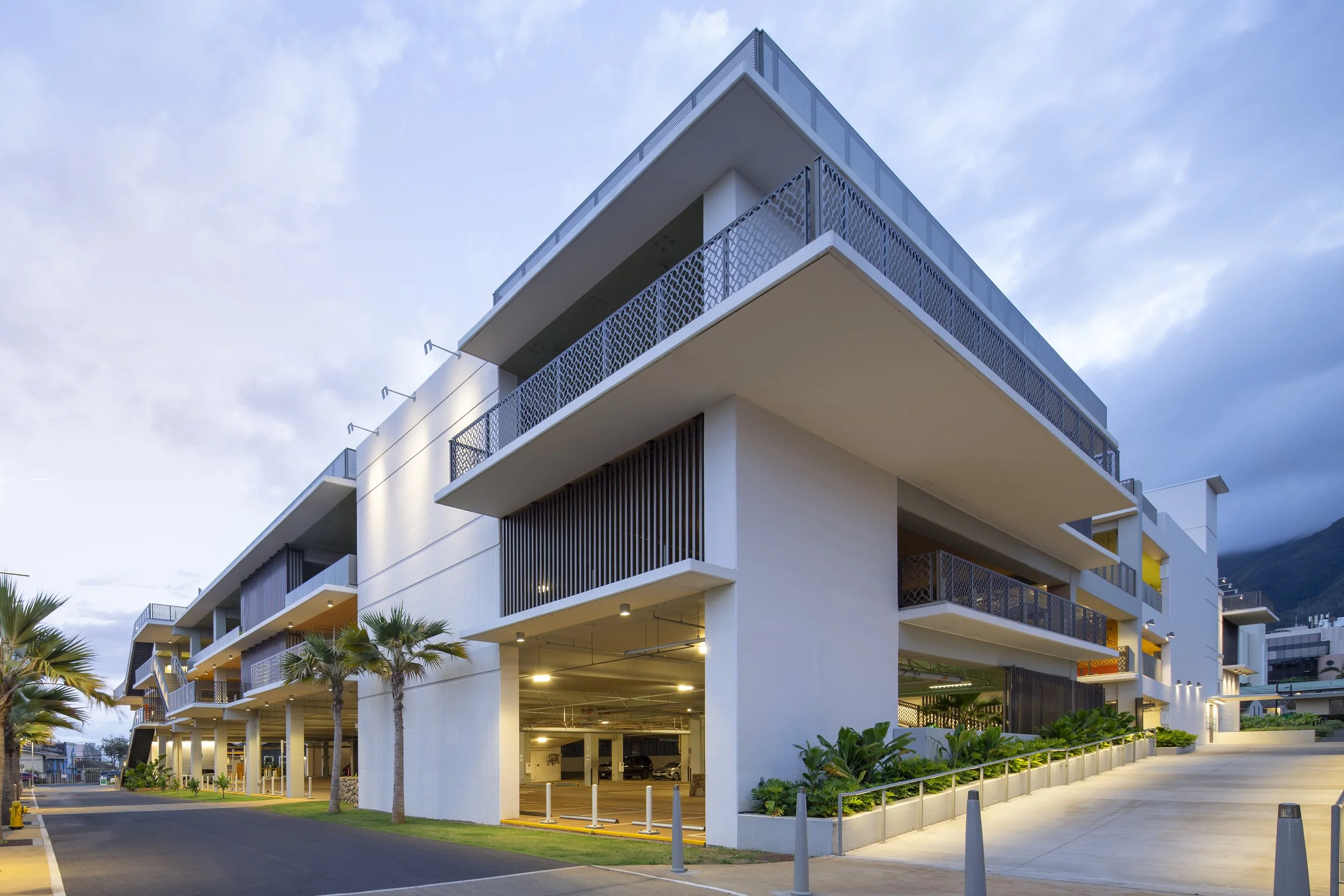
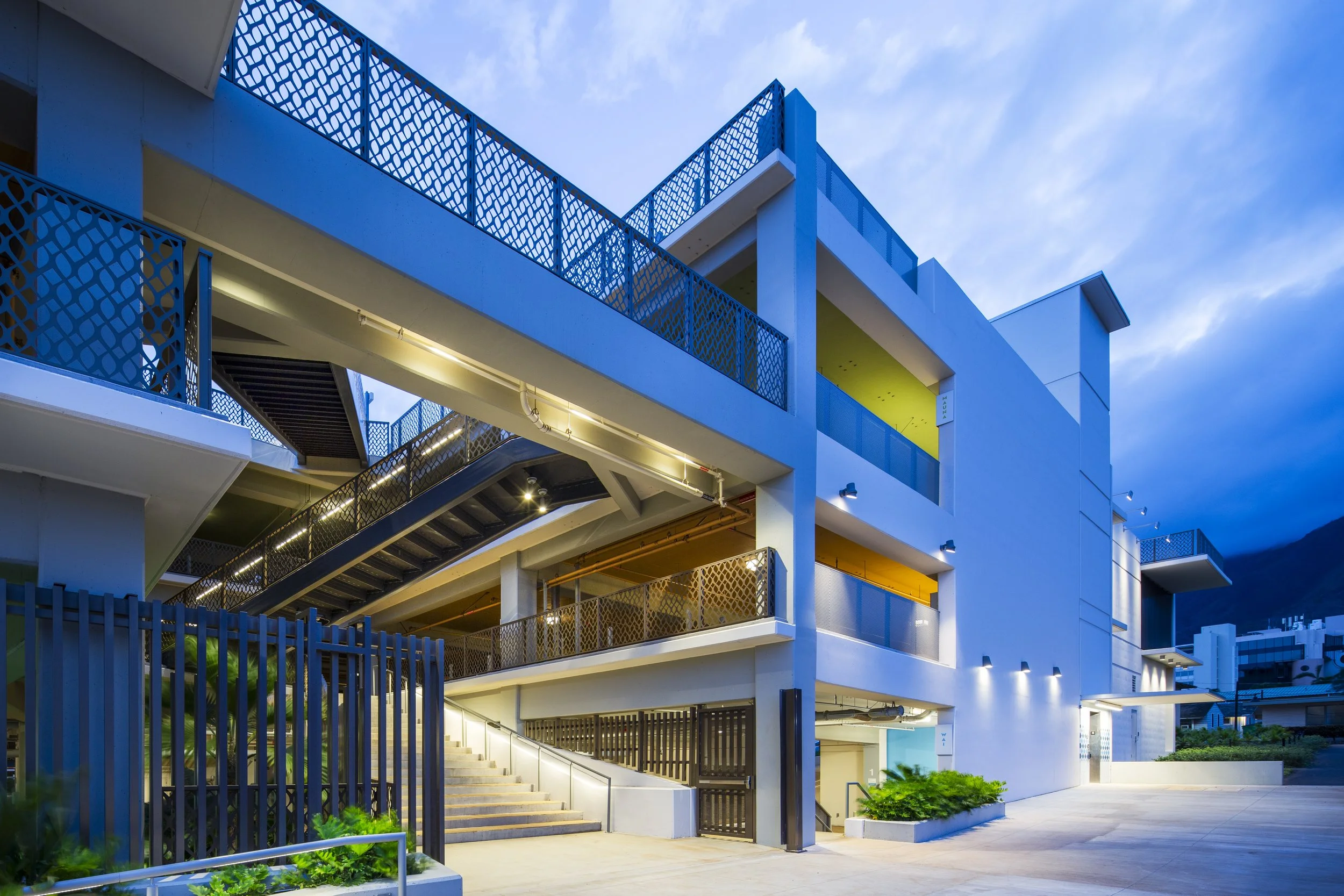
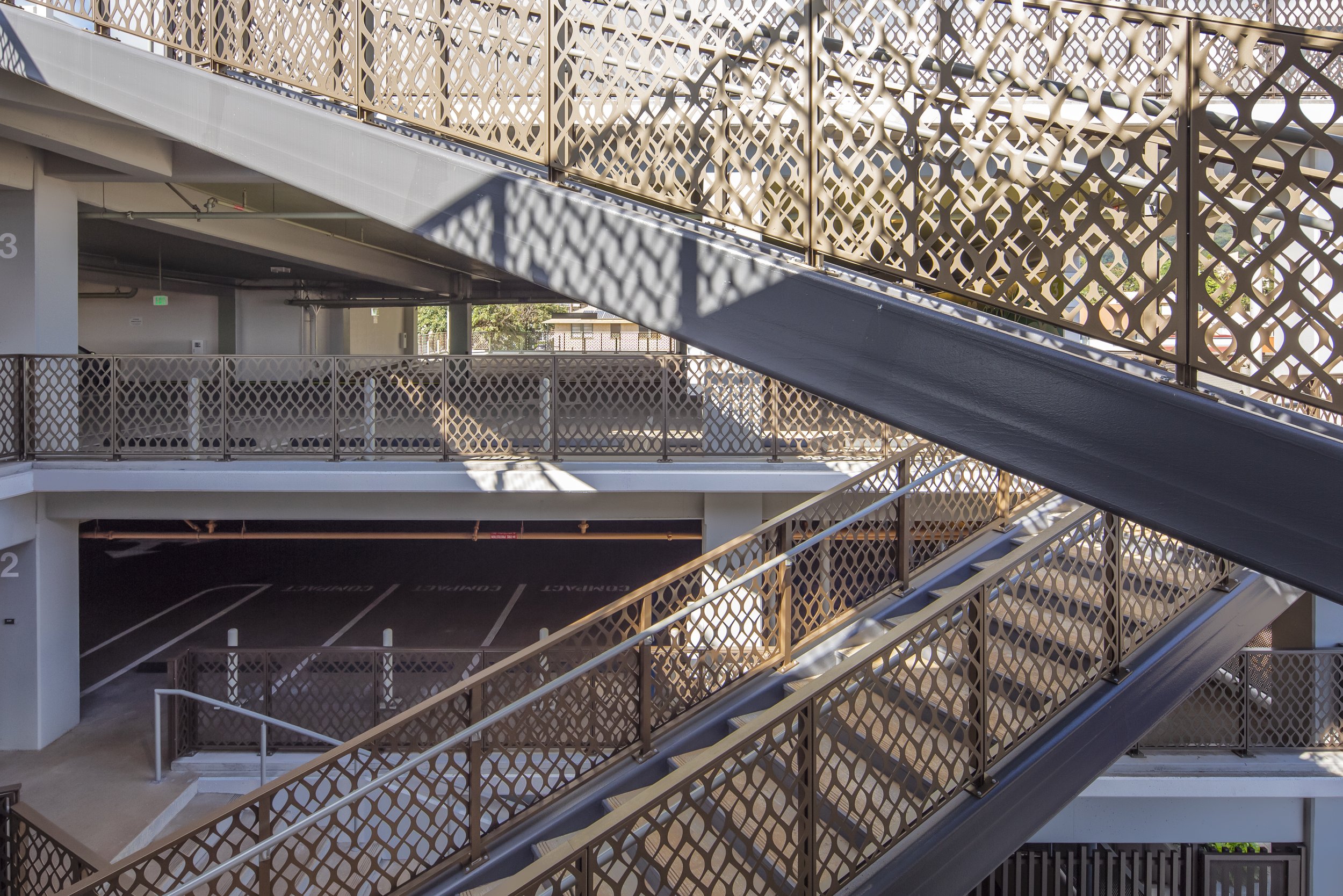
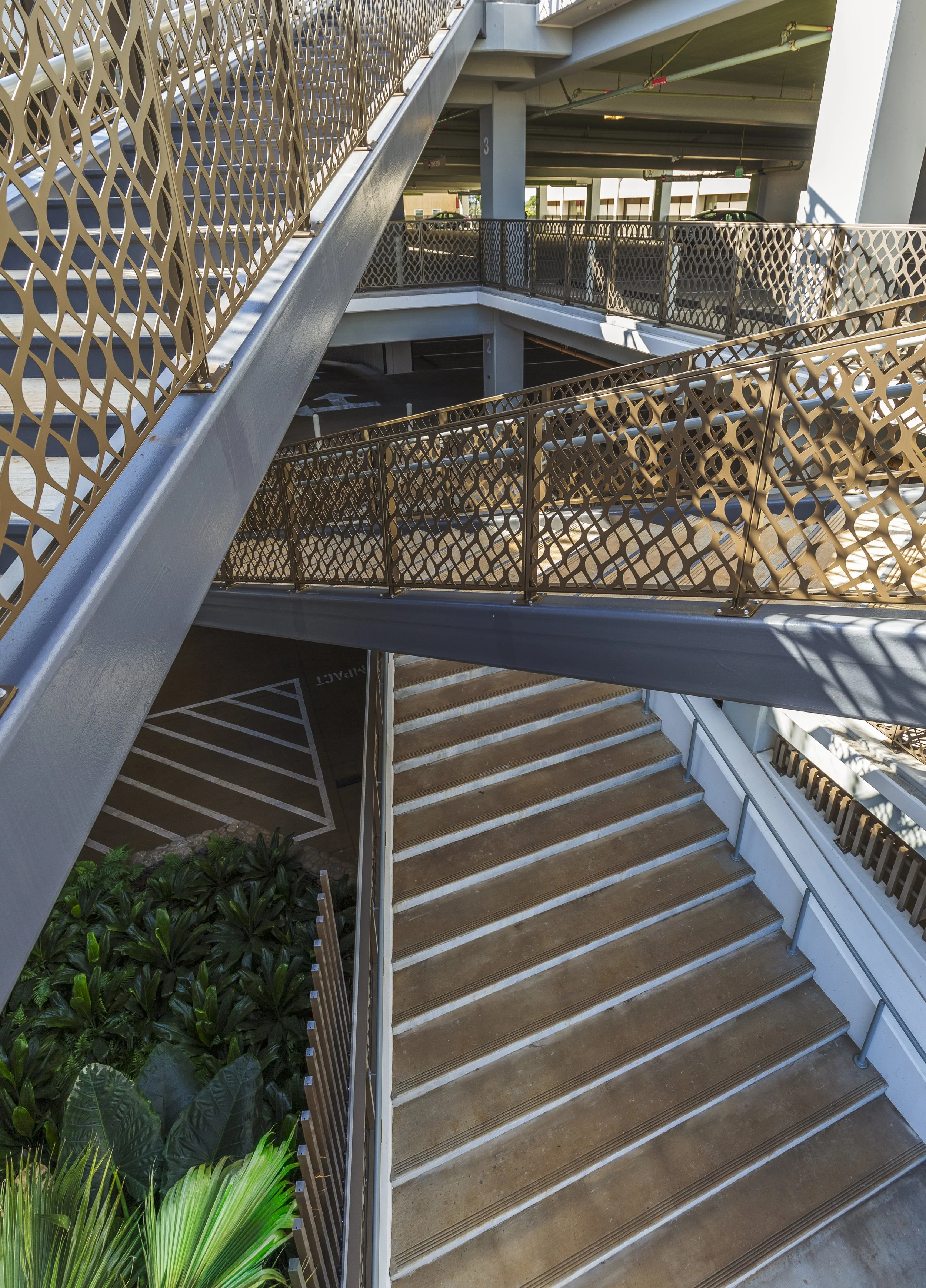
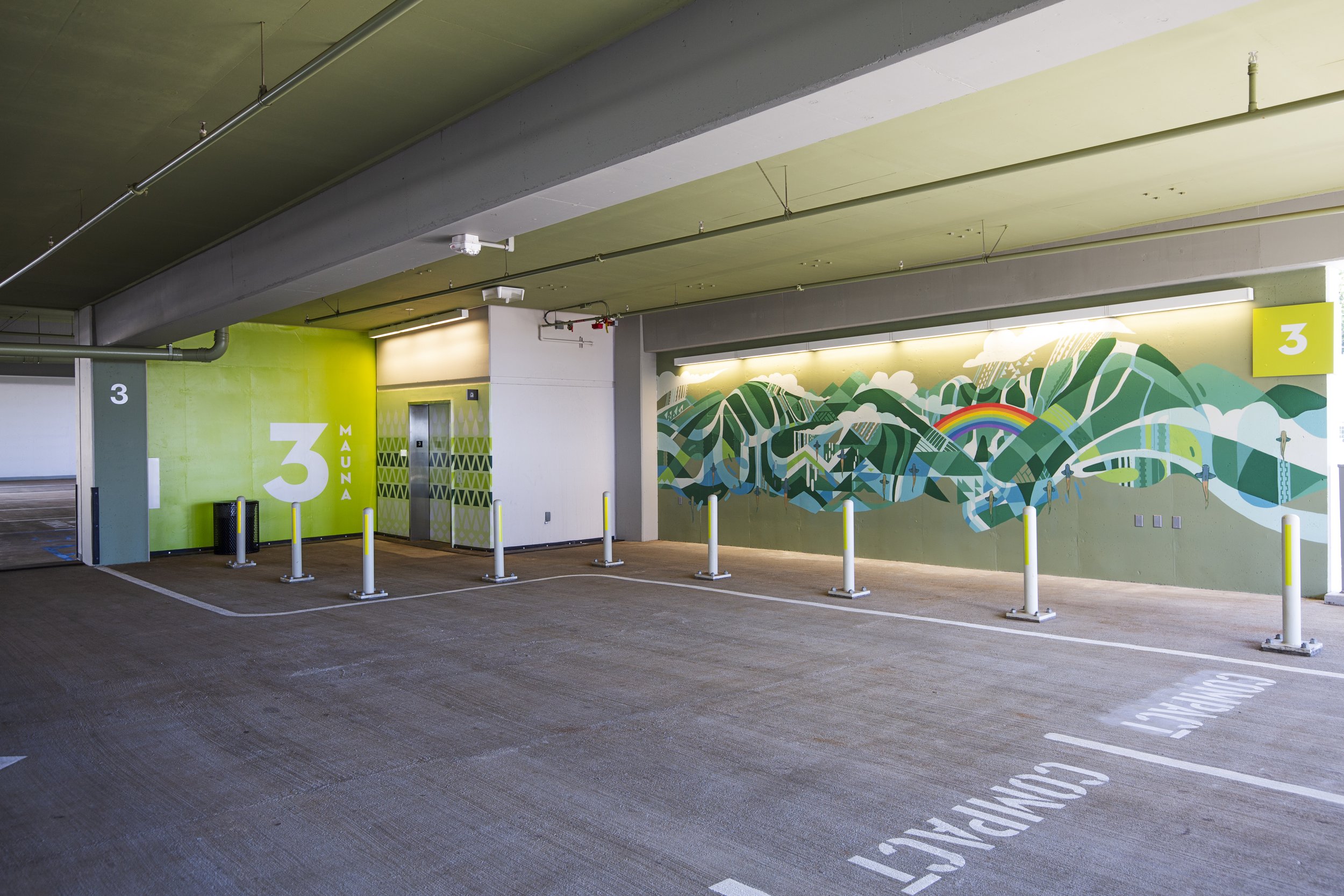
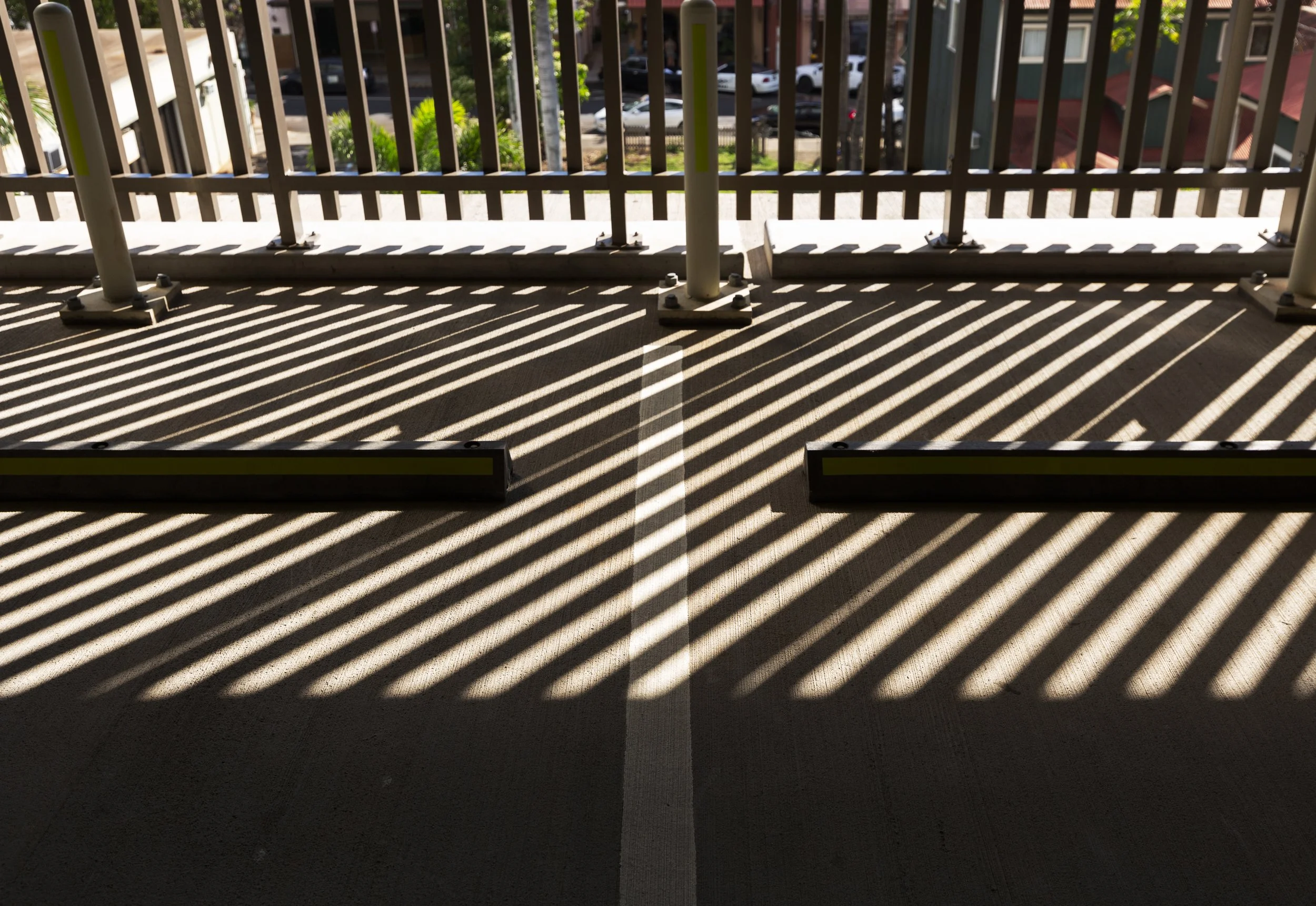
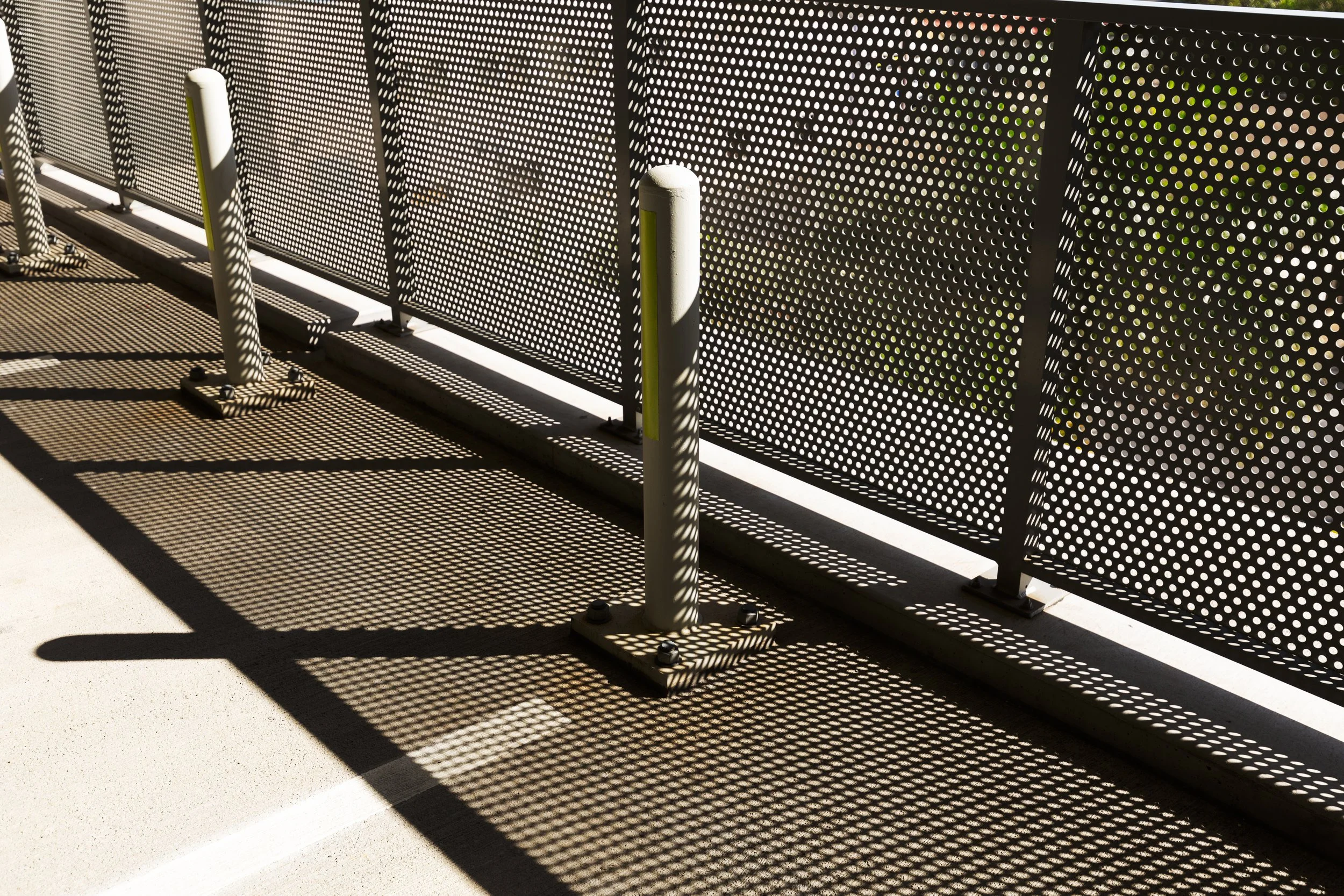
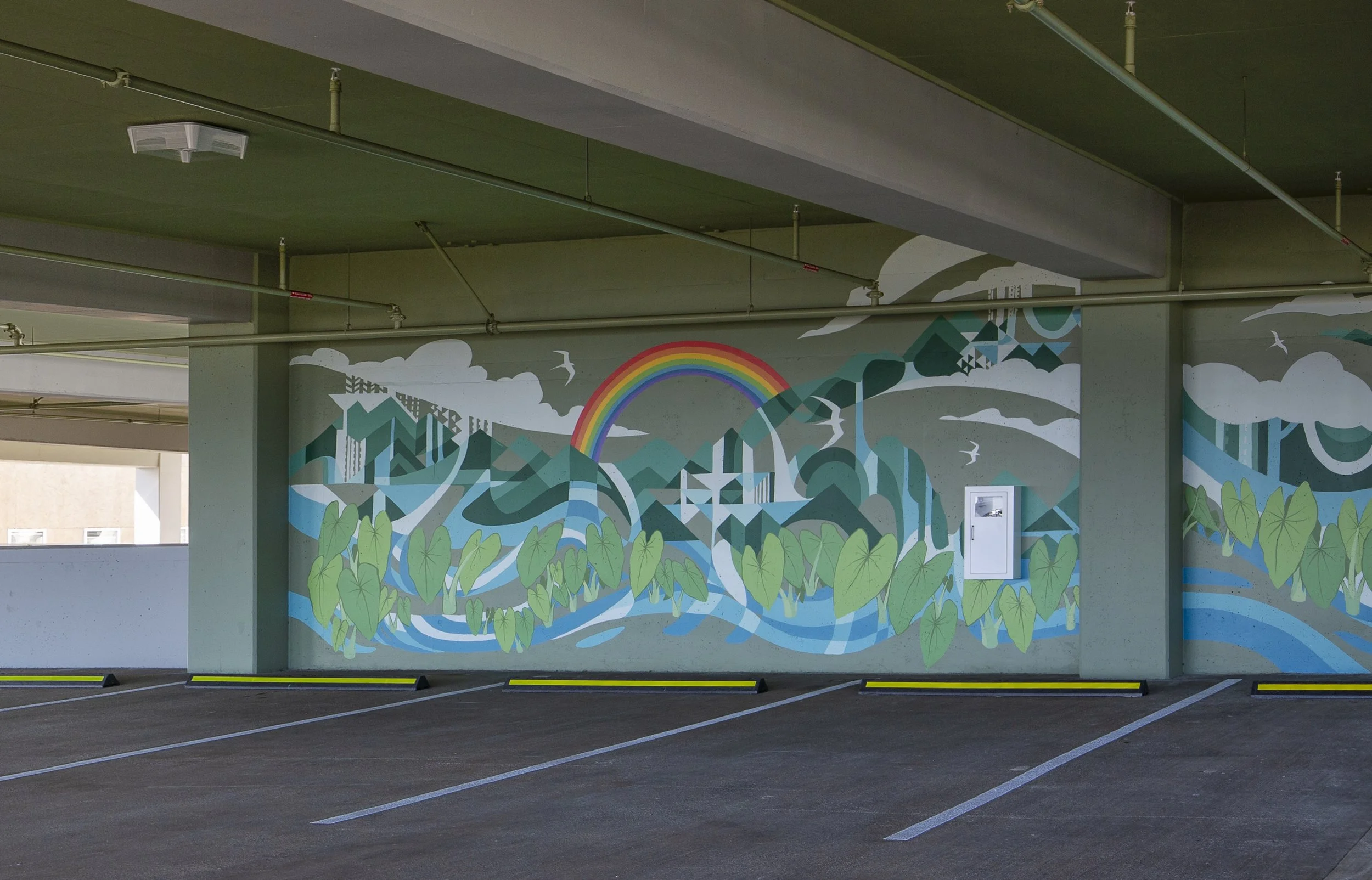
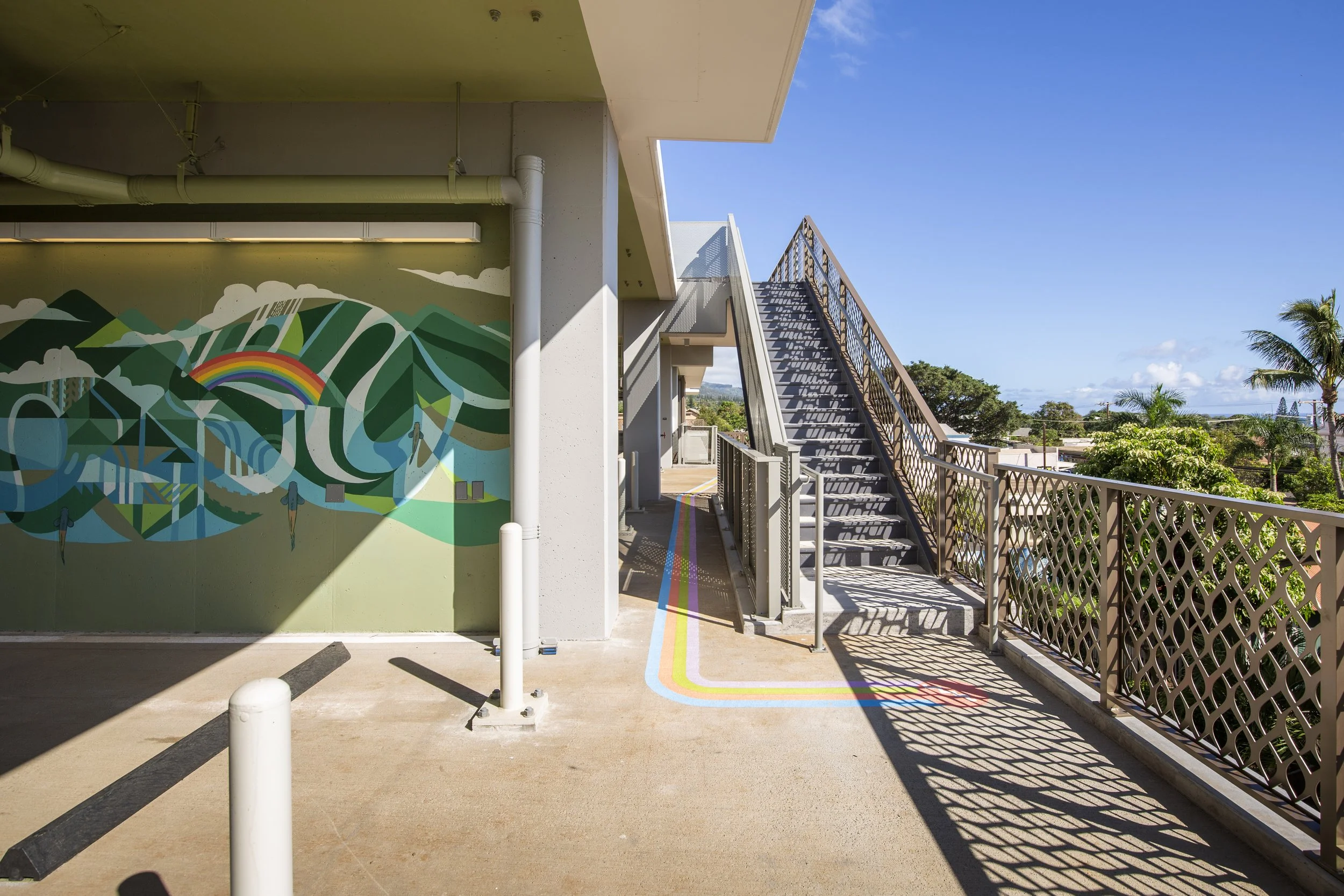
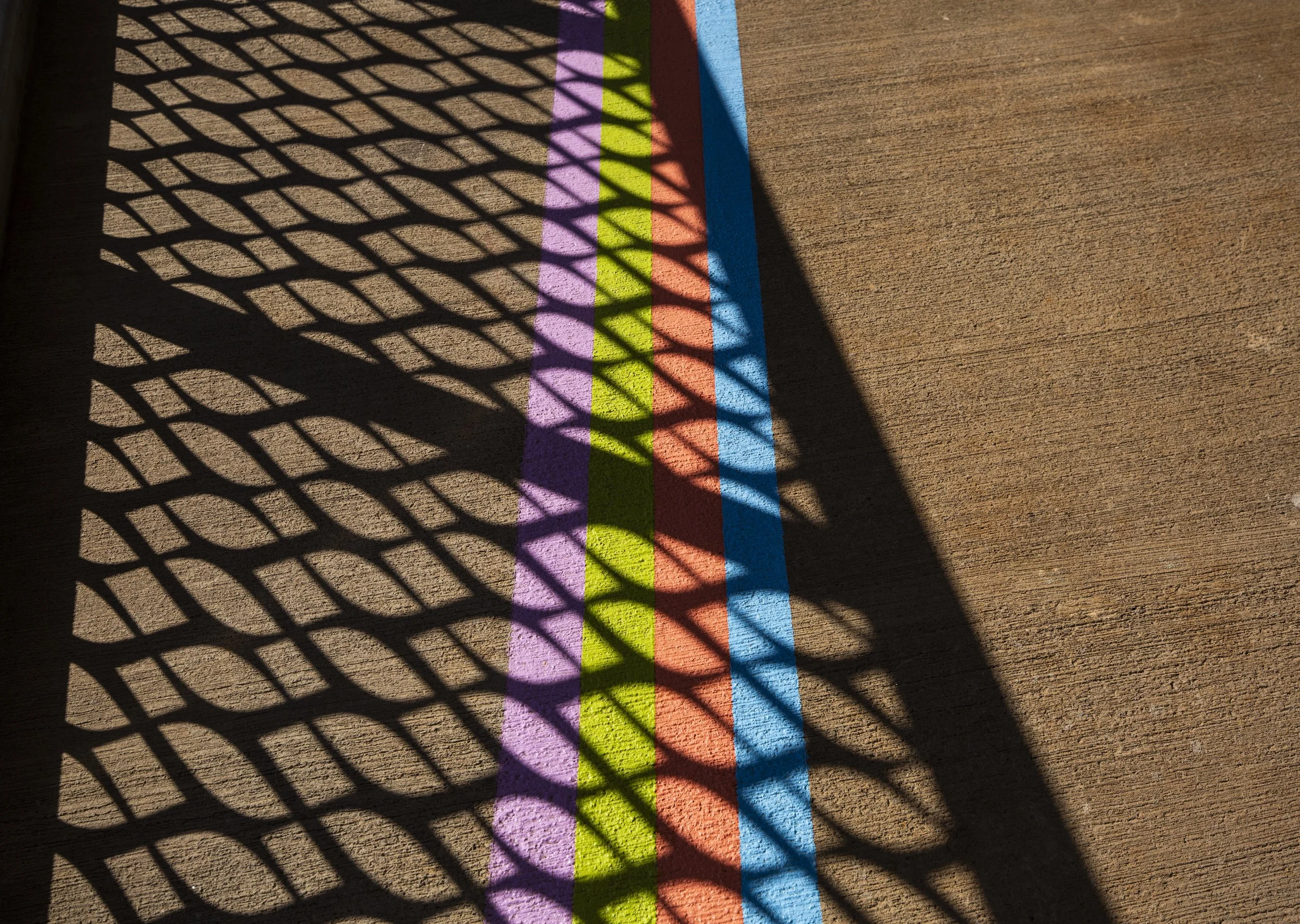
The vision for the Downtown Wailuku parking garage goes beyond functionality, aiming to serve as a vibrant community hub that enhances energy and economic vitality. Its design emphasizes seamless integration with the urban fabric, cultural homage, clear wayfinding, and expanded parking capacity. The structure harmonizes with surrounding buildings, incorporates architectural details reflecting Wailuku’s heritage, and features vibrant signage for easy navigation. Key elements include vehicle circulation via Church and Pili Streets, pedestrian pathways linking Market and Church Streets, and a retail promenade along the east edge. Thoughtful pedestrian access, EV charging infrastructure, and a versatile first level with a 14-foot ceiling for markets and events further position the garage as a dynamic space for community gatherings and cultural activities.
Year Completed: 2023
Service Type: Master Planning + Architecture + Interiors
Size: 150,000 Sq. Ft.
HCDA / HTDC
ENTREPRENEURS SANDBOX
Honolulu, Hawai‘i
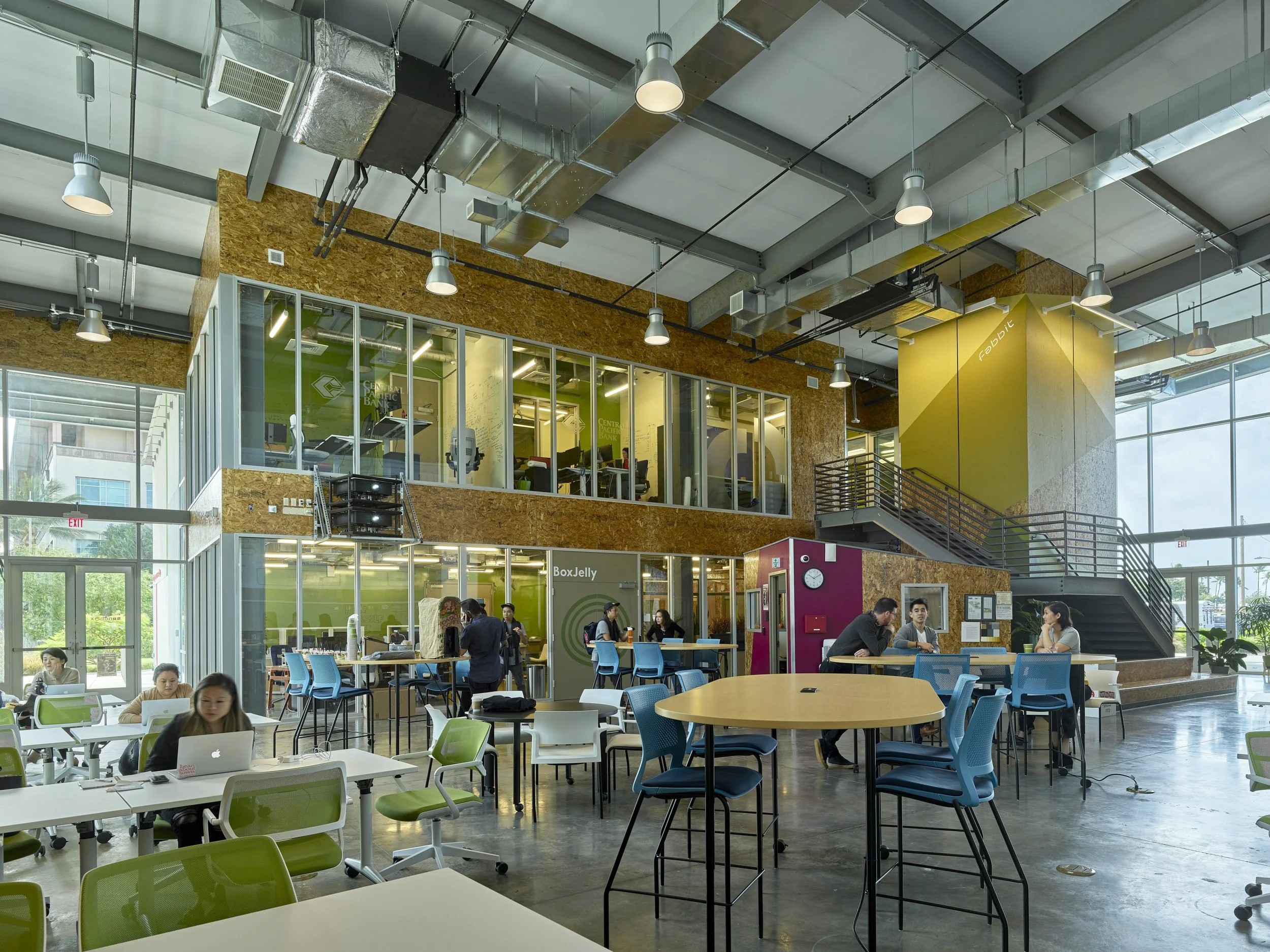
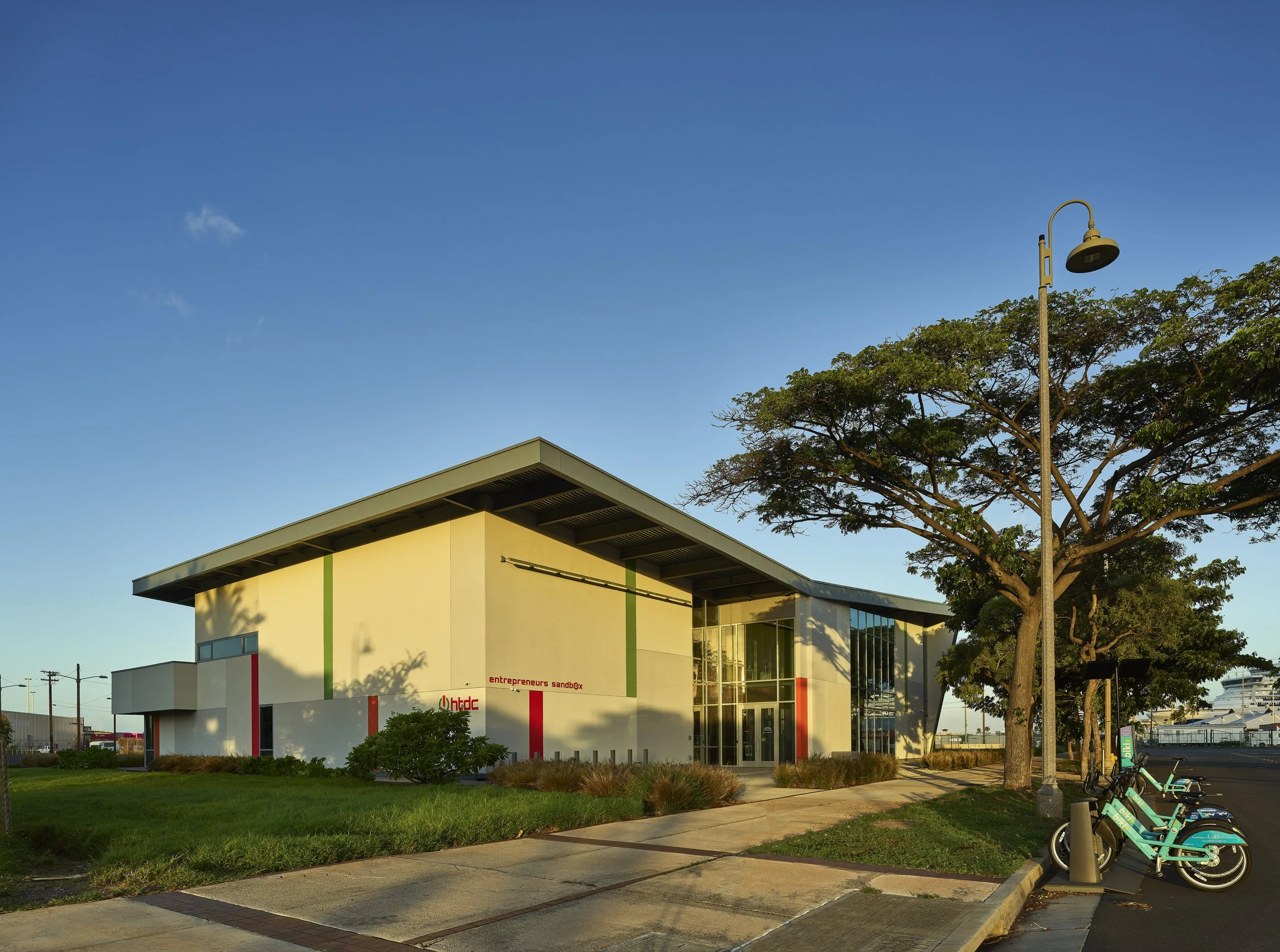
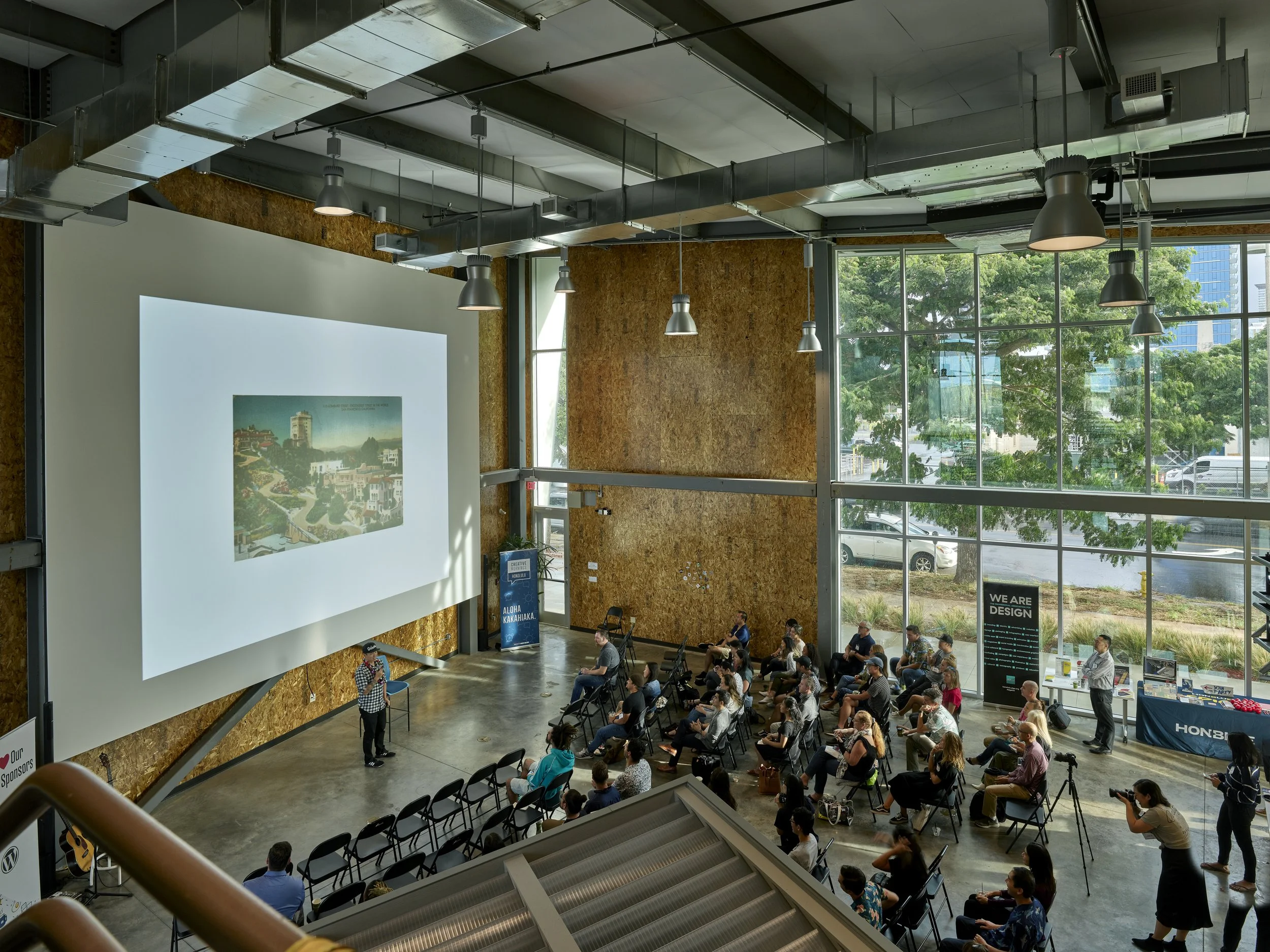
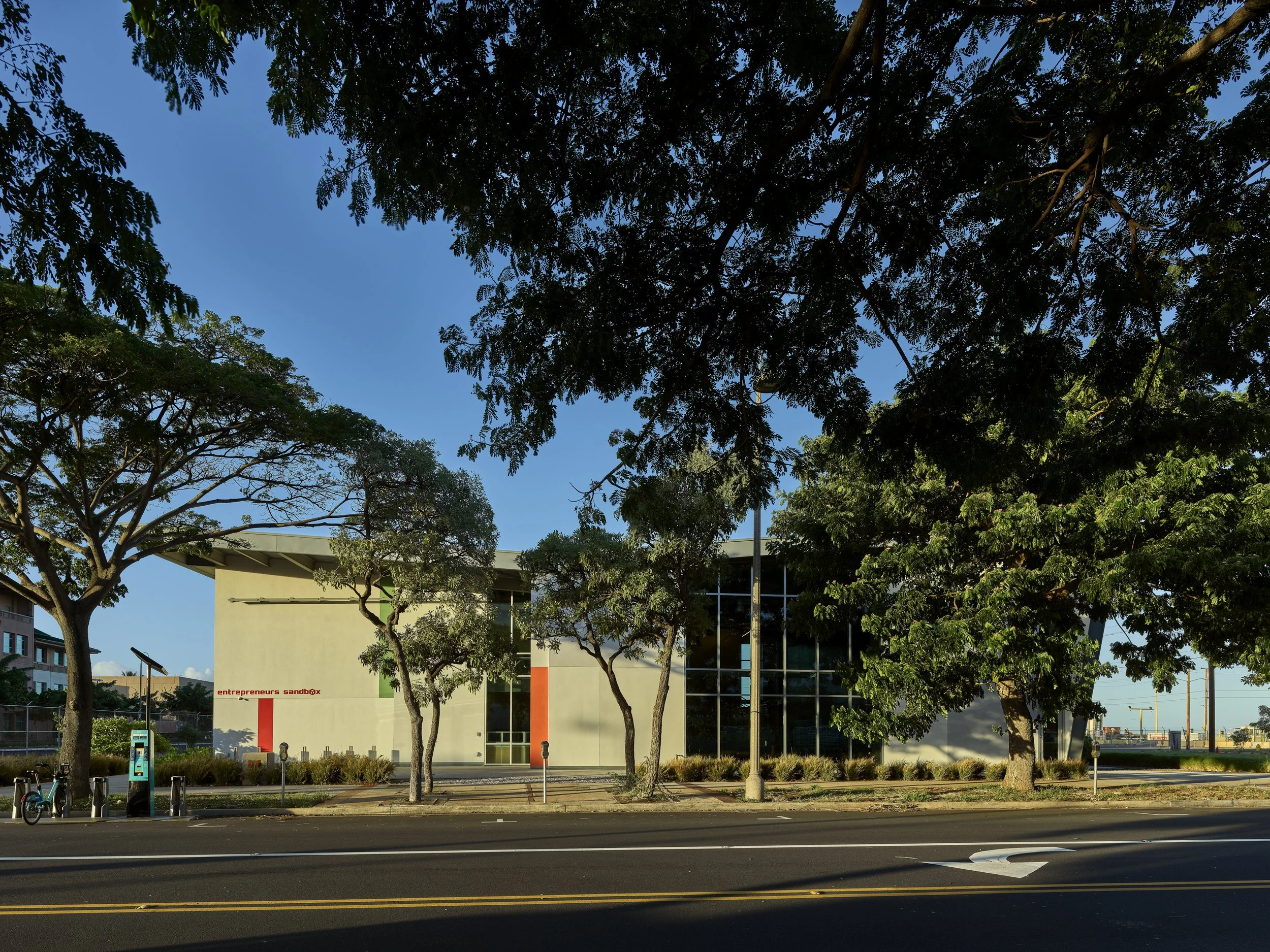
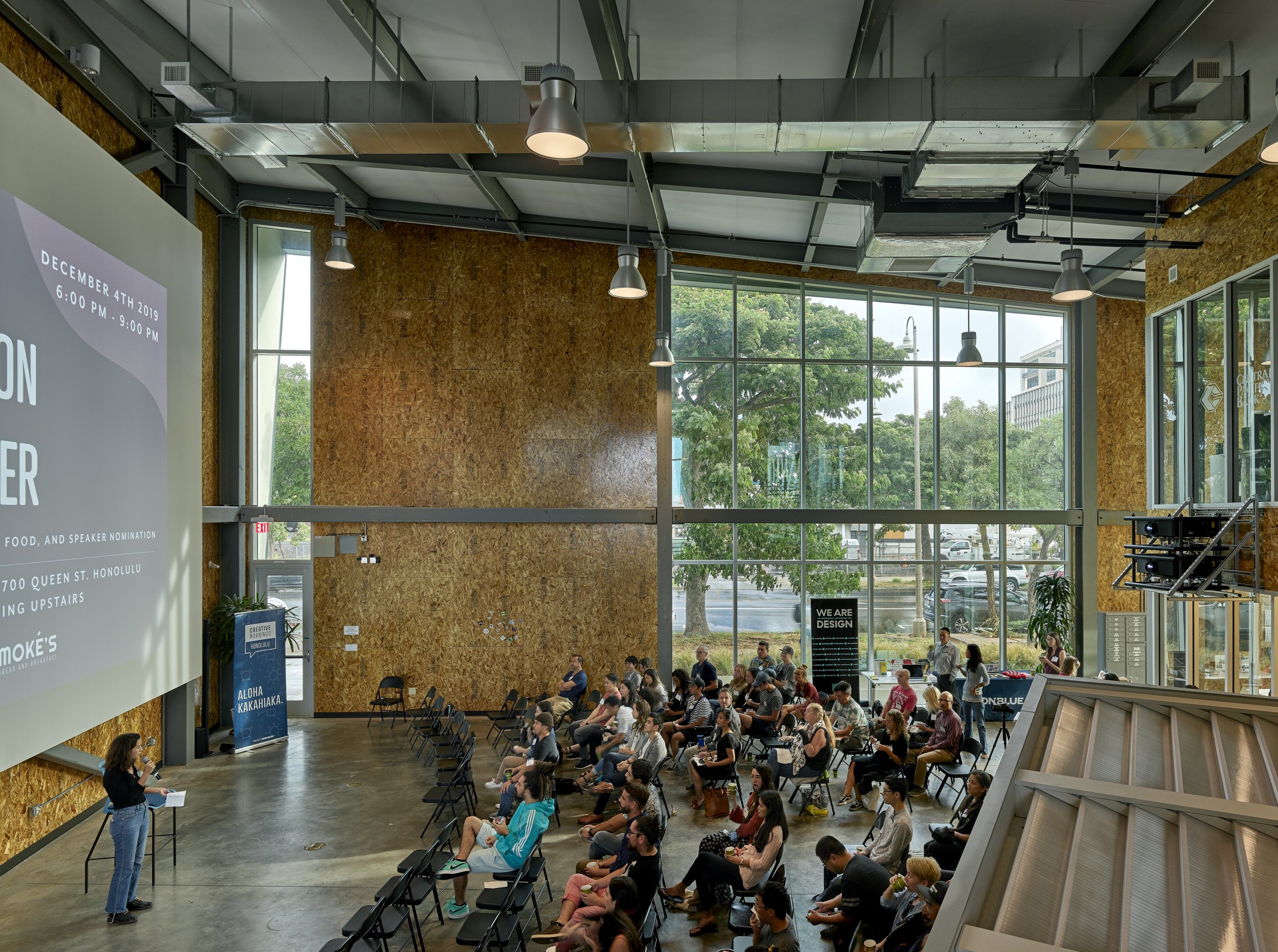
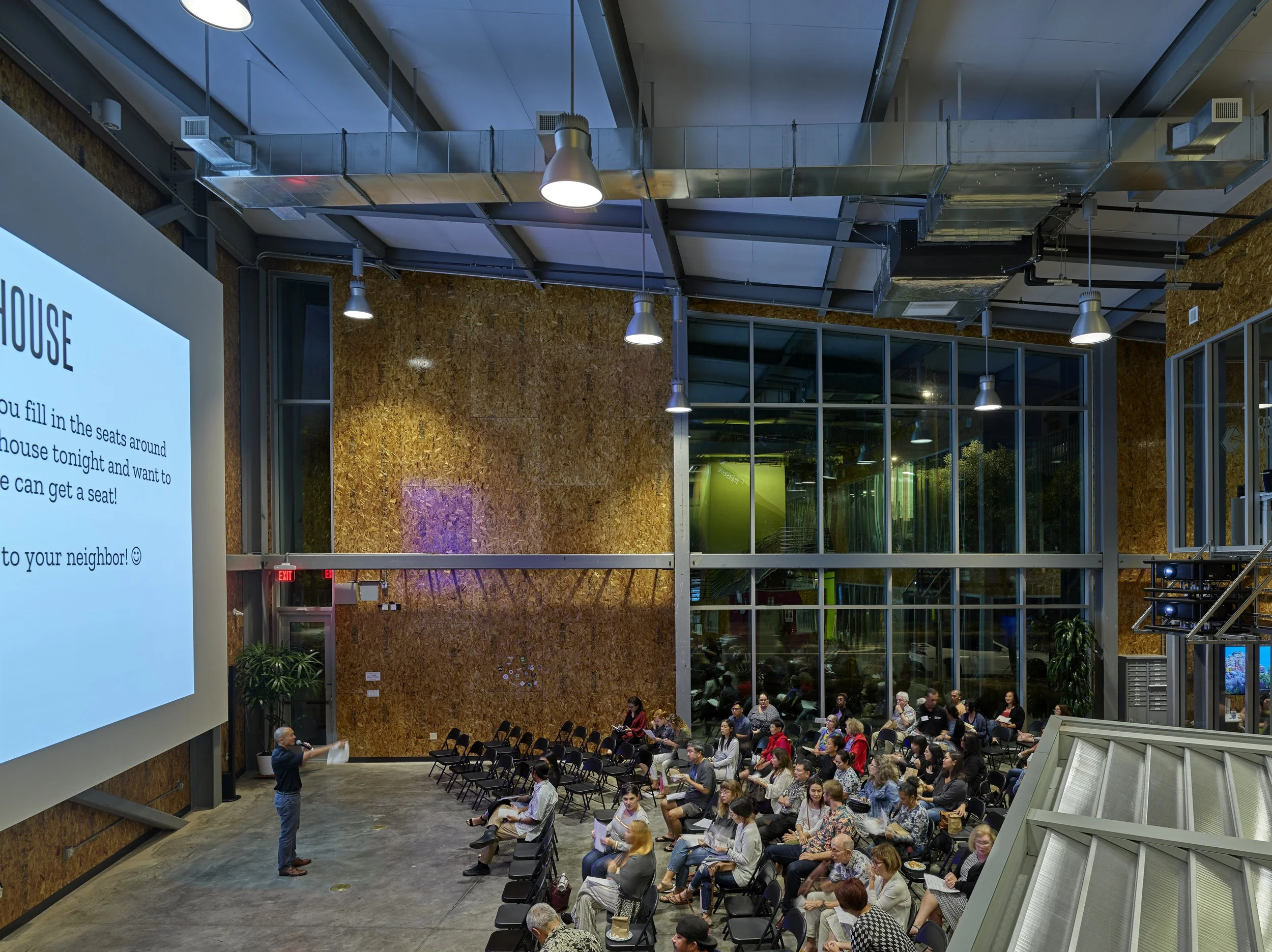
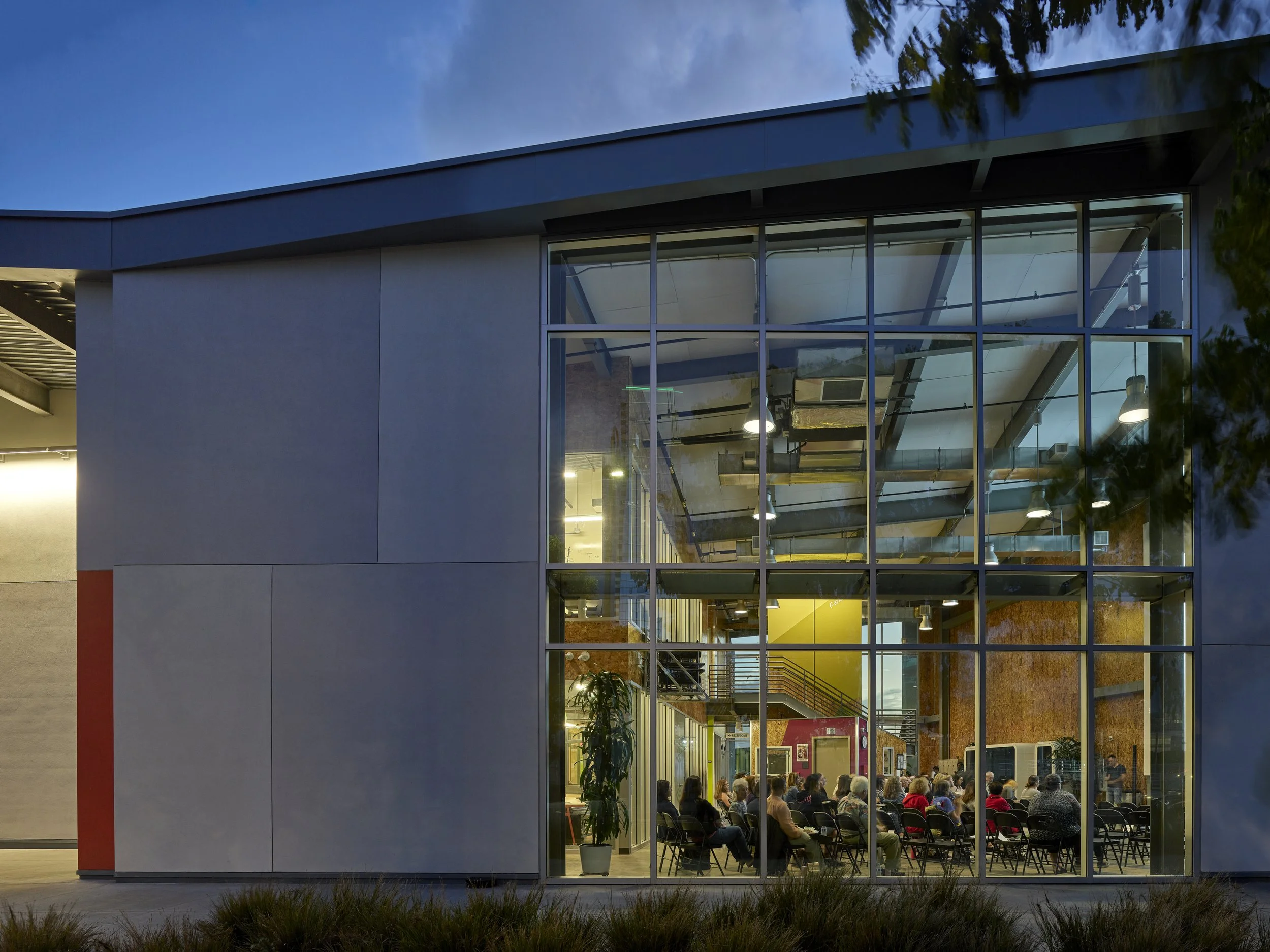
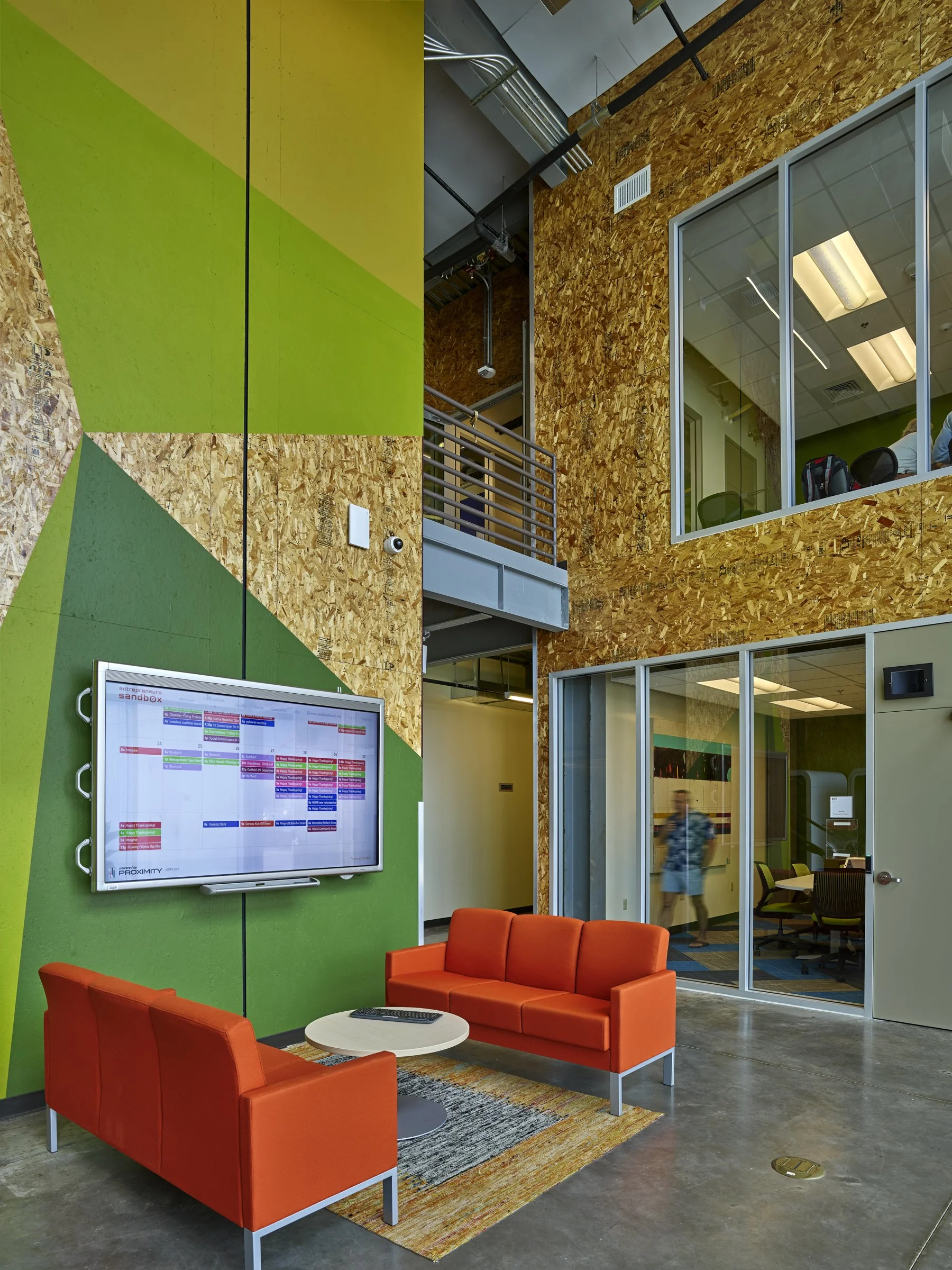
The Entrepreneurs Sandbox is the first phase of the Hawaii Community Development Authority (HCDA) and the Hawaii Technology Development Corporation’s (HTDC’s) vision to transform Kaka‘ako Makai into a mixed-use Innovation District supporting high-tech industry growth. Designed as a community hub for innovation, the facility provides collaborative workspaces, prototyping labs, and digital media production studios to help entrepreneurs bring ideas to life.
The 13,500 sq. ft. space includes co-working areas, a Makery Lab, a creative media studio, rentable offices, and mentoring spaces. The design reflects Kaka‘ako’s industrial character while maintaining an inviting, street-front presence that fosters collaboration and creativity. The project received multiple AIA Honolulu awards for architecture and interior design.
Year Completed: 2019
Service Type: Architecture + Interiors
Size: 13,500 Sq. Ft.
-
In partnership with the Hawaii Community Development Authority (HCDA), the Hawaii Technology Development Corporation (HTDC) planned to establish new facilities on “Lot C” in the Kakaako Makai District. HCDA and HTDC commissioned Ferraro Choi to develop designs at both the urban and building scale.
The Master Plan provides planning guidelines to transform the existing 5.5 acre surface parking lot into a mixed-use innovation district linked with the adjacent John A. Burns School of Medicine, University of Hawaii Cancer Center, and the Kakaako Waterfront Park. This will offer residents and visitors a central location with convenient access to and from the Honolulu International Airport, urban Honolulu, and Waikiki. The Innovation Block will:
Foster public and private community development
Encourage collaboration and innovation between research, commercial, education, and high tech enterprises
Incorporate public recreational uses, pedestrian access, and public parking
Two new LEED Silver-equivalent buildings within the Innovation Block will further expand HTDC’s initiatives:
The Entrepreneur’s Sandbox will offer budding entrepreneurs collaborative and flexible work places.
The Kewalo Incubation Center will provide start-up companies with leased office and lab spaces with in-house business mentorship programs and networking opportunities.