RESEARCH
Research is essential in architecture because it informs better design decisions by grounding creativity in evidence, whether related to materials, environmental performance, user needs, or cultural context.
Through research, we can innovate responsibly, improve building performance, and create spaces that are safer, more sustainable, and more responsive to the people who use them.
FEATURED RESEARCH PROJECTS
AMUNDSEN-SCOTT SOUTH POLE STATION
At the Geographic South Pole
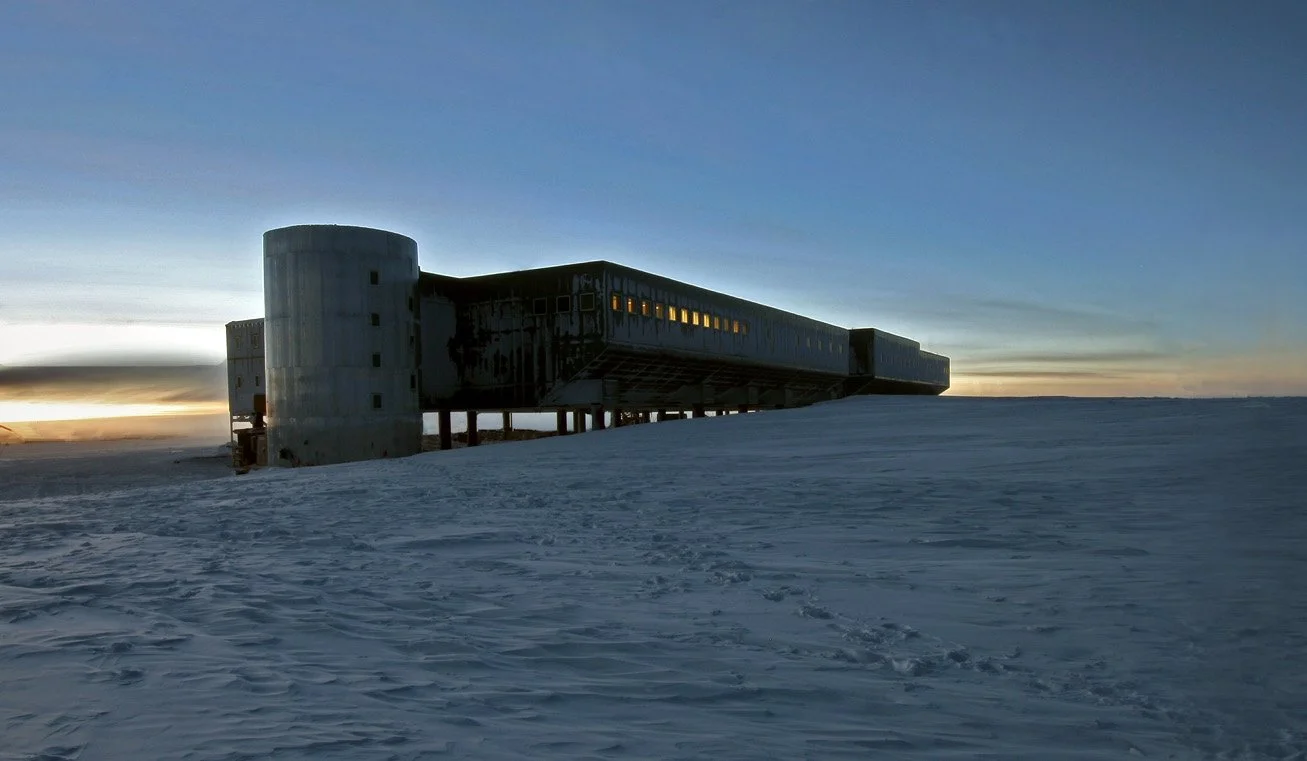
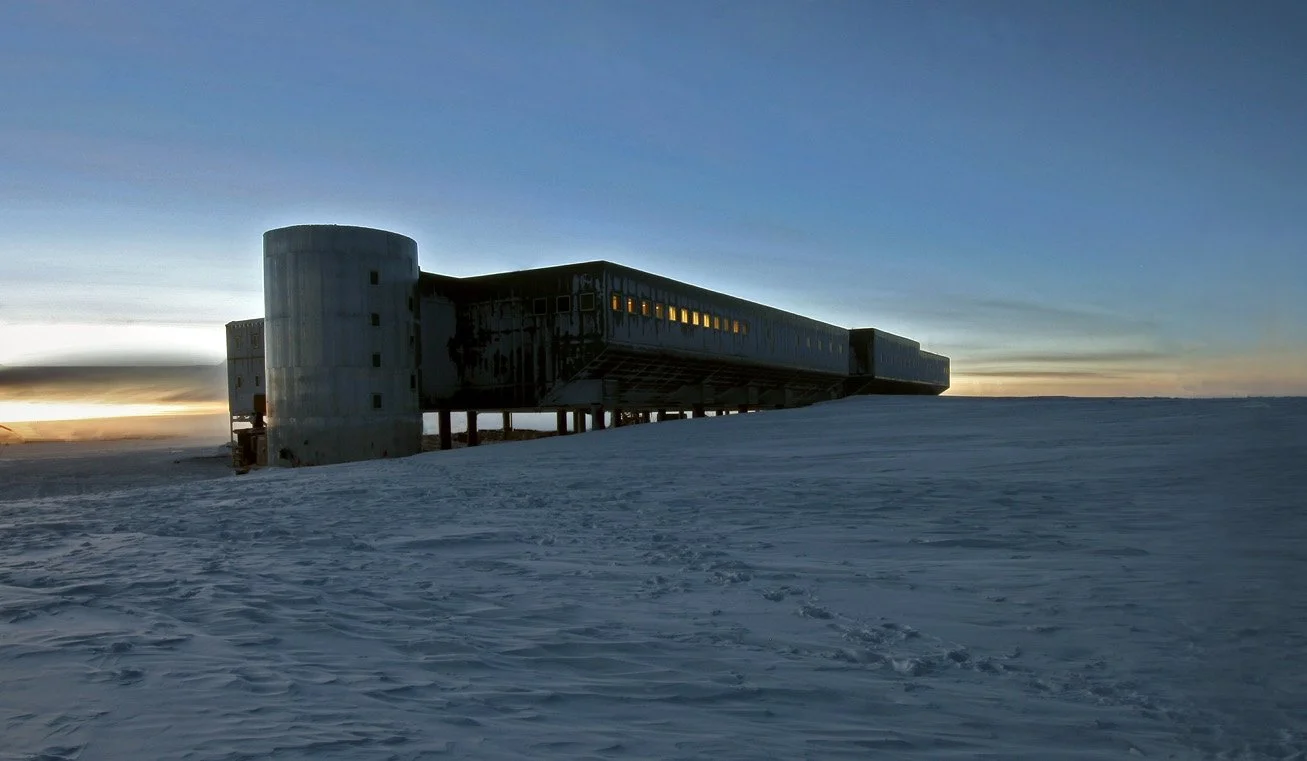
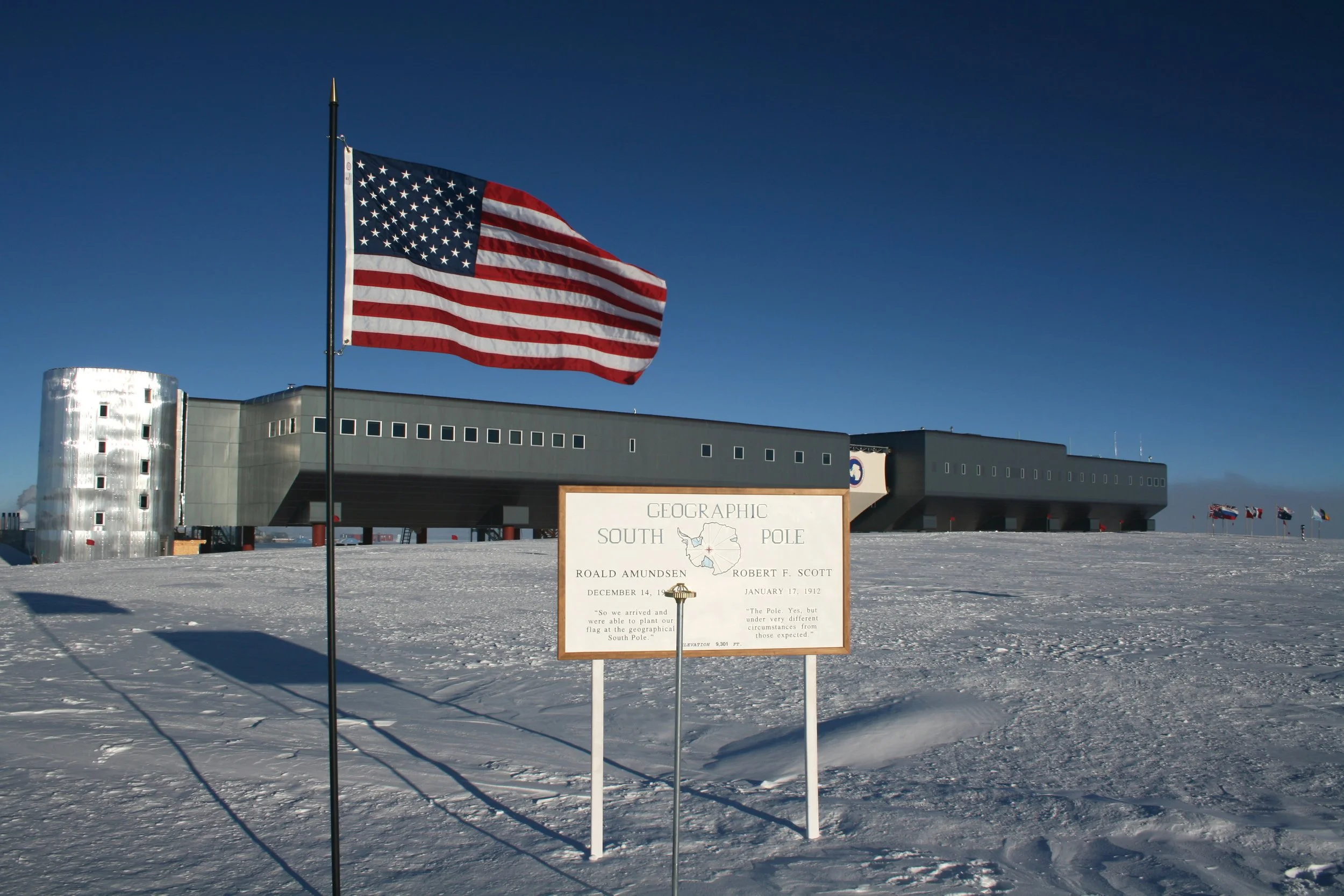
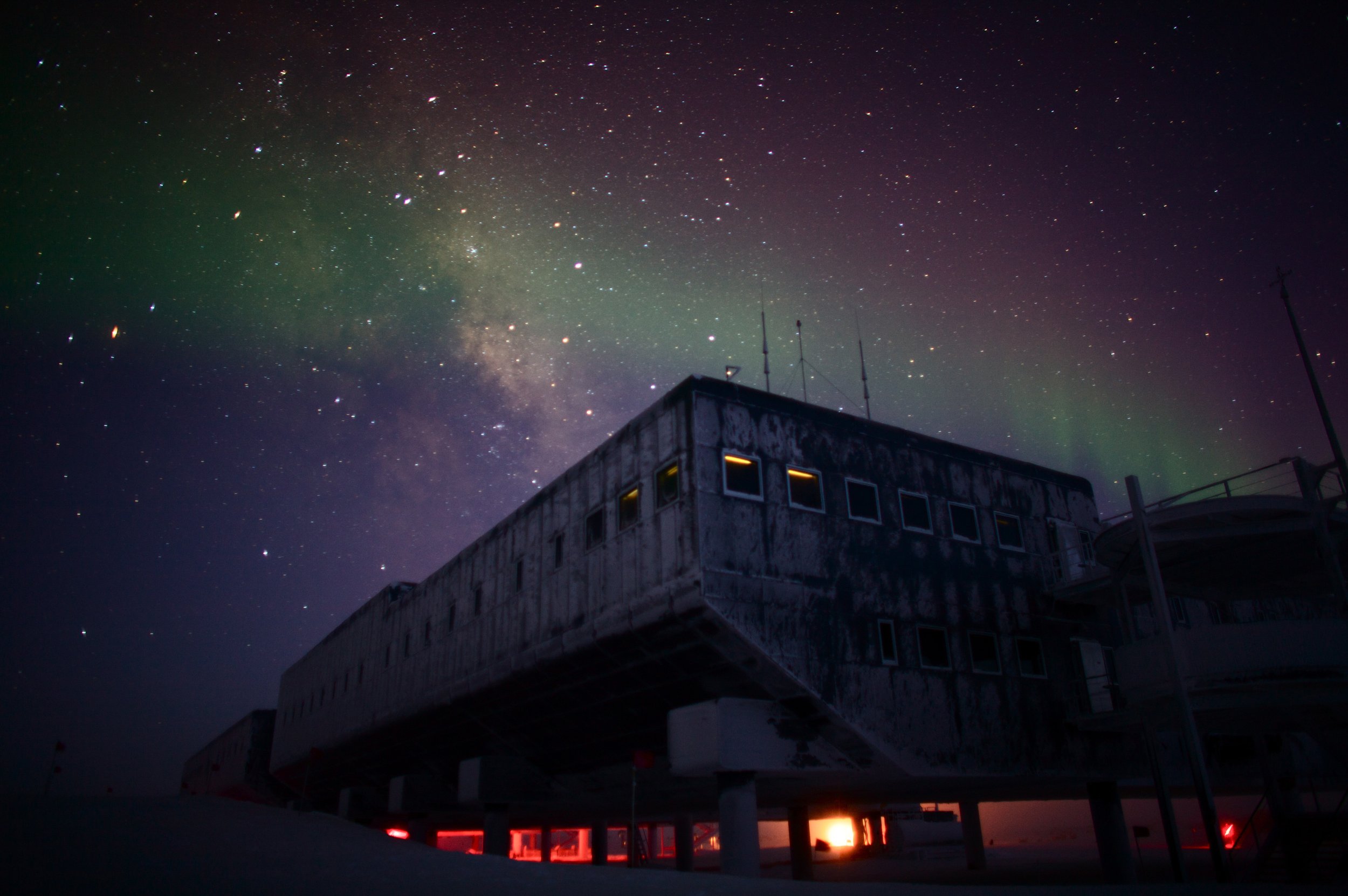
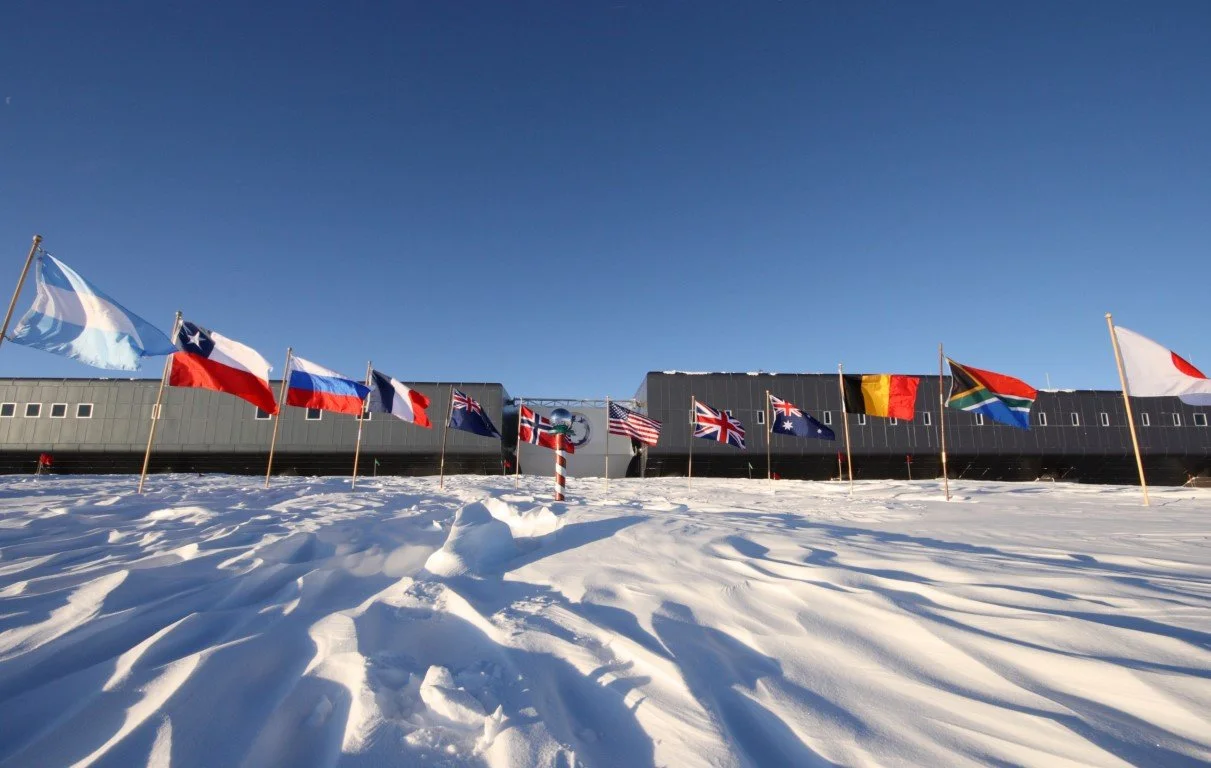
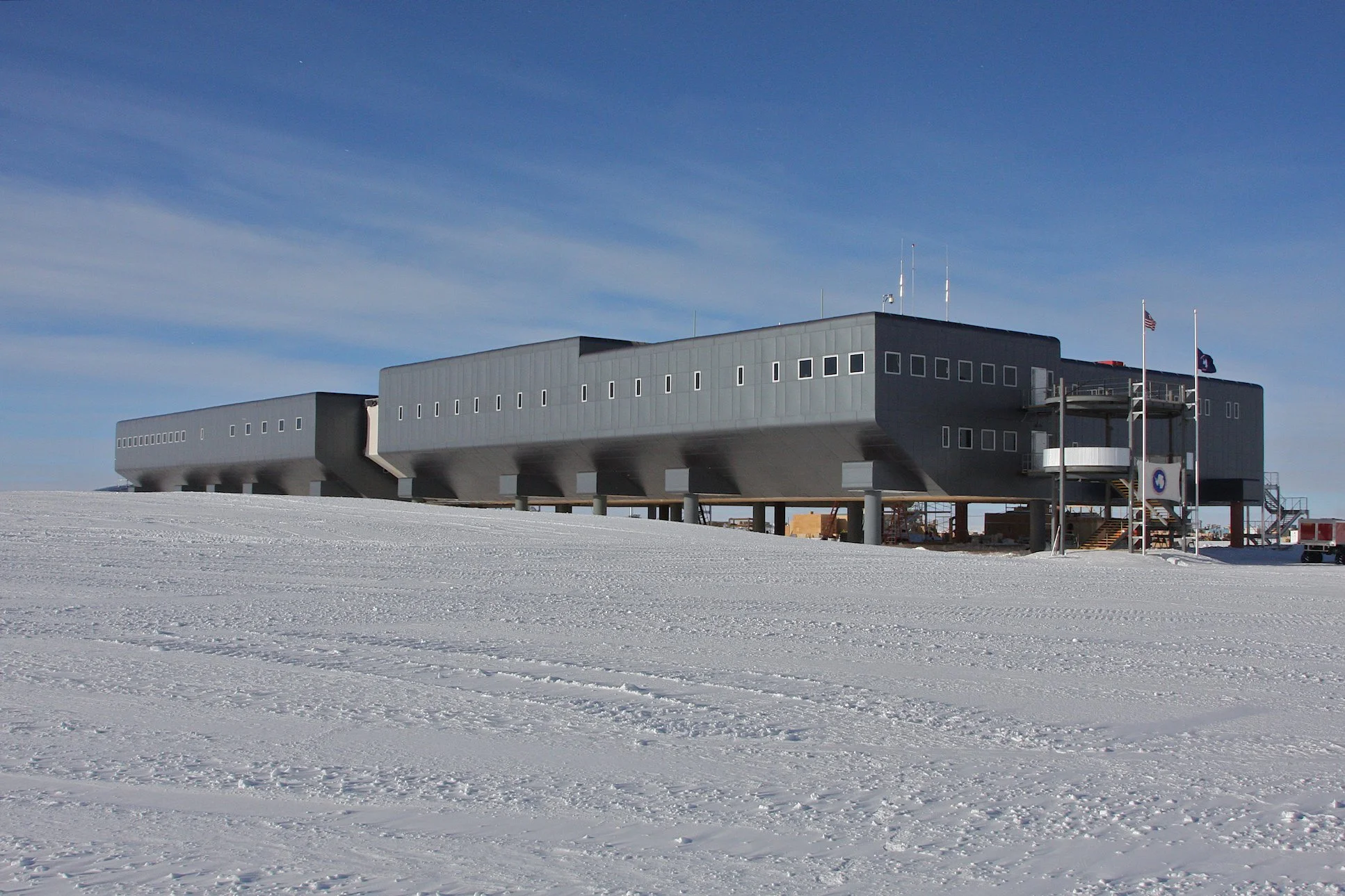
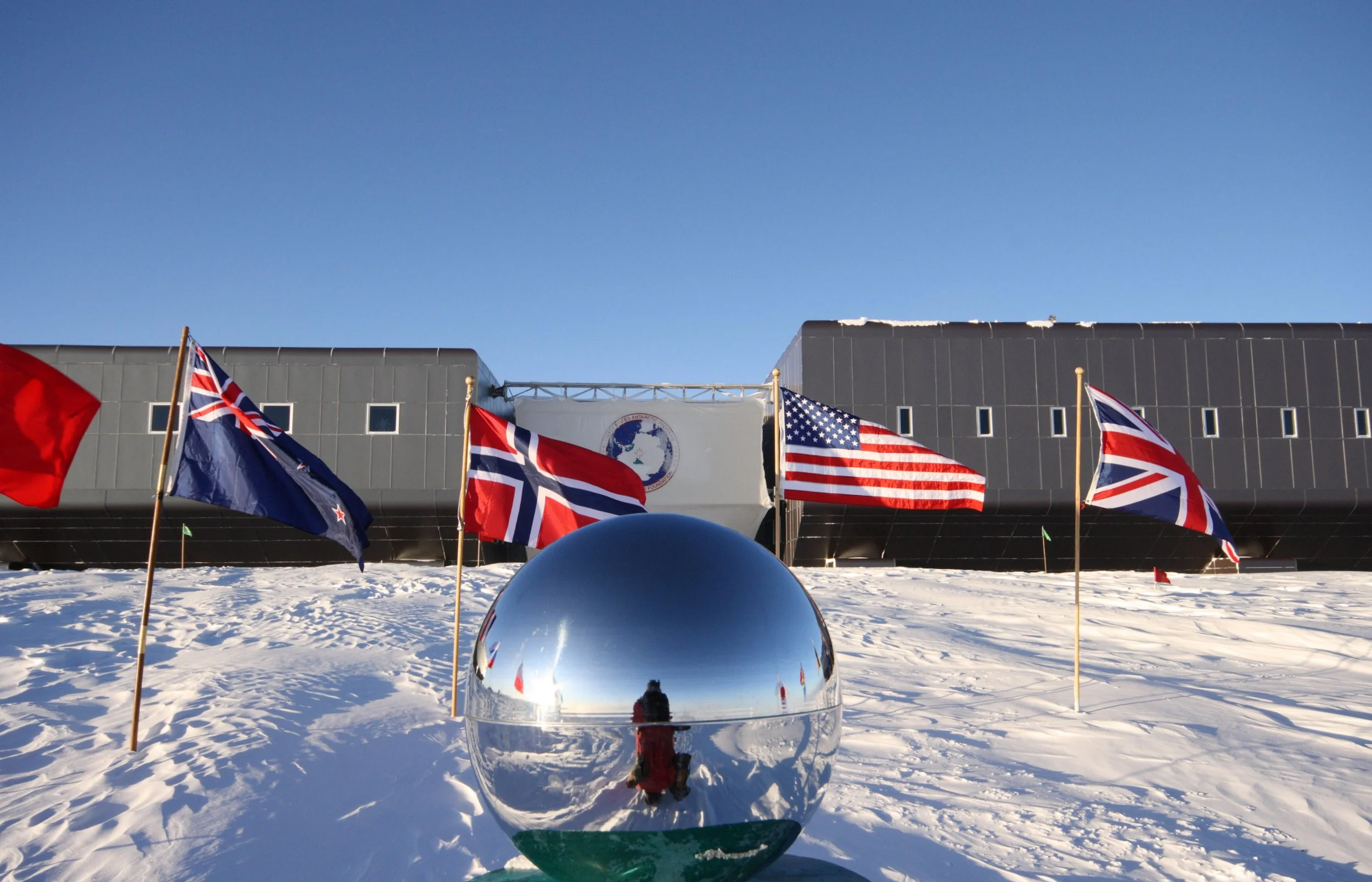
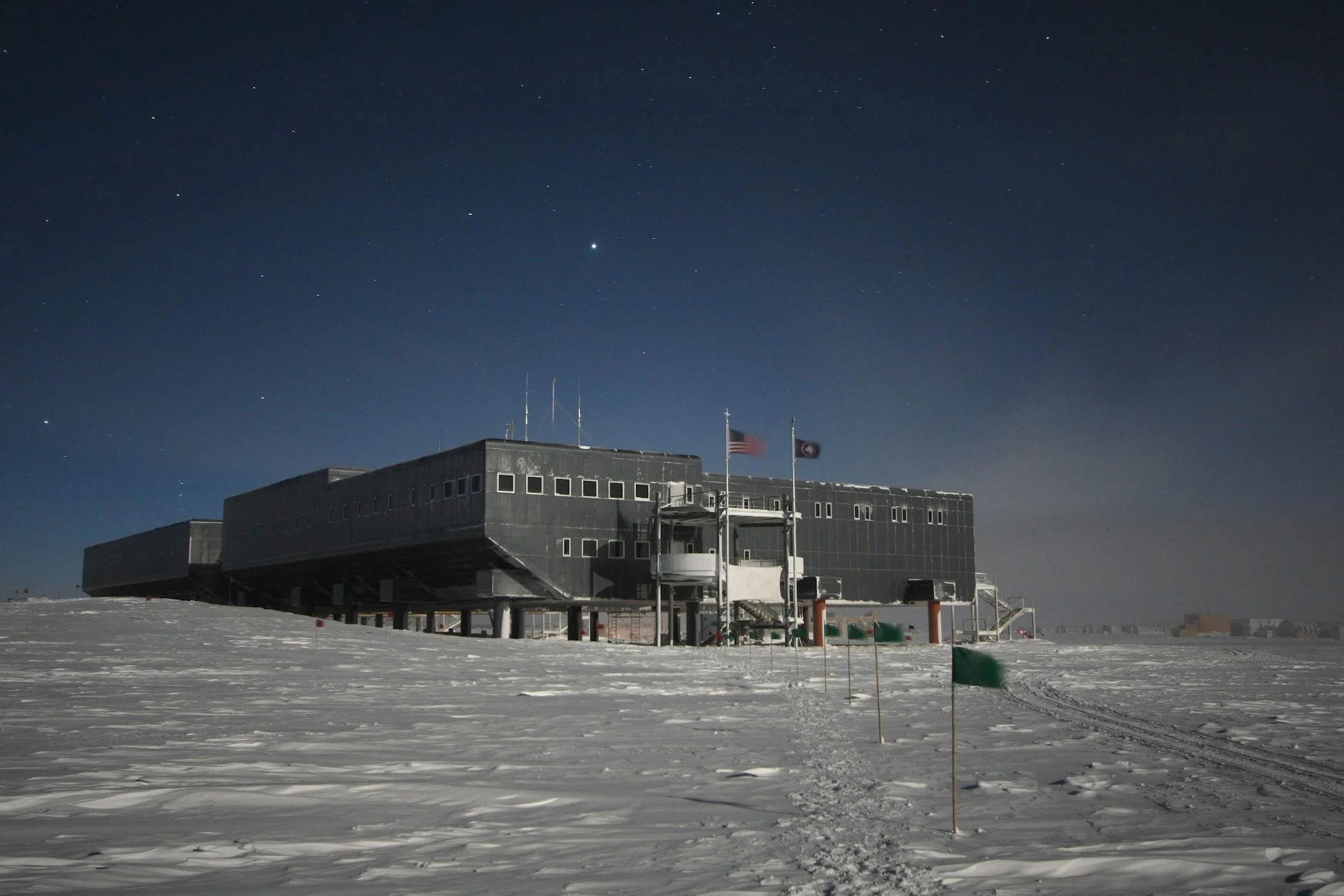
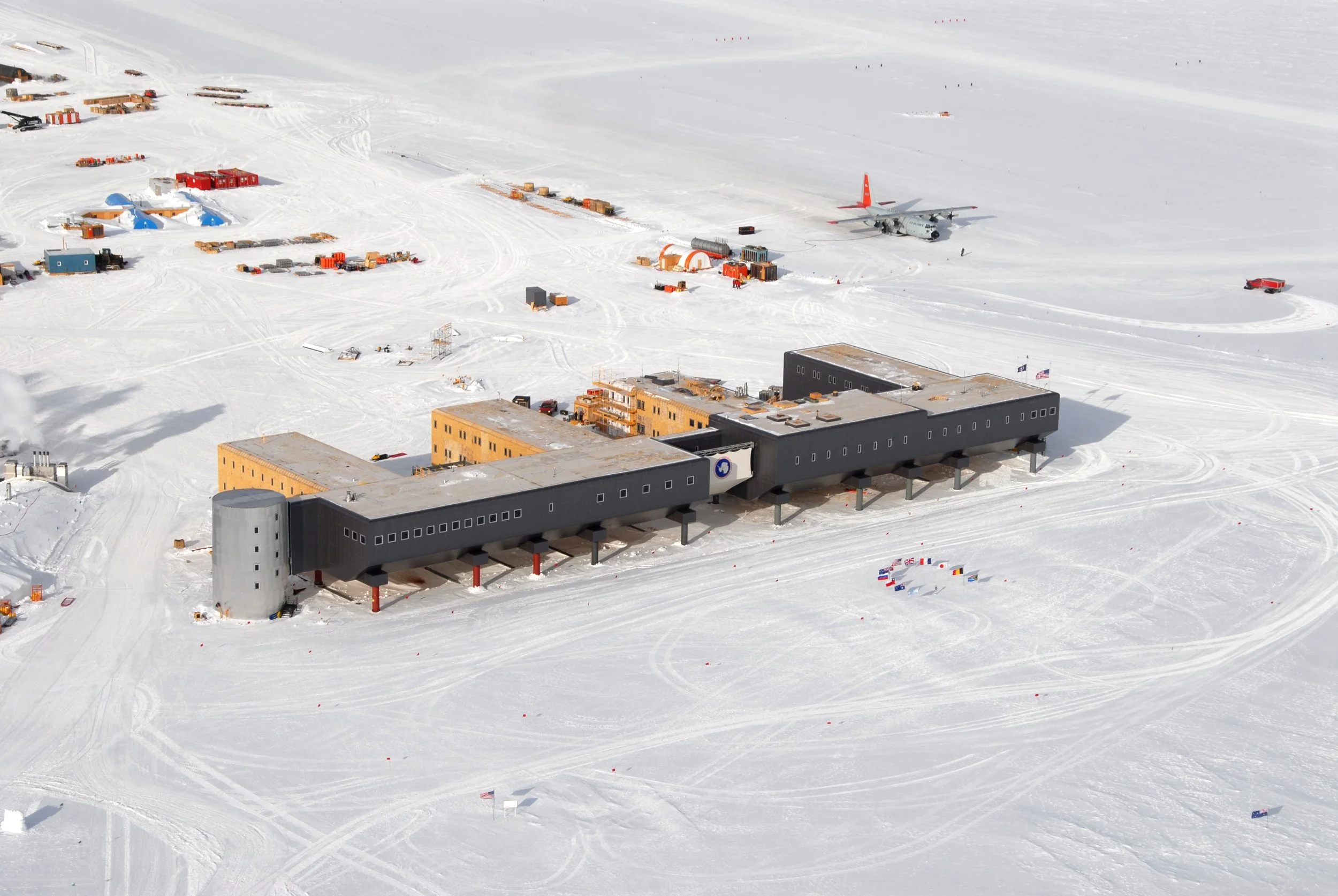
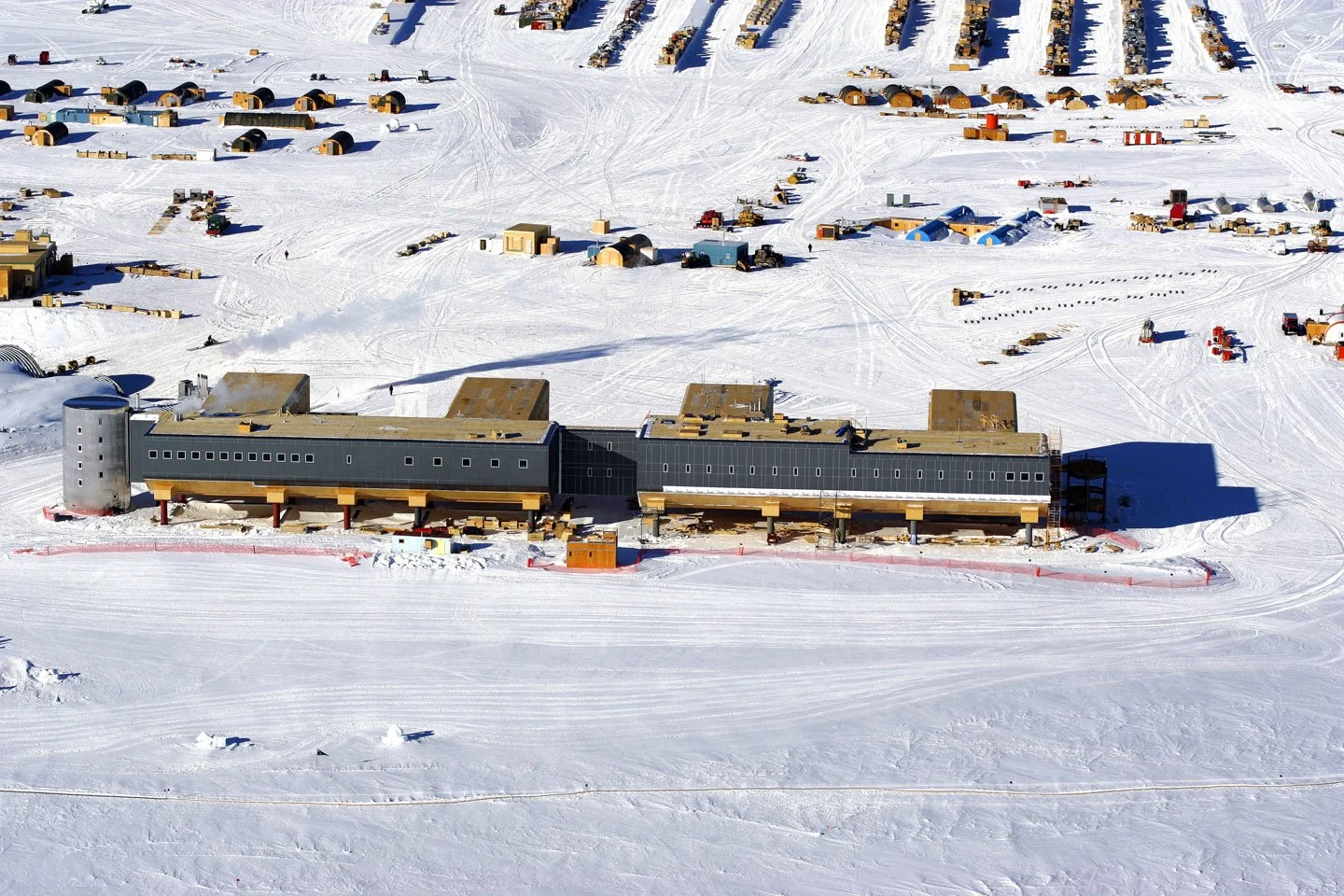
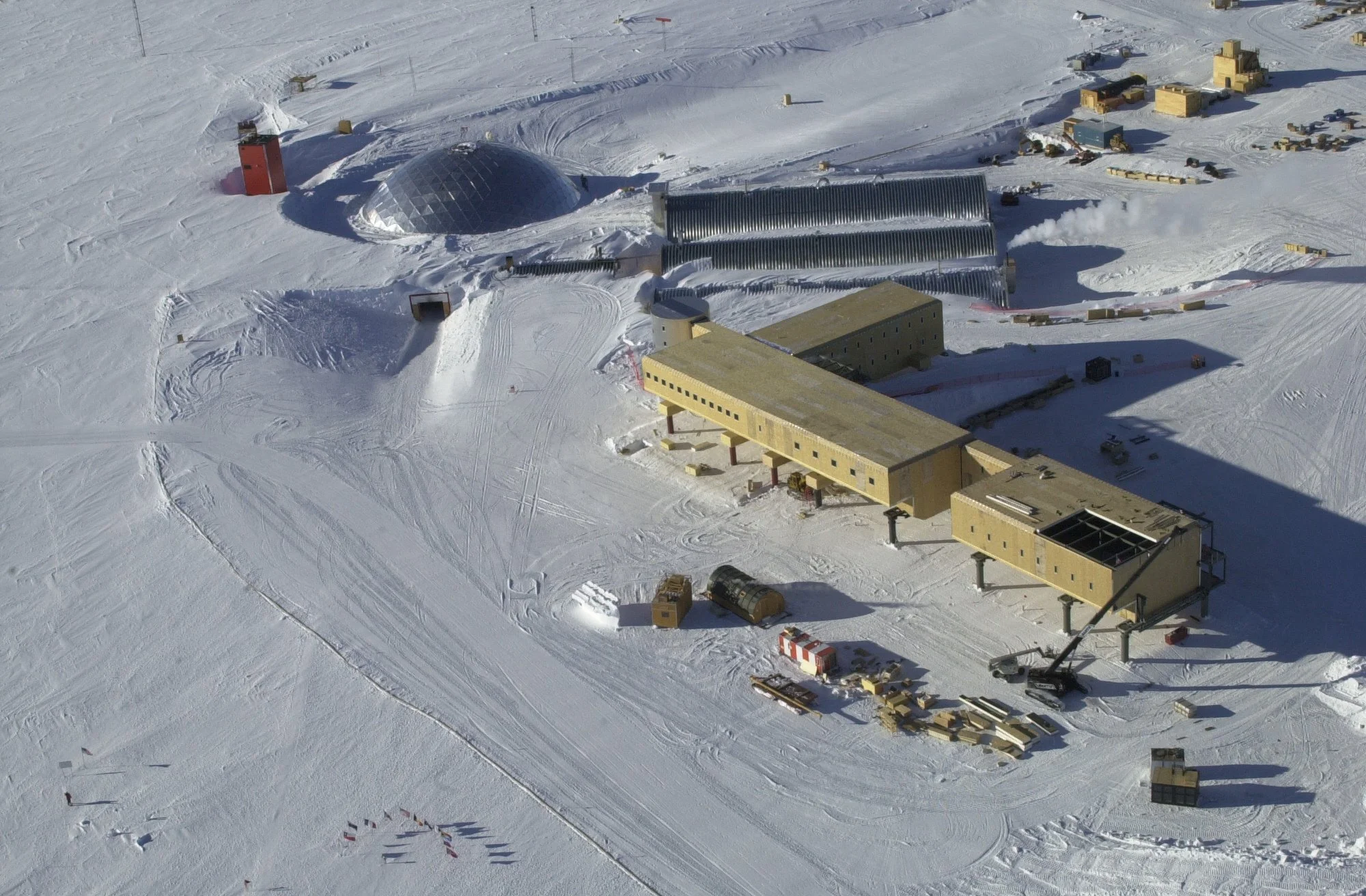
Completed in 2010, the new Amundsen-Scott station is strategically situated at the geographic South Pole, at an elevation of 2,800 meters. The station sits on a 2700-meter-thick glacier that moves with a velocity of 11 meters per year. It is one of the premier remote facilities of its kind in the world.
Built to accommodate the National Science Foundation’s Polar Research Programs, the station needed to be designed such that all construction components could fit in the cargo bay of a ski-equipped LC-130 Hercules aircraft and flown from McMurdo Station to the Pole.
To prevent burial by annual snow drift, the station is elevated three meters off the surface and its windward face is chamfered similar to an airplane wing. The unique design works by increasing wind speed above and below the station, effectively scouring drifting snow by preventing it from settling until it is well beyond the station on the downwind side. Outboard columns conceal jacking systems which allow the whole station to be raised periodically, keeping it above the plateau that continues to gain elevation at a rate of 0.2 meter per year.
A city in miniature, including a NASA-designed plant-growth chamber for fresh food production, the station accommodates a population of 150 during the four-month austral summer and 50 during the eight-month winter isolation period.
Year Completed: 2021
Service Type: Architecture + Interiors
Size: 70,000 Sq. Ft.
-
All heating is provided by jacket cooling and exhaust gas heat exchangers at the primary diesel power plant.
Alternative energy systems use wind and solar power providing up to 14% of the station’s power requirements.
Good indoor air quality is ensured by specification of low VOC (volatile organic compounds) paints, adhesives, caulking compounds, and insulation.
All water is derived from the surrounding ice field and strictly rationed.
Existing buildings were dismantled and reconstructed to reduce retrograde and waste generation.
New buildings are sited to dramatically reduce snow plowing, which had accounted for a major portion of the station’s fuel usage.
All building systems were designed to reduce waste in the shipping and construction process.
All waste materials are processed and returned to the continental U.S for disposal.
To double its useful life, the building can be raised above the snow surface as required with a unique jackable column system.
Specifications preclude environmental destructive materials as described by the Antarctic Treaty.
NOAA DANIEL K. INOUYE REGIONAL CENTER
Honolulu, Hawai‘i
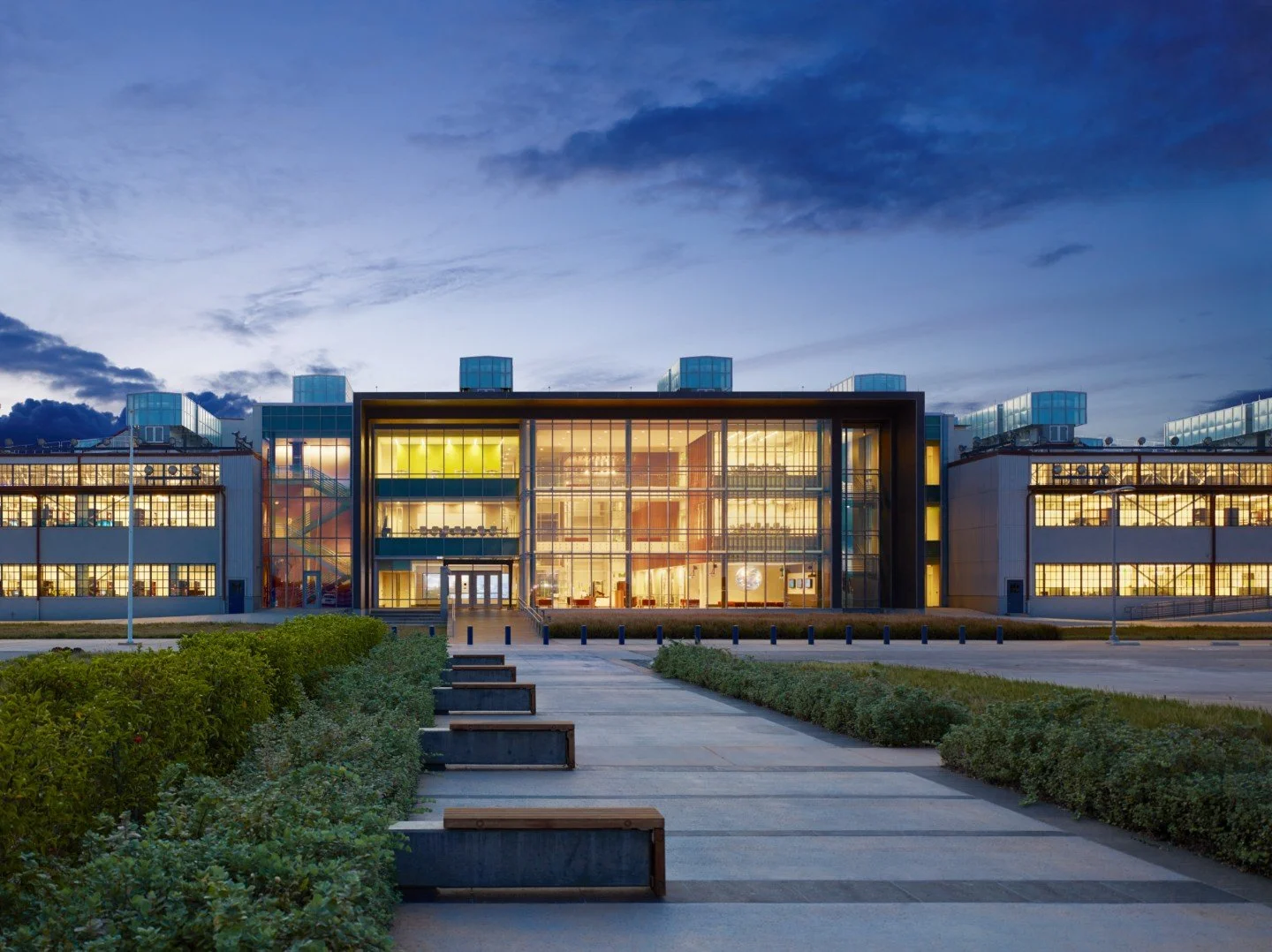
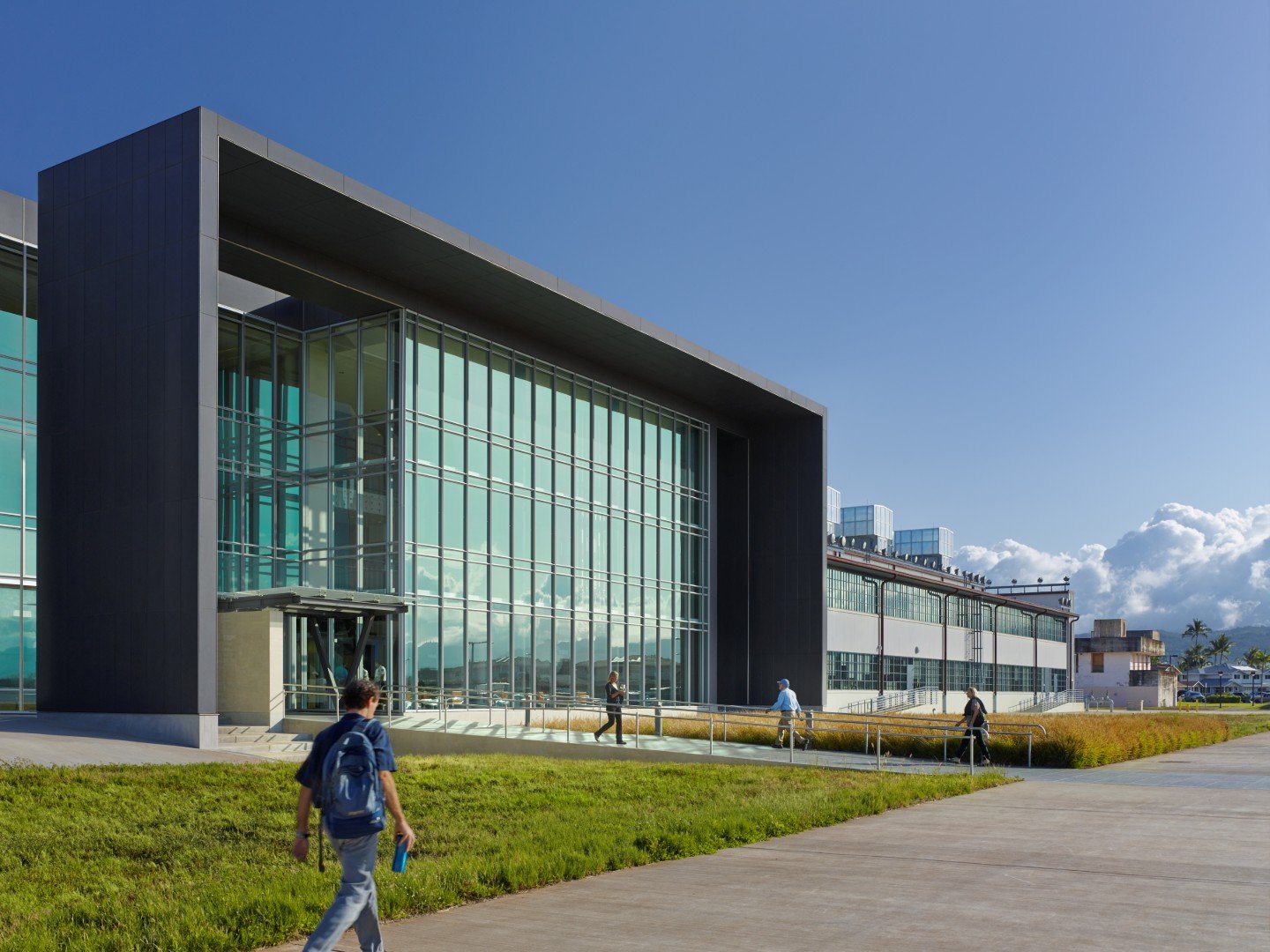
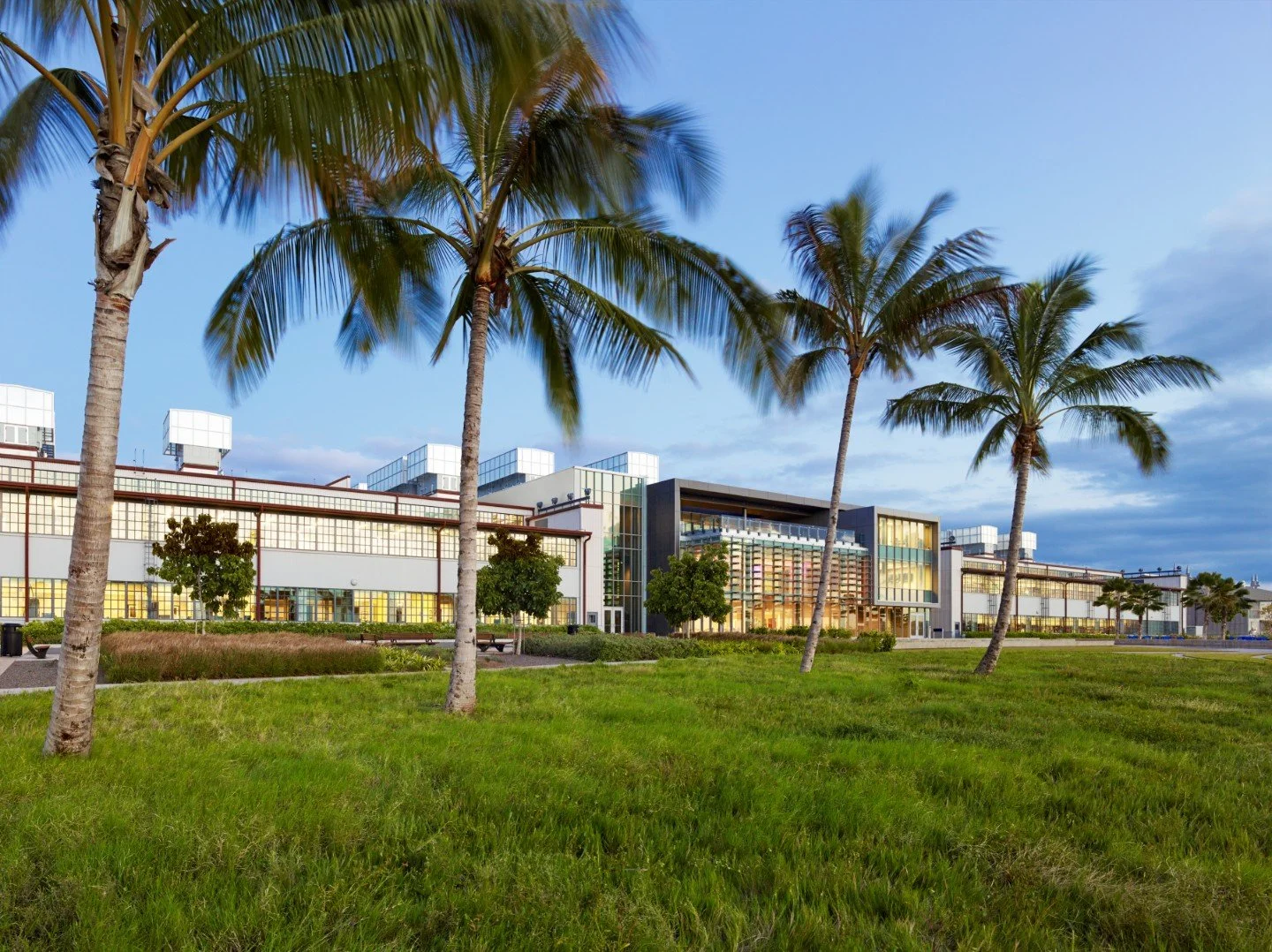
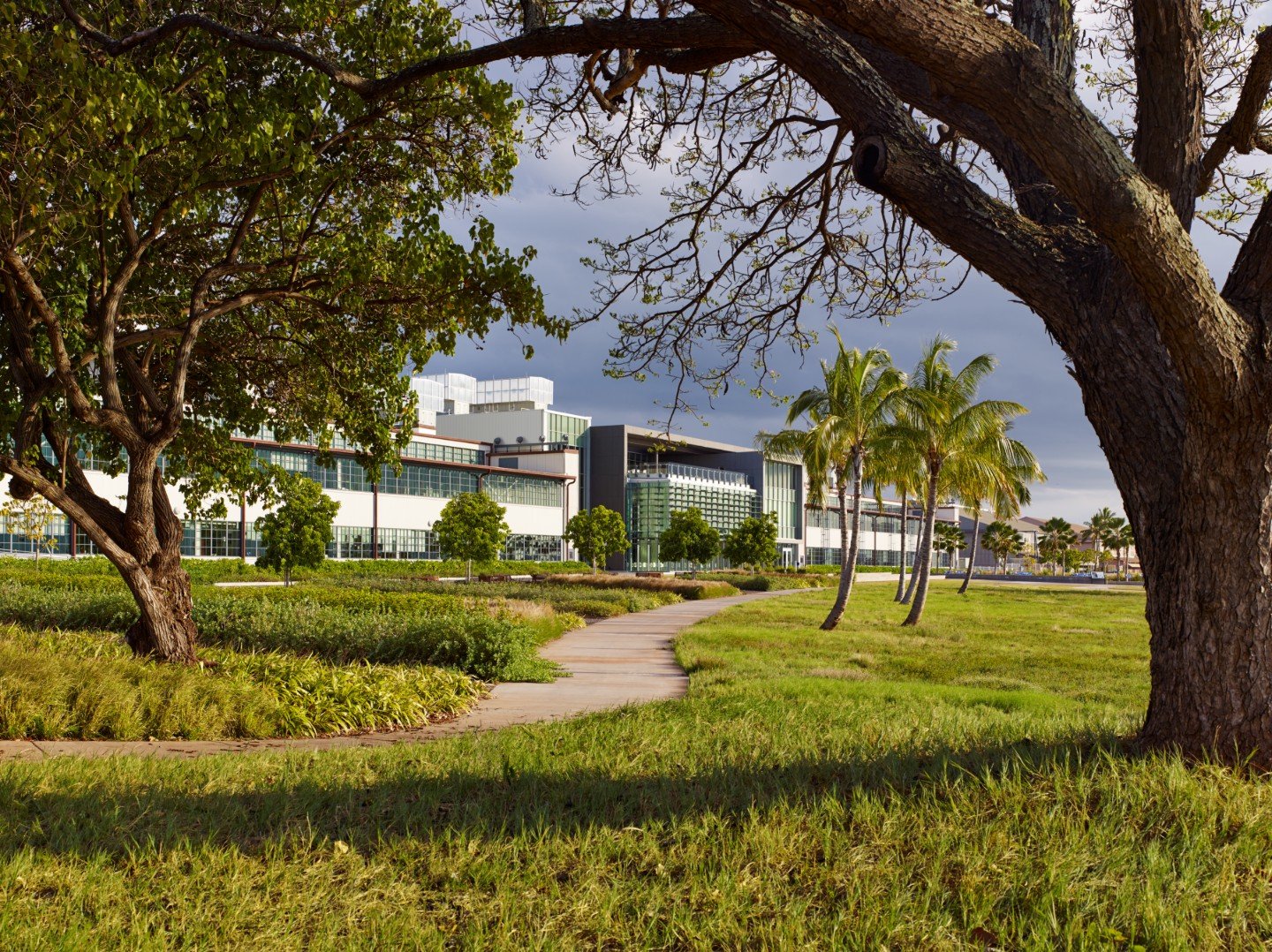
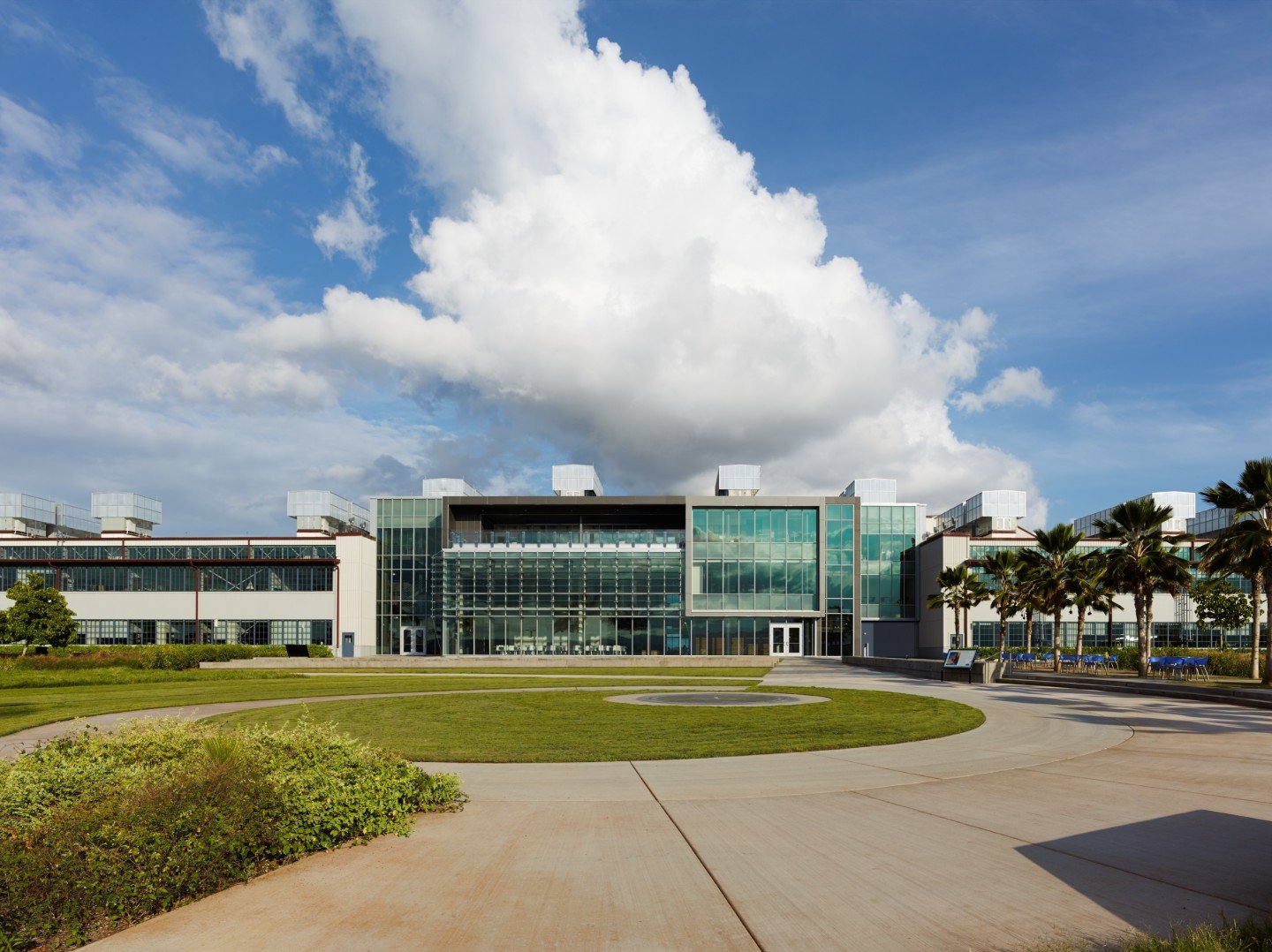
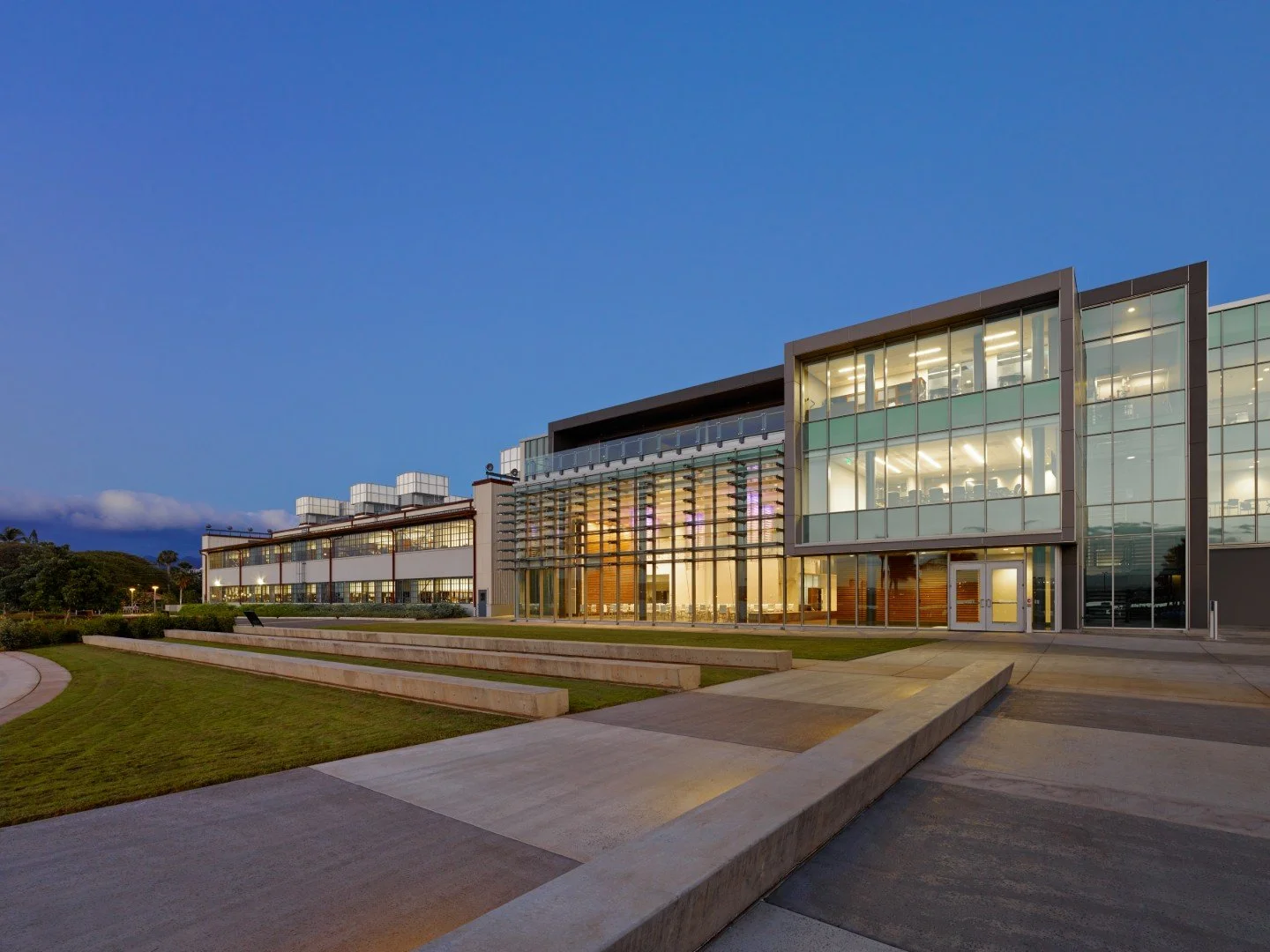
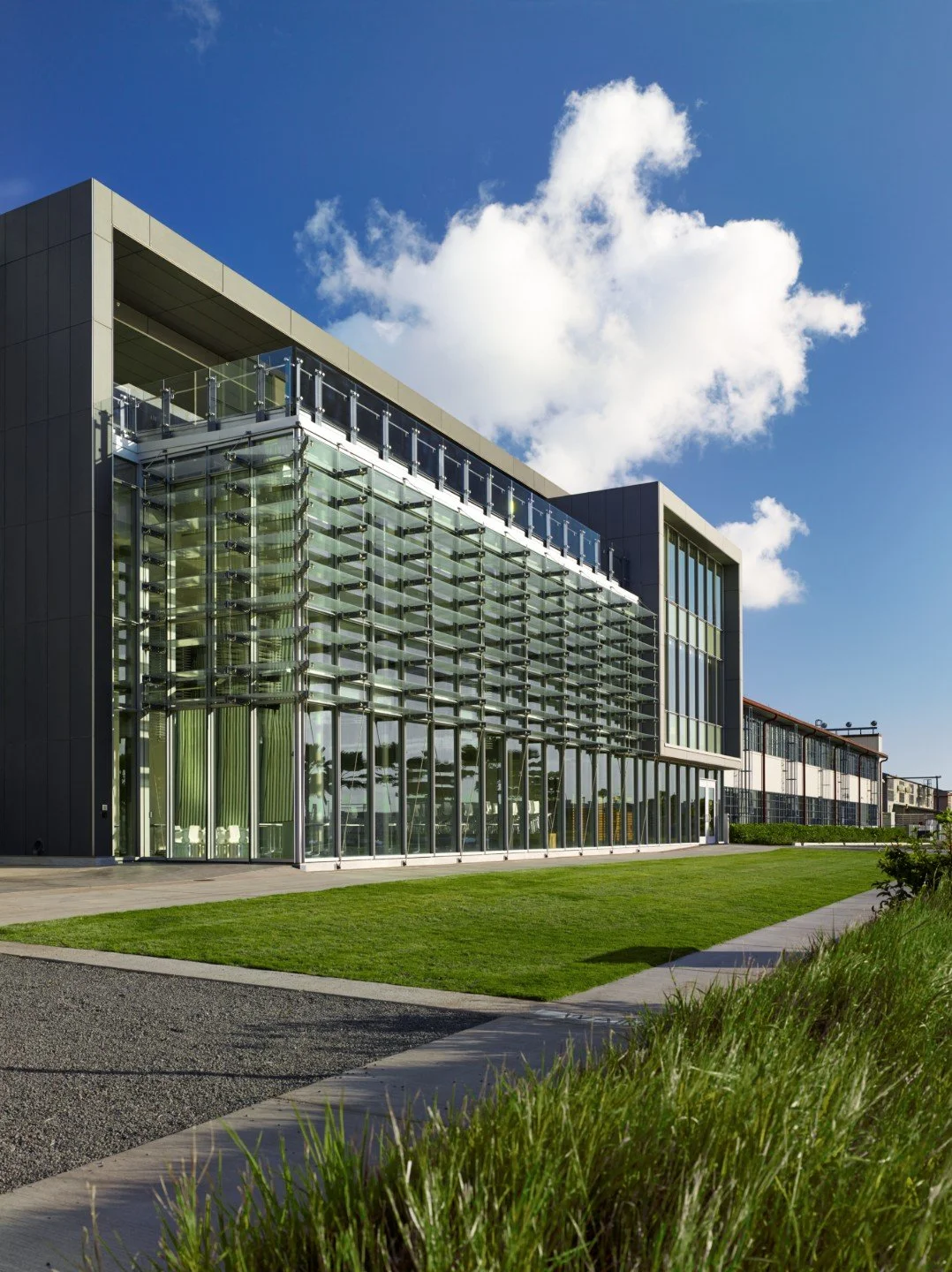
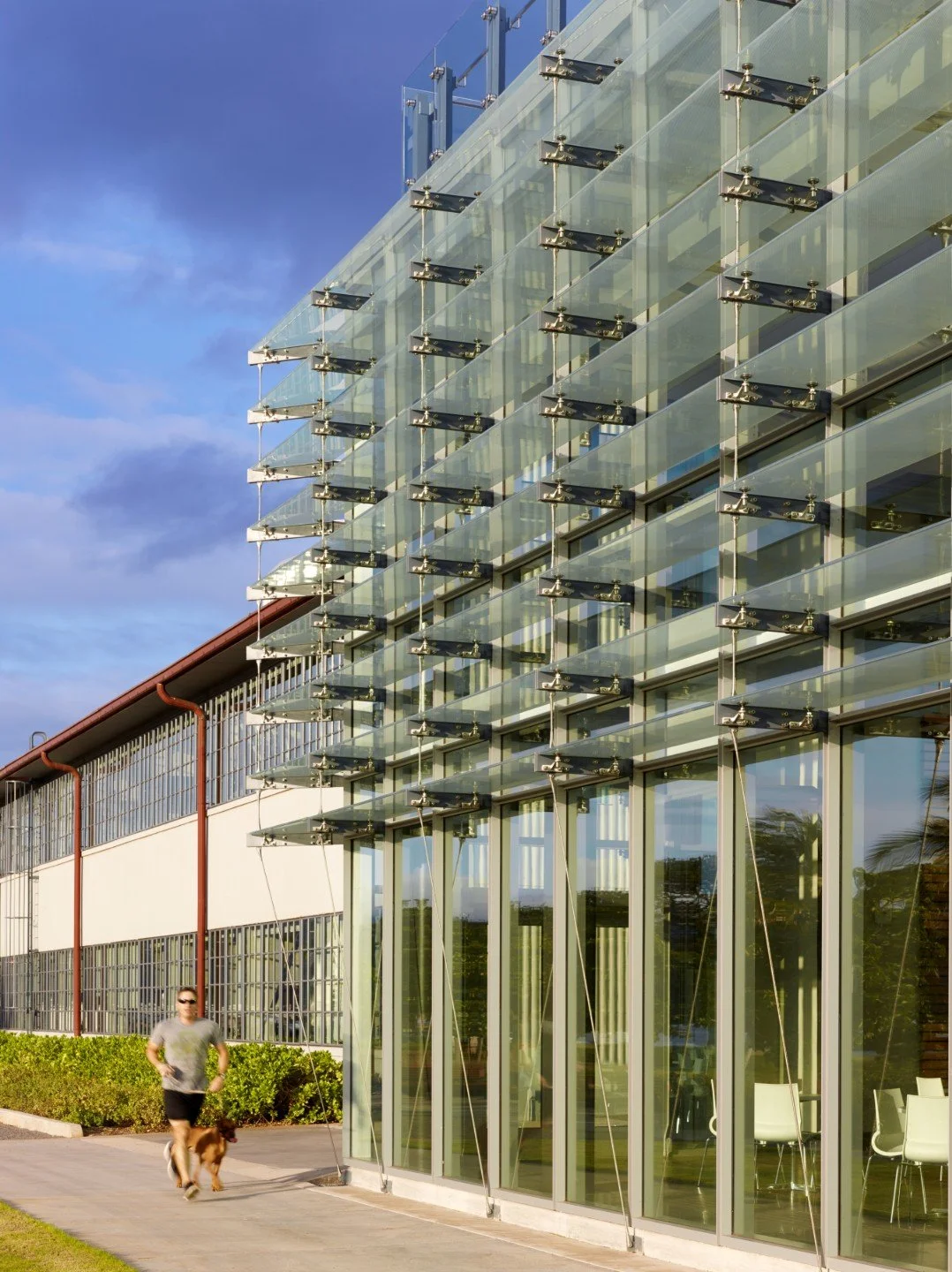
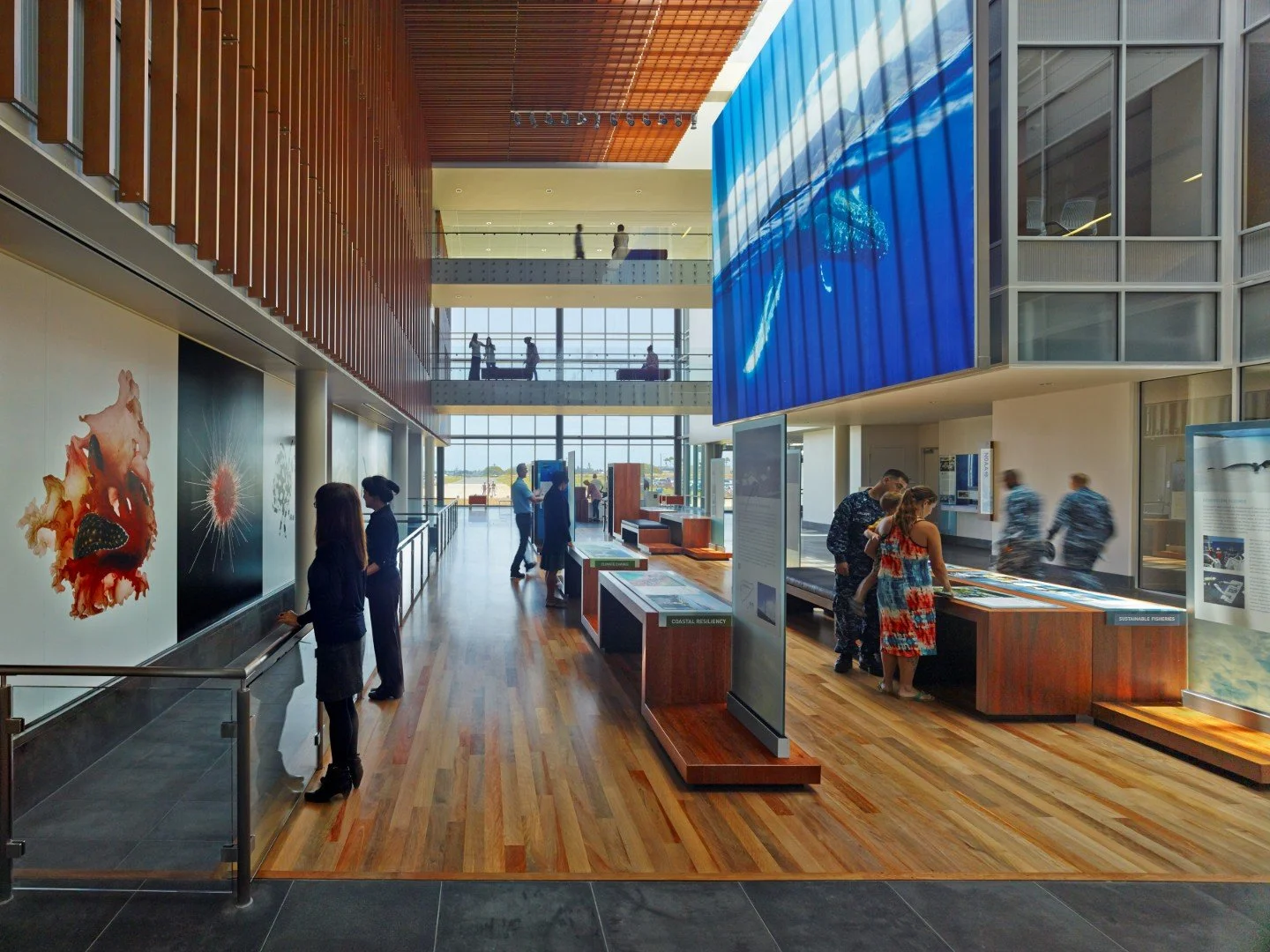
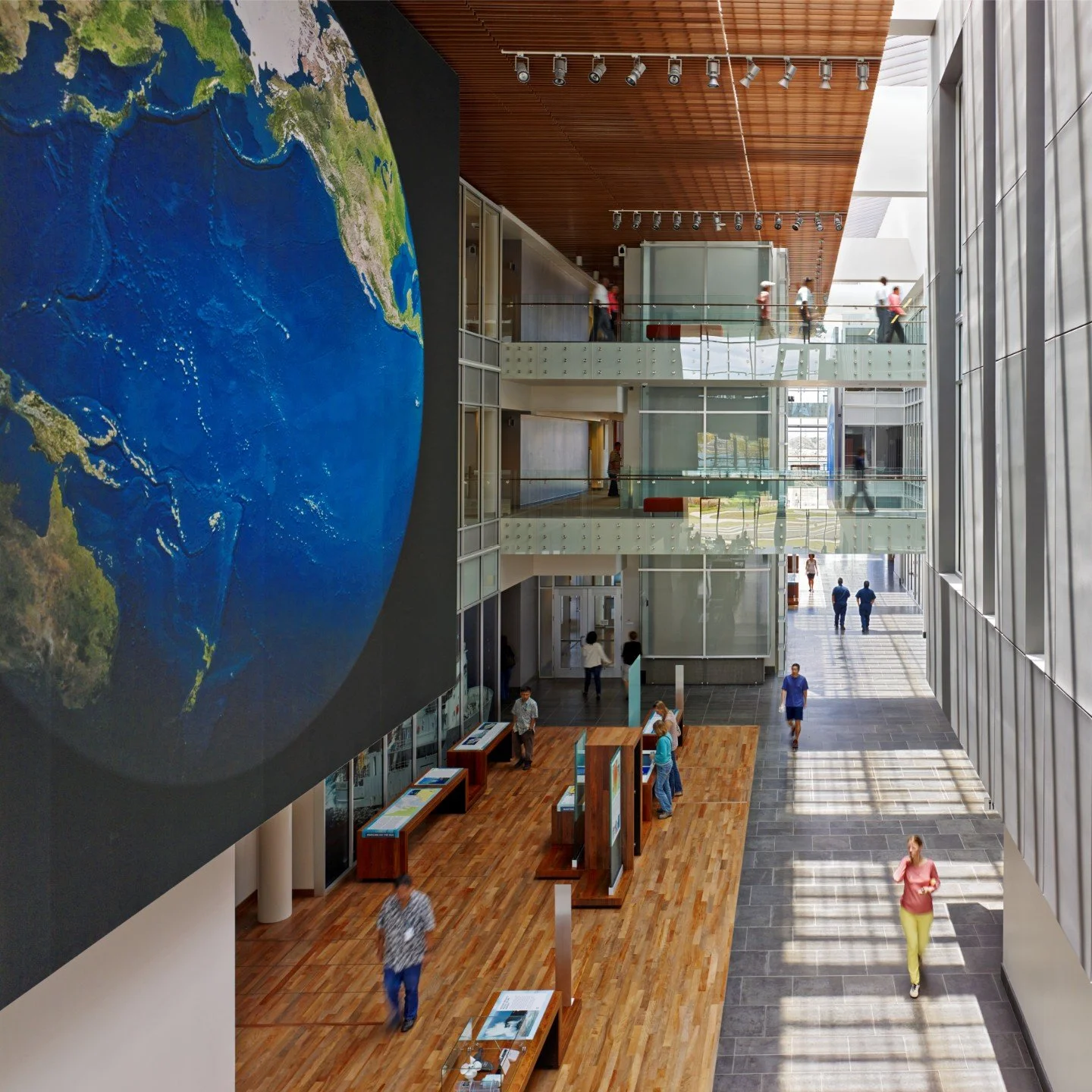
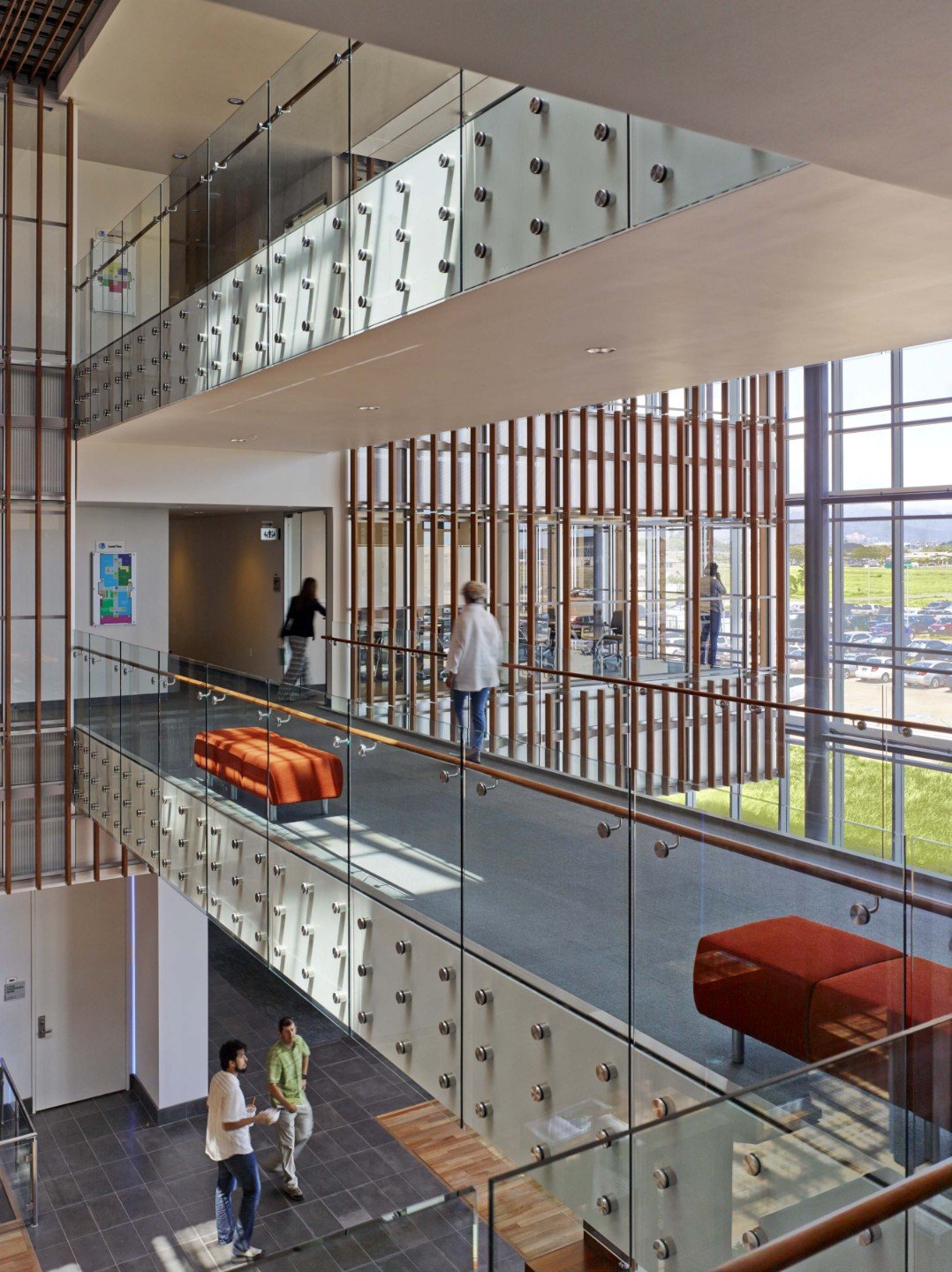
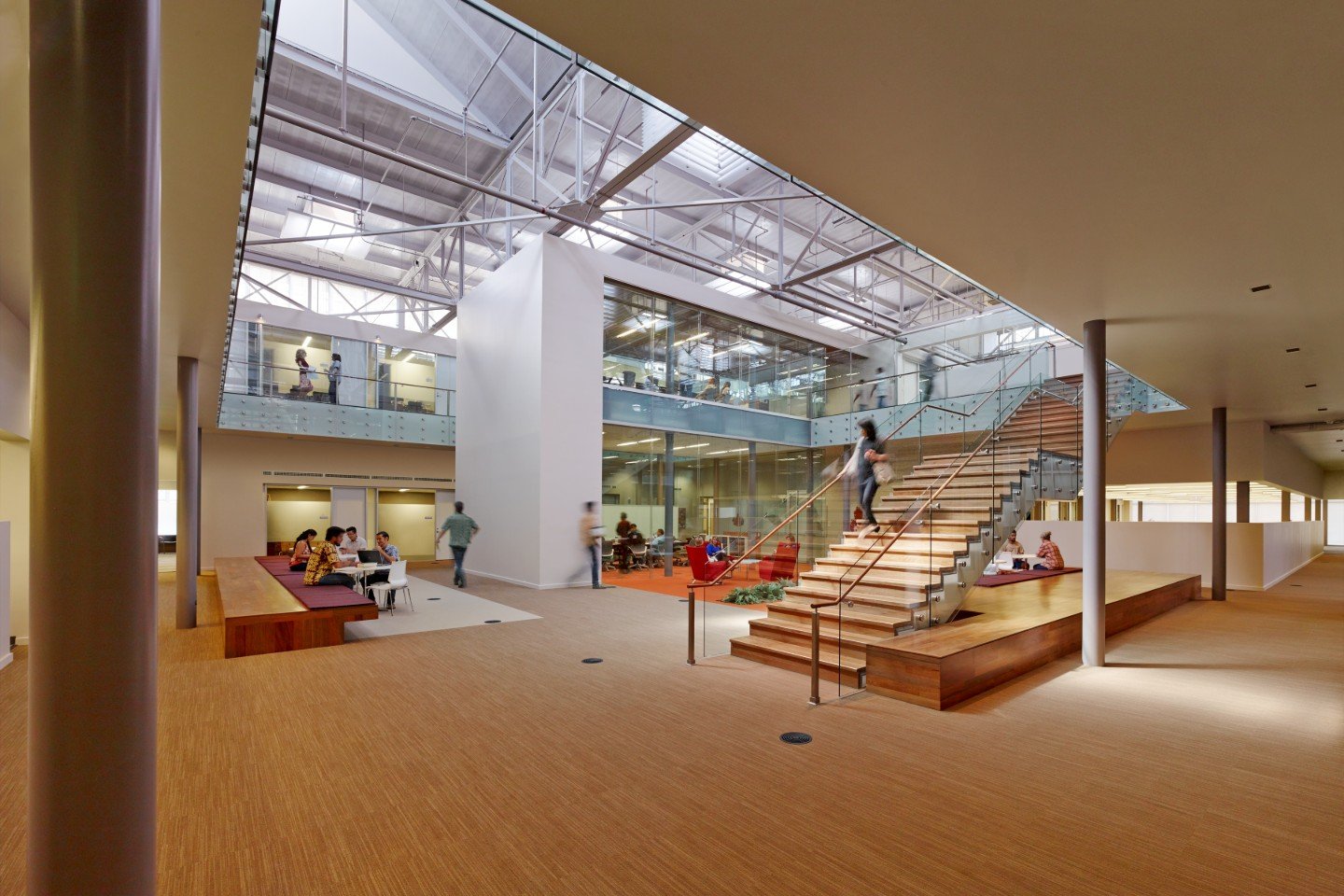
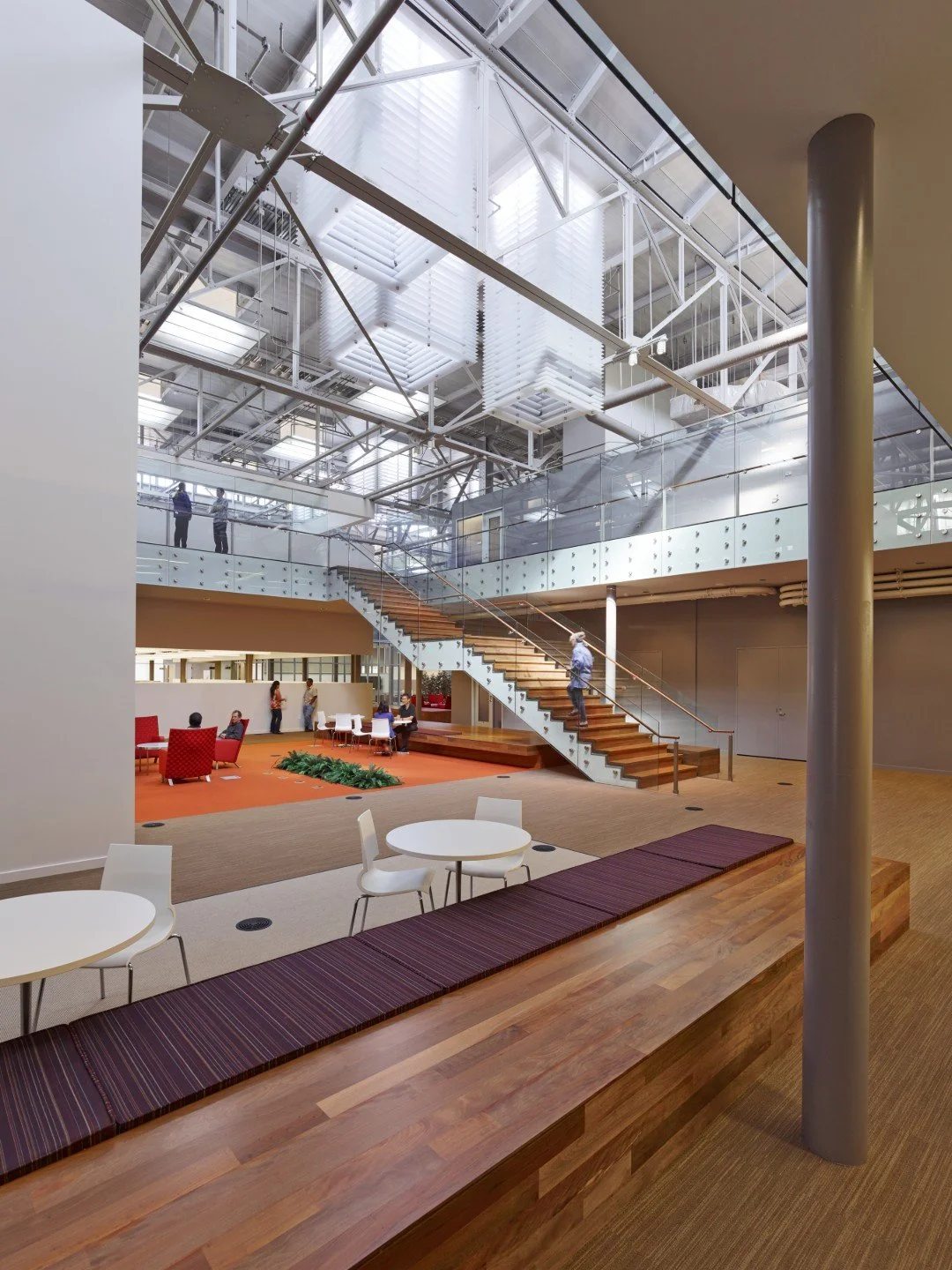
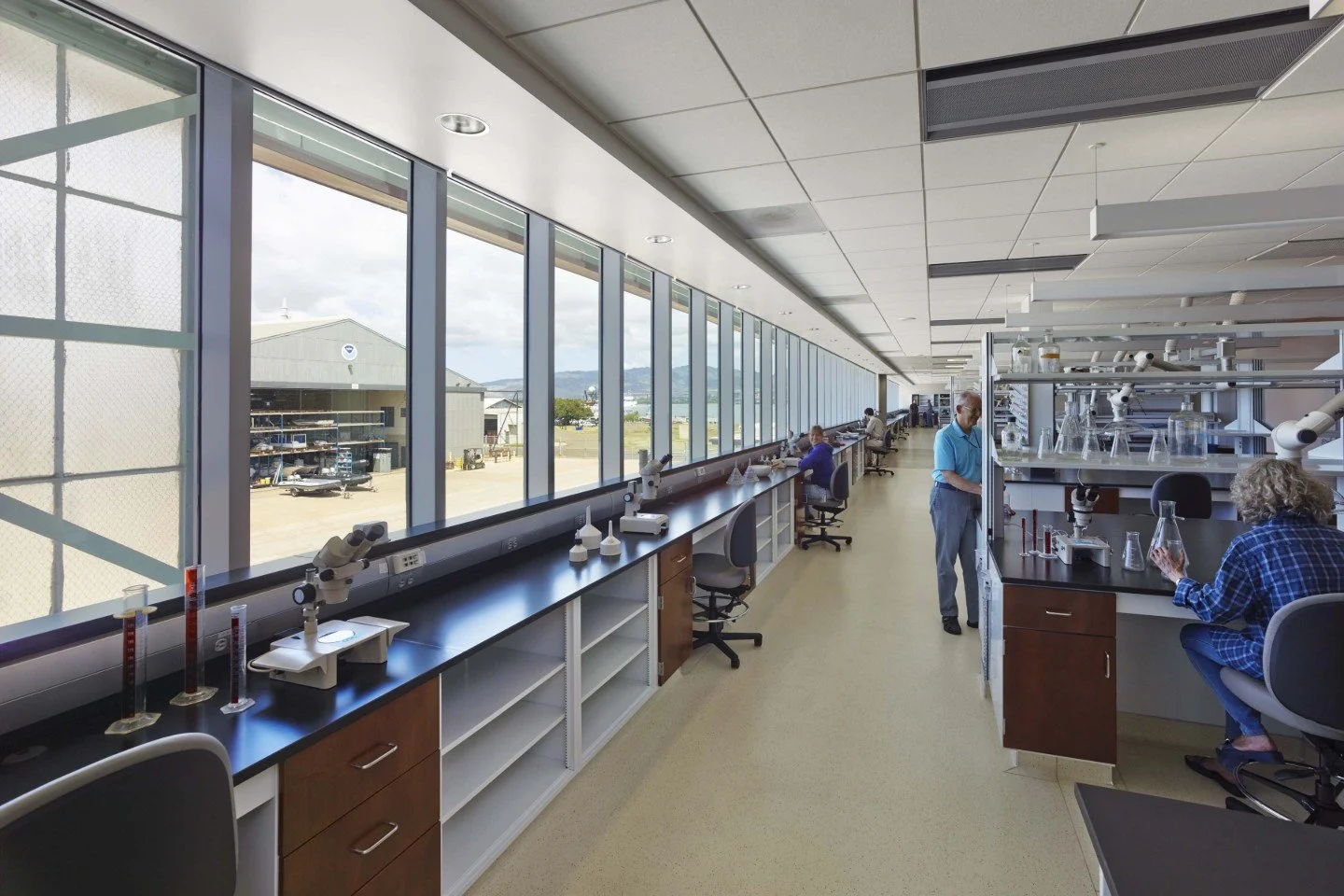
Ferraro Choi teamed with premier mainland architect HOK of San Francisco to design the National Oceanic and Atmospheric Administration (NOAA) Daniel K. Inouye Regional Center (Laboratory and Office Complex) on historic Ford Island at Pearl Harbor.
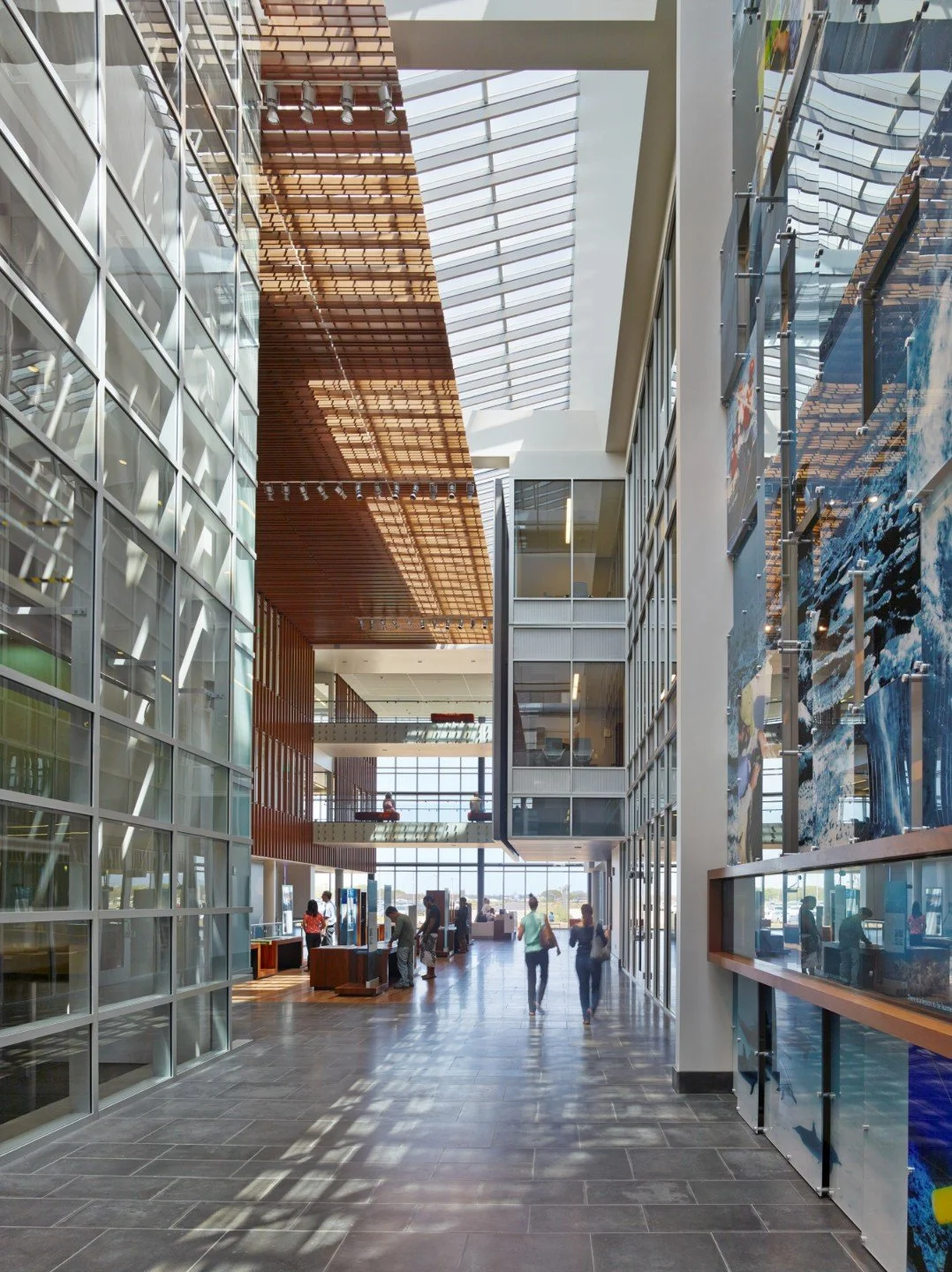
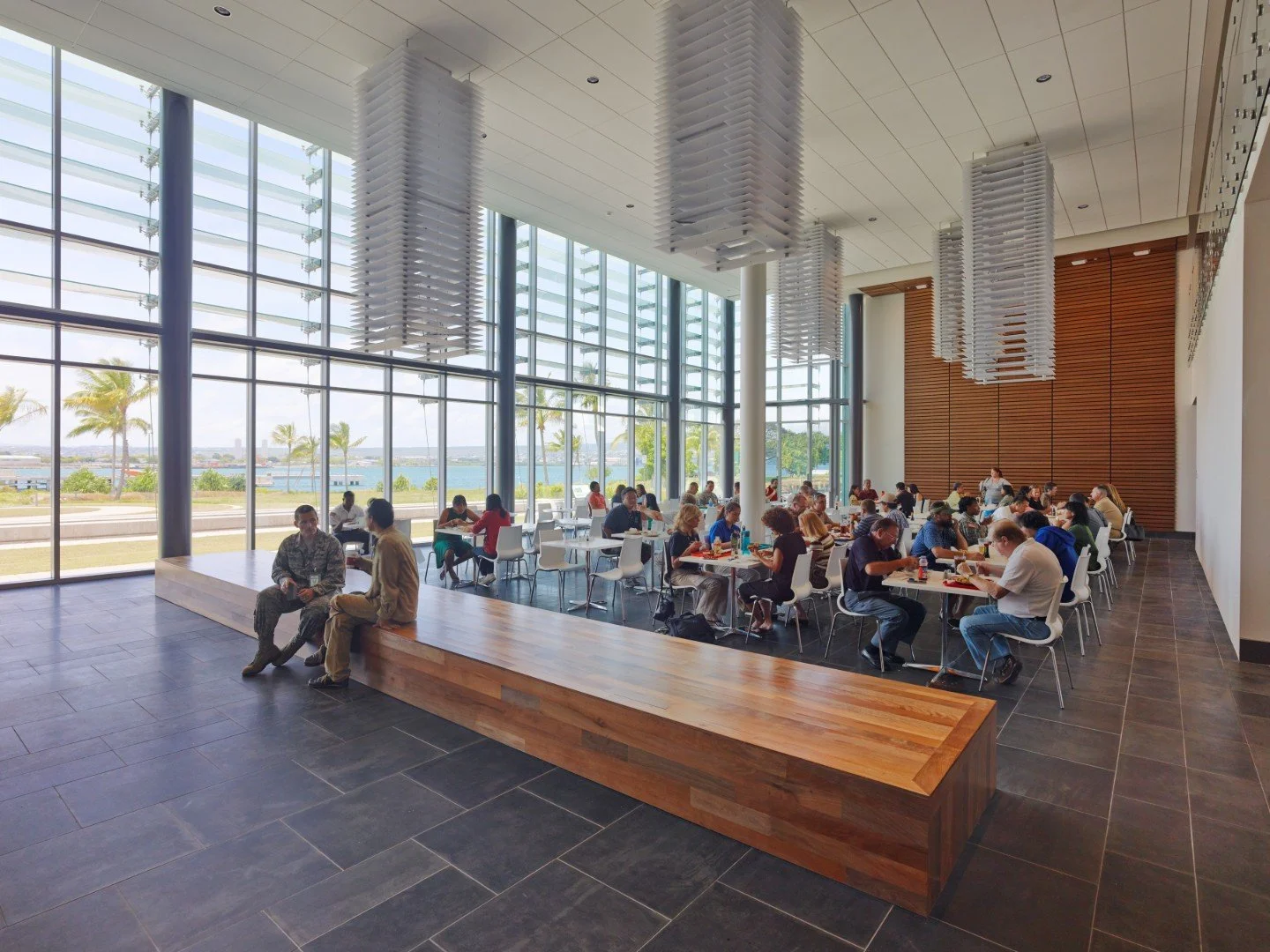
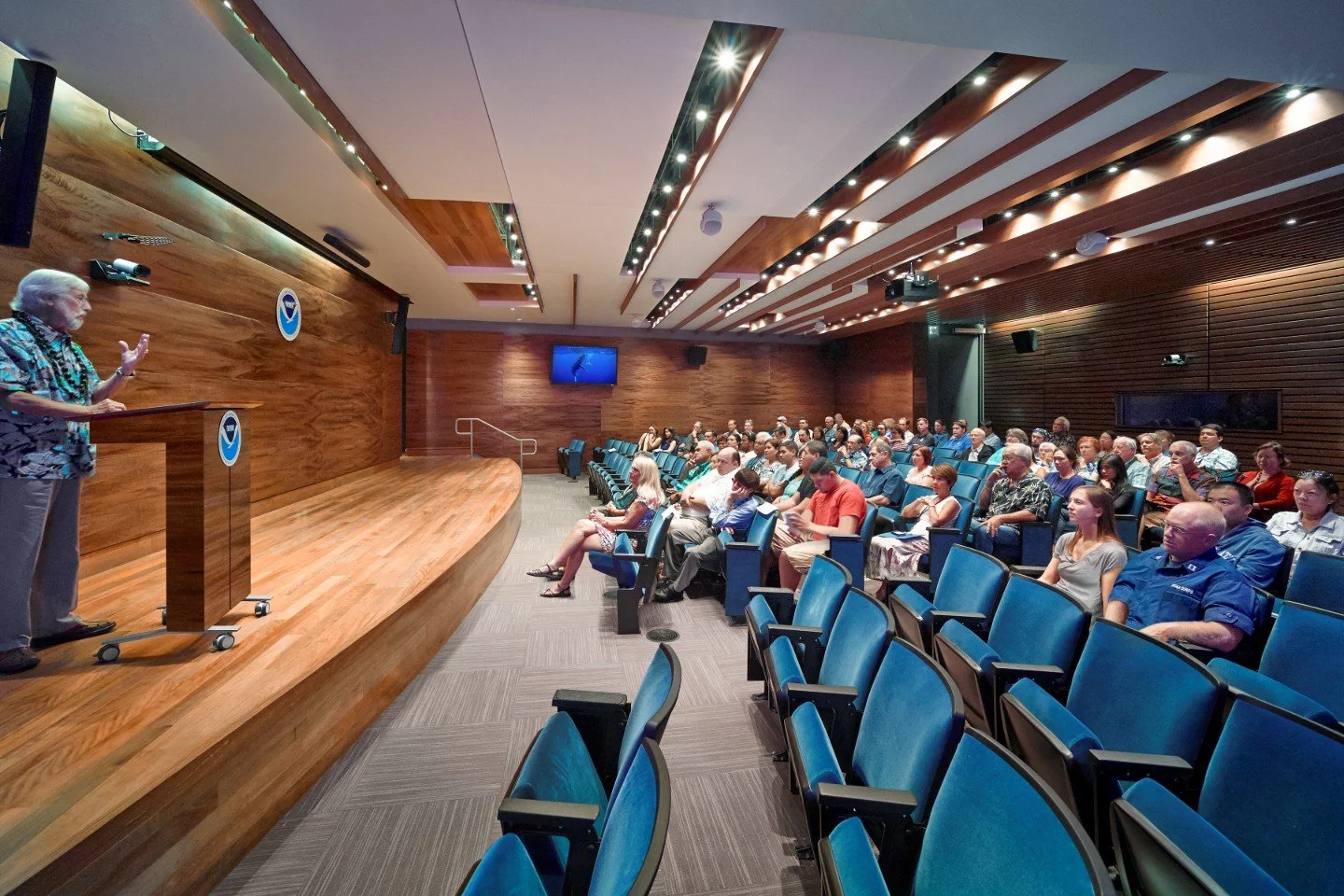
The facility consolidates NOAA’s many Honolulu-area offices and labs into a single, efficient campus facility including pier facilities for NOAA’s Hawaii-based research and fisheries enforcement vessels and small boats. Facilities include office space, wet laboratories, marine animal tanks, and administration and support space for NOAA’s research, conservation management and enforcement programs. NOAA retained NAVFAC Pacific to administer the design, engineering and construction contracts.
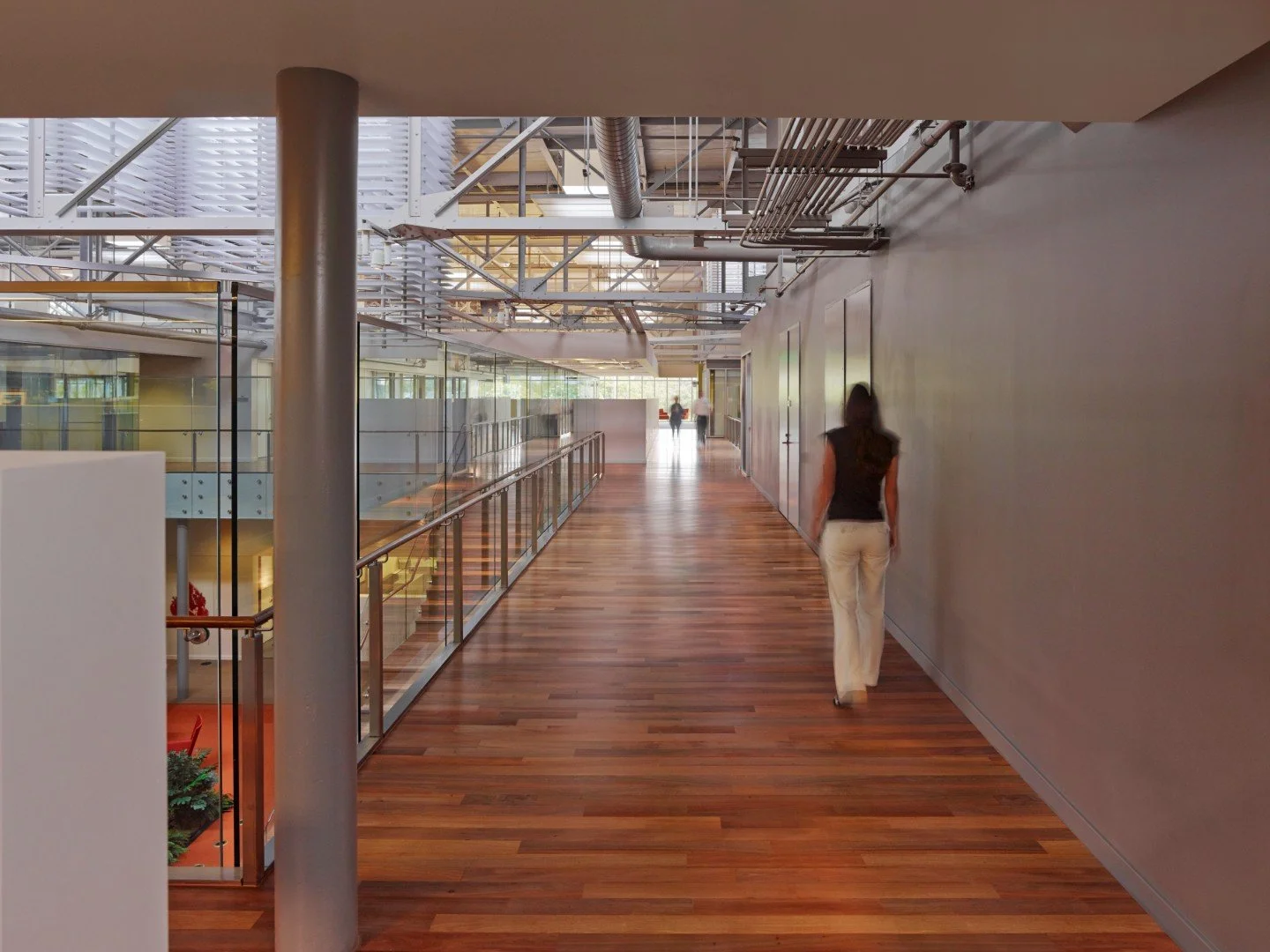
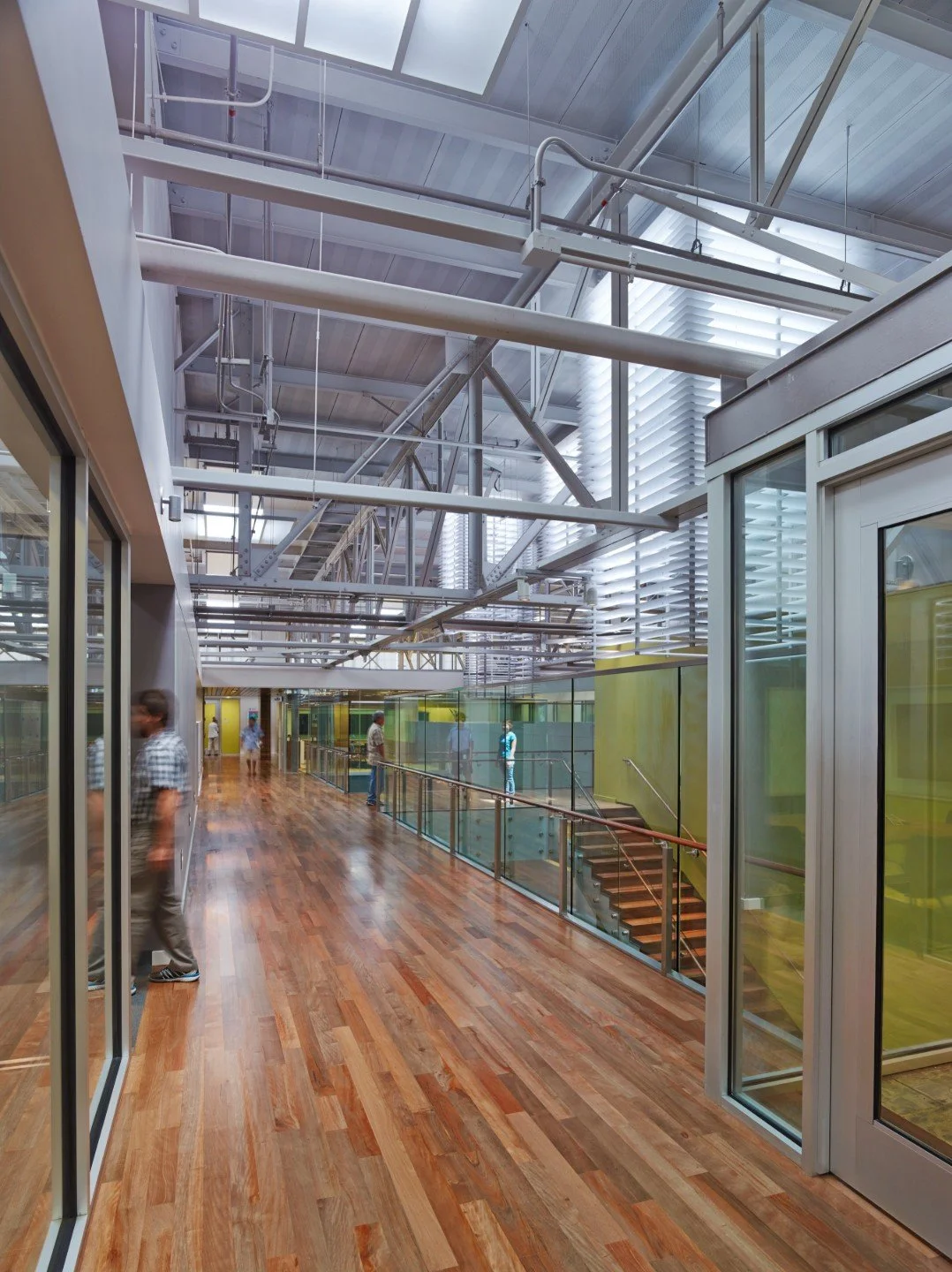
The project achieved LEED NC v2.0 Gold certification. In 2017, the Center was recognized with the AIA Committee on the Environment (COTE) Top Ten award, garnering national attention. In addition to its sustainable design, the complex places many of its program activities and spaces in three renovated historic hangar buildings and incorporates Hawaiian cultural themes that complement the NOAA mission. Two of the hangars are inter-connected by a new building that serves as the facility’s technology systems core and main entrance. The first floor of the new building includes a visitor center, conference facilities, an exhibition area, and cafeteria-style dining.
Year Completed: 2015
Service Type: Architecture + Interiors
Size: 374,000 Sq. Ft.
HAWAII GATEWAY ENERGY CENTER
NATURAL ENERGY LABORATORY OF HAWAII AUTHORITY
Kailua-Kona, Hawai‘i
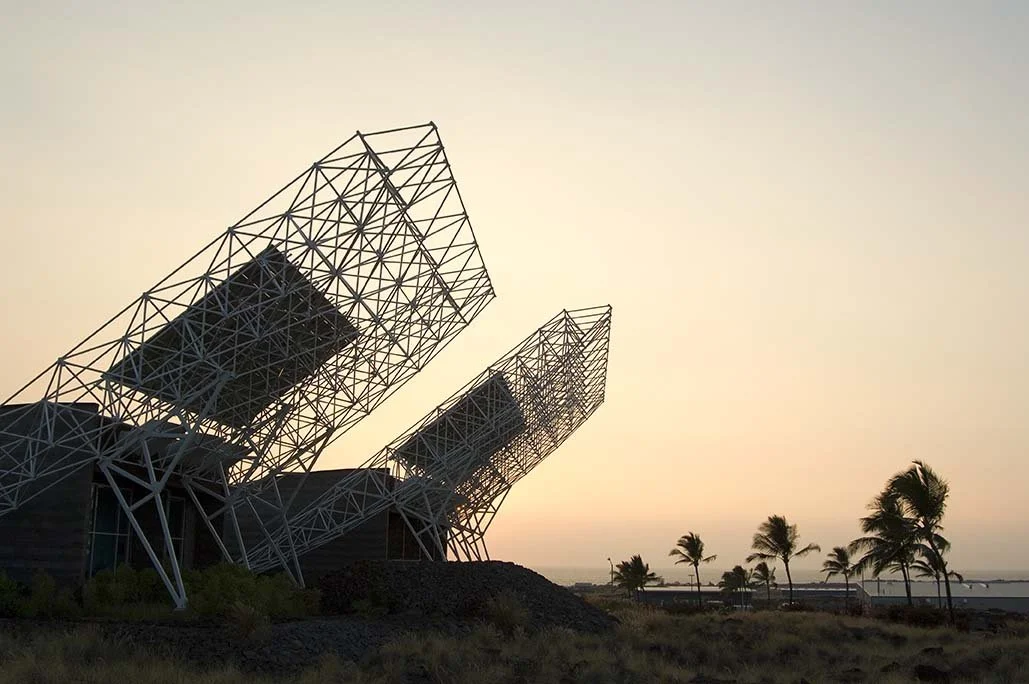
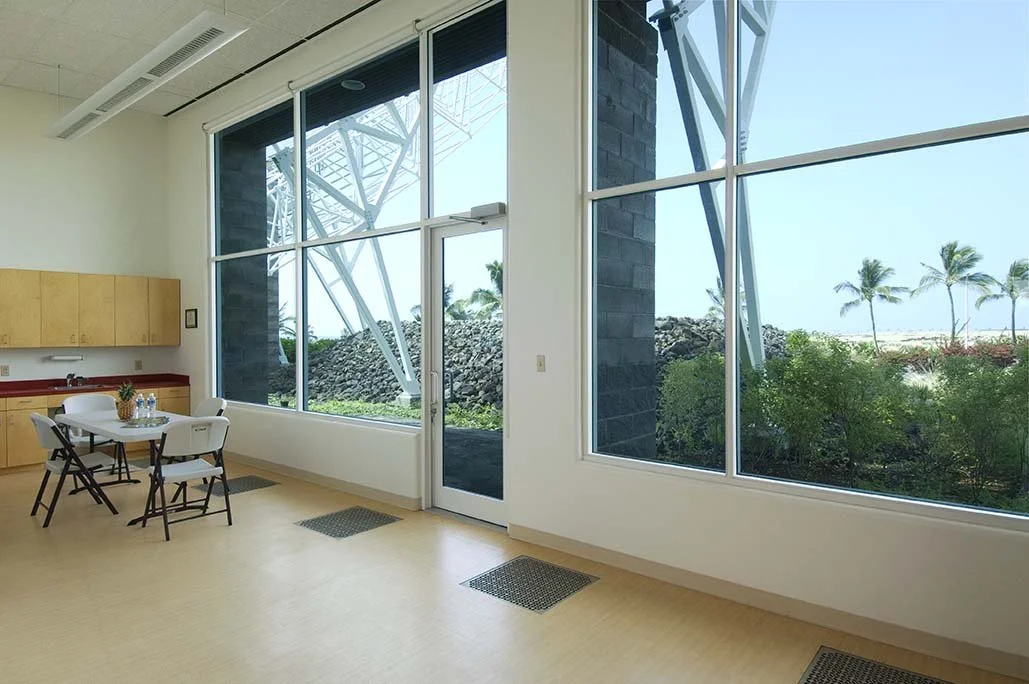
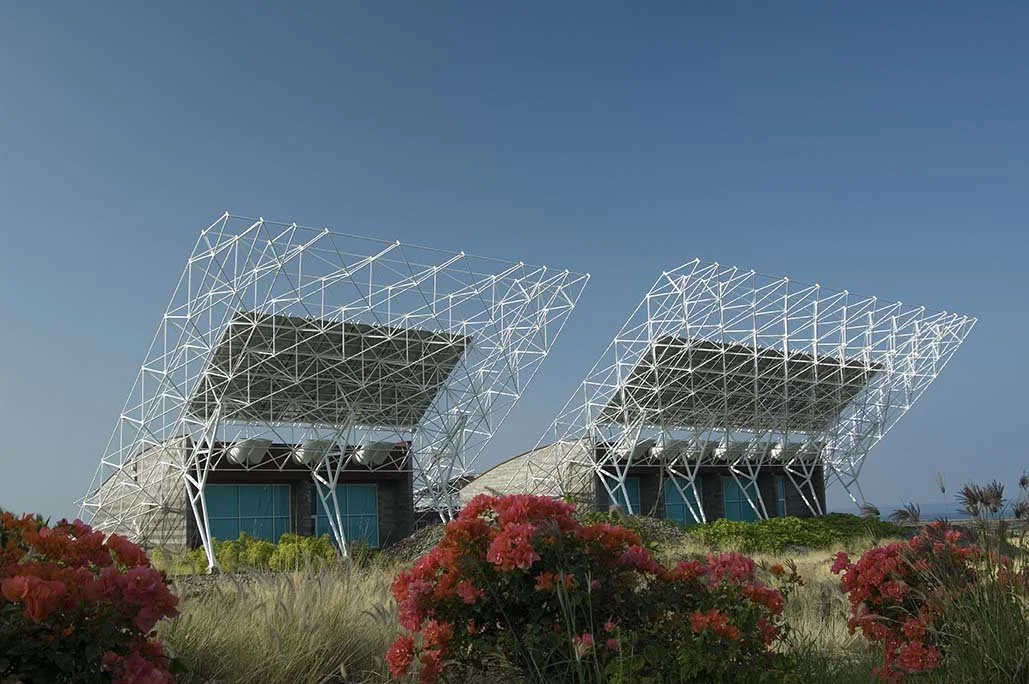
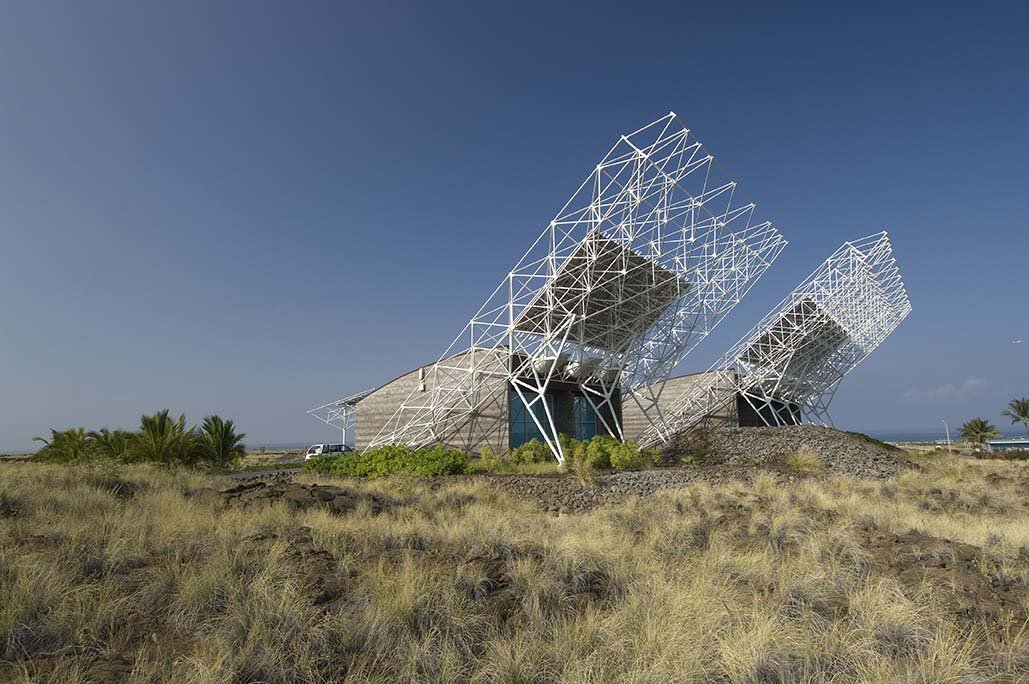
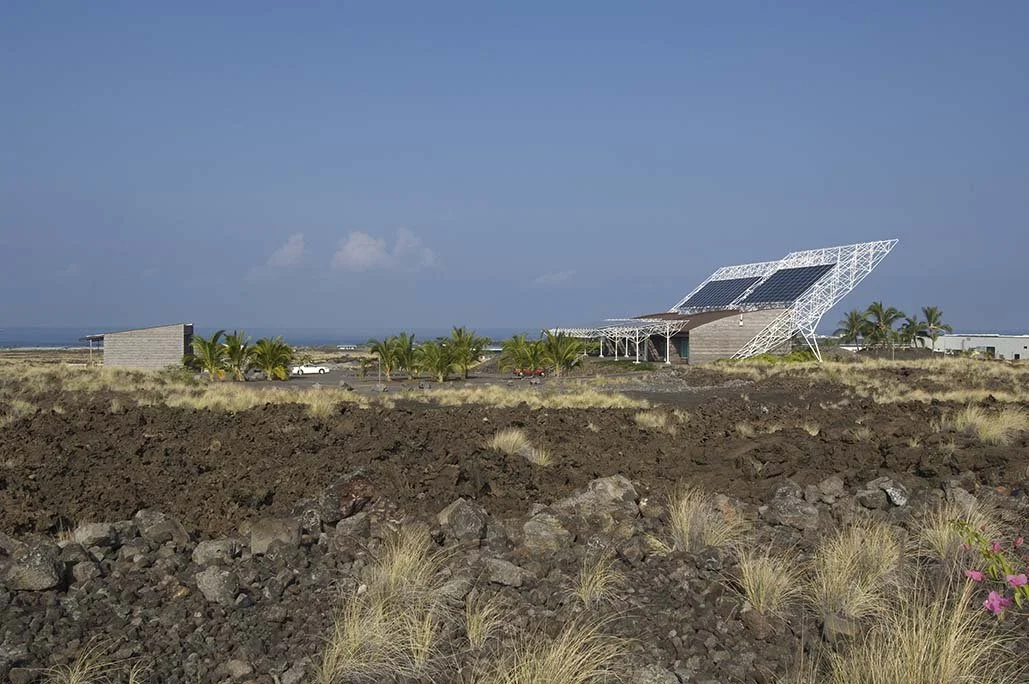
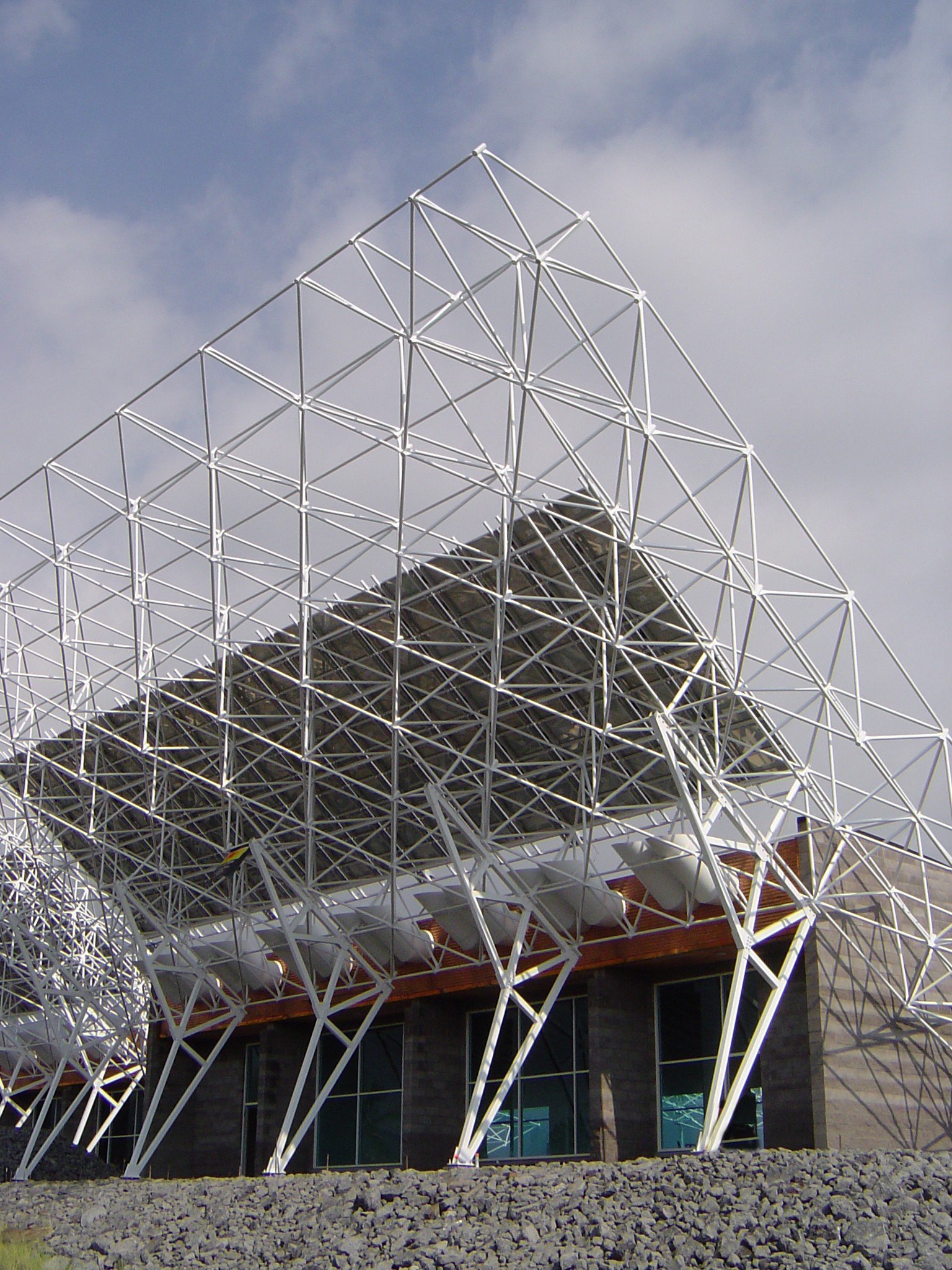
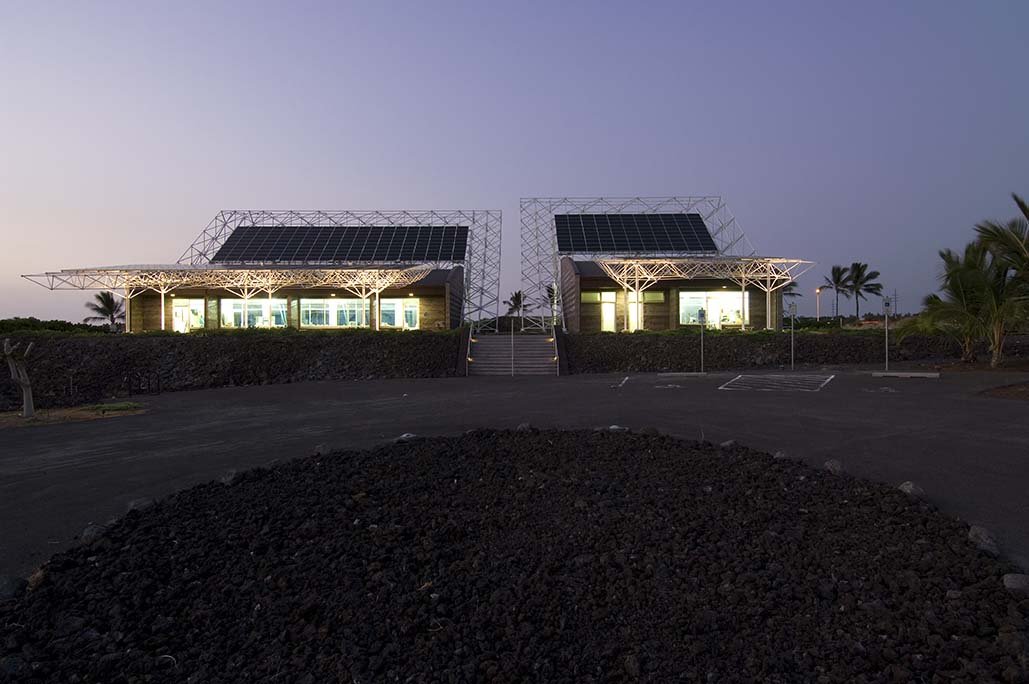
Spearheaded by the State of Hawaii’s Natural Energy Laboratory of Hawaii Authority (NELHA) and funded by the U.S. Department of Energy, the Hawaii Gateway Energy Center visitor center is the first phase of a 6.5-acre campus for renewable and distributed energy research and development.
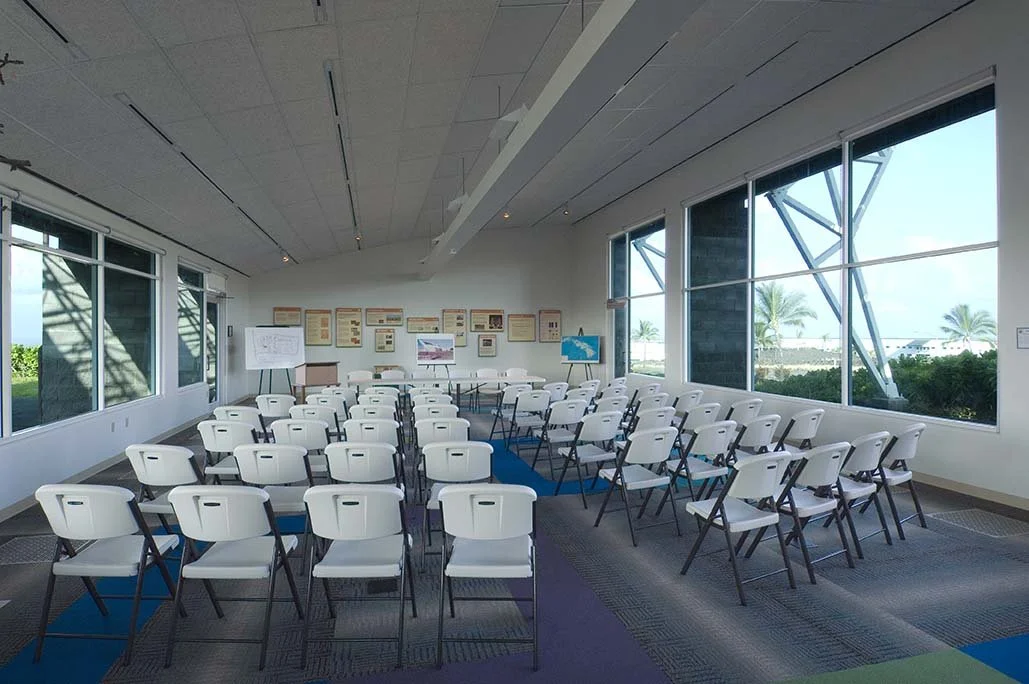
The 3,600 square-foot visitor center houses multi-purpose space for community outreach, public presentations, education, and conferencing. In the future, the visitor center will connect to a 22,000 square-foot modular laboratory complex which will provide space for renewable energy research, development, distribution, and demonstration.
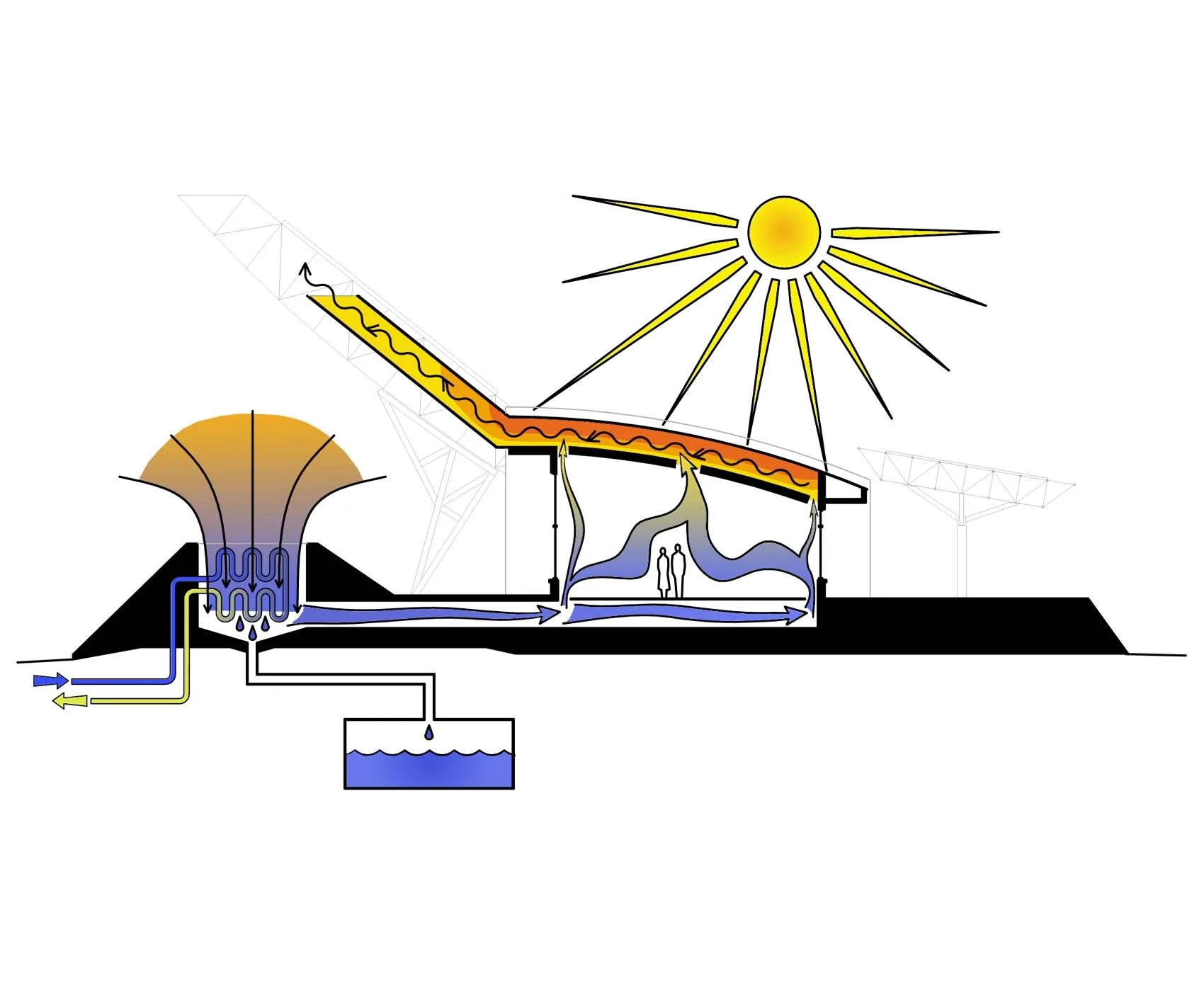
Focused on high-performance environmental stewardship, the HGEC visitor center design is innovative and sustainable. In November 2005, it achieved a LEED Platinum rating in accordance with the U.S. Green Building Council’s Green Building Rating System, one of only eight buildings worldwide so rated at the time. Unique aspects of the building’s design include passive deep seawater cooling combined with a thermal chimney that moves ventilation air without mechanical assistance, zero-net renewable energy production, and 100% daylighting.
Year Completed: 2005
Service Type: Architecture + Interiors
Size: 3,600 Sq. Ft.
FERRAZ STATION
DESIGN COMPETITION
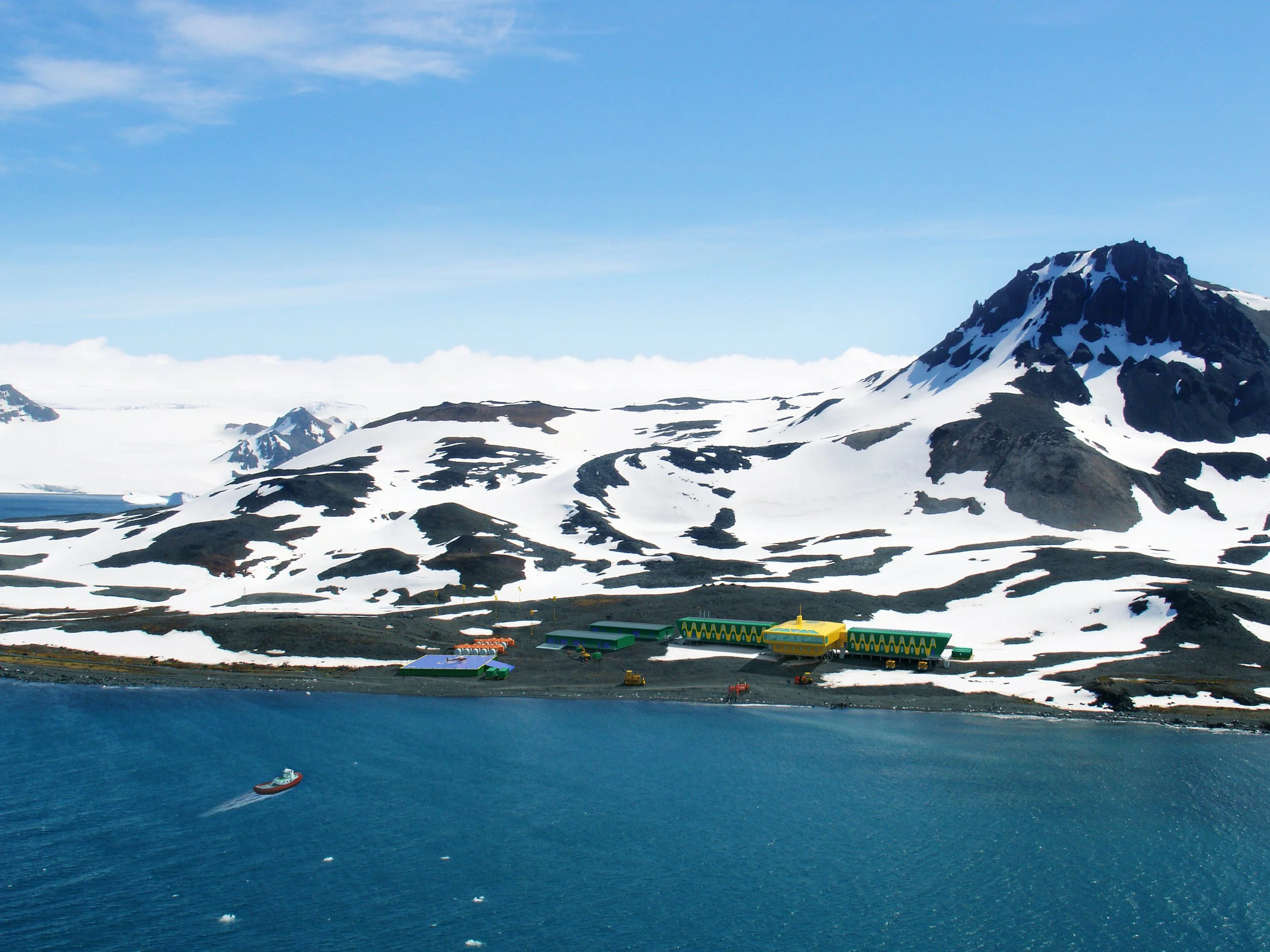
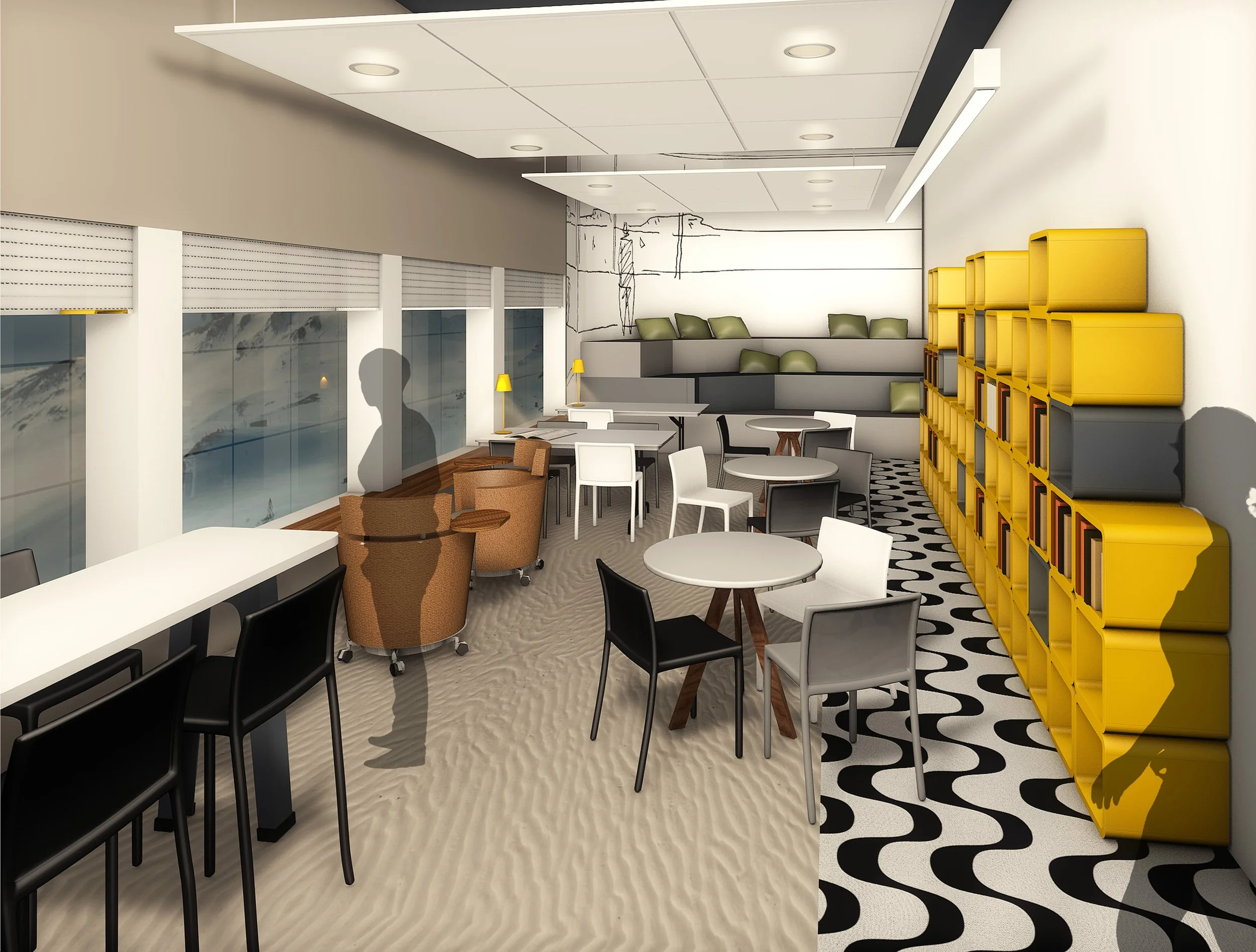
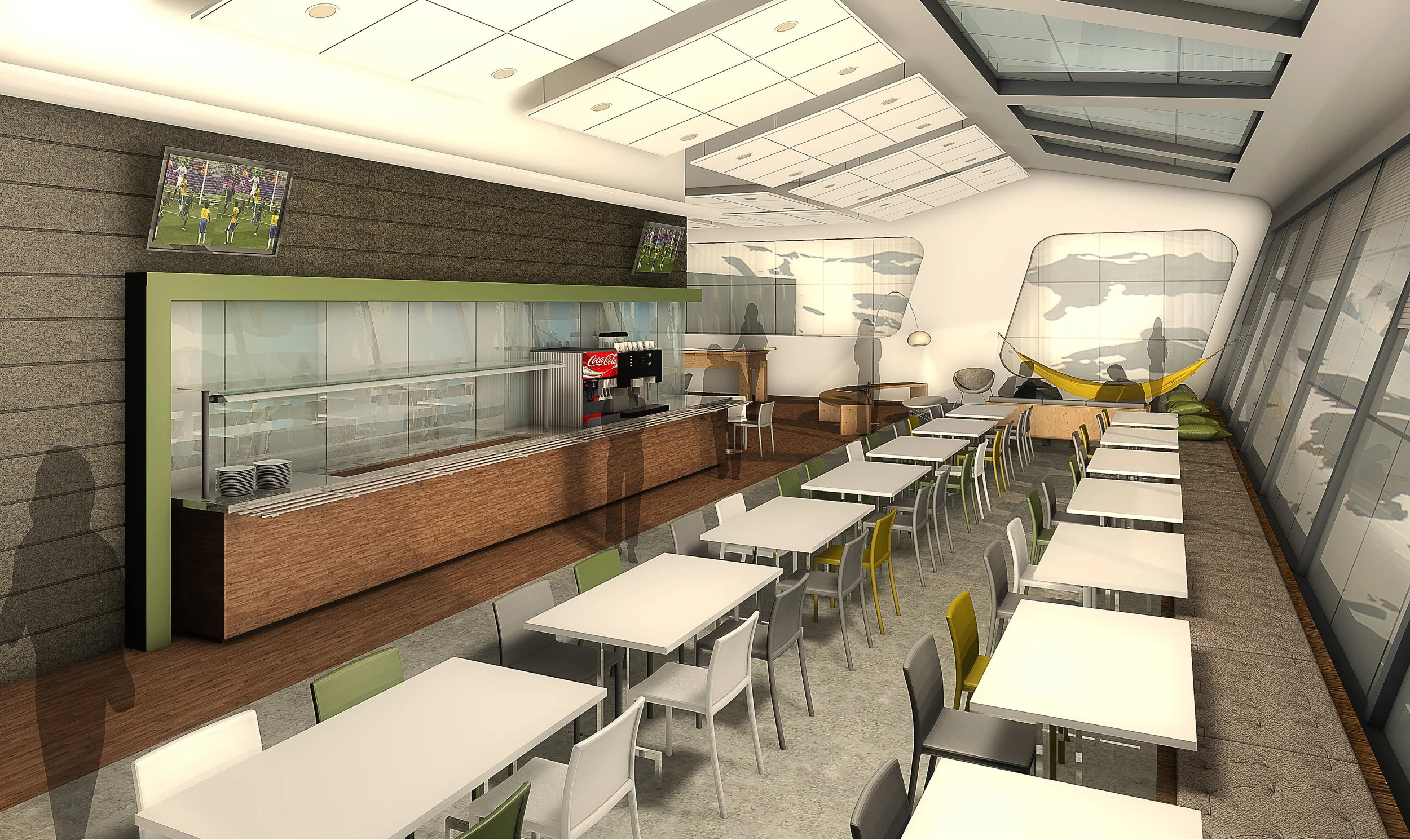
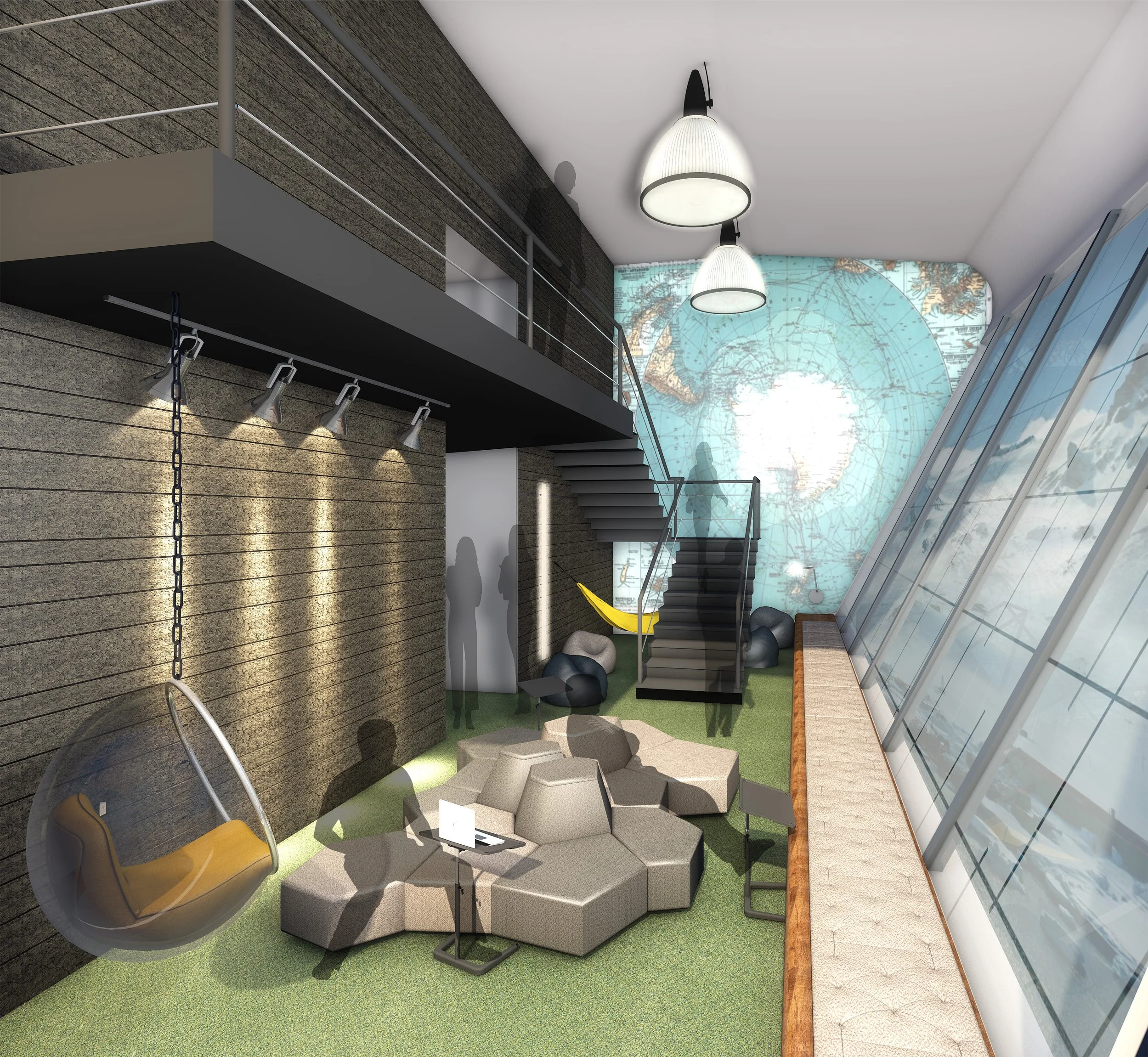
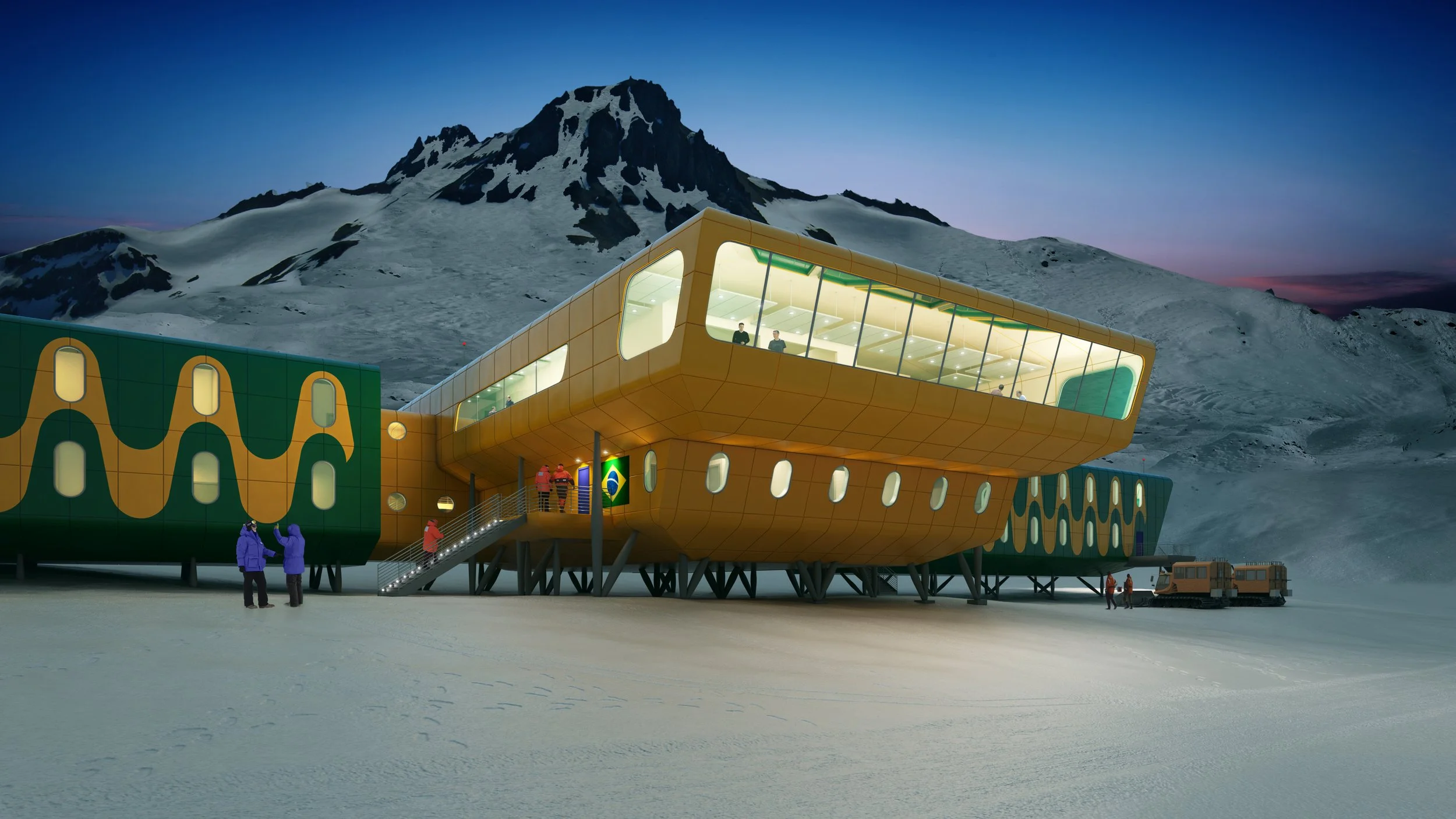
This remote science facility was the result of an intensive and collaborative design competition for Brazil’s Comandante Ferraz Antarctic Station. The new 32,400 square-foot research/living/working habitat with separate operations and maintenance facilities of 11,300 square feet is located on the Keller Peninsula, King George Island, Antarctica.
The Brazilian Antarctic Program (BAP) has had a presence in Antarctica since 1984. Research performed there includes marine biology, microbiology, molecular biology, astronomy, organic and inorganic chemistry, meteorology, and environmental sciences. The facility will support a summer population of 64 and a winter-over population of 34.
The design competition was sponsored by the Instituto de Arquitetos do Brasil (Institute of Brazilian Architects) and the Brazilian Navy (represented by the Interministerial Commission for Ocean Resources Office), to select a team to design the replacement of the original station destroyed by fire in February, 2012. The program called for an innovative, functional, safe, and energy-efficient Antarctic research station with a distinctly Brazilian identity.
The new Comandante Ferraz Antarctic Station re-established the much-needed Brazilian research endeavor in Antarctica.